Maximum/minimum temperature/precipitation/rainy day/humidity of major cities
26 results
-
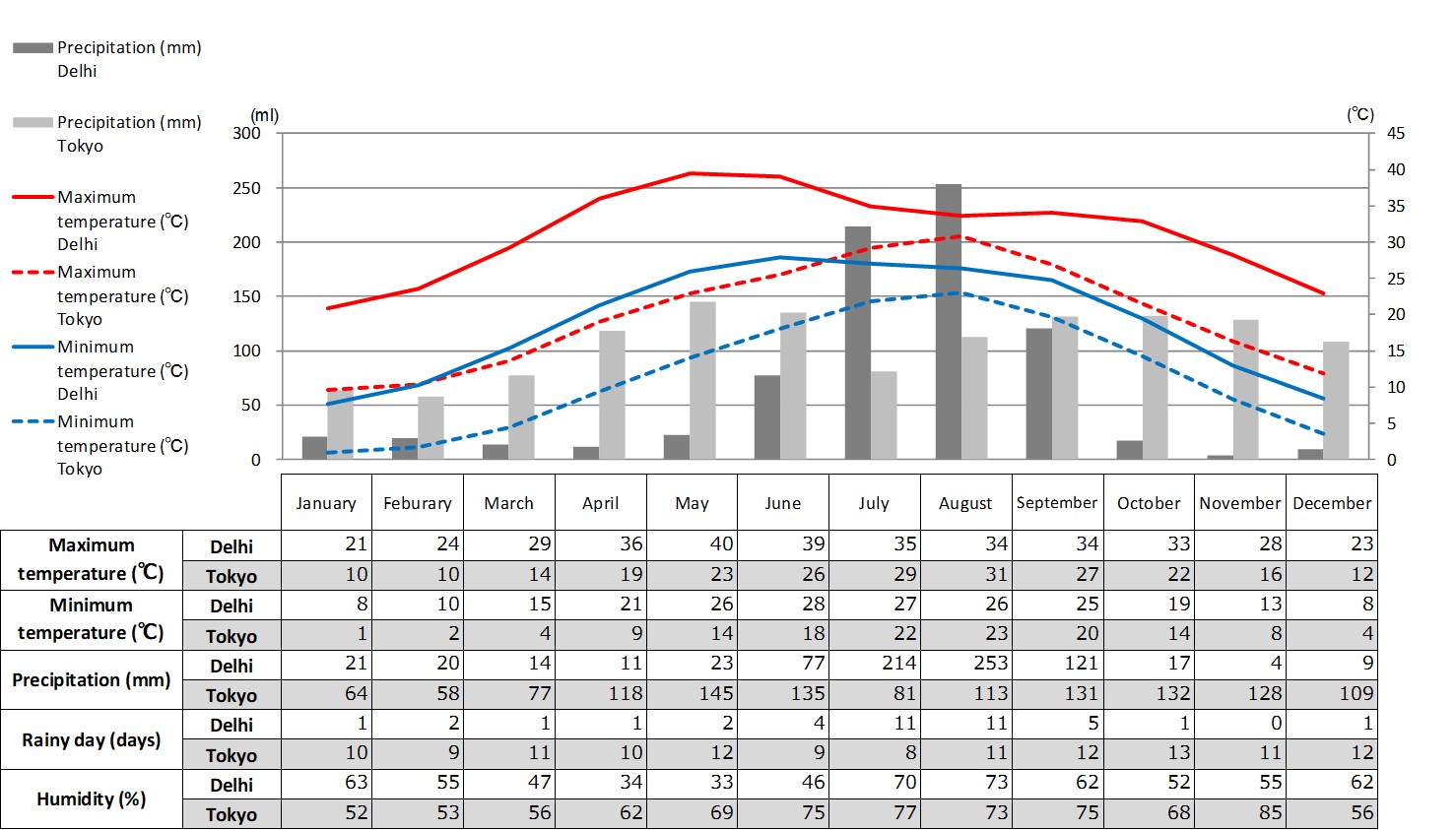
Maximum and minimum temperatures, precipitation, number of days with rain, and humidity for Delhi and Tokyo
calendar_monthAug 04, 2020
Delhi's climate is very extreme. Summers (April-July) are very hot and winters (December-January) are cold; July to mid-September is the monsoon season, which can be hot and humid. In summer, light, airy clothing, hats and sun shades are essential. In winter, you need to wear woolen clothing to protect yourself from the cold.
-
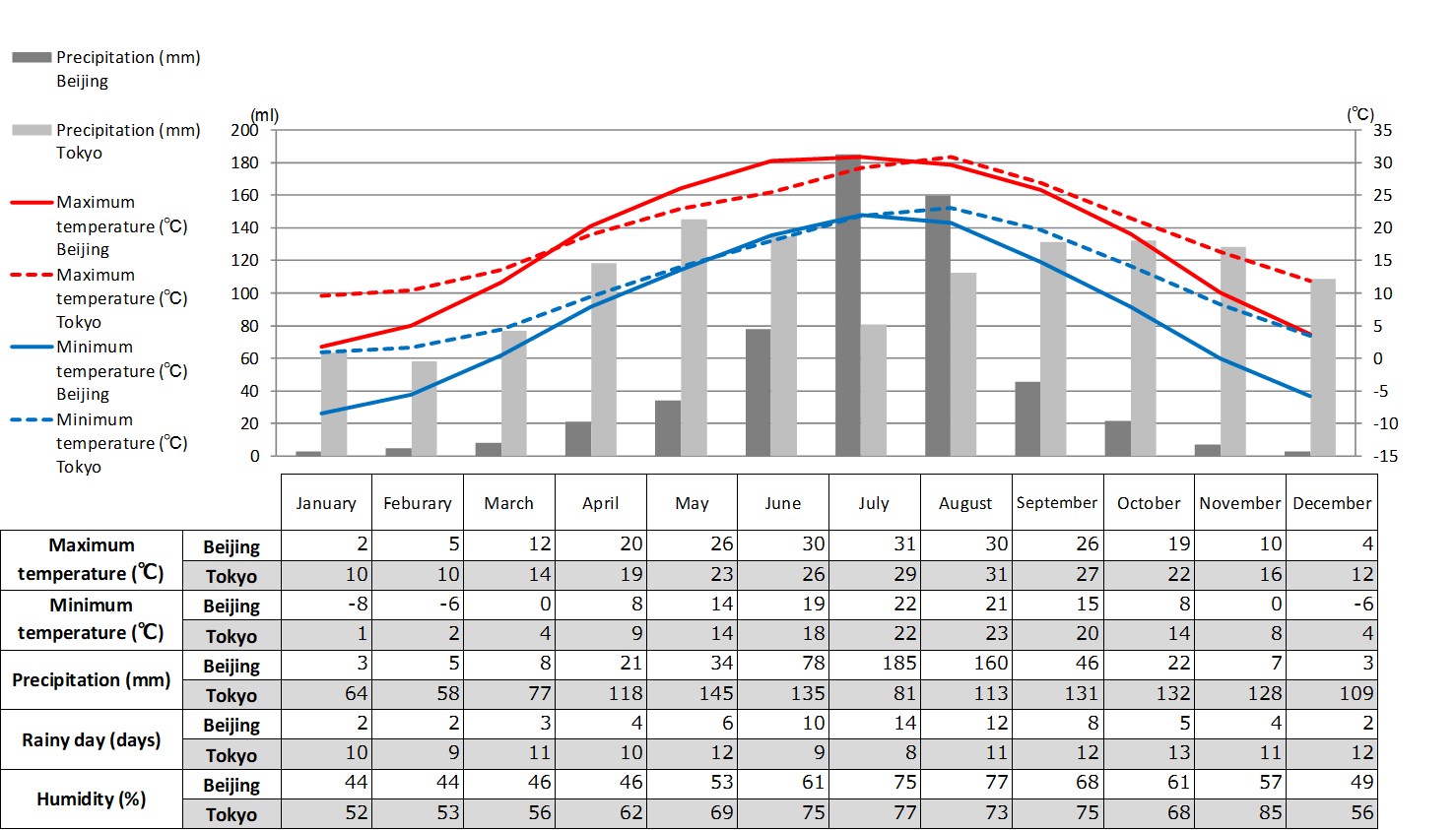
Maximum and minimum temperatures, precipitation, number of days with rain, and humidity for Beijing and Tokyo
calendar_monthAug 04, 2020
Beijing has four distinct seasons. Spring (March-May) is a time of frequent cold and warm air activity, frequent temperature changes, a large temperature difference between day and night, heavy winds and dust. Summer (June-August) is a period of high temperatures and frequent rainfall, with frequent convective weathers such as thunderstorms and heavy rains. Autumn (September-November) is sunny and dry, with high autumn skies and crisp, clean air. Winter (December-February) is cold and dry, with strong winds and occasional snowfalls. The weather is somewhat cold in spring and autumn, so you'll need to bring a light sweater and jacket. From around the end of October, winter gears such as down jackets, hats and gloves will be needed.--- For those interested in learning more about daily life in China, please also check out this article. What is Real Life in China? Daily Habits and Current Trends Marketers Should Know・Urban Housing Conditions: Surprisingly Not That Spacious? Floor Plans and Features・Ways to Maximize Space Utilization・Refrigerators in the Living Room? And Entranceways: Different Approaches Compared to Japan・Chinese Households Focusing on Indoor Air Qualityetc.
-
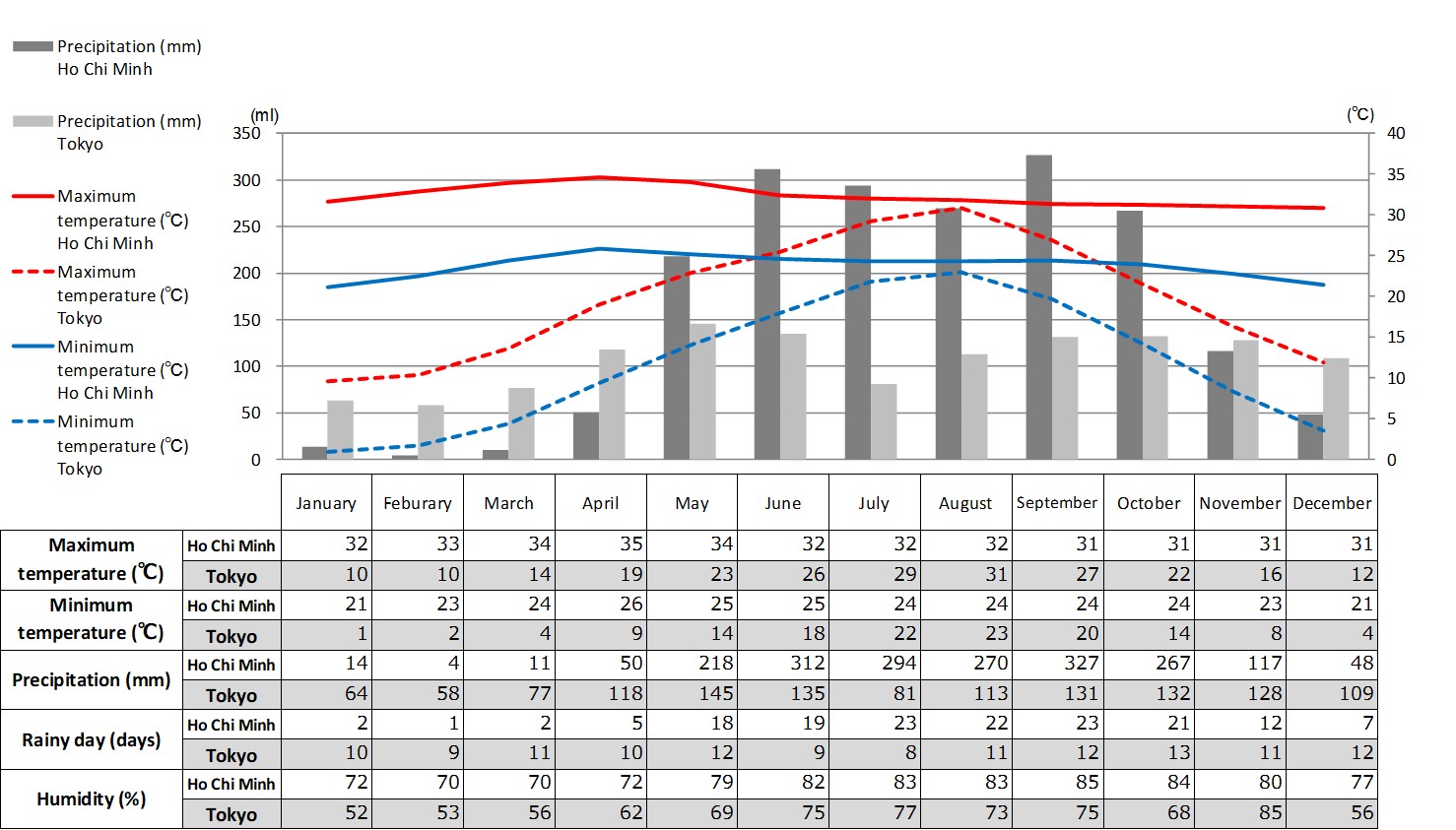
Maximum and minimum temperatures, precipitation, number of days with rain, and humidity for Ho Chi Minh and Tokyo
calendar_monthAug 04, 2020
Ho Chi Minh City and the southern part of Vietnam have two separate seasons, the dry season (December-April) and the rainy season (May-November), but the temperature does not fluctuate and is around 30 degrees C all year round. There are some cool days in January and February, but it is very hot during June and July. During the rainy season, May-November, heavy rainfall can occur for several hours in the evening.
-
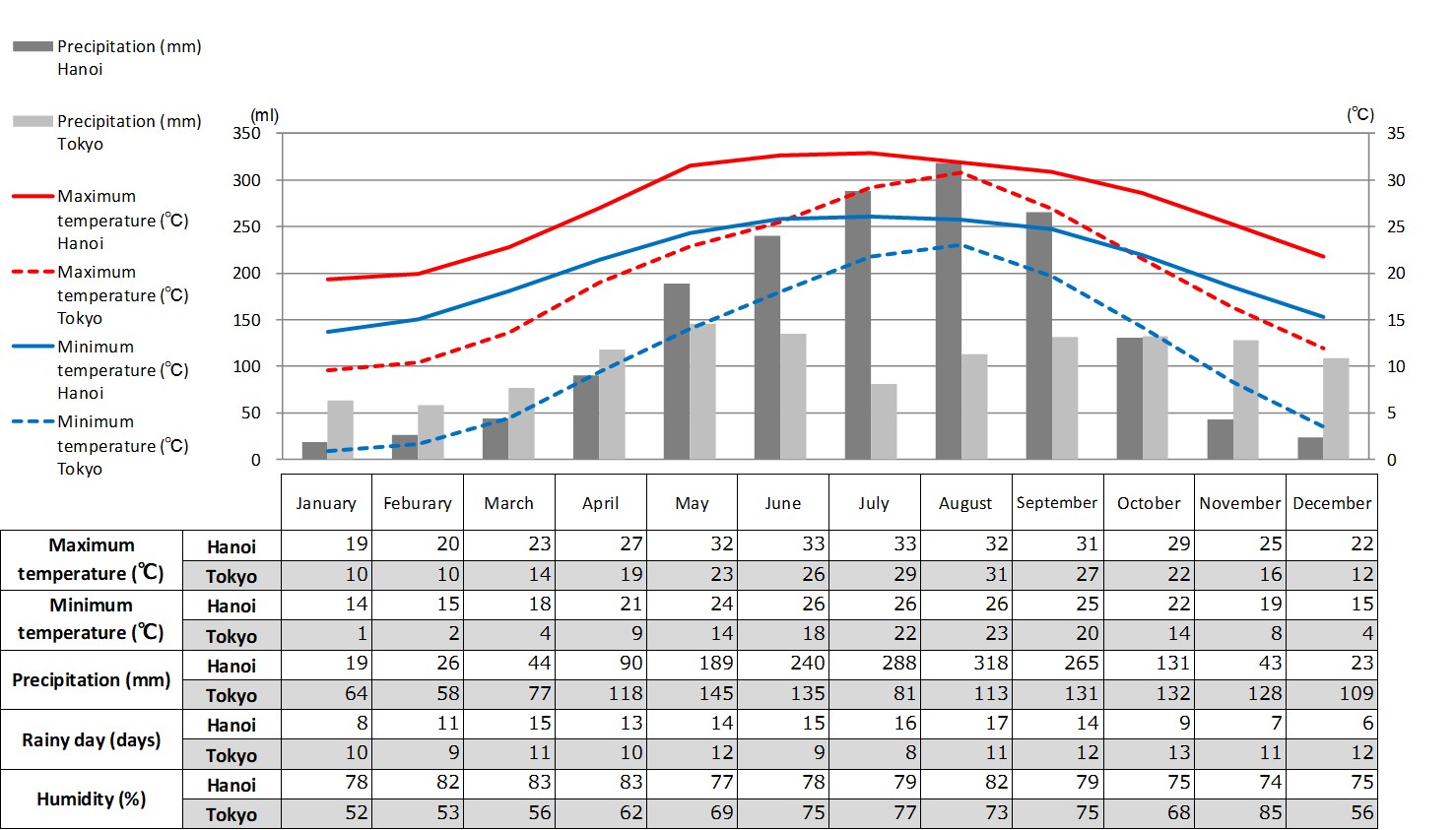
Maximum and minimum temperatures, precipitation, number of days with rain, and humidity for Hanoi and Tokyo
calendar_monthAug 04, 2020
April to June and September to December are the most comfortable times in Hanoi. April is hot with temperatures around 30 degrees C, but sunny weather is common; September to November is slightly cooler, with temperatures around 25 degrees C, and there are many sunny days. June is a very hot month with temperatures around 40 degrees C, and the rainy season is from June to August. December is cool and misty, and it is cold and below 10 degrees C from the end of December to March, so bringing a coat, jacket, scarf, etc. is recommended.
-
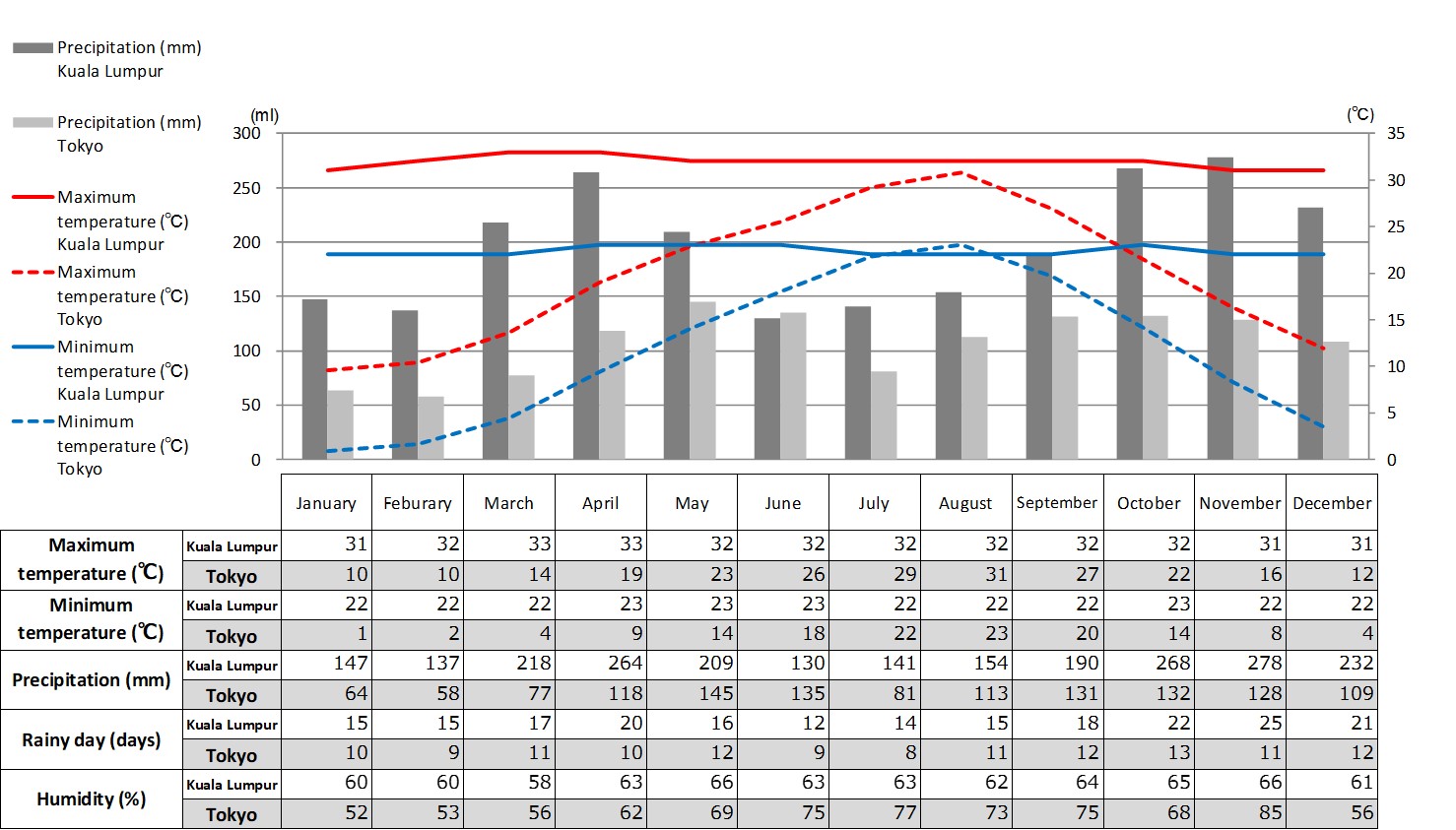
Maximum and minimum temperatures, precipitation, number of days with rain, and humidity for Kuala Lumpur and Tokyo
calendar_monthAug 04, 2020
Malaysia is located near the equator and has a tropical climate, so you can wear T-shirts, shorts and sandals all year round. The characteristics are that the average temperature during the daytime is around 30 degrees C throughout the year, but the temperature rarely exceeds 35 degrees C, and the mornings and evenings have a comfortable temperature of around 25 degrees C. From May to September is relatively rainy due to the southwest monsoon, but it rarely rains all day long like the rainy season in Japan, with squalls lasting 30 minutes to 2 hours. In Kuala Lumpur, there is also a lot of rain from October to December. To stay comfortable in Malaysia, where the temperature and humidity are high, breathable clothes are recommended. However, even though the temperature is high during the day, it can get chilly in the morning and evening. The air conditioning in hotels, restaurants and shopping malls can be very strong, so bringing a long-sleeved jacket is recommended. Since the city is located near the equator, the sun is very strong during the daytime. It is recommended to bring a hat and sunglasses when walking around the city. For those with sensitive skin, sunscreen is recommended, even in the cities. Hydration is also necessary. There are no specific dress restrictions for tourists even though it is a Muslim country, but it is not advisable to wear revealing clothing when visiting mosques and temples. It is best to avoid wearing sleeveless clothes and miniskirts when visiting temples. When visiting a mosque, women are required to wear a gown or scarf that covers their skin and hair (loaner gowns are available). Men are also required to wear a gown if they are wearing shorts or sleeveless clothes.
-
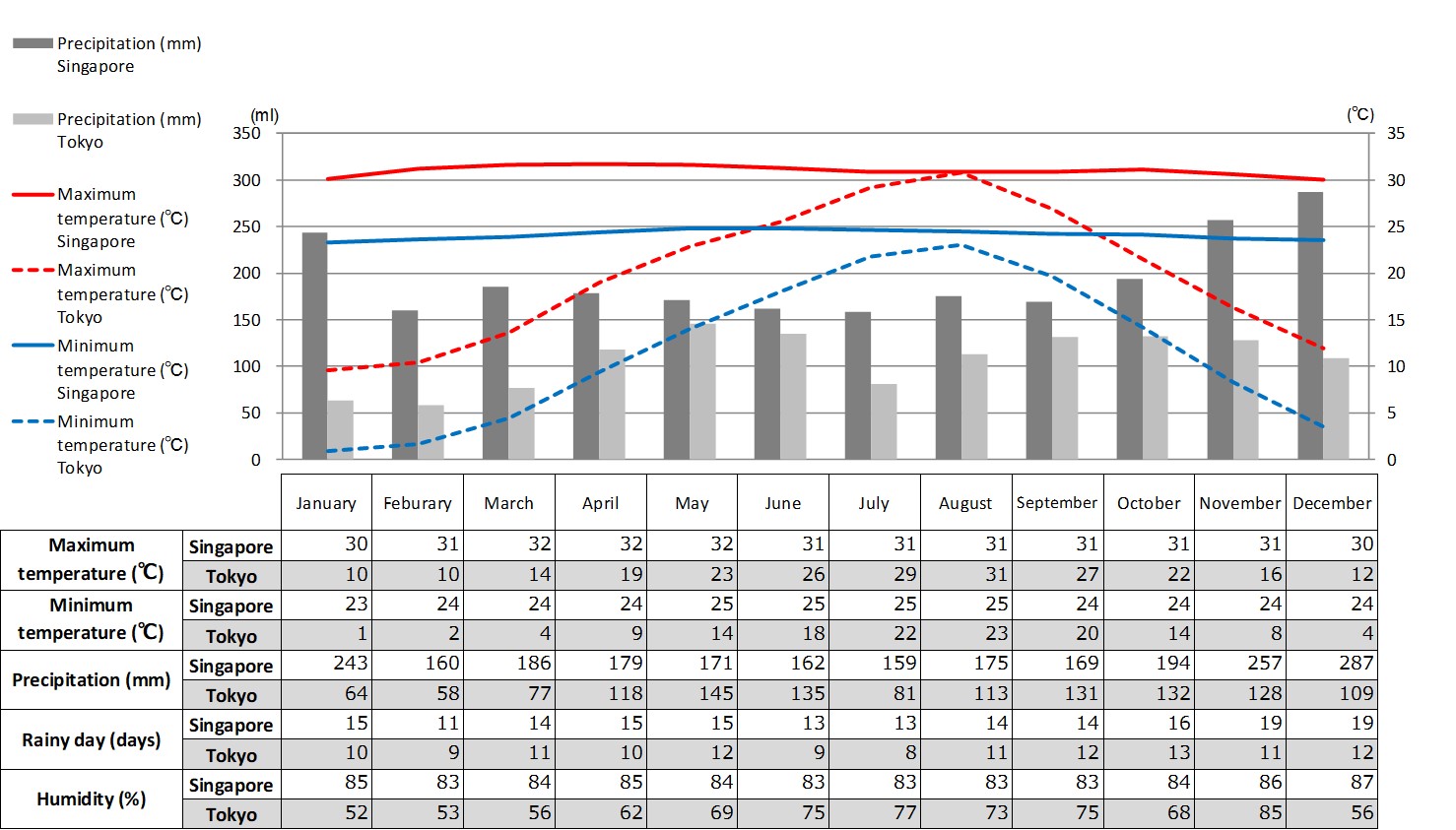
Maximum and minimum temperatures, precipitation, number of days with rain, and humidity for Singapore and Tokyo
calendar_monthAug 04, 2020
Singapore is hot and humid all year round, with highs more than 30 degrees C for most of the year. Downpours and brief squalls are frequent, so rain gear is a must.---Accelerate decision-making with smart overseas resident dataGlobal Viewer This service provides reports tailored to your issues using questionnaire data on various actual conditions and attitudes of sei-katsu-sha in 11 countries (Asia and US) stocked by INTAGE.The service covers 400 items, including actual behavioral conditions and awareness, values, and information contact related to various product and service categories. ▼Click here for detailshttps://www.global-market-surfer.com/lp/gv/
-
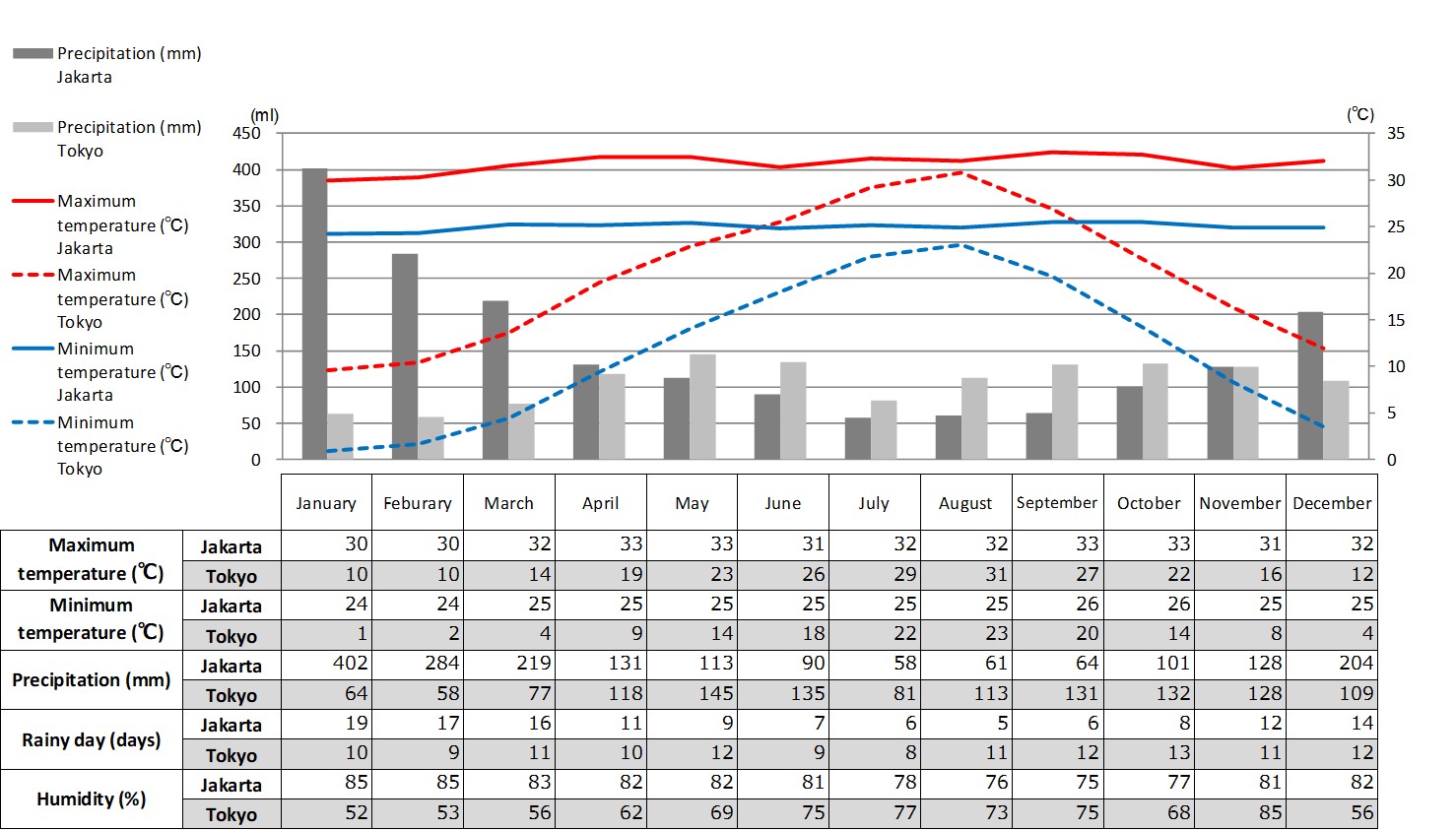
Maximum and minimum temperatures, precipitation, number of days with rain, and humidity for Jakarta and Tokyo
calendar_monthAug 04, 2020
The climate belongs to the tropics, with an average temperature of over 25 degrees C throughout the year, and there are two seasons: a dry season and a rainy season. The dry season is from April to September and the rainy season from October to March. During July and August, the humidity is not very high and it is relatively cool. Basically, you can wear summer clothes, but you may want to always bring a piece of clothing to put on because there is too much air conditioning in planes, buses, restaurants and hotels. It is also useful to have light long sleeves to avoid the sun during the day and to prevent insect bites.
-
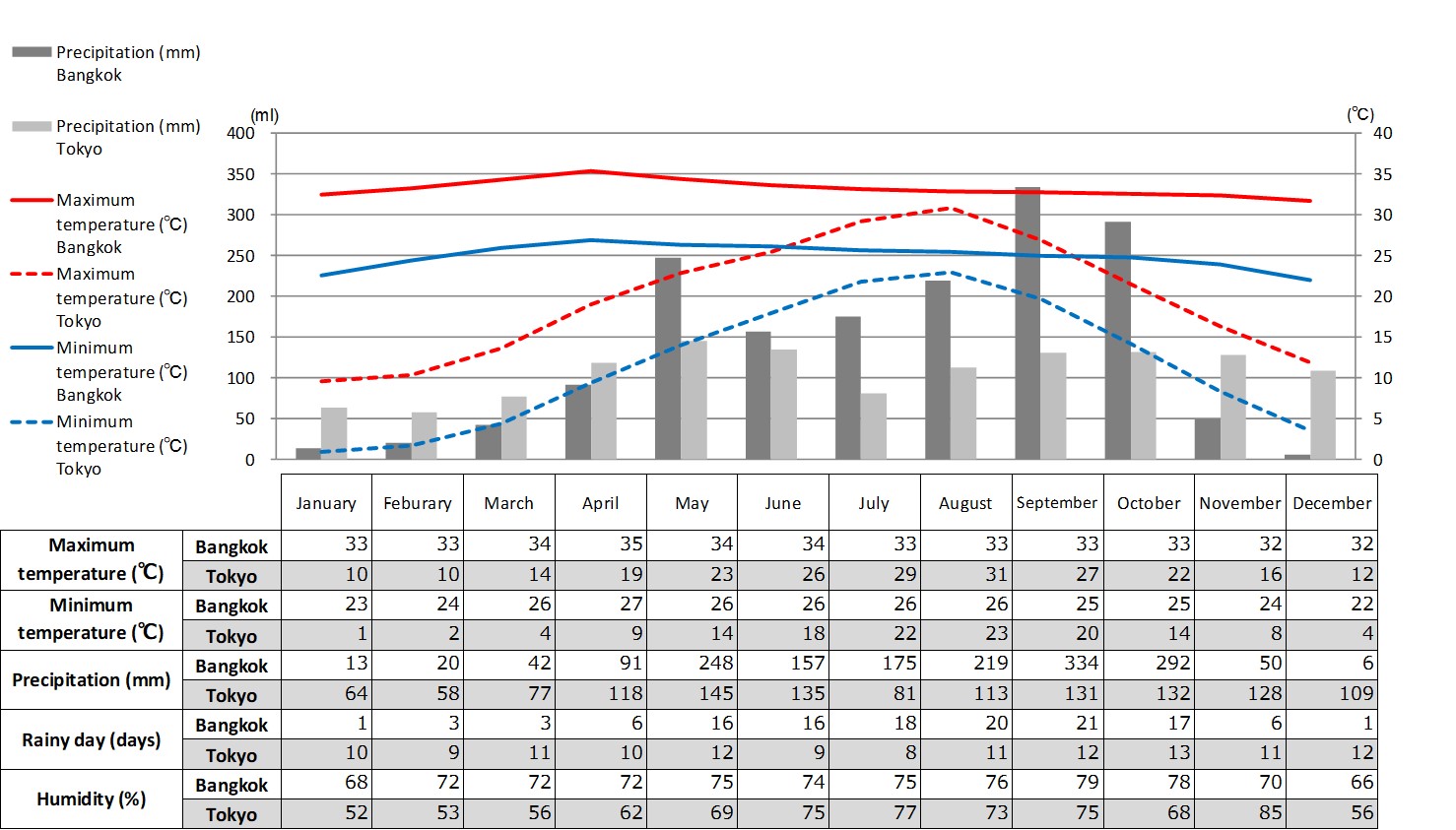
Maximum and minimum temperatures, precipitation, number of days with rain, and humidity for Bangkok and Tokyo
calendar_monthAug 04, 2020
It is hot, humid and muggy, and can be considered the climate of midsummer in Japan throughout the year. There are three main seasons: the dry season (November to March), the hot season (April to May), and the rainy season (June to October). In the dry season, there is almost no rainfall and the temperature is slightly lower than in the other seasons. The hot season when Songkrang (water festival), the Thai Lunar New Year, is celebrated is the hottest season of the year, with strong sunshine and continuous hot and humid weather. The hottest month of the hot season is April. Rainfall is light, but squalls can occur. The rainy season is the highest rainfall season of the year, but it rarely lasts all day like the rainy season in Japan, with heavy squalls of about an hour or two every day. After the rain, it is cooler. The weather is hot and humid with strong sunshine throughout the year, so it is best to wear airy clothes. Some department stores, hotels and restaurants are overly air-conditioned, so you may want to bring a piece of clothing to put on. During the rainy season (green season), squalls can occur, so a folding umbrella or raincoat is useful.--- If you’d like to learn more about the “average lifestyle” of Thais, please also check out this article. Average and Real Spending Habits of Thais: Essential Information You Should Know・Consumption values focused on practicality, self-improvement, and word-of-mouth・Changing dietary habits・Growing health consciousnessand more
-
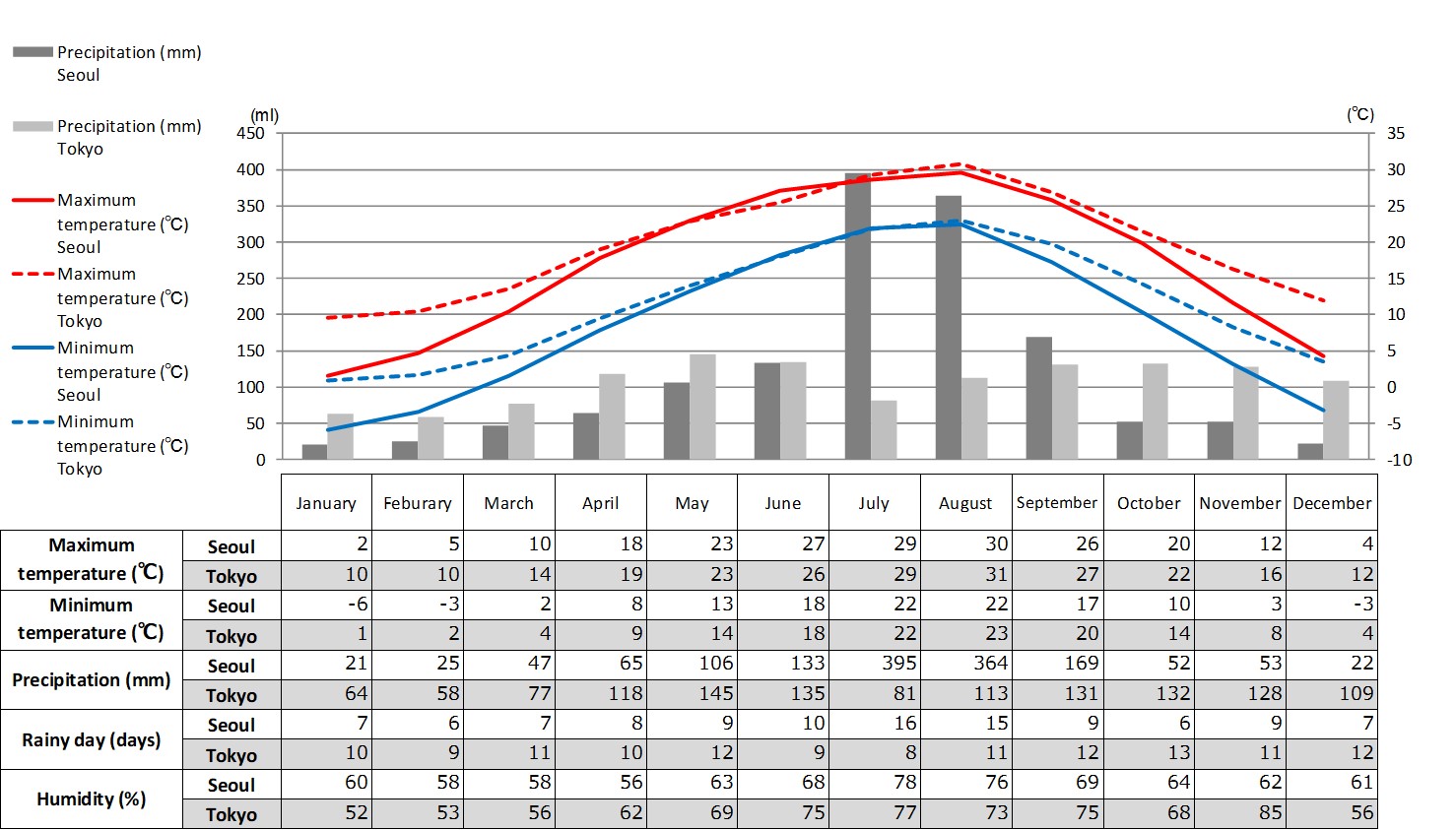
Maximum and minimum temperatures, precipitation, number of days with rain, and humidity for Seoul and Tokyo
calendar_monthAug 04, 2020
Seoul has a relatively mild climate, with four distinct seasons. In spring (March to May), the average temperature in March is about 6 degrees C and in May it rises to about 18 degrees C. Summer (June to August) is hot and humid, with the average temperature rising to 26 degrees C in August. The rainy season lasts for about a month from mid-June, but it doesn't rain too serious and heavy. Monthly rainfall is highest in July, averaging 383mm. Autumn (September to November) is the time of year when the air is crisp and clean. Winter (December-February) is a chilling experience with northwest winds blowing down from the Siberian High. The temperature drops below freezing and the Hangang (Han River) freezes over. Sometimes heavy snow falls and parks and gardens in the city are blanketed in white.---Accelerate decision-making with smart overseas resident dataGlobal Viewer This service provides reports tailored to your issues using questionnaire data on various actual conditions and attitudes of sei-katsu-sha in 11 countries (Asia and US) stocked by INTAGE.The service covers 400 items, including actual behavioral conditions and awareness, values, and information contact related to various product and service categories. ▼Click here for detailshttps://www.global-market-surfer.com/lp/gv/
-
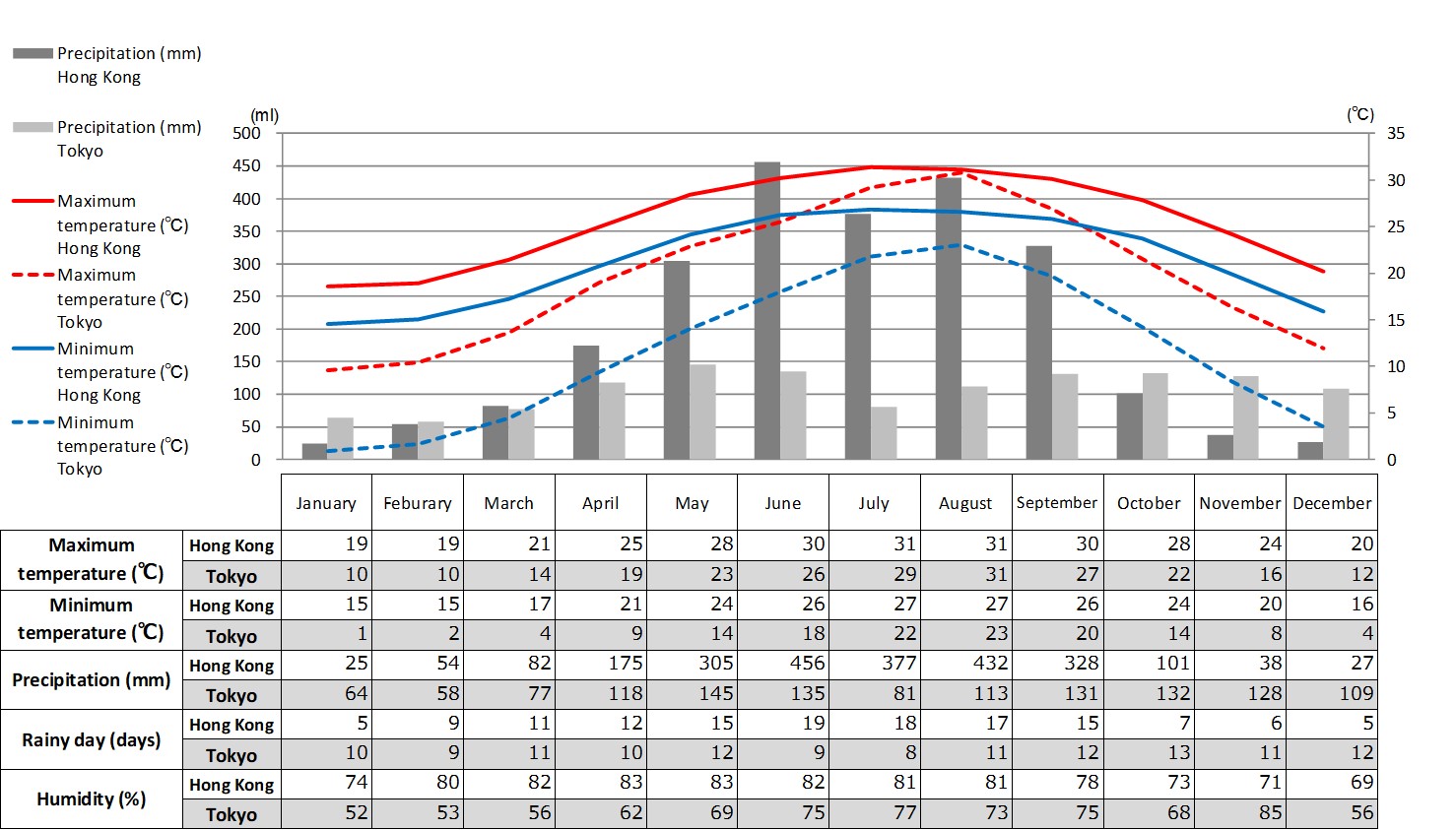
Maximum and minimum temperatures, precipitation, number of days with rain, and humidity for Hong Kong and Tokyo
calendar_monthAug 04, 2020
Being in the subtropical climate zone, Hong Kong's seasons are unique, with the typhoon season from May to November. Spring (March to May) is a time of gradual increase in both temperature and humidity. Nights can be chilly. Summer (June-August) is hot and humid, with clear skies, but occasionally there are showers and severe thunderstorms. The temperature can top 31 degrees C, but the humidity is so high that the temperature feels much higher. In the fall (September to November), there are many clear, sunny days with a fresh breeze, and the temperature is comfortable. Winter (December to February) is cooler and drier, with often cloudy skies. Occasionally cold fronts visit. The temperature in the city can drop below 10 degrees C.---This report focuses on “marriage”—a major turning point in life that significantly alters consumer behavior—and explores the cultures and customs deeply rooted in various Asian countries.How does consumer behavior change as people transition from single life to marriage and parenthood? By analyzing the significant event of marriage, we offer insights that will help you gain a more comprehensive understanding of Asian consumers. How Do “Marriages” Differ Across Asian Countries!? And the Consumption Behaviors That Come With Marriage ~ Bride Price? Groom Price? What About the Funds? ~・How are “weddings” conducted in various Asian countries?・Consumption Patterns Related to Marriage: Preparations and Purchases Made Upon Getting Marriedetc.---Accelerate decision-making with smart overseas resident dataGlobal Viewer This service provides reports tailored to your issues using questionnaire data on various actual conditions and attitudes of sei-katsu-sha in 11 countries (Asia and US) stocked by INTAGE.The service covers 400 items, including actual behavioral conditions and awareness, values, and information contact related to various product and service categories. ▼Click here for detailshttps://www.global-market-surfer.com/lp/gv/
-
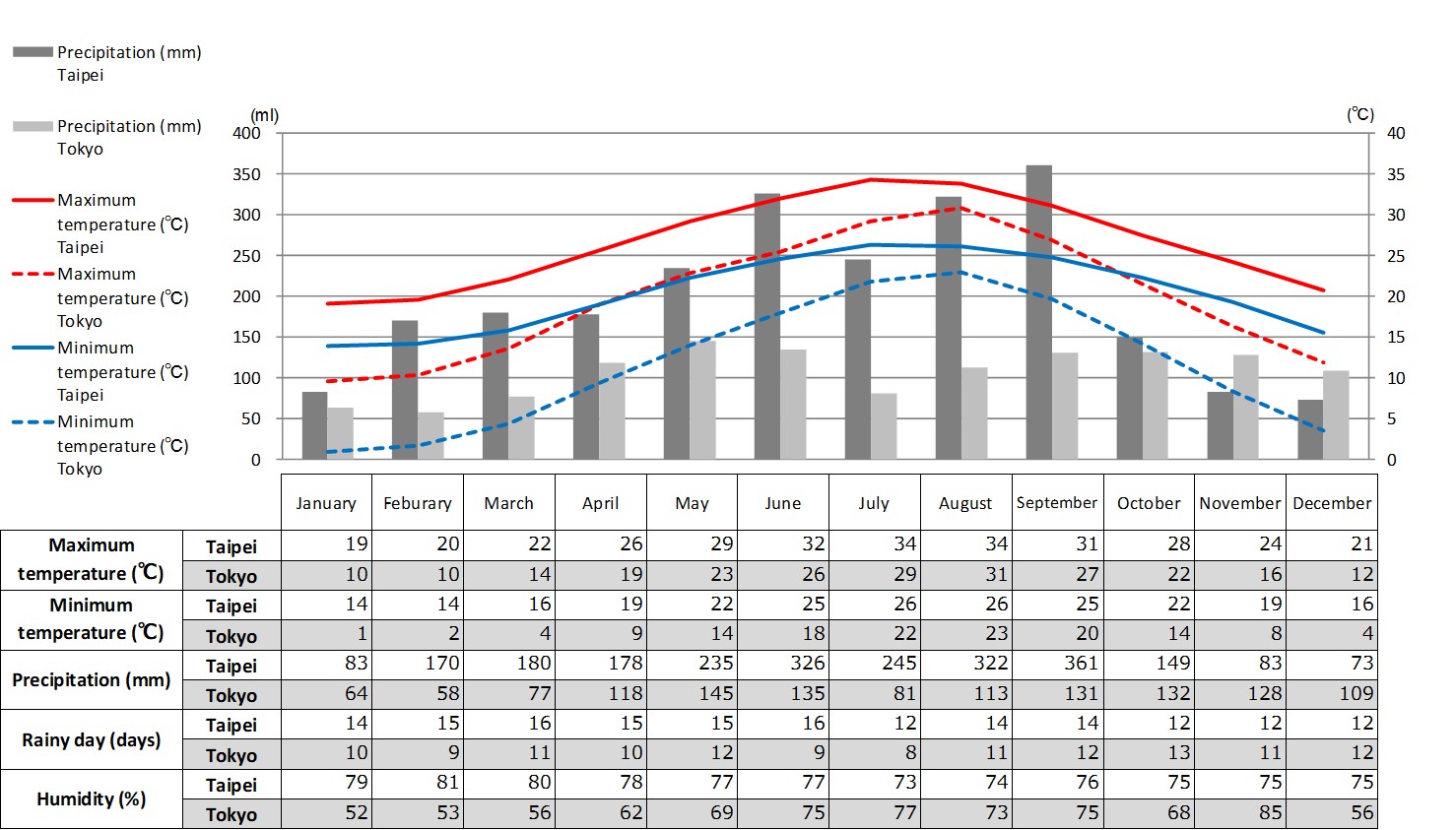
Maximum and minimum temperatures, precipitation, number of days with rain, and humidity for Taipei and Tokyo
calendar_monthAug 04, 2020
Taiwan's climate is basically warm all year round, making it ideal for travel. The annual average temperature is about 22 degrees C, and the average minimum temperature is 12-17 degrees C (54-63 degrees F). As a result, there is no snowfall in the plains in winter and only a few in the high mountains. During the transition from spring to summer (March to May), the occasional rain front can produce long drizzling, so an umbrella is necessary when traveling during this period. In summer (June-August), typhoons occasionally come through. In autumn (September to November), you can enjoy clear skies and crisp air every day to your heart's content. During the short, warm winter months (December to February), the occasional cold wave is a real treat for spa fans. All in all, Taiwan has a spring-like climate in all four seasons.---Taiwan is known for its pro-Japanese sentiment and is attracting significant attention as a destination for Japanese companies looking to expand. But how well do you understand the “average” lifestyle and values of Taiwanese people?Drawing on various data sources, including Intage’s “Global Viewer” survey of overseas consumers, we’ll break down and explain the “average” that defines Taiwanese consumers, as well as the latest trends emerging from this data. Let’s Get to Know the “Average” Taiwanese Person! A Comprehensive Guide to the Typical Consumer Profile and the Latest Trends・Lifestyle: Housing, Environment, Housework, and Marriage・Food Culture, Health, and Sports Awareness
-
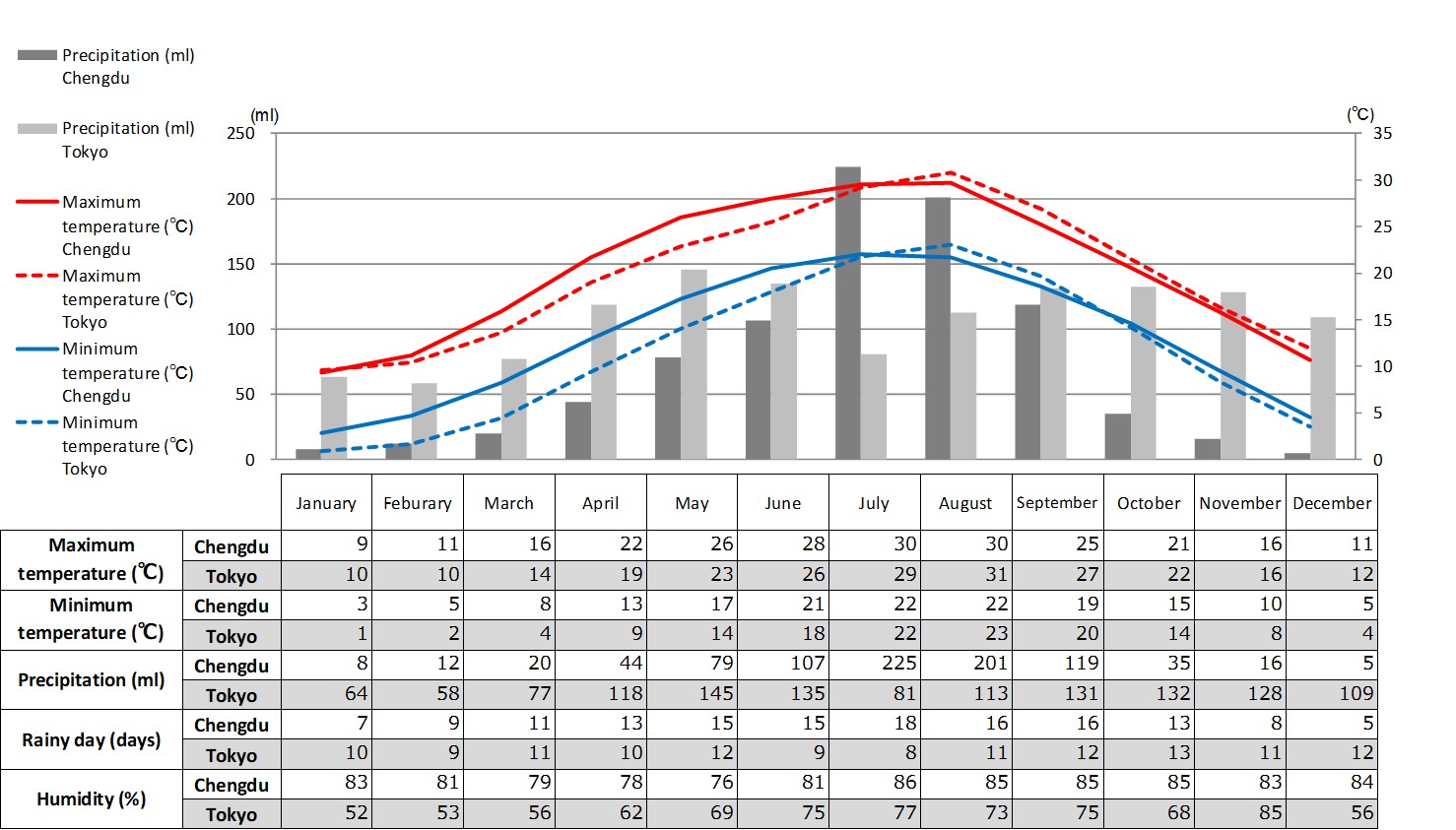
Maximum and minimum temperatures, precipitation, number of days with rain, and humidity for Chengdu and Tokyo
calendar_monthAug 04, 2020
.