Search Results
Purchase - 20 results
-

Intent to Purchase Processed Foods_Own Country (Intage Global Viewer)
- sellGlobal Viewer
calendar_monthApr 06, 2026
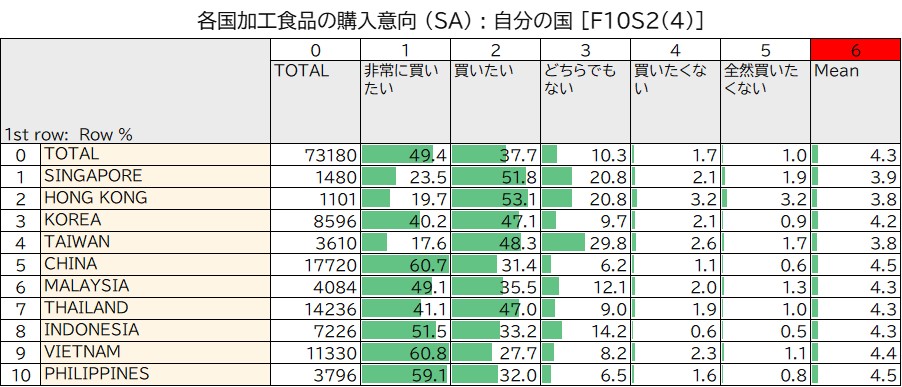
・Overall, many countries reported that consumers were “very likely” or “likely” to purchase processed foods from their own country.・Among countries where consumers reported being “very likely” to purchase processed foods from their own country, Vietnam had the highest percentage (60.8%), followed by China (60.7%) and the Philippines (59.1%).・Among countries where respondents answered “neither” regarding their intention to purchase processed foods from their own country, Taiwan had the highest percentage (29.8%), followed by Singapore and Hong Kong, which tied at 20.8%.Intage Global Viewer provides the latest data for 2025/2026, as well as data on “food ingredients purchased in the past month” and more.Click here for details. If you’d like to gain a deeper understanding of home cooking trends in various countries, please also check out the following article. From Stocking Up on Ingredients to Cleaning Up: Home Cooking in 8 Asian Countries ~Three Trends Revealed Through Food Culture~Food is an essential part of our lives. It strongly reflects a country’s culture, family structure, and infrastructure.・Grocery shopping and food storage habits・Changes in the kitchen’s main role・Time management for increasingly diverse meals
-

Intent to Purchase Processed Foods_United States (Intage Global Viewer)
- sellGlobal Viewer
calendar_monthApr 06, 2026
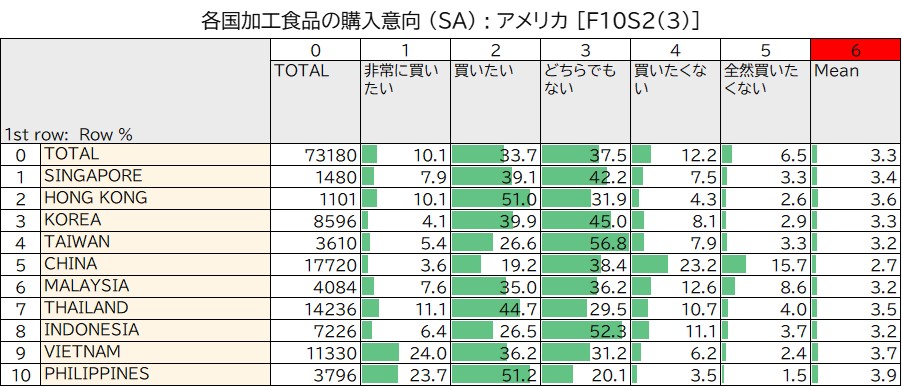
・Vietnam had the highest percentage of respondents who said they were “very interested in buying” U.S. processed foods (24.0%), followed by the Philippines (23.7%).・The country with the highest percentage of respondents who said they “want to buy” American processed foods was the Philippines (51.2%), followed by Hong Kong (51.0%).・The country with the highest percentage of respondents who said they “do not want to buy” U.S. processed foods was China (23.2%), followed by Malaysia (12.6%).Intage Global Viewer provides the latest data for 2025/2026, as well as data on “groceries purchased in the past month” and more.Click here for details. If you’d like to gain a deeper understanding of home cooking trends in various countries, please also check out the following article. From Stocking Up on Ingredients to Cleaning Up: Home Cooking in 8 Asian Countries ~Three Trends Revealed Through Food Culture~Food is an essential part of our lives. It strongly reflects a country’s culture, family structure, and infrastructure.・Grocery shopping and food storage habits・Changes in the kitchen’s main role・Time management for increasingly diverse dining experiences
-

Intent to Purchase Processed Foods_China (Intage Global Viewer)
- sellGlobal Viewer
calendar_monthApr 06, 2026
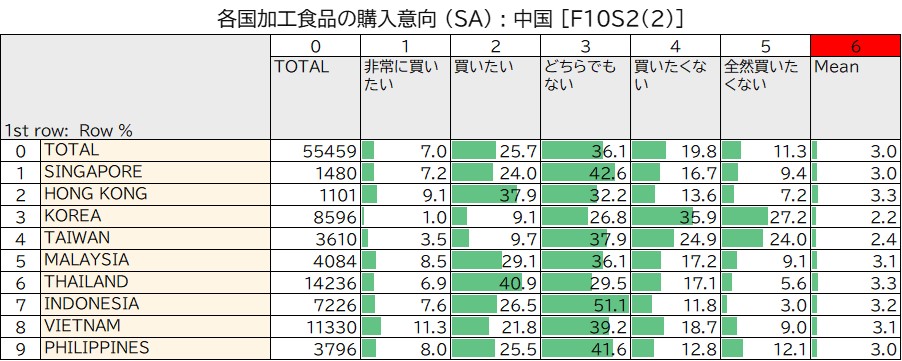
・The country with the highest percentage of respondents who said they “want to buy” Chinese processed foods was Thailand (40.9%), followed by Hong Kong (37.9%).・The country with the highest percentage of respondents who said they “definitely do not want to buy” Chinese processed foods was South Korea (27.2%), followed by Taiwan (24.0%).・The country with the highest percentage of respondents who answered “neither” regarding their intention to purchase Chinese processed foods was Indonesia (51.1%), followed by Singapore (42.6%).Intage Global Viewer also provides the latest data for 2025/2026, as well as data on “food ingredients purchased in the past month” and more.Click here for details. If you’d like to gain a deeper understanding of home cooking trends in various countries, please also check out the following article. From Stocking Up on Ingredients to Cleaning Up: Home Cooking in 8 Asian Countries ~Three Trends Revealed Through Food Culture~Food is an essential part of our lives. It strongly reflects a country’s culture, family structure, and infrastructure.・Grocery shopping and food storage habits・Changes in the kitchen’s main role・Time management for increasingly diverse meals
-

Intent to Purchase Processed Foods_Japan (Intage Global Viewer)
- sellGlobal Viewer
calendar_monthApr 06, 2026
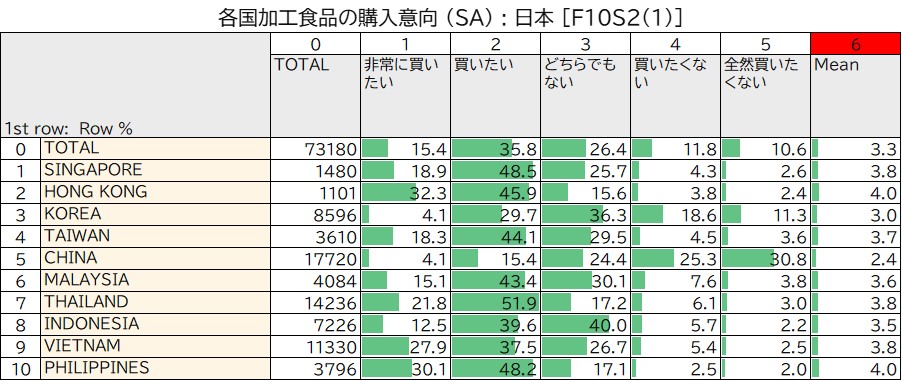
・The country with the highest percentage of respondents who said they “definitely want to buy” Japanese processed foods was Hong Kong (32.3%), followed by the Philippines (30.1%).・The country with the highest percentage of respondents who said they “want to buy” Japanese processed foods was Thailand (51.9%), followed by Singapore (48.5%) and the Philippines (48.2%).・The country with the highest percentage of respondents who said they “definitely do not want to buy” Japanese processed foods was China (30.8%), followed by South Korea (11.3%).Intage Global Viewer provides the latest data for 2025/2026, as well as data on “food ingredients purchased in the past month” and more.Click here for details. If you’d like to gain a deeper understanding of home cooking trends in various countries, please also check out the following article. From Stocking Up on Ingredients to Cleaning Up: Home Cooking in 8 Asian Countries ~Three Trends Revealed Through Food Culture~Food is an essential part of our lives. It strongly reflects a country’s culture, family structure, and infrastructure.・Grocery shopping and food storage habits・Changes in the kitchen’s main role・Time management for increasingly diverse meals
-

Frequency of Cooking at Home on Weekdays: Lunch (Intage Global Viewer)
- sellGlobal Viewer
calendar_monthApr 06, 2026
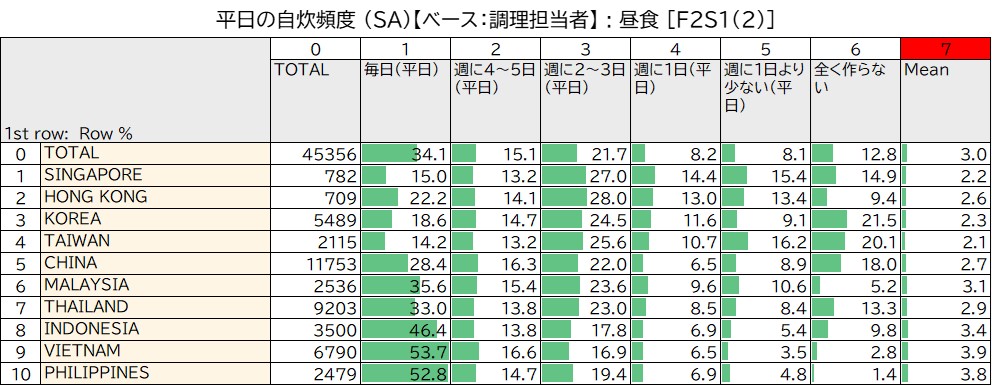
・Among those who reported cooking their own lunch “every day” on weekdays, the country with the highest percentage was Vietnam (53.7%), followed by the Philippines (52.8%) and Indonesia (46.4%).・Among those who responded that they cook for themselves “2–3 days a week,” the country with the highest percentage was Hong Kong (28.0%).・Among those who responded that they “never cook,” the country with the highest percentage was South Korea (21.5%), followed by Taiwan (20.1%).Intage Global Viewer also provides the latest data for 2025/2026, as well as data on topics such as “frequency of cooking on holidays.”Click here for more details.If you would like to gain a deeper understanding of home cooking habits in various countries, please also check out the following article. From Stocking Up on Ingredients to Cleaning Up: Home Cooking in 8 Asian Countries ~Three Trends Revealed Through Food Culture~Food is an essential part of our lives. It strongly reflects a country’s culture, family structure, and infrastructure.・Grocery shopping and food storage habits・Changes in the kitchen’s main role・Time management for increasingly diverse dining experiences
-

Frequency of Cooking at Home on Weekdays: Dinner (Intage Global Viewer)
- sellGlobal Viewer
calendar_monthApr 06, 2026
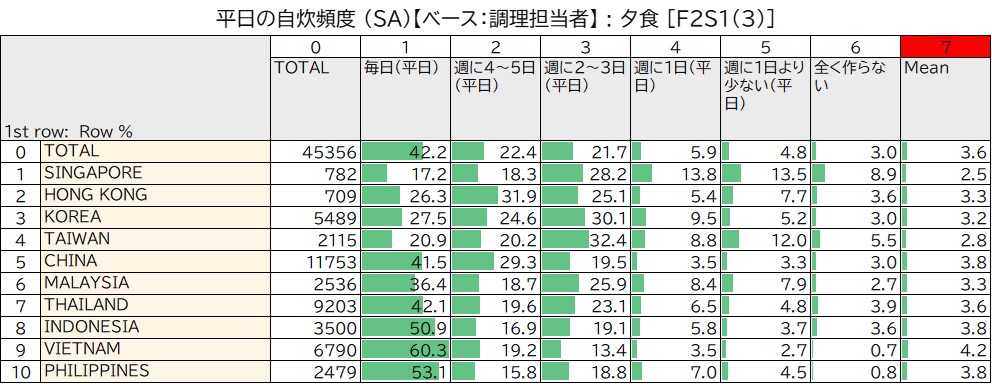
・Among those who responded that they cook their own dinner “every day” on weekdays, the country with the highest percentage was Vietnam (60.3%). This was followed by the Philippines (53.1%) and Indonesia (50.9%).・Among those who responded that they cook their own meals “2–3 days a week,” the country with the highest percentage was Taiwan (32.4%), followed by South Korea (30.1%).・Among those who answered “once a week (on weekdays),” the country with the highest percentage was Singapore (13.8%).Intage Global Viewer also provides the latest data for 2025/2026, as well as data on topics such as “frequency of home cooking on holidays.”Click here for more details.If you’d like to gain a deeper understanding of home cooking trends in various countries, please also check out the following article.From Stocking Up on Ingredients to Cleaning Up: Home Cooking in 8 Asian Countries ~Three Trends Revealed Through Food Culture~Food is an essential part of our lives. It strongly reflects a country’s culture, family structure, and infrastructure.・Grocery shopping and food storage habits・Changes in the kitchen’s main role・Time management for increasingly diverse dining experiences
-

What to do if your usual household items (detergent) are out of stock (Intage Global Viewer)
- sellGlobal Viewer
calendar_monthApr 03, 2026
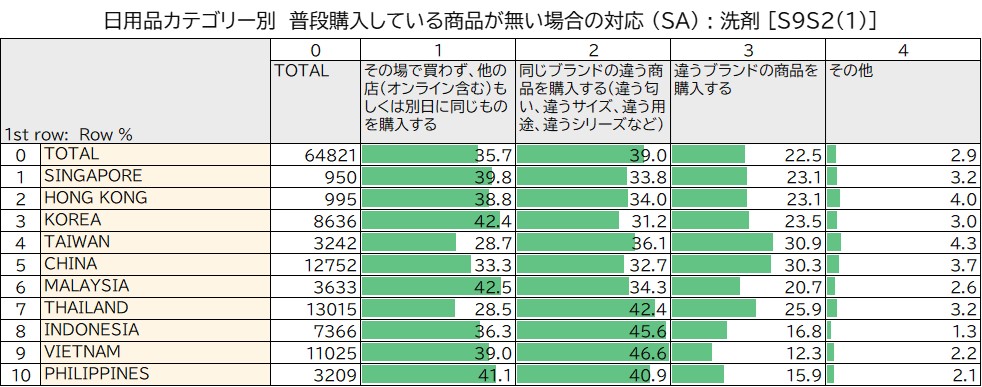
・Among those who answered “I would purchase a different product from the same brand (different scent, size, purpose, series, etc.),” the country with the highest percentage was Vietnam (46.6%), followed by Indonesia (45.6%) and Thailand (42.4%).・Among those who answered “I do not buy it on the spot, but purchase the same item at another store (including online) or on a different day,” the country with the highest percentage was Malaysia (42.5%), followed by South Korea (42.4%) and the Philippines (41.1%).・Among those who answered “I purchase a product from a different brand,” the country with the highest percentage was Taiwan (30.9%), followed by China (30.3%).Intage Global Viewer also provides the latest data for 2025/2026, as well as data on categories such as “cleaning tools and air fresheners.”Click here for more details.Please also check out the following article on laundry habits. 【Japan・Korea】What is a Convenient “Semi-Outdoor Balcony”? Differences in Laundry Habits Between Japan and KoreaThis article highlights differences between Japan and South Korea regarding where washing machines are placed, how laundry is dried, and where detergent is stored.・Where washing machines are placed・How laundry is dried・Where detergent is stored
-

Purchase Channels for Household Goods (Detergents) (Intage Global Viewer)
- sellGlobal Viewer
calendar_monthApr 03, 2026
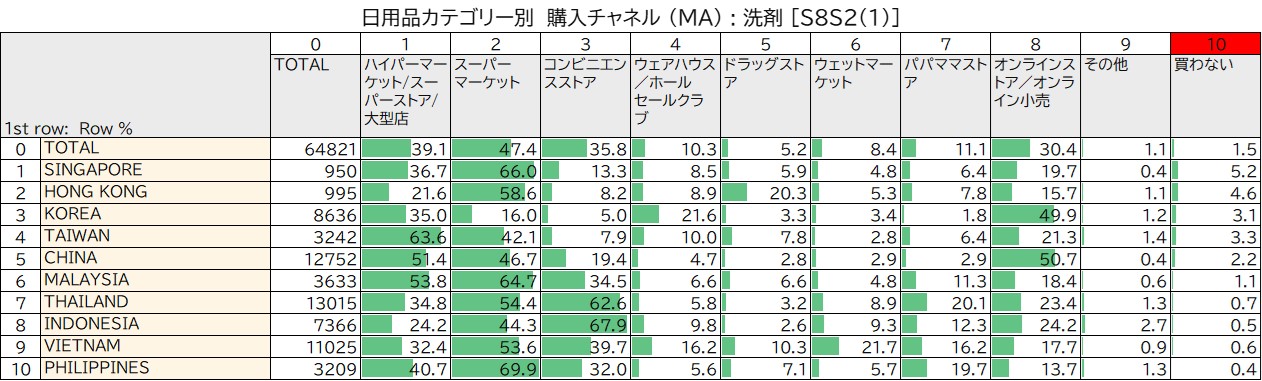
・The countries where the highest percentage of people shop at “supermarkets” are the Philippines (69.9%), followed by Singapore (66.0%) and Malaysia (64.7%).・The country where the highest percentage of purchases are made at “convenience stores” is Indonesia (67.9%), followed by Thailand (62.6%).・The country where the highest percentage of purchases are made at “online stores/online retailers” is China (50.7%), followed by South Korea (49.9%).Intage Global Viewer also provides the latest data for 2025/2026, as well as data on topics such as “Purchase Channels for Cleaning Supplies and Air Fresheners.”Click here for more details. Please also check out the following article on laundry habits.【Japan・Korea】What is a Convenient “Semi-Outdoor Balcony”? Differences in Laundry Habits Between Japan and KoreaThis article highlights differences between Japan and South Korea regarding where washing machines are placed, how laundry is dried, and where detergent is stored.・Where washing machines are placed・How laundry is dried・Where detergent is stored
-

Cleaning Frequency: Kitchen (Intage Global Viewer)
- sellGlobal Viewer
calendar_monthApr 02, 2026
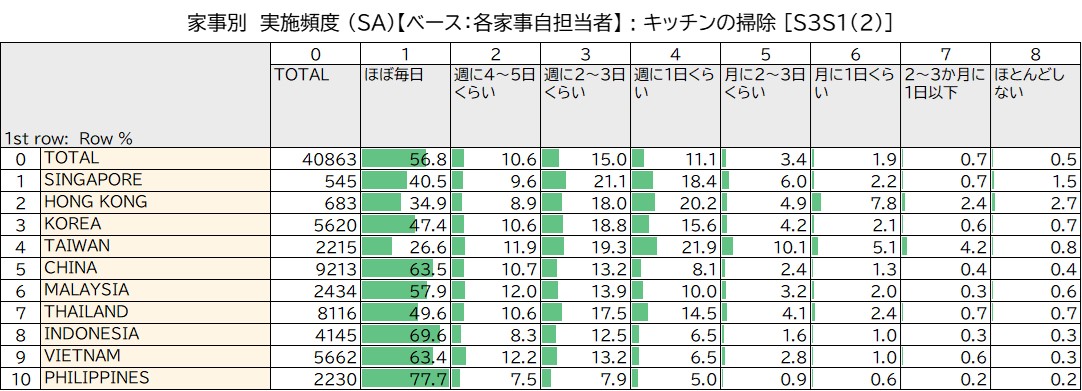
・In all countries, “almost every day” was the most common frequency for cleaning the kitchen. The highest rate was in the Philippines (77.7%), followed by Indonesia (69.6%).・In Taiwan, “almost every day” was the most common response, but at 26.6%, this figure was lower than in other countries. On the other hand, 21.9% of respondents said “about once a week,” which was higher than in other countries.Intage Global Viewer also provides the latest data for 2025/2026, as well as data on topics such as “frequency of laundry, dishwashing, and cleaning other spaces.”Click here for more details. Please also check the following articles on living environments and cleaning habits. [China: World Residence Tour] The Living Environment and Cleaning Conditions of Chinese HousingThis article introduces the differences between China and Japan in terms of cleaning tools and methods.・Different flooring materials for each room・Cleaning order and tools used
-

Cleaning Frequency and Shower Area (Intage Global Viewer)
- sellGlobal Viewer
calendar_monthApr 02, 2026
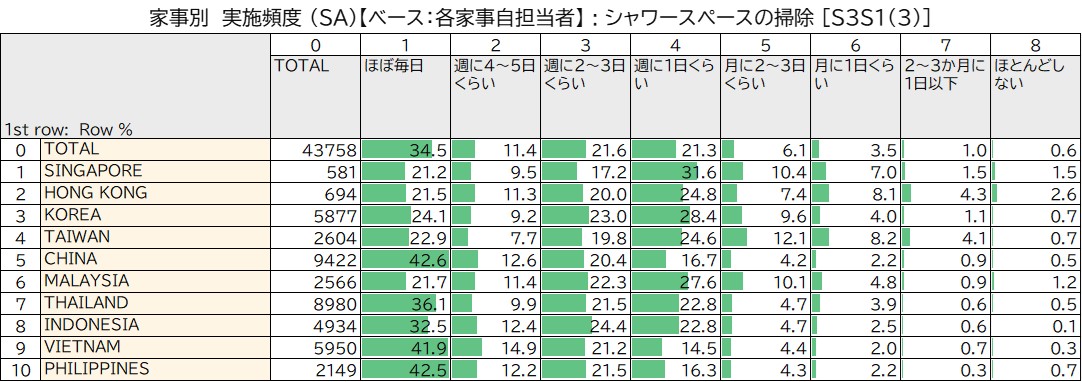
・Respondents tend to clean their shower areas “almost every day,” “about 2–3 days a week,” or “about once a week.”・The highest percentage for “almost every day” was in China (42.6%), followed by the Philippines (42.5%) and Vietnam (41.9%).・The highest percentage for “about once a week” was in Singapore (31.6%), followed by South Korea (28.4%) and Malaysia (27.6%). Intage Global Viewer also provides the latest data for 2025/2026, as well as data on topics such as “Frequency of Laundry, Dishwashing, and Cleaning Other Areas.”Click here for more details.Please also check the following articles regarding living environments and cleaning habits.[China: World Residence Tour] The Living Environment and Cleaning Conditions of Chinese HousingHere, we introduce the differences between China and Japan in terms of cleaning tools and methods.・Different flooring materials for each space・Cleaning order and tools used
-

Cleaning Frequency: Living Room (Intage Global Viewer)
- sellGlobal Viewer
calendar_monthApr 02, 2026
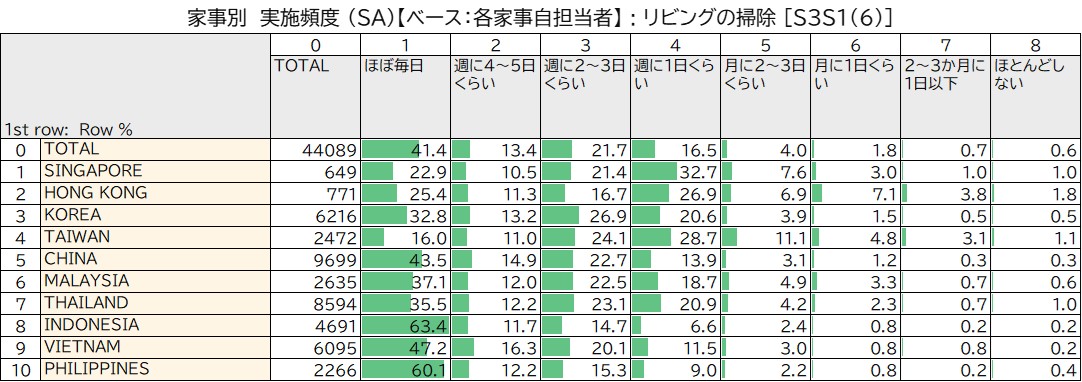
・Respondents tend to clean their living rooms “almost every day,” “about 2–3 days a week,” or “about once a week.”・The highest percentage of respondents who clean “almost every day” was in Indonesia (63.4%), followed by the Philippines (60.1%).・The highest percentage for “about once a week” was in Singapore (32.7%), followed by Taiwan (28.7%) and Hong Kong (26.9%).Intage Global Viewer also provides the latest data for 2025/2026, as well as data on “frequency of laundry, dishwashing, and cleaning other spaces.”Click here for more details.Please also check out the following article on living environments and cleaning habits.[China: World Residence Tour] The Living Environment and Cleaning Conditions of Chinese HousingThis article introduces the differences between cleaning tools and methods in China and Japan.・Different flooring materials for each room・Cleaning order and tools used
-

A state where you can truly feel that it has been cleaned—Kitchen (Intage Global Viewer)
- sellGlobal Viewer
calendar_monthApr 02, 2026
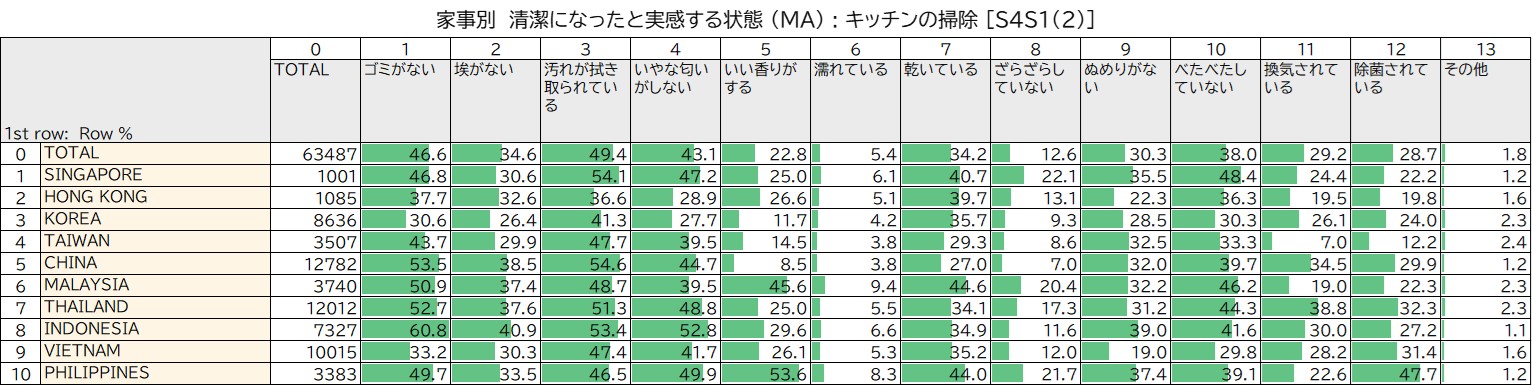
・Indonesia had the highest percentage of respondents reporting that their homes were “free of trash” (60.8%).・The Philippines had the highest percentage of respondents reporting that their homes “smelled good” (53.6%), followed by Malaysia (45.6%).・The Philippines had the highest percentage of respondents reporting that their homes were “sanitized” (47.7%), followed by Thailand (32.3%).Intage Global Viewer also provides the latest data for 2025/2026, as well as data on topics such as “laundry, dishwashing, and other space conditions.”Click here for more details. Please also check out the following article on a survey regarding the sense of cleanliness. [Generation Z in Asian countries] Philippines: Generation Z values “good smells”While Filipinos often describe themselves as a “clean-loving nation,” here we explore their attitudes toward cleanliness.・Housing Conditions in the Philippines・Maids' Cleaning Styles・A Passion for Fragrance