First.
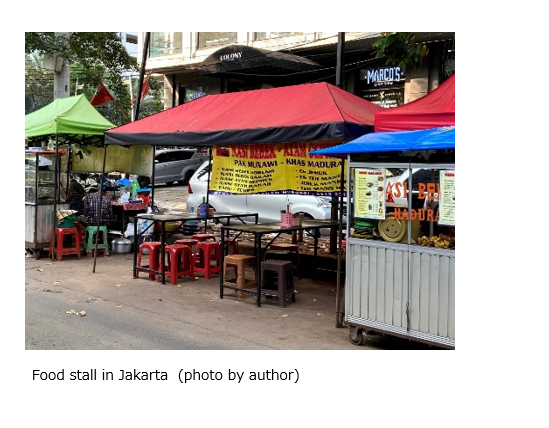
With the world’s fourth-largest population and sustained GDP growth, Indonesia is Southeast Asia’s largest economy.
How well do you understand the “average Indonesian lifestyle and values”?
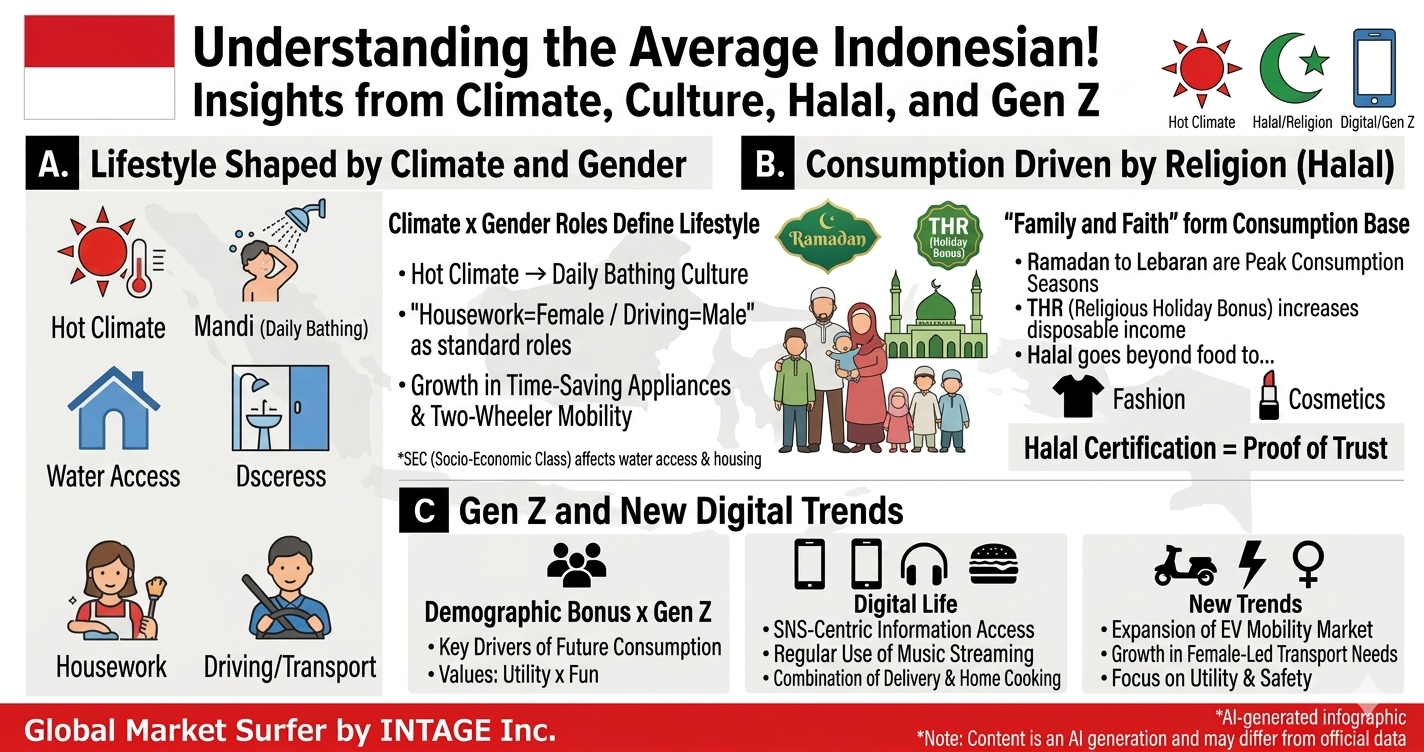
Drawing on various data sources, including Intage’s “Global Viewer” international consumer data, we will organize and explain the “average” that defines Indonesian consumers, as well as the latest trends revealed by this data.
Let’s Get to Know the “Average” Indonesian! Understanding the Lifestyle Through Climate, Culture, Halal, and Gen Z
・Lifestyle and Living Environment: Differences by Socioeconomic Class (SEC)
・Religious and Halal Considerations and Unique Consumer Behavior
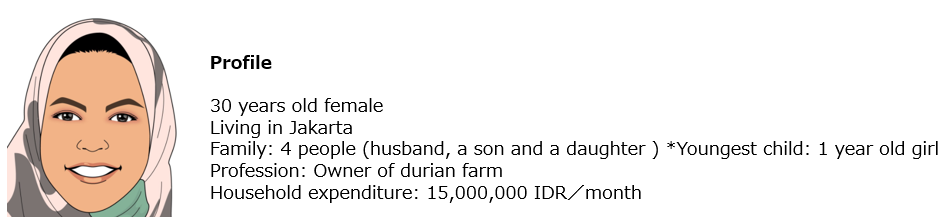
SEC A (Socioeconomic Class A)
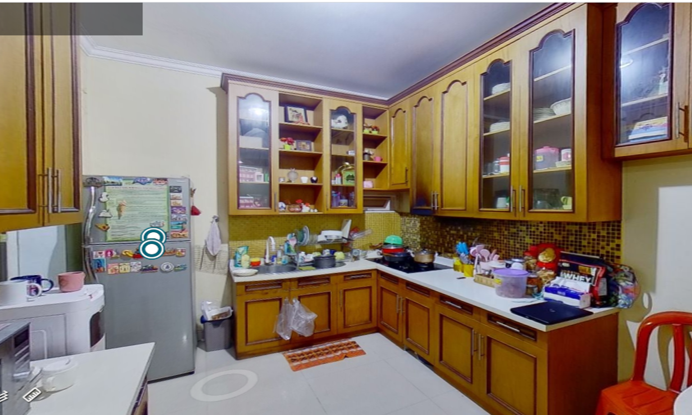
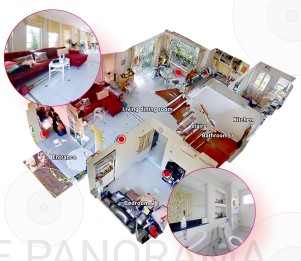
(Photo source: Seikatsu-sha DatabaseConsumer Life Panorama) (For an overview of Consumer Life Panorama here)
The well-organized kitchen is fully equipped with all the necessary appliances and facilities, including a sink, gas stove, refrigerator, water dispenser, microwave, and rice cooker. The kitchen is kept neat and clean, with thorough maintenance.
Although this household has a part-time maid, she is not involved in cooking at all. Instead, the mother prepares meals for the family. They tend to limit eating out or ordering takeout, as the family places strong value on spending time together at home while sharing meals cooked by the mother. Since cooking is also one of the mother’s hobbies, she appears to take her time preparing elaborate, carefully made dishes.
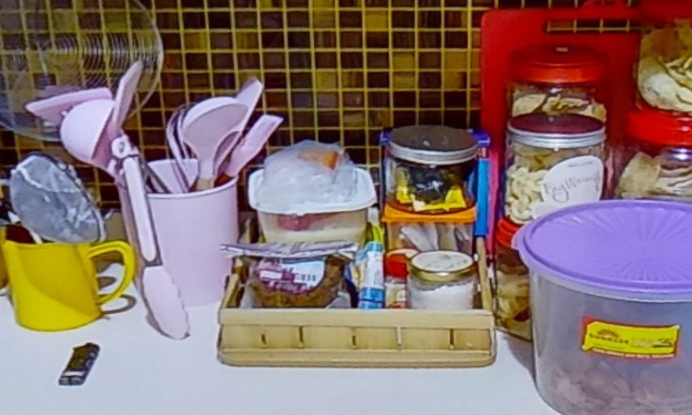
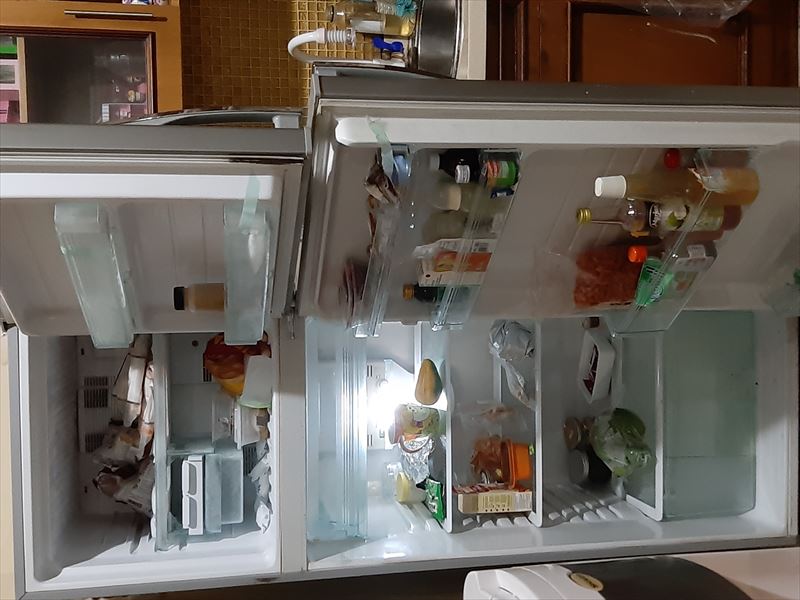
SEC B (Socioeconomic Class B)
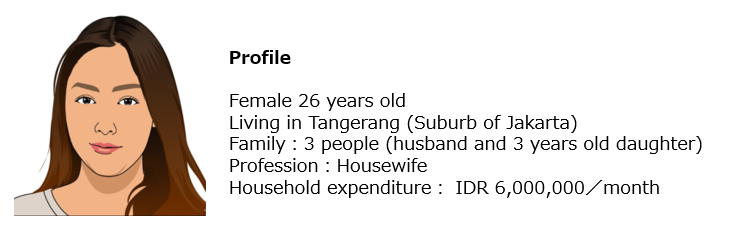
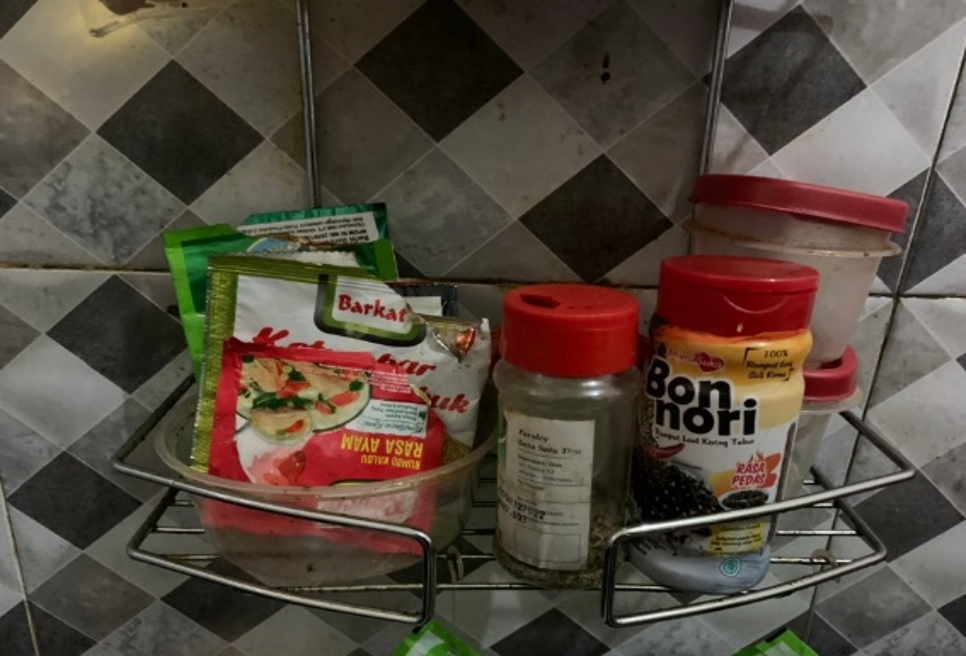
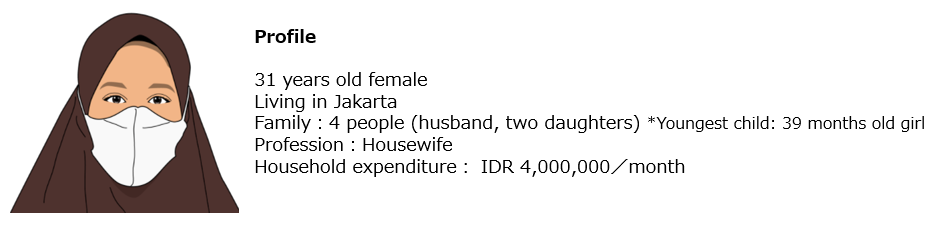
SEC C (Socioeconomic Class C)
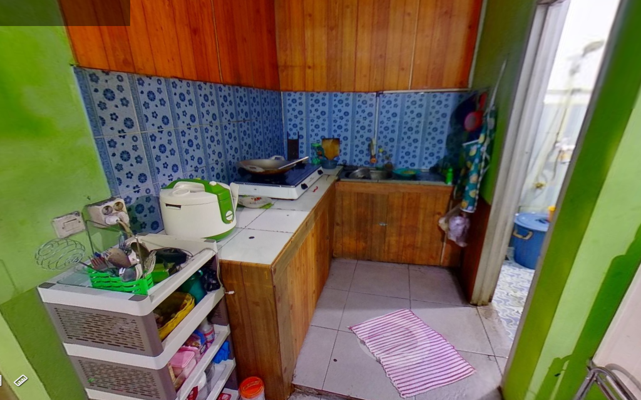
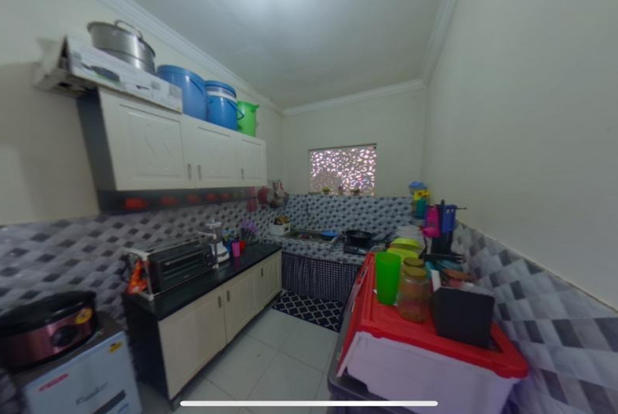
Although the kitchen is about the same size as those in SEC B households, in terms of cleanliness it shows visible dirt and dust, making it hard to say that cleaning is thorough. The kitchen is equipped with a sink, rice cooker, and gas stove, while the refrigerator is located in an adjacent room rather than in the kitchen itself.
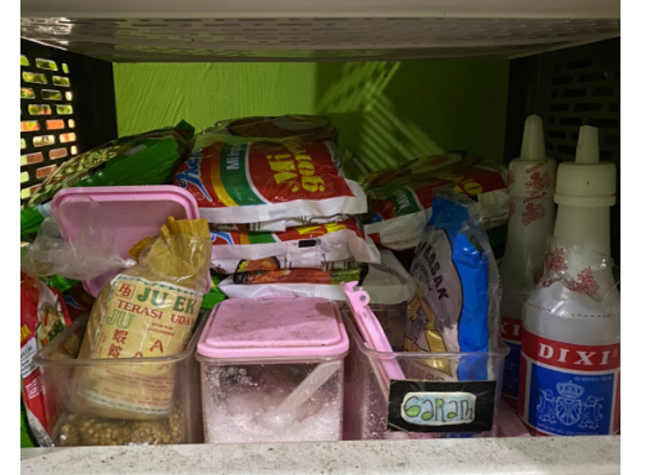
(Photo source: Seikatsu-sha DatabaseConsumer Life Panorama) (For an overview of Consumer Life Panorama here)
Finally
The seasonings used vary depending on the socioeconomic class as well as whether or not they have a maid, how much time they can spend on cooking, and their interest in the cuisine of their own country or other countries. Class A has the impression that they use carefully selected seasonings because they have more economic and time resources and can spend more time on cooking. Class B and C do not have the luxury of time like Class A and are always pressed for time. Class B is conscious of cutting back on time by eating out or getting take-out, while Class C is conscious of cutting back on time and cooks for the family due to economic circumstances. One thing that all economic classes have in common is that they eat breakfast together as a family at home. Many of the breakfast dishes are simple, such as cereals and fruits, but it seems that spending the beginning of the day with the family is more important than the food itself. It is said that the number of wealthy and middle class people in Indonesia will double in the next 10 years. It will be interesting to see how the current B and C class people will change their awareness and habits regarding cooking.What is Consumer Life Panorama?
This is a website-type database that has accumulated visual data on more than 1,000 sei-katsu-sha from 18 countries around the world. The database includes many 3D models of living environments and 2D data of items owned by each sei-katsu-sha, and is useful for understanding overseas sei-katsu-sha, which is difficult to grasp using only letters and numbers.
Using visual data such as those cited in this column,
Compare the differences in the attributes of overseas consumers
To get a realistic understanding of the actual usage of each category
To understand the overall lifestyle of target consumers
etc., can be utilized as a “no-go” home visit survey.