In Bangkok, Thailand—where many households have both spouses working—people often cook meals at home, but they also frequently opt for takeout from the countless street stalls and eateries that line the streets, or dine out. It is also common for couples to share household chores and childcare, and stories of men who love to cook and prepare meals for their families every day are often heard. This article explores the culinary and household dynamics of Bangkok, highlighting the relaxed atmosphere that is quintessentially Thai—where couples work together while incorporating takeout and dining out into their routines.
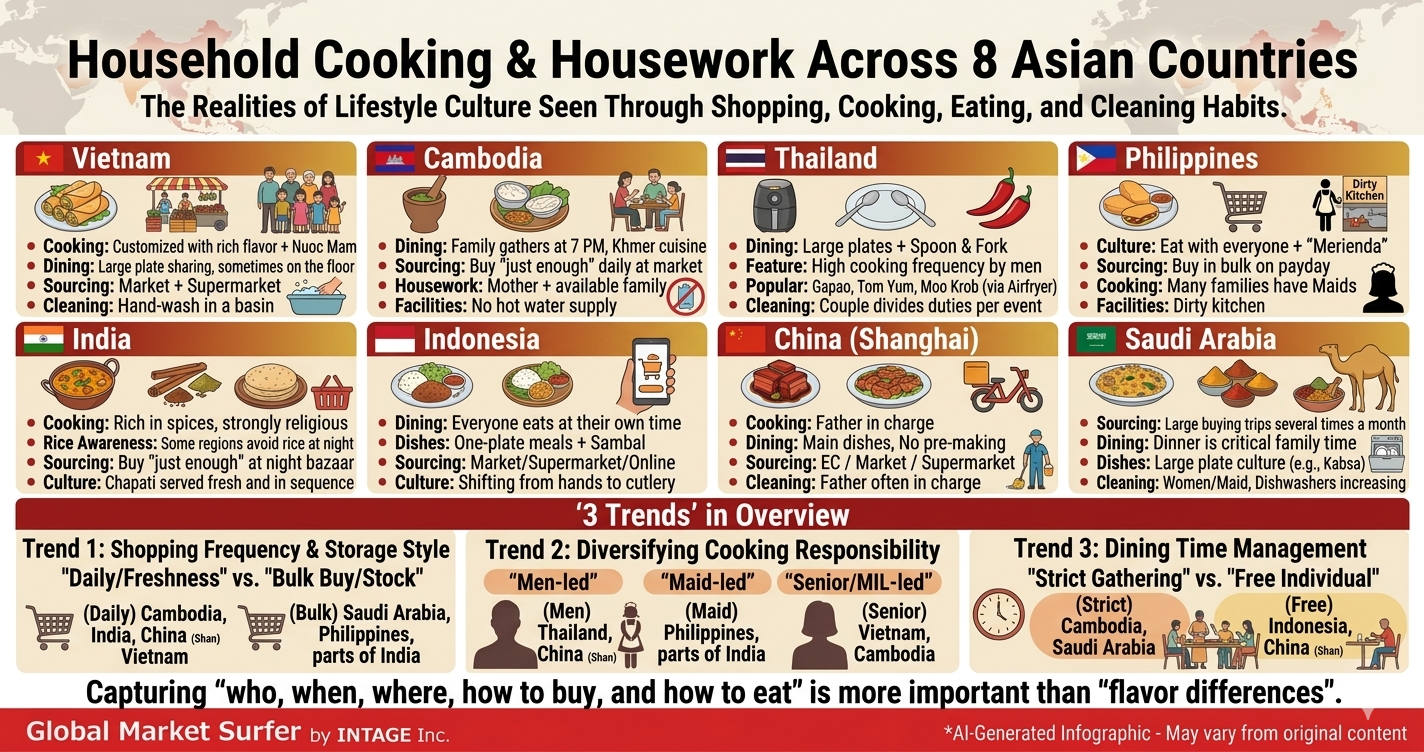
If you’d like to learn more about home cooking and household routines in various Asian countries, please also check out this article.
From Stocking Up on Ingredients to Cleaning Up: Home Cooking in 8 Asian Countries ~Three Trends Revealed Through Food Culture~
・Countries where groceries are bought daily vs. countries where people buy in bulk
・Seasoning and presentation styles in each country
・Who cooks? Who cleans up?
・Does the family eat together? Or do they eat whenever they like? and more
Fresh ingredients are available at the market
My Thai friend, Ms. Buah (a woman in her 40s), lives with her husband and two children in a house in Bangkok. Since she works in online sales, she is often at home and says she cooks dinner three or four times a week. She buys her ingredients in the morning while driving her children to kindergarten at a market near the school. “The market has a wide variety of fresh ingredients. I’ve decided to buy fish and vegetables at the market; I plan my dinner menu and buy only what I’ll use that day. As for meat, the market feels unsanitary to me. For example, I’ve heard that the machines used to grind meat are dirty. That’s why I buy meat at the supermarket. I do freeze some, but I think buying only what I need and using it all up keeps it fresher and is better for my health, so I buy it as needed,” says Buah.
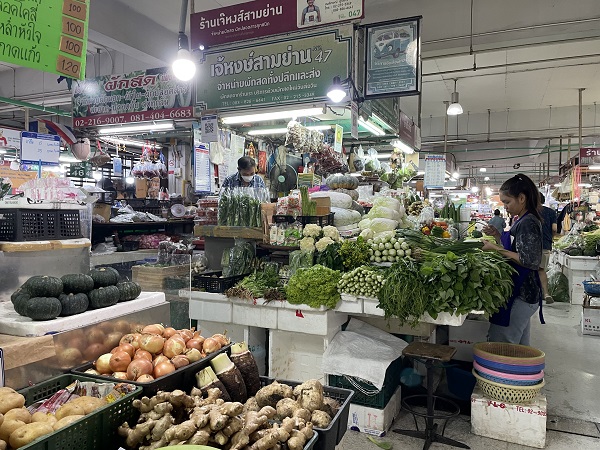
A scene from a market in Bangkok
I cook about twice a week—Thai men are good cooks
In Buah’s case, she prepares simple breakfasts such as bread or egg dishes. For dinner, she cooks at home three to four times a week, and on the other days, she eats at nearby street stalls or restaurants. A simple meal out in the neighborhood costs about 500 baht (1,900 yen) for a family of four, which is about the same as buying ingredients and cooking at home. He says that when his children’s kindergarten goes on long break, he visits the market less often and cooks less frequently. He feels no pressure to cook every day, and depending on his mood, he might cook, eat out, or order food delivery. “What I value most is eating food fresh from the kitchen. I feel that meals stored in the fridge or bought in advance aren’t tasty and aren’t good for your health.” According to a survey on cooking habits in various countries conducted by the recipe sharing and search site “Cookpad” in collaboration with Gallup, Thai men cook more frequently than men in other Asian countries. Out of 14 meals (lunch and dinner) per week, married Thai men cook 7 times a week—more than double the 2.9 times per week in Japan and Myanmar, and the 3.2 times per week in Cambodia. On the other hand, married Thai women cook 7 to 7.6 meals per week, which is lower than the average of 9.5 meals per week in other countries. The average frequency of home cooking among Thais overall was 6.6 meals per week.
From an article published in November 2022 on the Bangkok Biz News website
(https://www.bangkokbiznews.com/lifestyle/food/1040366)
Bua, who is from southern Thailand, says her father also preferred eating at home to dining out and always cooked for the family. While her mother prepared simple dishes like egg dishes and stir-fries, her father reportedly made elaborate Thai curries and soups. When I asked a Thai female friend about this, she said that while mothers generally take on the role of preparing family meals, there is no sense of awkwardness about men cooking. Lately, I often hear that many men enjoy cooking, and it’s seen as a natural thing for men to do. When visiting elementary schools in Bangkok, it appears that 20 to 30 percent of the parents picking up or dropping off children are fathers or grandfathers, and men’s participation in housework and childcare is considered normal. In Thailand, there are no terms like “cooking guys” or “hands-on dads” that treat men who actively cook or raise children as something special.
Spicy Thai food is a staple
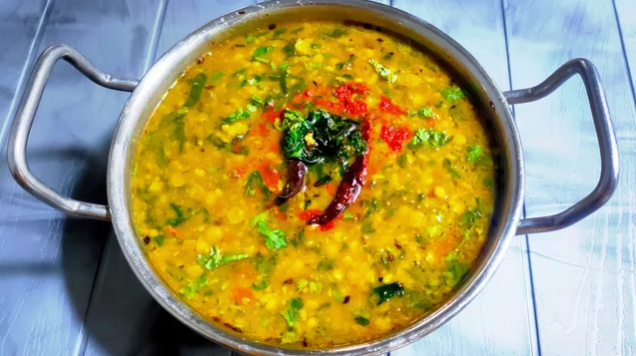
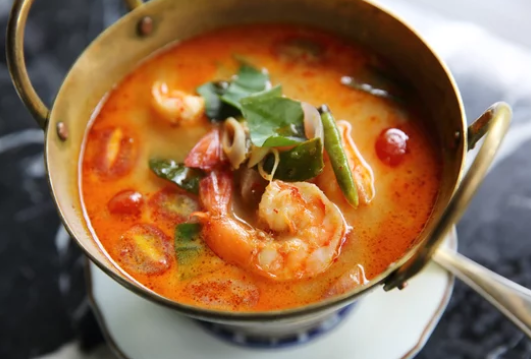
For dinner, which is the main meal of the day, they prepare white rice as the staple, along with two or three side dishes and soups. Meat, fish, and vegetables are often fried or stir-fried. Bua’s family loves the “Ga Pao Rice (stir-fried rice with basil)” and “Tom Yum Goong (lemongrass-scented shrimp soup)” that Bua makes. Thai cuisine often features spicy flavors, and children gradually get used to spicy food starting around upper elementary school, reaching the “extremely spicy” level by the time they become adults. Since Buah’s children are still young, they cannot eat spicy food. When making Ga Pao Rice, she first sets aside a portion for the children, seasoning it without adding spice, and then adds chili peppers and other ingredients to the rest to make it spicy for the adults.
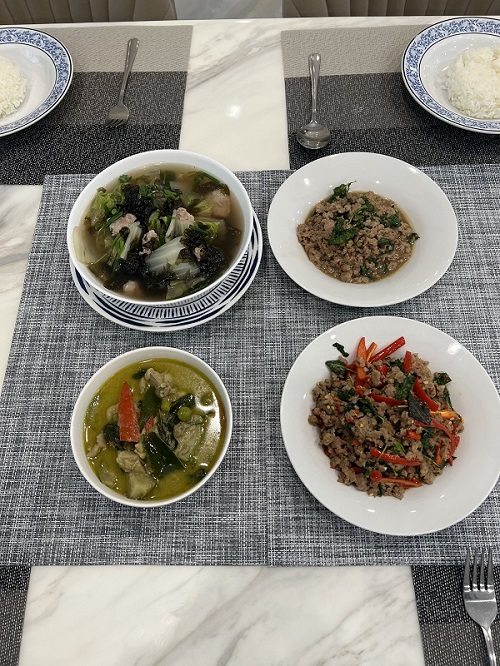
Bua's Ga Pao (Kids' & Adults')
The author’s Thai husband also loves to cook. One of the dishes he often makes on weekends is “Kai Pao,” a Thai-style braised pork belly. The key to the flavor is a paste made by grinding cilantro roots, garlic, and white pepper in a mortar. In Thai cuisine, cilantro roots are more important than the leaves for flavoring, so at the market, you’ll find only bundles of roots for sale. This paste is sautéed, and palm sugar is heated to release its aroma before the pork belly is added. The pork, hard-boiled eggs, and deep-fried tofu are then simmered with star anise and cinnamon for about an hour to finish. My husband gathers information from YouTube recipe sites and sometimes buys pig’s trotters instead of pork belly to make this dish. Men seem to get really into elaborate cooking.
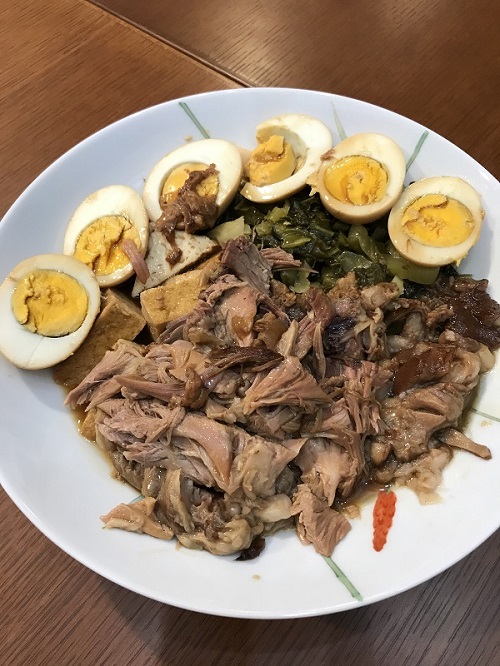
The “Kaiparo” Pork Trotter Version
Air fryers, which make it easy to fry food, are popular
Although Buah cooks in her indoor kitchen, she says she’d really like to have another stove outside. The reason is that deep-frying leaves the stove covered in oil, making it a hassle to clean. In Thailand, gas stoves—which tend to produce strong odors and splatter oil—are often placed outdoors or in semi-outdoor areas, but finding space for them is difficult in Bangkok. During the COVID-19 pandemic in Thailand, cooking became a popular form of recreation at home. At that time, the air fryer became a hot topic for its ability to make deep-frying easy. There was a buzz online about being able to make fried dishes that are difficult to prepare at home, such as “muu krop”—a large chunk of pork belly fried until crispy. Buah also says she bought an air fryer during the pandemic and is glad she did. She says it’s still very useful for frying foods and grilling fish.
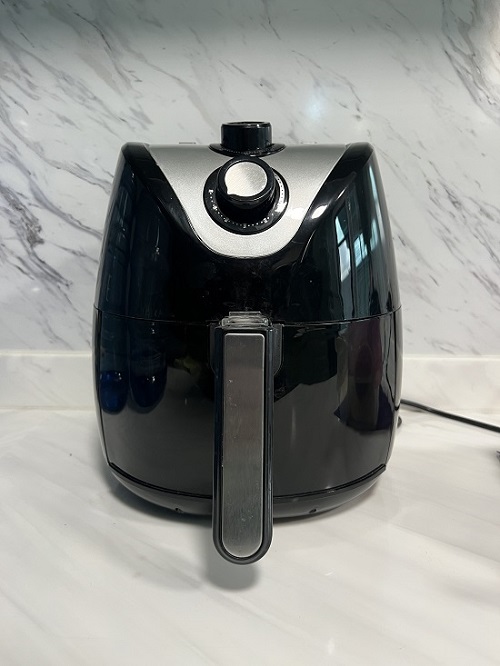
The Buah Family's Air Fryer
The family gathers around a large platter of food
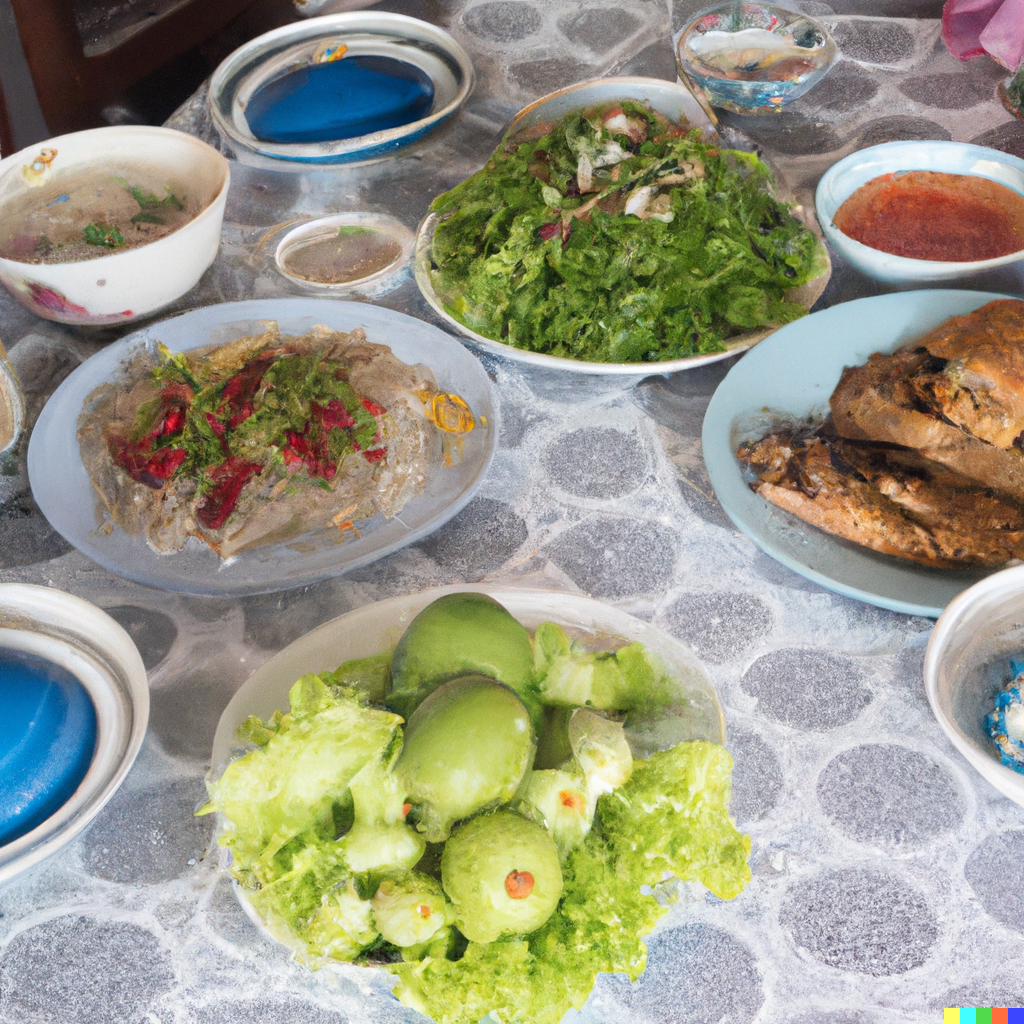
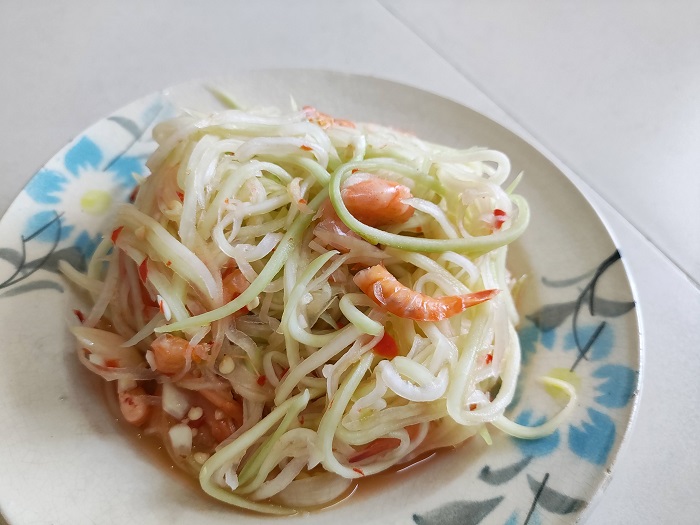
At mealtime, everyone serves rice onto their own flat plate. Large platters of side dishes are placed in the center of the table, and each person adds their favorite dishes to their rice to eat together. Thais eat with a spoon and fork. They skillfully remove fish bones and shrimp tails with their spoon and fork, rarely using their hands. While many families eat together as a group, in busy dual-income households in Bangkok, it seems common to eat out on the way home or for the children to make do with food they’ve bought themselves. Dishes are washed by hand after the meal. Whichever spouse has a free hand does the washing. A curious feature of Thai kitchens is the prevalence of double sinks. Buah mentioned that she once learned in school that when washing dishes, you should prepare two basins: use detergent in one and rinse in the other. This seems to be a remnant of that practice, though in reality, they reportedly use only one of the sinks. Thai women in Bangkok continue working after marriage, not only for financial reasons but also because of their social standing. Having grown up watching their parents work, they naturally help each other with household chores after marriage. Even in busy Thai dual-income households, the Thai style seems to be one where preparing daily meals isn’t seen as a burden—instead, whoever feels like it cooks what they like, and they keep things relaxed by mixing in meals eaten out or takeout.