The Philippines, the Asian country that has spent the longest time under foreign rule, readily embraces and enjoys not only traditional cuisine but also Western and European dishes. Since it is common even in middle-class families for family members to work abroad, the country’s food culture offers insight into why so many women are able to thrive in the workforce.
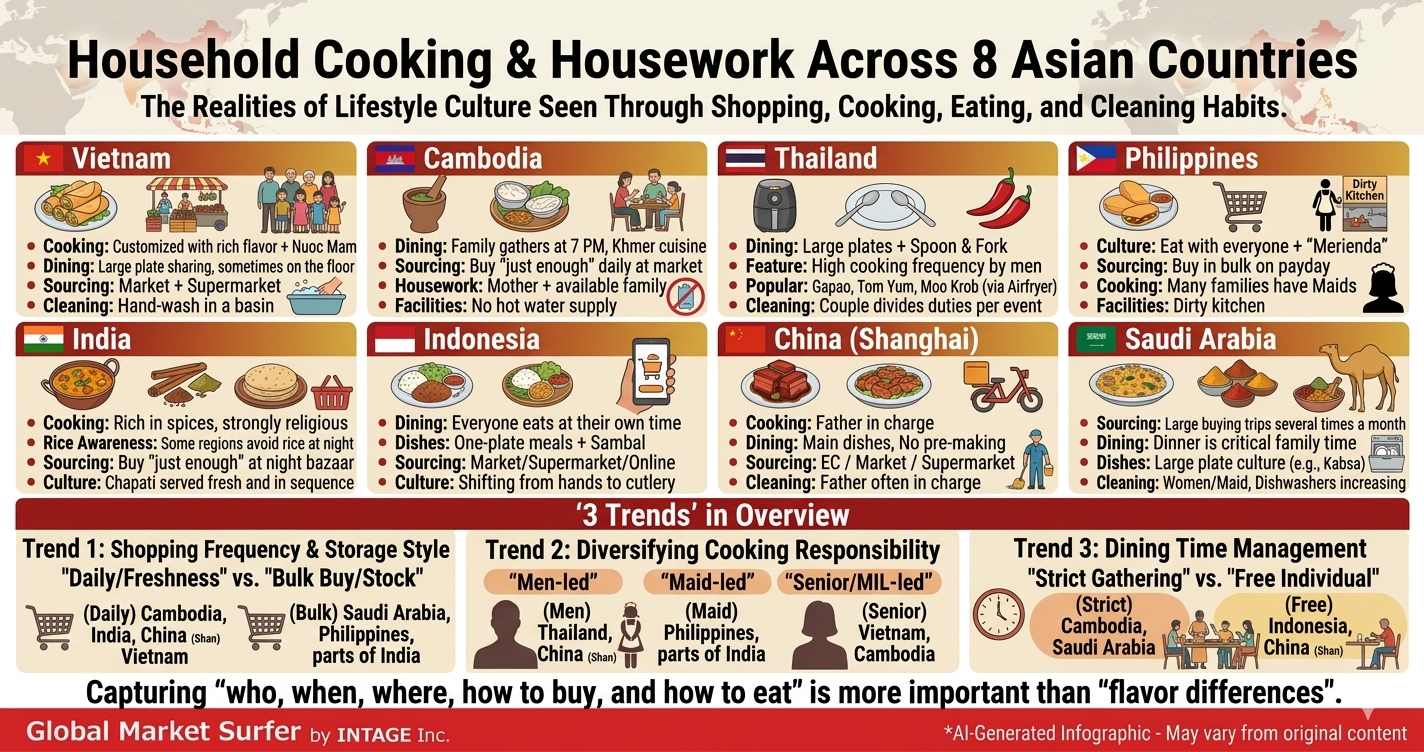
If you’d like to learn more about home cooking and household routines in various Asian countries, please also check out this article.
From Stocking Up on Ingredients to Cleaning Up: Home Cooking in 8 Asian Countries ~Three Trends Revealed Through Food Culture~
・Countries where groceries are bought daily vs. countries where people buy in bulk
・Seasoning and presentation styles in each country
・Who cooks? Who cleans up?
・Does the family eat together? Or do they eat whenever they like? and more
The State of the Kitchen in the Philippines
In the Philippines, paydays generally occur twice a month. Whether due to a lack of a savings mindset, low wages, or the “it’ll all work out somehow” attitude typical of tropical countries, people tend to spend their entire paycheck as soon as they receive it. Since a monthly pay schedule might leave families without food just one week later, paydays are often set for the 15th and the end of the month. On payday, families go out to enjoy meals and shopping, causing traffic jams and crowds at every shopping mall. Supermarkets also see long lines at the registers on payday, as many people come to stock up on large quantities of rice, fresh meat, canned goods, and noodles. Since the poor often do not own refrigerators, this kind of bulk shopping is characteristic of the middle class.
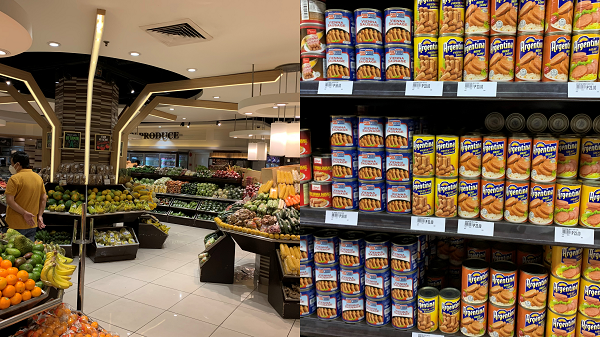
A supermarket inside a shopping mall
Every shopping mall has a supermarket, and on payday, people enjoy eating out at the mall and stock up on groceries at the supermarket. In addition to fresh produce, every household always keeps a supply of canned goods that can be stored at room temperature. Sometimes people even bring canned food and white rice to school for their lunch.
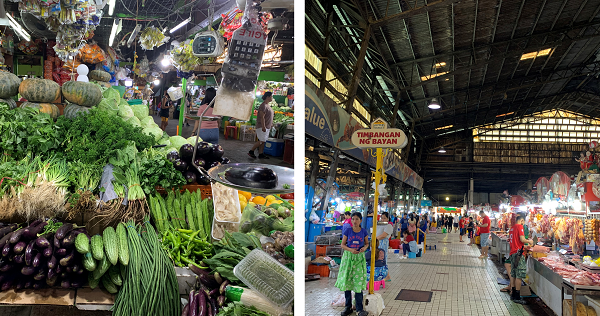
Fresh Food Market
Prices are slightly lower than at supermarkets. People go there for the freshness and variety of ingredients rather than the price. Since many households have both partners working, they don’t buy ingredients for every meal at the market.
Cooking in Dual-Income Households
Many middle-class Filipino families have both parents working, so they often hire maids. While maids are often associated with the wealthy, even middle-class families typically have one or two live-in domestic workers who handle housework and childcare. In dual-income households, maids often prepare meals. Sometimes families teach maids who cannot cook their family’s signature dishes, and in other cases, maids who have lived with the family since childhood come along when the family moves to a new home. In the Philippines, where women’s participation in the workforce has grown remarkably, this culture of having maids handle household chores provides a crucial foundation. Many men can cook as well, so there isn’t a strong notion that cooking is solely the mother’s responsibility. Since people often work in the office until 5 or 6 p.m. and then face terrible traffic on their way home, it’s difficult to stop at the supermarket to buy groceries and prepare dinner after arriving home. It is precisely because of the presence of maids who have dinner ready and do the dishes upon their return that the country has such a high proportion of female executives. Due to the severe traffic congestion in the Manila Metropolitan Area, commuting is difficult for those who use public transportation. Many people leave home early in the morning—before 6 a.m.—to arrive at work early, eat the packed lunch they brought in the office break room, and then start working at their desks at 8 a.m. Since they leave home so early that they don’t have time to prepare a packed lunch, they often bring leftovers from dinner they made the night before or canned foods. As part of company benefits, break rooms are often equipped with toasters, microwaves, hot and cold water, and instant coffee. For lunch, employees might eat the leftovers from their packed meals, go to a nearby restaurant, or buy food from a local deli to eat in the break room.
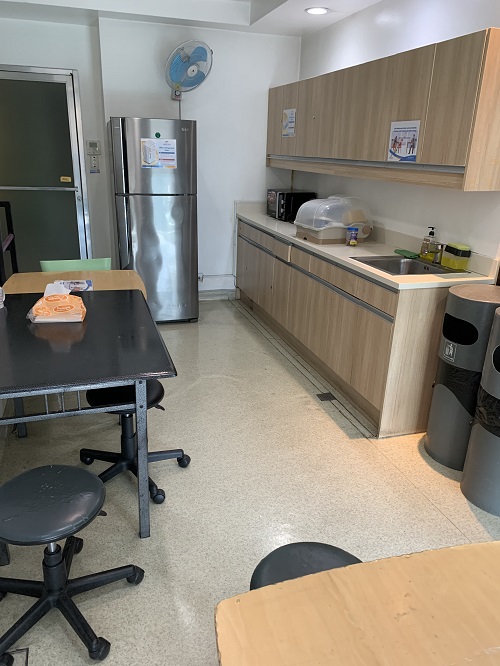
The office pantry
Typical Filipino cuisine
Filipinos consider rice more important than anything else, and they often joke, “No Rice, No Life” (meaning they can’t survive without rice). Filipino cuisine is generally seasoned in a way that allows you to eat plenty of rice. Unlike the sticky rice found in Japan, Filipino rice is of the light, fluffy variety, so side dishes are often soupy. The traditional way to eat Filipino food is to mix the side dish and its sauce into the white rice. Although Japanese people also have a rice-based culture, I’ve heard that “Japanese people mix side dishes and white rice in their mouths, while Filipinos mix them on the plate before eating,” and that’s exactly right. You might have heard of “Halo-Halo,” a famous Filipino shaved ice dessert, even in Japan. “Halo-Halo” means “to mix” in Filipino, and it truly symbolizes the Filipino culture of mixing food on the plate before eating. The variety of side dishes also differs from the Japanese standard of “one soup and three dishes”; instead, it’s a combination of white rice and side dishes. Since Filipinos love eating out and gathering with others, when dining in a group, everyone orders what they like and shares it with the group. This aspect, too, differs from Japan and reflects Filipino food culture.
A typical Filipino dish is adobo, which is pork or chicken simmered in soy sauce and vinegar made from sugarcane.
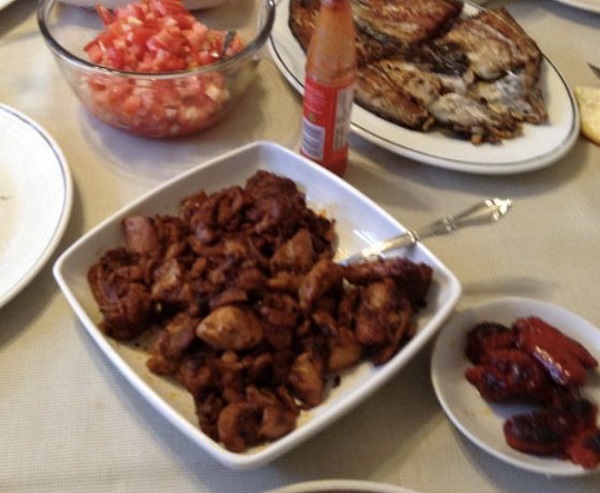
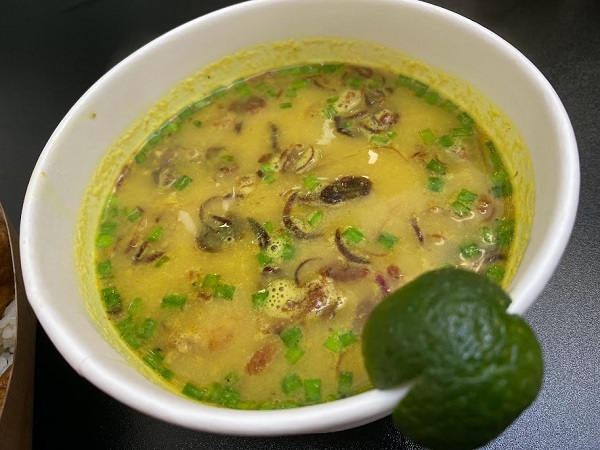
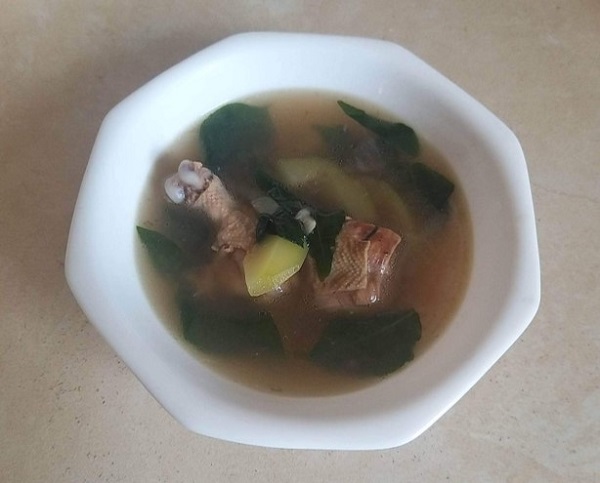
Since every household has its own recipe, it’s always fun to try adobo at someone else’s house—it’s different from what you make at home. Sinigang, a sour soup made with tamarind and simmered with pork, meat, fish, and vegetables, is also a popular dish.
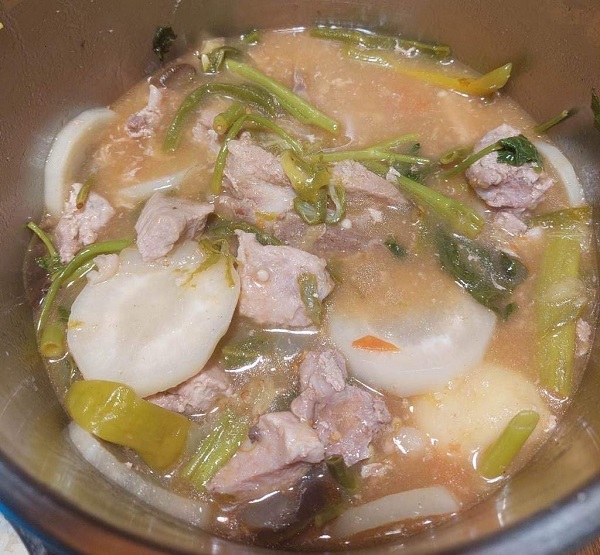
When eating Filipino food, hold the spoon in your right hand and the fork in your left, and scoop up the fluffy white rice with the spoon to eat. It is said that the reason knives are not used stems from when the Spanish introduced their own cutlery to the Philippines—a country where people traditionally ate with their hands—and insisted that Filipinos use spoons instead of letting them handle knives. The Filipino dining style involves using the spoon to both cut and mix meat and vegetables, killing two birds with one stone.
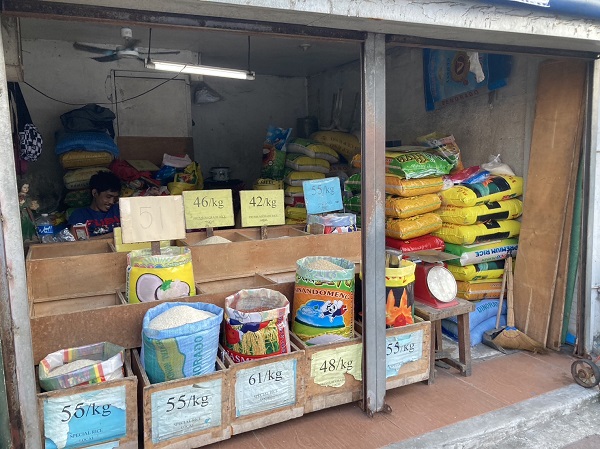
A rice shop in town
Prices start at around 50 pesos per kilogram. Rice is such a vital source of energy for Filipinos that the current president was elected on a campaign promise to lower the price to 20 pesos per kilogram.
Main Kitchen and Prep Kitchen
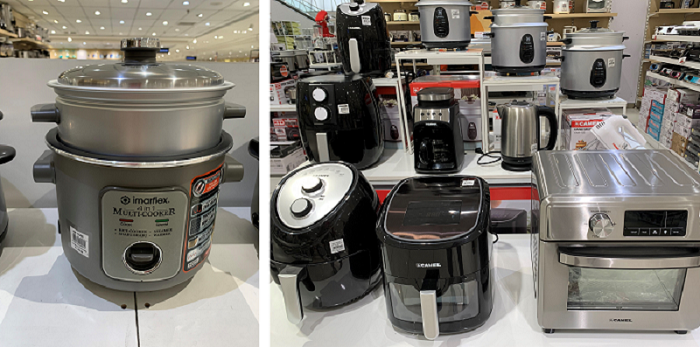
Some homes in the Philippines have two kitchens. One is the standard kitchen, and the other is a “dirty kitchen” located outside the building or in the maid’s quarters. The standard kitchen is used by the family for cooking, while the dirty kitchen is for washing groceries, scaling fish, and other food preparation tasks. Maids also use this kitchen to prepare their own meals. Although the name “dirty kitchen” sounds negative, it is necessary because ingredients are not pre-processed like those sold in Japanese supermarkets; instead, tasks such as deboning meat or peeling shrimp require a dedicated space for food preparation. Some dirty kitchens are even equipped for deep-frying with oil or charcoal grilling, which produces smoke. One cooking appliance found in every household is the rice cooker, which supports the rice-based diet. Other common items include frying pans, soup pots, and toasters. Since pots are often used to reheat meals, microwaves aren’t considered particularly essential. Because Filipinos love fried foods, many in the health-conscious, high-income middle class own air fryers.
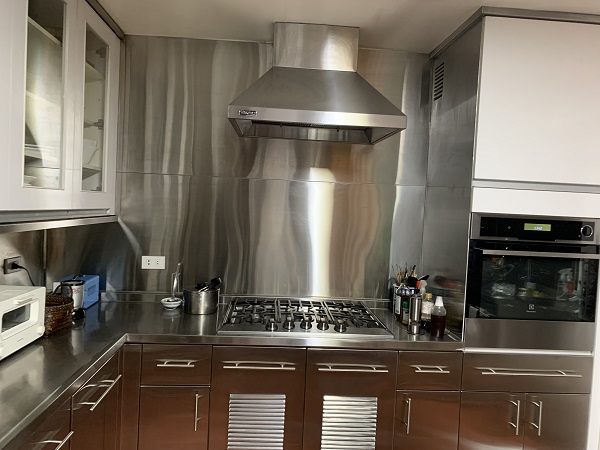
Photo of the indoor kitchen
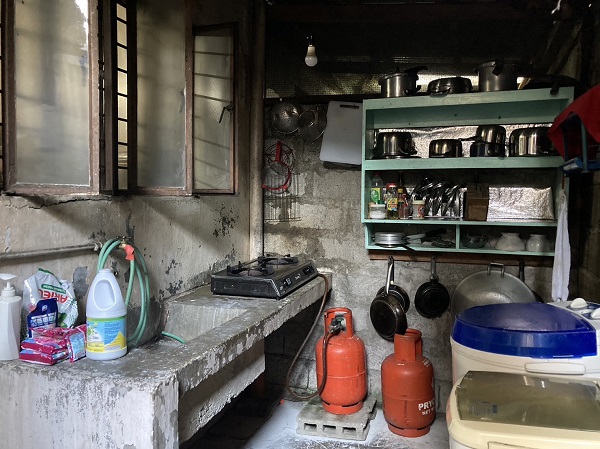
Photo of a utility kitchen in a single-family home that leads to the maid's room
We enjoy eating together with everyone in a lively, fun atmosphere
Meals are generally eaten together. At home, people eat with their families, and at work, they eat with colleagues in the break room or at a restaurant. A typical meal consists of white rice, one side dish, a palate cleanser, and soup. Every shopping mall has a food court, and there are shops called “bariwag” where you can choose two or three side dishes to go with rice for as little as 150 pesos (about 320 yen). When you select and order your side dishes, they serve you a soup without the ingredients typically found in sinigang soup. Since the rice tends to be dry, the Filipino way of eating is to use this soup to moisten it before eating. In the Philippines, people eat meat and fish, and vegetables are not considered particularly important. There is a perception that vegetables are food for the poor, so white rice with meat or fish is the norm. Even the packed lunches brought to the office consist only of brown-colored side dishes and rice, with little thought given to color or appearance. While people have recently begun to learn about the importance of vegetables, the Philippines lacks a culture of growing vegetables to be delicious, so the vegetables themselves aren’t very tasty. As a result, they are often simmered until soft in sauce or drenched in dressing, which, from a nutritional standpoint, cannot be considered a healthy way of eating.
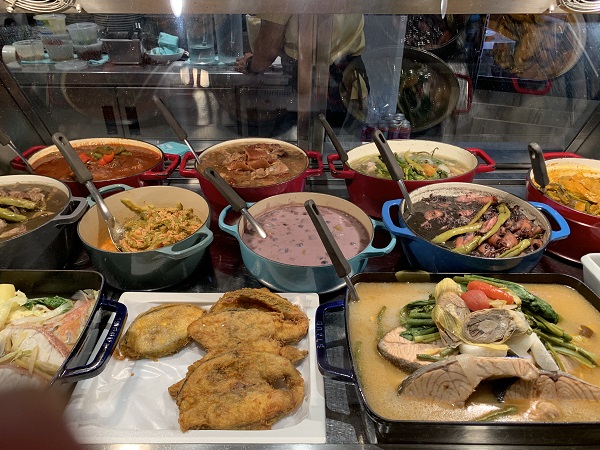
Delicatessen: They mainly offer fried foods and soups. On the right in the foreground is a salmon sinigang soup.
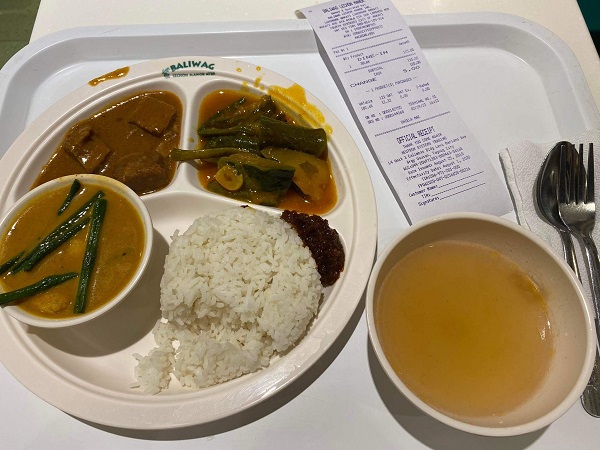
The Filipino set meal I ordered at Bariwag
Filipinos love to eat. They look forward to “merienda”—morning and afternoon snack times—in addition to breakfast, lunch, and dinner, and are always eating something. While there is a gap between the rich and the poor in the Philippines, and some people cannot eat their fill every day, being able to eat one’s fill has become a status symbol in itself. They rarely freeze leftovers; instead, they often cook extra food to share with poor neighbors, demonstrating their warm-hearted nature. Because this culture of mutual support is so deeply rooted, the Philippines is said to be a country where no one, no matter how poor, ever starves to death. In the Philippines, where “Kumain kana?” (“Have you eaten yet?”) serves as a common greeting, I hope that this spirit of compassion will continue to be cherished even as the country develops into a developed nation.