India is a vast country home to a variety of religions and a diverse array of ethnic groups. Each religion and region preserves a wealth of culture and traditions, and even within families, culinary customs vary widely.
While India is known for having many vegetarians due to religious practices, it is also characterized by a rich variety of meat dishes, such as the world-famous “butter chicken” and “tandoori chicken.”
In this article, focusing primarily on middle- to upper-middle-class Hindus living in Delhi,
we will explore “Indian food culture” as it varies by region and religion.
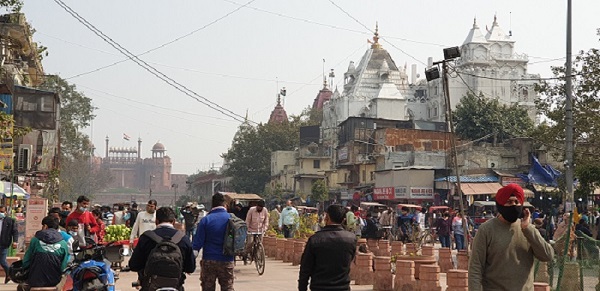
Chandni Chowk in Old Delhi
From the back, you can see the World Heritage Site “Red Fort,” a Jain temple, and a Hindu temple. Next to them, in a row, are a Sikh temple and a mosque, and across from them is a church.
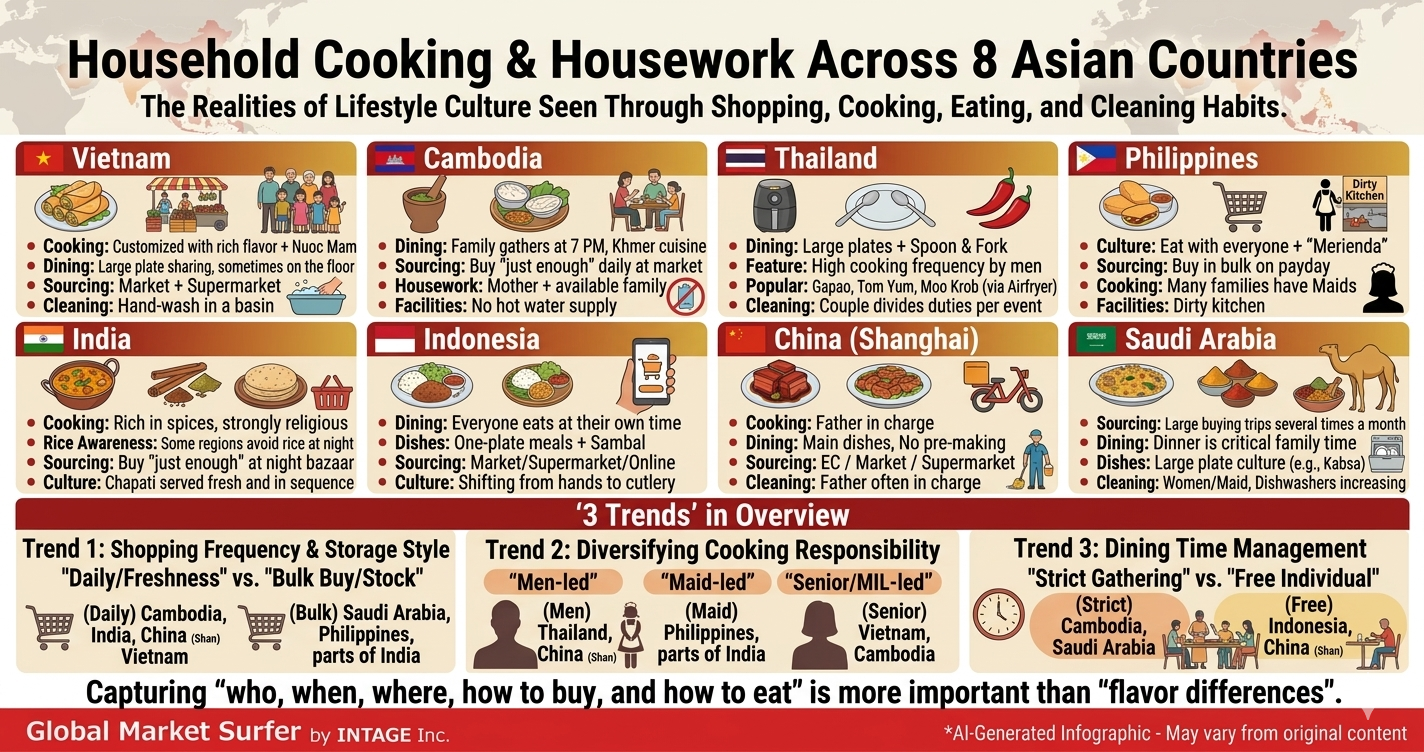
If you’d like to learn more about home cooking and household routines in various Asian countries, please also check out this article.
From Stocking Up on Ingredients to Cleaning Up: Home Cooking in 8 Asian Countries ~Three Trends Revealed Through Food Culture~
・Countries where groceries are bought daily vs. countries where people buy in bulk
・Seasoning and presentation styles in each country
・Who cooks? Who cleans up?
・Does the family eat together? Or do they eat whenever they like? and more
A Diet Focused on Faith and Freshness
Since Indians prefer fresh ingredients, they usually buy what they need on the same day. Night markets are held every day of the week in various neighborhoods, bustling with local housewives, elderly people accompanied by their maids, and men on their way home from work. At these night markets, you can buy freshly harvested fruits and vegetables. In addition, vendors sell produce from handcarts in residential areas every morning and evening, making it convenient to pick up fresh produce on short notice. Meat is purchased at butcher shops in nearby markets. In India, where there are many vegetarians, shops that sell meat alongside other food items are virtually nonexistent except in modern supermarkets. Even in modern supermarkets, meat is sold behind glass partitions. There is a perception that food placed alongside meat has become “contaminated.” In recent years, however, the number of “egg-tarians” (people who eat eggs but not meat) has increased, so many butcher shops now sell eggs alongside meat. Due to religious reasons, Indians do not eat beef or pork, but they do eat goat meat, chicken, fish, and eggs. Many people select live chickens on the spot and have them processed there. It is mostly men buying them on their way home from work, with few female customers.
Sunita (42), a housewife, does her weekly grocery shopping at the night market held in her neighborhood every Monday. In addition to long-lasting vegetables like potatoes, onions, and tomatoes, as well as other vegetables she uses frequently, she buys fresh seasonal vegetables and fruits. She goes shopping with her husband when he comes home. She buys any other missing ingredients from a vegetable vendor who sells from a handcart near their home. She says she does not eat meat on Mondays, Tuesdays, and Thursdays out of respect for the Hindu gods.
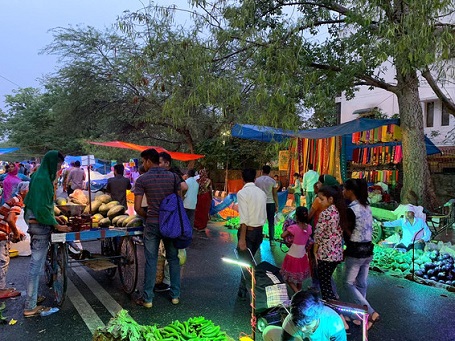
Scene from the night bazaar: Fresh produce laid out for sale on the ground and in carts

Modern supermarket: A glass-enclosed meat counter section
Maids Provide Support to Indian Housewives
Many households prefer to cook fresh meals each time rather than rely on prepared dishes. In particular, “chapati”—a staple bread from North India—is prepared fresh on the spot so it can be eaten hot off the griddle. In recent years, with the rise in dual-income households, some families prepare “masala” (a paste made by sautéing spices, onions, and tomatoes) on weekends to serve as a base for gravy (the sauce component of curry) and freeze it for later use. In addition, many Indian households employ domestic help, and it is common for a cook to prepare the meals. Depending on the household’s circumstances, some dual-income couples have their cook prepare just breakfast or all three meals, while others have a live-in cook who prepares meals as needed. Sunita cooks three meals a day, but breakfast consists of chai and a light meal. Schools in India start at 7:30 a.m. and end around 2:00 p.m. Therefore, she prepares packed lunches for her children, and she and her husband eat those for breakfast. She makes a packed lunch of chapati and dry vegetable curry for her husband, which she and her children then eat for lunch. She employs a maid to wash dishes and clean, but she does the cooking herself.
A culinary culture adapted to the local climate and environment
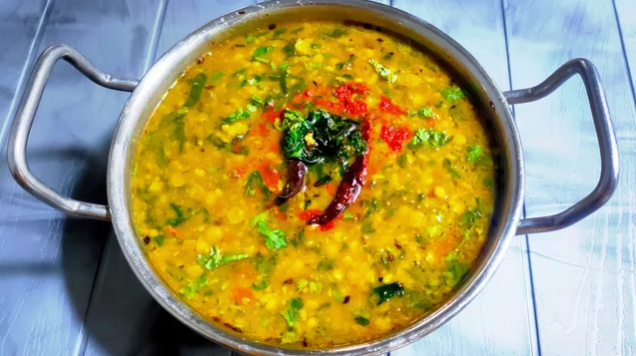
When it comes to home-style cooking in North India, “dal” is the first thing that comes to mind. It is a curry made by simmering beans with turmeric and salt, then tempering ghee (Indian clarified butter) or mustard oil with cumin seeds to release their aroma. “Bujia” is a dry curry made by stir-frying vegetables such as potatoes with cumin, coriander, turmeric, and red chili powder. Other accompaniments include salads and ‘achar’ (pickles), while the staple foods are “chapati” (whole-wheat flatbread) and rice. Sometimes, the meal consists of a vegetable curry with gravy called “sabzi” served with chapati. Sabzi is made by thoroughly sautéing onions and tomatoes with basic spices until they form a paste, then simmering it with your choice of vegetables and water. While some households eat rice, in North India it is believed that rice “cools the body,” “causes weight gain,” and “is hard to digest,” so many families avoid eating it at night. Furthermore, the cooking method is not like in Japan, where the rice absorbs the cooking liquid; instead, it is boiled in plenty of water and then drained. It is almost as if they were boiling noodles. In Sunita’s household, they eat rice along with chapati. First, they eat chapati and bugiya, and then they eat rice with saucy curries like dal or subji. Incidentally, Indians never eat chapati and rice at the same time. I once asked why, and they replied, “That’s just the way it is” or “Probably for digestion,” so it seems they don’t really know the specific reason. They never miss homemade achar, and in the summer, they also have raita (yogurt salad). Because of the extreme seasonal temperature differences, they naturally incorporate ingredients and spices that warm the body in winter, and conversely, ingredients and spices that cool the body and aid digestion in summer.
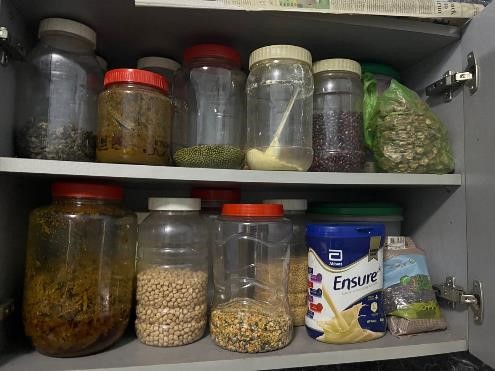
A variety of beans and achar
Traditional, partitioned kitchens are still the norm today
In North India, a gas stove is essential for making chapati. This is because chapati is seared over an open flame at the end to make it puff up. Since gas is expensive, induction cooktops are also common, but they are typically used only for simple cooking, making chai, or warming milk. Gas stoves are used for the main cooking tasks. Also, because many dishes involve frying, a large range hood is indispensable in the kitchen. Ceramic stone and tiles are used for kitchen surfaces, making it easy to clean up spilled spices. Since tap water is not drinkable, water purifiers are installed. Kitchens are generally partitioned off, and some households even install doors to conceal them. This practice may stem from old beliefs—such as the superstition that food spoils more easily if exposed to human eyes—or traditions where women were not allowed in the kitchen during their menstrual periods. In recent years, modern designs featuring open kitchens have begun to gain popularity, but they are still limited to a select few, such as the wealthy.
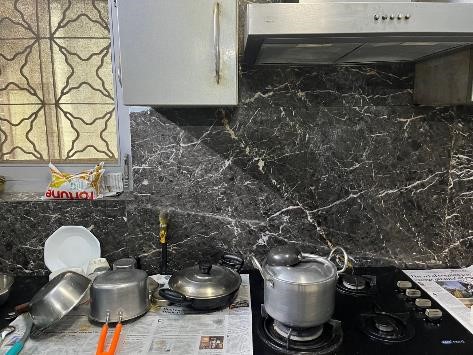
Gas stove and range hood
Made of durable, hygienic stainless steel—perfect for Indian culture
In North Indian households, a pressure cooker is needed for boiling beans and rice; a cast-iron pan (karai) for frying dry curries until crispy; a deep pot (patila) for heating milk; and a set consisting of a rolling pin (beran), a rolling board (chakra), tongs (chimta), and a flat frying pan (tawa) for making chapati; and a saucepan is required for making chai. Additionally, a ladle (karchul) is essential, as it is used not only for the same purpose as a Japanese ladle but also for tempering. As for tableware, while glass, ceramic, and plastic are used, stainless steel is the most common. In Hinduism, there are several festivals throughout the year, and special cooking utensils and tableware are prepared to make offerings for these occasions. This is because the spices, ingredients, and meats used in daily cooking are considered “impure,” so utensils and tableware that have come into contact with them cannot be used. Furthermore, based on the belief that preparing meat contaminates the kitchen and the entire house, many households do not cook meat at home, and this practice is particularly strict in households with older members. As people grow older, some refrain from eating meat because they believe the day of their passing is drawing near. Although Sunita’s family is not vegetarian, they do not cook meat at home. When they do eat meat, they dine out or order delivery. Since Sunita herself is deeply religious, she does not eat meat on Mondays, Tuesdays, and Thursdays, nor during religious holidays. She says she is generally fine without eating meat.
A Mother’s Love in Every Chapati
Generally speaking, in North India, meals consist of a soupy curry—such as a lentil or vegetable curry—along with a dry vegetable curry, salad, raita, and achar, served with chapati or rice; this can be described as a “one soup, three side dishes” meal. People eat skillfully using only their right hand, which serves as a spoon. Although it is often said that “the left hand is unclean and cannot be used,” some people tear off pieces of chapati or use their left hand to hold the food while eating meat. Recently, more people have started using spoons and forks. It is said that the use of spoons and forks has increased because many people find eating with the hands “disgusting” or a “breach of etiquette,” and many women dislike having their fingernails stained by spices. Meals are generally eaten together as a family, but since chapati is eaten fresh, one piece at a time, the mother is usually the last to eat. While some non-vegetarians eat meat dishes every day, this is very rare, and many people abstain depending on the day of the week or religious holidays. In urban areas, many households are nuclear families, so they often eat together at the dining table, but in extended families, some households have strict rules. Rules vary by household, such as men and women eating separately, or the elderly and men starting first while women eat last. At Sunita’s house, they use a dining table, and since they eat rice in the evening, lentil curry or vegetable curry with gravy is a must. They also make each chapati one by one and serve them piping hot. Sunita and her husband eat with their hands because they feel it gives them a greater sense of having eaten, but their daughter and son use spoons. They say it’s because their nails get dirty or they can’t eat neatly.
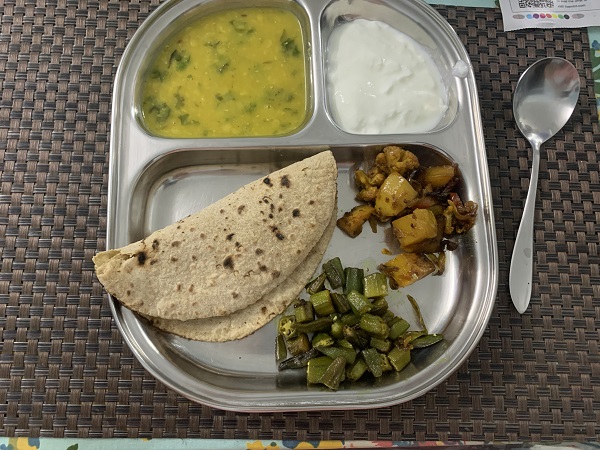
Dal, okra bhujia with potato achar, yogurt, and chapati: After finishing the chapati, I’ll have some rice too.
Religion is an integral part of daily life for Indians
Indian food culture feels like a “religion.” This holds true even for non-Hindus. Muslims, for example, will not eat meat unless it is halal, even though meat is a staple of their diet, while some Jains avoid not only meat but also root vegetables like garlic and potatoes because they fear they might kill insects. Food culture also varies by region. In coastal areas, fish is considered “vegetarian” and is sometimes offered on altars. The naan familiar to Japanese people is typically only eaten at restaurants, and in South India, there are regions where naan and chapati are absent, and rice is the sole staple food. Many regions have been influenced more by the food cultures of Southeast Asia and China than by India’s, and people there prefer pork. Because such diverse religions and ethnic groups coexist within a single country, it is extremely difficult to categorize “Indian cuisine” as a single, unified entity. Given the many religious rules governing Indian dietary habits, the more devout a person is, the more conservative their eating habits tend to be. Many Indians feel comfortable eating home-cooked meals and seem to dislike eating out because they “don’t know what’s in the food” or “don’t know how it was prepared.” On the other hand, young people and the affluent in Delhi are interested in multinational cuisine, and various dining-out cultures have begun to be adopted. Nowadays, more people are eating raw fish and beef (buffalo). Even within households, there is a growing number of people—particularly in families that do not prioritize religion, nuclear families, and young dual-income couples—who are not bound by complicated rules. With the adoption of processed foods and meal delivery services, a more liberal approach to eating is beginning to take hold. As globalization is expected to advance further in the future, Indians’ attitudes toward food are likely to change as well.