[Global series: Cuisine and Housework] Indonesia: What to do when cooking
Indonesians absolutely love eating. While their three main meals are modest in size, they adore snacking, giving the impression they're constantly eating or drinking something. It's surprising how restaurants and eateries always have customers, regardless of the time. They don't really have the habit of eating at set times; it's normal to eat what you want when you want it. Eating out at street stalls or eateries, catering, and delivery are also common, and the habit of cooking at home isn't as strong as in Japan. However, recently, due to rising prices and the high cost of eating out, more households are cooking at home to save money.
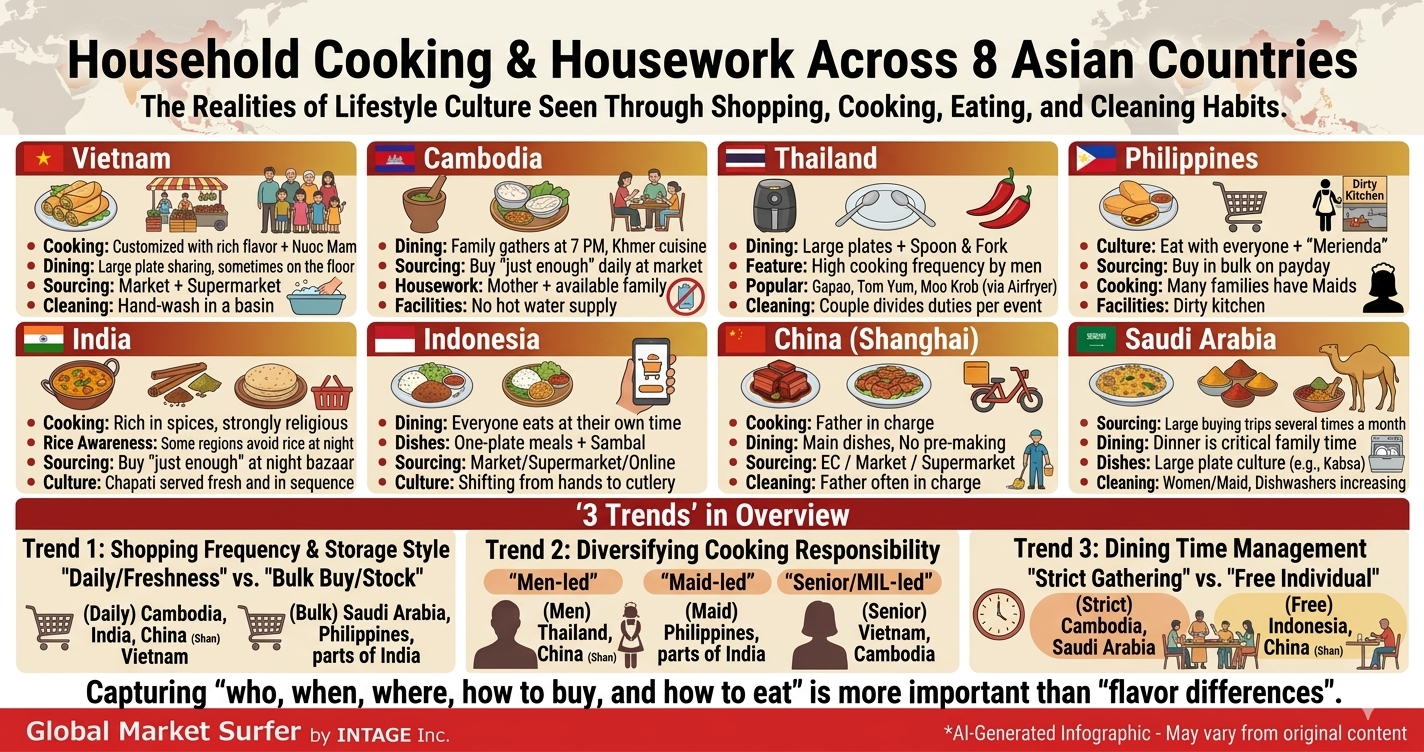
If you’d like to learn more about home cooking and household routines in various Asian countries, please also check out this article.
From Stocking Up on Ingredients to Cleaning Up: Home Cooking in 8 Asian Countries ~Three Trends Revealed Through Food Culture~
・Countries where groceries are bought daily vs. countries where people buy in bulk
・Seasoning and presentation styles in each country
・Who cooks? Who cleans up?
・Does the family eat together? Or do they eat whenever they like? and more
【Diversification of Food Procurement Methods】
There are three main ways to buy groceries: markets, supermarkets, and online. Markets mostly carry locally produced items, so the variety is limited, but many people frequently buy 1 to 3 days' worth of vegetables, fruits, fish, meat, and so on. For those without a market within walking distance or a 5-10 minute bike ride, who lack time for early morning markets, or who need imported items not found at markets, many people buy a week's to ten days' worth in bulk at mid-sized supermarkets or online. Online shopping is often cheaper than supermarkets, and free shipping is available based on purchase amount, so many people order everything they need together. E-commerce sites like Tokopedia, which primarily handled daily necessities, have expanded their fresh food offerings since the pandemic. Services like Gojek/Grab enable quick delivery, making it convenient. There are two common patterns: households where the shopping is done by the family but cooking is done together with the helper, and households where both shopping and cooking are handled by the helper.
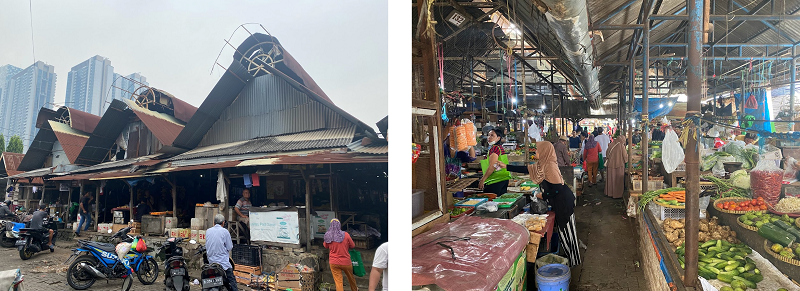
Left: Around the market / Right: Inside the market
【Home Dining Style】
On weekdays, the housekeeper primarily does the cooking, with the mother occasionally assisting two to three times a week. On weekends, the family enjoys going to the mall or eating out at relatives' gatherings, so they rarely cook all three meals at home. In Indonesian households, it's common to prepare large quantities of food early in the morning and arrange it on the kitchen counter or dining table. People then help themselves to whatever they want, whenever they want. While families and relatives sometimes gather to eat together, this feels more like a special occasion—like a home party where everyone says, “Let's eat together today!”—rather than an everyday routine.
【Basic Indonesian Cuisine】
Indonesia has numerous regions, ethnic groups, and religions (regional differences are pronounced due to its archipelago nature), and its cuisine also has distinct characteristics in each area, making it difficult to generalize as simply “Indonesian cuisine.” However, Javanese cuisine, prepared by the largest ethnic group, the Javanese, has relatively widespread influence nationwide, partly because many Javanese migrate to other regions for work. A typical meal consists of a combination of fried items—such as tofu, tempeh, fish, chicken, or vegetables—marinated and lightly fried, served with white rice. It is commonly eaten with sambal, a chili sauce made from Indonesian chilies.
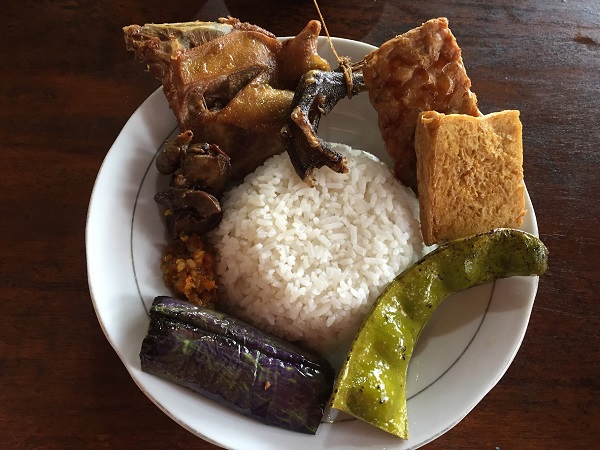
Tempura of chicken, tofu, and vegetables
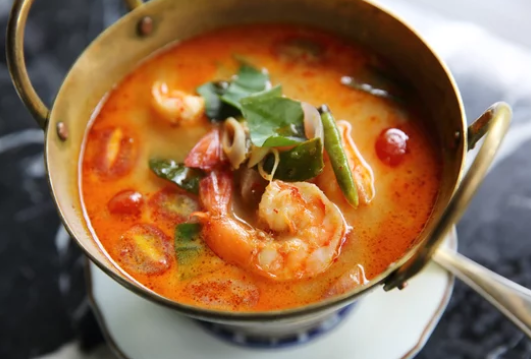
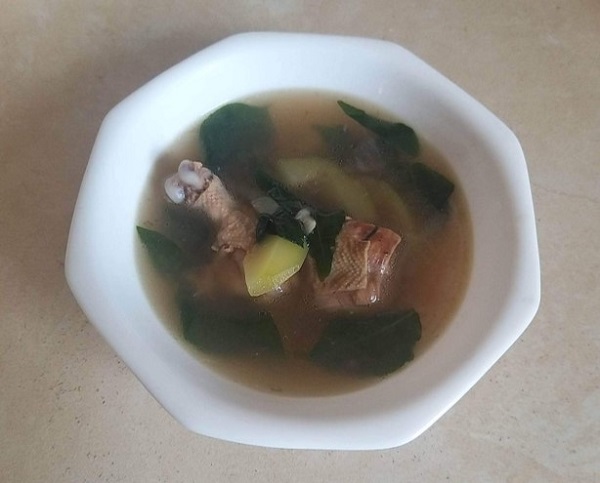
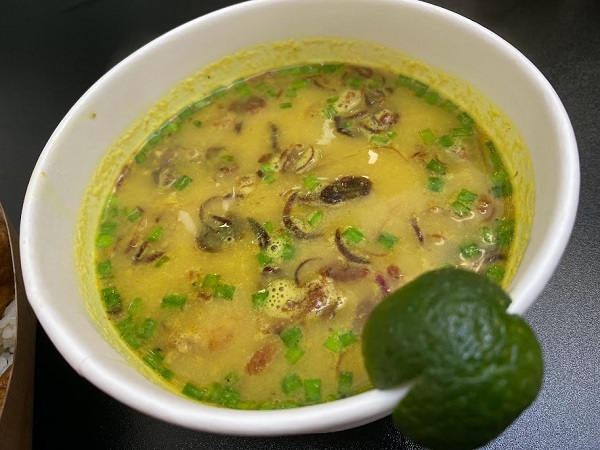
Other soup dishes are also plentiful, with many featuring root vegetables, chicken, beef, and goat meat. The main types are clear soups and milky soups made with coconut milk.
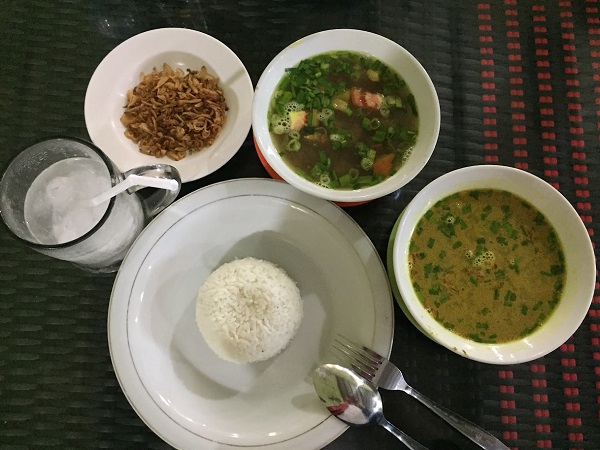
Clear Beef Soup and Coconut Soup
In Indonesian cuisine, it's standard to serve krupuk-style items (like shrimp crackers or tempeh) alongside rice, either dipping them in soup while eating or nibbling on them between bites to add texture.
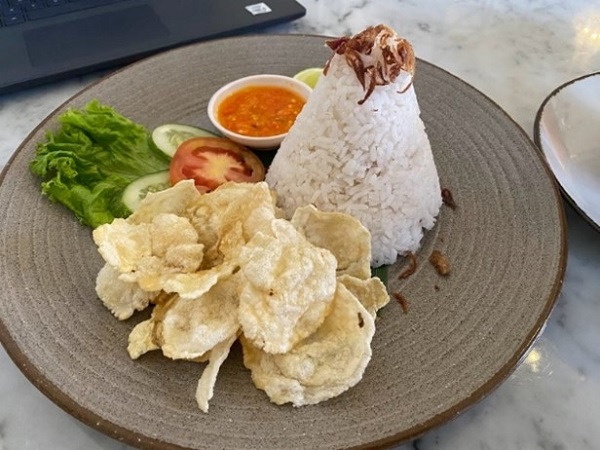
Krupuk served with rice
Vegetables are rarely eaten raw; stir-fries (water spinach, Chinese cabbage, bean sprouts, bitter melon, tempeh, etc.) are the norm. Water spinach, long beans, cassava or papaya leaves, bean sprouts, bitter melon, eggplant, potatoes, and other vegetables are stir-fried with garlic, shallots, and chili peppers.
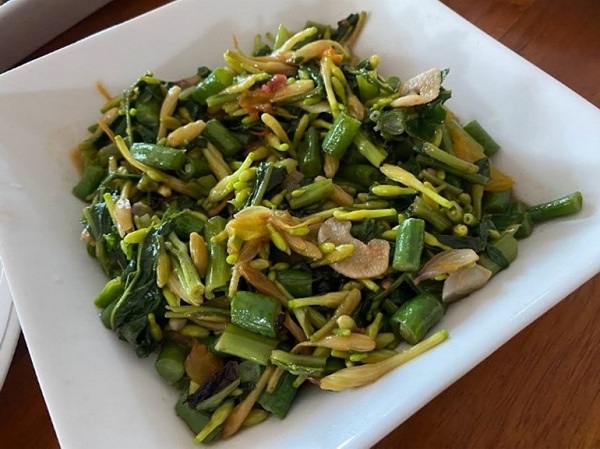
Stir-fried Papaya Flowers and Long Beans with Garlic
In Indonesia, there are many dishes featuring processed fish paste. While ingredients like beef meatballs or fish paste are used, they are typically steamed or fried. Fried fish paste resembles satsuma age and has a flavor profile that appeals to Japanese palates.
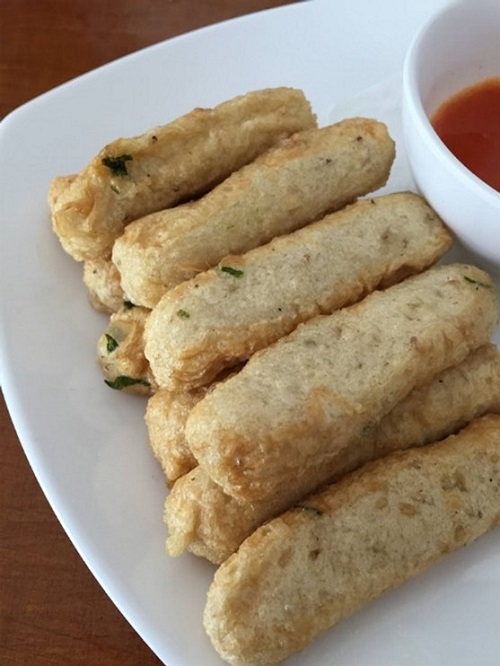
Deep-fried fish paste, often eaten as a snack or light bite
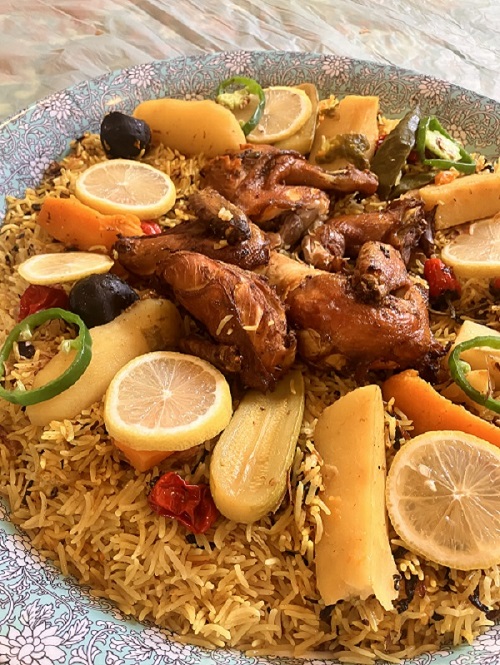
Other staple dishes include stews made with chicken, goat, or fish. These are similar to what one might imagine as coconut curry, characterized by the use of many spices and a distinctly spicy flavor.
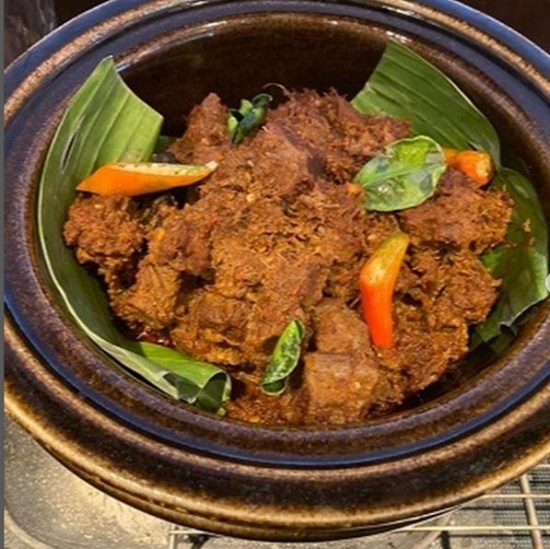
Rendang - Beef Stewed in Coconut Milk
Noodles are also commonly eaten, with dry oil noodles and stir-fried noodles being the mainstream types. Many are influenced by Chinese cuisine. Oil noodles are topped with sweet and savory braised chicken and boiled vegetables. Thin chili noodles are not spicy; they are characterized by a light flavor using chicken broth.
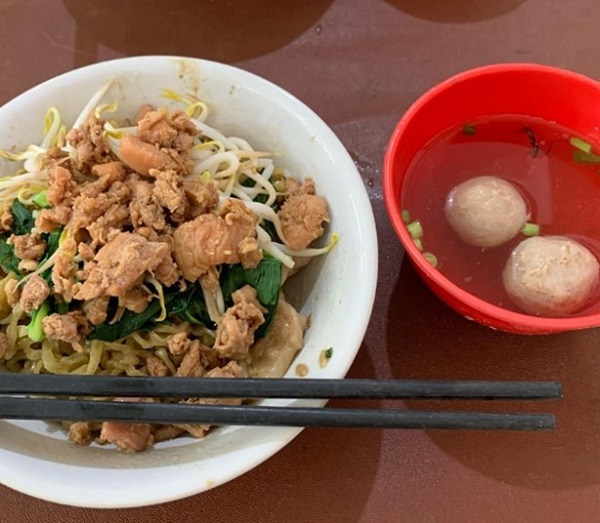
Chicken simmered in sweet and savory sauce atop noodles, served with meatball soup on the side.
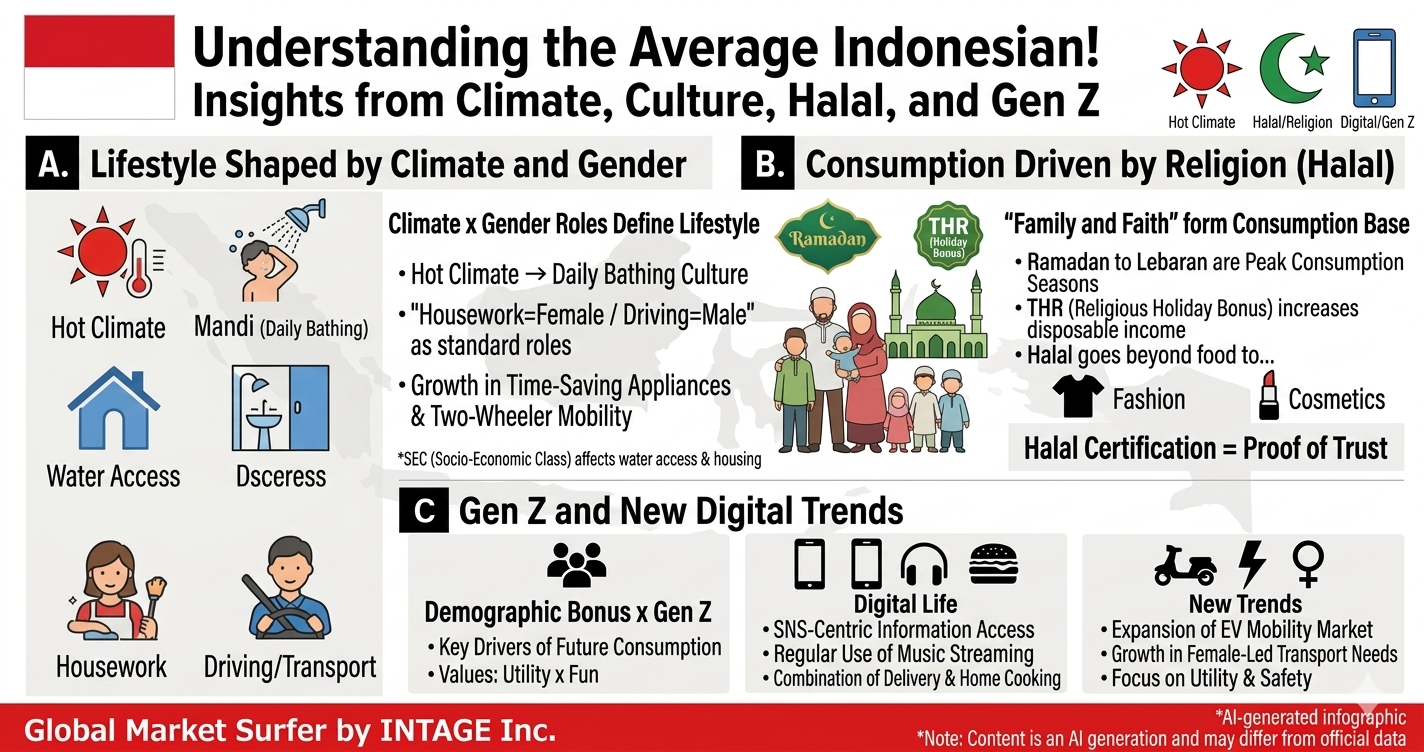
With the world’s fourth-largest population and sustained GDP growth, Indonesia is Southeast Asia’s largest economy.
How well do you understand the “average Indonesian lifestyle and values”?
Drawing on various data sources, including Intage’s “Global Viewer” international consumer data, we will organize and explain the “average” that defines Indonesian consumers, as well as the latest trends revealed by this data.
Let’s Get to Know the “Average” Indonesian! Understanding the Lifestyle Through Climate, Culture, Halal, and Gen Z
・Lifestyle and Living Environment: Differences by Socioeconomic Class (SEC)
・Religious and Halal Considerations and Unique Consumer Behavior
The Soul of Indonesian Cuisine: Spices and Sambal
Indonesian cuisine uses many spices, but the three central ones are Bawang Putih (garlic), Bawang Merah (shallots), and Daun Salam (bay leaves). Other spices are also blended according to the dish. When eating, many people add Sambal (Indonesian chili sauce) and Kecap Manis (a sweet soy sauce-like condiment) to taste. While bottled sambal is common, some households make their own using fresh chilies, tomatoes, and other ingredients to suit their family's taste.
Chili peppers, garlic, shallots, bay leaves, turmeric, ginger, lemongrass, kaffir lime leaves, and other root-based spices are also commonly used.
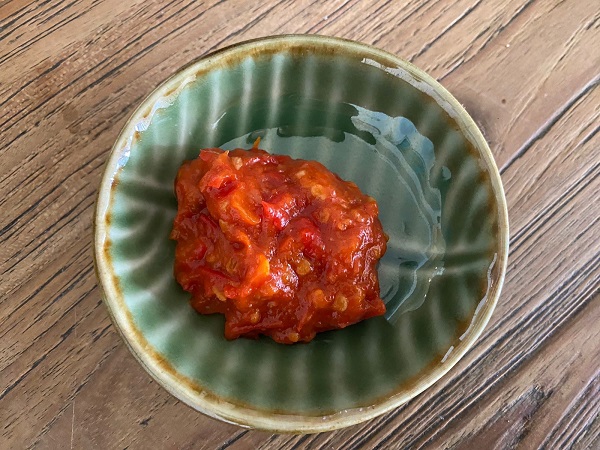
Sambal
Sambal also varies by region and recipe, but generally consists of red chili peppers, tomatoes, shallots, and garlic, all ground and stir-fried. This sambal pairs well with any dish. Depending on preference, fermented and dried shrimp can be toasted over a flame and added (the smell is intense, but it enhances the umami flavor).
Indoor and Outdoor: Kitchen Conditions in Indonesia
From the perspective of ventilation and hygiene, many households once placed their kitchens outdoors. However, in recent times, more homes have kitchens indoors. Older houses may have kitchens both outdoors and indoors, referred to as the “Dapur kotor (dirty kitchen)” and “Dapur Bersih (clean kitchen)” respectively. Historically, it was customary for domestic helpers to cook. They would prepare meals in the outdoor kitchen, bring them inside, and diners would reheat the food in the indoor kitchen. Due to rising land prices in recent years, new homes (mid-range, around 50-80 square meters costing approximately 10 million yen) typically have only one indoor kitchen installed, a compromise between space and cost. Apartments also typically have one kitchen, though some high-end units over 200 square meters may include a kitchen within the maid's quarters.
【Essential Cooking Tools for Home Cooking】
In Indonesia, a stone mortar called a cobek is traditionally used to grind spices. However, many people nowadays either don't have a cobek at home or can't use one, so more people are using mixers or blenders for grinding. Indonesians say, though, that using a cobek makes the spices taste better.
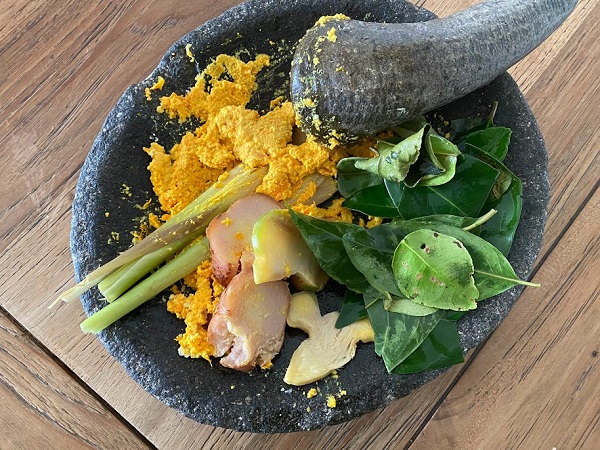
Grind spices using a stone mortar called a cobek to blend them.
Rice cookers are always present, typically large models like 5-cup capacity ones, and it's common to cook only once a day. Other appliances include a microwave (for reheating prepared meals), a blender or mixer (for making sambal or spice mixes without using a stone grinder), and an air fryer (for those who enjoy fried foods but are health-conscious).
【Changing Eating Habits】
The standard style is a one-plate arrangement featuring rice topped with the main fish or meat dish along with one or two stir-fried side dishes, or a combination of rice served with soup (sometimes poured over the rice). Traditionally, people eat by mixing rice and side dishes with their right hand (the left hand is not used), but nowadays it's common to eat with a spoon (right hand) and fork (left hand). Chopsticks are sometimes used for noodles, and many Indonesians are skilled at using them.
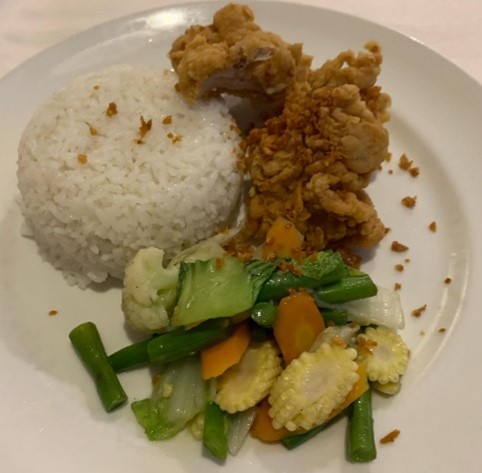
Stir-fried vegetables, fried chicken, and rice
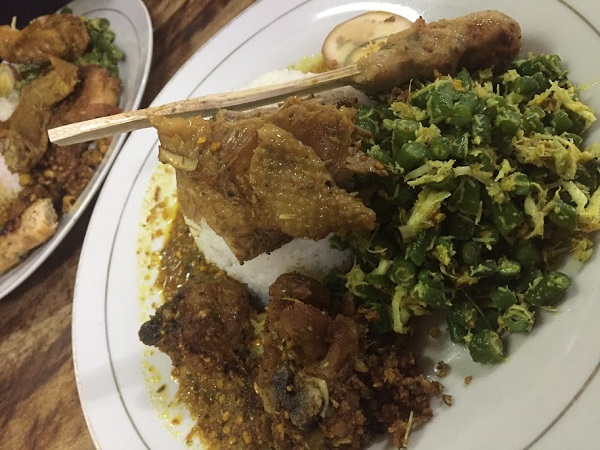
Nasi Ayam Campur:Chicken, long beans with coconut dressing, and chicken meatballs over rice
【Leave the tidying up to the housekeeper】
In households with domestic help, the helper typically handles tidying up and washing dishes. In households without help, the mother often does the tidying. Dishwashers are sometimes installed in high-end apartments, but they are not widely used in ordinary homes, and compact dishwashers for home use are not sold.
In conclusion
In Indonesia, the exchange “Sudah Makan belum?” (Have you eaten yet?) is commonly used instead of greetings. It is common for households to employ domestic helpers, and in families where the mother works full-time, a helper is almost always hired. Consequently, cooking is primarily handled by the helper, and the mother rarely cooks. Growing up in such a household environment means many people, regardless of gender, cannot cook, and especially few people cook from scratch. However, recently, a wide variety of instant spice mixes requiring only mixing have become available, making cooking considerably easier. Among younger generations, Westernization of diets is advancing, and more people are showing interest in easy-to-make dishes like pasta and sandwiches for reasons of “saving money” and “health.” Furthermore, while many people used to migrate from rural areas with fewer job opportunities to Jakarta to work as domestic helpers, opportunities for factory work and self-employment (such as e-commerce) have increased even in rural areas. This has made hiring domestic helpers more difficult. Consequently, the habit of cooking at home is likely to become more established in the future.