Saudi home cooking traditionally features many large platters. Instead of serving individual portions, families eat directly from the platter using their hands or spoons, fostering communication and enjoying each other's company. This method also makes it easier to gauge how much each family member eats. Encouraging children to “eat more” is a common expression of affection throughout the Arab world, not just Saudi Arabia.
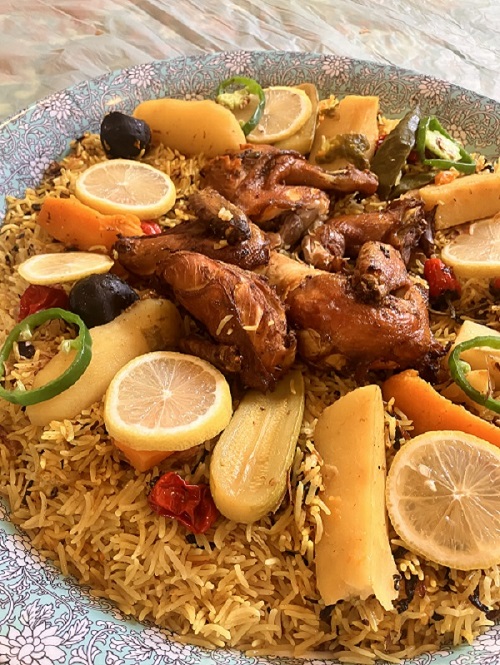
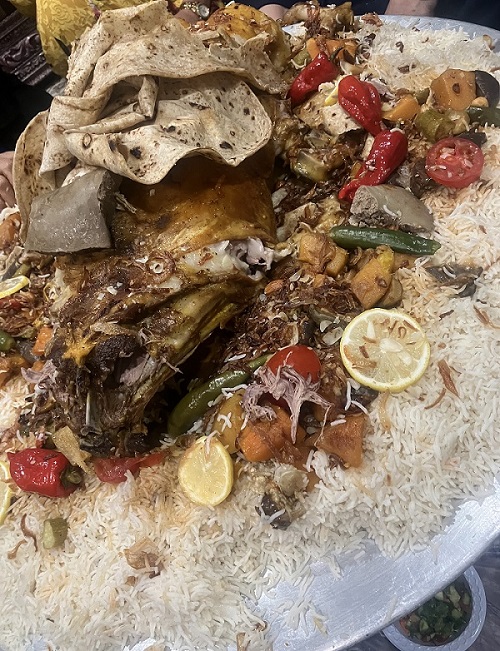
(Above) Kapsa Rice (Northern Urban Household)
The vegetables and spices used vary by household.
(Each household has its own way of cutting vegetables; on this day, the daughter of a large family took the lead, resulting in a stylish presentation.)
If you’d like to learn more about home cooking and household routines in various Asian countries, please also check out this article.
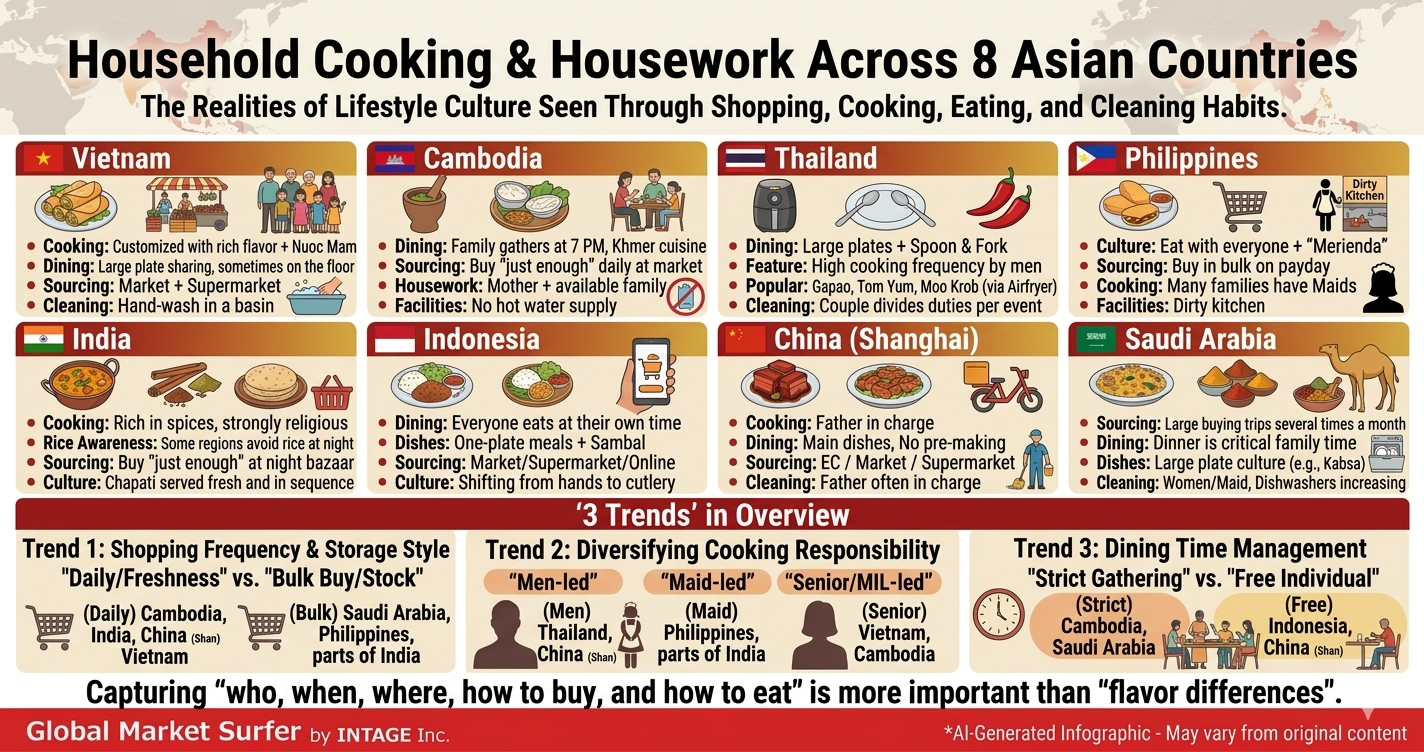
From Stocking Up on Ingredients to Cleaning Up: Home Cooking in 8 Asian Countries ~Three Trends Revealed Through Food Culture~
・Countries where groceries are bought daily vs. countries where people buy in bulk
・Seasoning and presentation styles in each country
・Who cooks? Who cleans up?
・Does the family eat together? Or do they eat whenever they like? and more
I do my main shopping in bulk a few times a month.
In Saudi Arabia, families typically consist of many members. Due to traditions requiring cohabitation with family or grandparents, or the custom of not showing one's face or hair to male relatives beyond the fourth degree of kinship, homes are often converted into multi-unit dwellings for two or more generations, or families live together in the same apartment building. In urban areas, nuclear families are becoming more common due to migrants from rural areas, individuals preferring not to live together, and physical space constraints. Consequently, bulk purchasing and consumption are typical, with supermarket bulk shopping being the mainstream style. Monthly food expenses for urban households are approximately 1,000 to 1,500 riyals (about 40,000 to 60,000 yen). Households that eat out frequently tend to have higher food expenses than those with six or more children. In Saudi Arabia, supermarkets and hypermarkets dominate the distribution of cooking ingredients and meals. These stores offer a wide range of household goods, appealing to budget-conscious families.

(Above) A typical shopping cart for a household in Mecca.
They make bulk purchases at the supermarket twice a month, focusing on items with a long shelf life like pasta, eggs, and dates. Each shopping trip costs around 500 riyals (approximately ¥20,000).
Cook at least once a day
It is common for all women in the family to share responsibilities and work together to prepare meals. Furthermore, due to the heavy workload, many households have helpers who take on some or all of the cooking. In Saudi Arabian households, where stay-at-home wives are common, daily cooking is standard. Home cooking is a daily habit, and since dinner is a particularly important meal where the family gathers, it is typically homemade. According to a 2020 report by Euromonitor International (※1), Saudi Arabian households cook at home an average of six or more times per week. However, some urban businesswomen do not cook at all.
Breakfast:
Breakfast is often a simple meal, typically requiring little cooking time. Some family members may skip breakfast, and many households purchase it from nearby shops. Options include ma'asoub (a sweet bowl of bread with honey or banana), freshly baked pita bread from the oven, or tamiz bread served with a plate of bean paste, fried lamb offal, scrambled eggs with tomatoes, cucumbers, tomatoes, cheese, etc., allowing everyone to assemble their own sandwich. Some families also eat sandwiches or mutabbaq (a dish similar to Korean jeon). Like other Arab countries, falafel and tamia (chickpea croquettes) are also common breakfast items. These popular breakfast foods are sold at many shops and are very affordable. Households with elementary school children eat breakfast around 6:00 AM and prepare packed lunches to take to school.
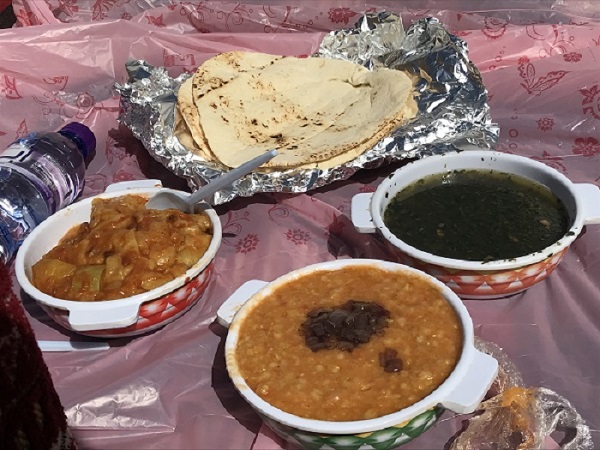
(Above) A typical breakfast. In the back is bread called “shami,” meaning Levantine.
On the left is a stir-fry with various vegetables. On the right is molokhia soup.
In the foreground is “ful,” a side dish made by simmering fava beans with onions and garlic in tomato sauce, served with bread for dipping.
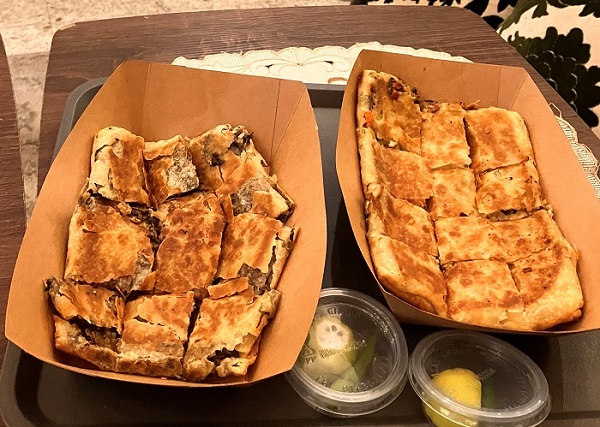
(Above) Mutabbaq, often eaten for breakfast.
The filling varies by shop or household; the left one has spinach, the right one has egg and ground meat, etc.
Lunch:
It's rare for the whole family to gather together, so simple meals are often prepared individually. For those working from home or depending on the household, this meal may serve as the main meal. Lunch is frequently after 1:00 PM, and if the children are older, it can sometimes be as late as 3:00 or 4:00 PM.
Dinner:
Home cooking is central to family life, with abundant dishes prepared to bring everyone together. However, households that focus primarily on lunch often purchase light meals.
Friday:
In Islamic customs, families and relatives often gather together. It is common for the host household to prepare large quantities of food to enjoy, and guests frequently bring homemade dishes as well. When spending weekends at vacation homes, rental villas, or desert tents, men and women often cook separately, though there are also occasions where men prepare and serve all the food for both groups at once. Beyond preparing meals themselves, it is also common to order large platters of food like kapsa.
In such situations when sharing large platters, several large dishes are prepared. A large group sits on the floor, placing the dishes on plastic sheets called sufra. People eat by taking food from the dishes near them, using their hands or spoons. For example, near tables with many children, the pace of eating may vary. If meat seems likely to be left over, it might be brought to tables with heartier eaters. In Saudi Arabia, hospitality is highly valued, and generosity is considered a virtue. Consequently, more food is prepared than strictly necessary. However, discarding food is considered religiously inappropriate. Leftover food is often set aside for the helpers. If there is still food remaining after that, it is frequently given to stray cats or other animals.
(Above) Dishes arranged on a large platter.
As an invitation meal after Ramadan, it is especially lavish.
Dynamic Cuisine Capsule
Saudi Arabia's vast territory (roughly six times the size of Japan) means regional specialties vary, but the most famous dish is Kapsa. Kapsa is a traditional Saudi one-dish meal often prepared for special occasions and family gatherings. Rich in spice flavors, it is beloved in many households. Enjoying the meal together is also a way for families to gather around the table, deepening bonds and camaraderie. To make Kapsa, chicken or lamb is used as the main ingredient, and rice is cooked in a pressure cooker. Meat and vegetables are simmered with spices; common vegetables include tomatoes, potatoes, carrots, onions, garlic, dried lemon, and shishito peppers. The spices used are cumin, coriander, cardamom, cloves, cinnamon, etc., varying slightly by household. When using chicken, it is often finished by baking in a gas oven until the surface is crispy. Kapsa is served with many accompaniments: bread; a sauce made by blending bell peppers, tomatoes, and shishito peppers with lemon juice; tahini (sesame paste thinned and mixed with garlic); a tomato and cucumber salad (dressed with a little lemon juice and salt); raw onions; lemons; various Tabasco sauces; molokhia soup; and stewed vegetables. These accompaniments allow you to enjoy the rice by changing its flavor. While more people in urban areas are eating with spoons, many households still eat with their hands.
(Above) Serving example for large gatherings (Southern regional urban areas)
(Preparing for guests takes time for the women. The photo shows only the women's portions, but separate preparations are made for the men's guest room, including dressing up and grooming.)
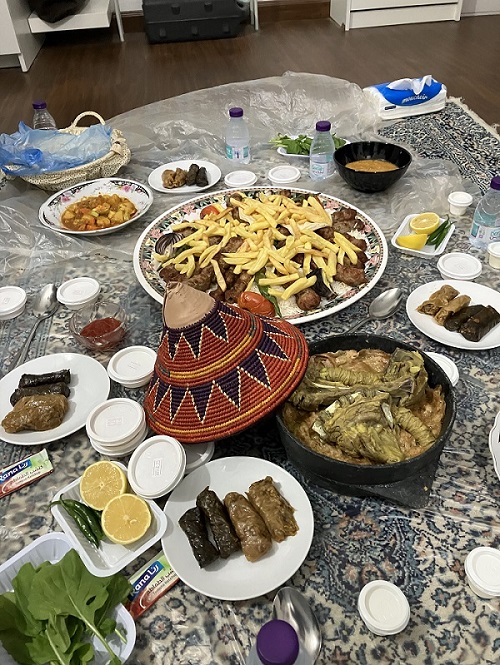
(Above) The dining table of a tribal family from Najran in the southern region, now living in the city.
Local cuisine (laksh) and barbecue dishes ordered for delivery (examples of large platters other than kabsah).
(Many people from rural areas live in urban centers. Saudis place great importance on their origins.)
After cooking, people often add Tabasco sauce, known as “shatta.” Whether someone likes spicy food varies, but it seems closer to the Japanese palate. Even those who enjoy spicy food tend to stick to mild heat. They don't seem to favor extremely spicy food like people from India or Indonesia do.
The spacious Saudi kitchen
Saudi Arabian kitchens are often designed to be spacious. Especially since large families are common, the cooking area is designed to be wide enough to prepare multiple dishes simultaneously. Additionally, powerful exhaust fans ensure comfortable cooking even when using large quantities of spices or oil. While many urban residents live in apartments, kitchens are often separate rooms and usually include a built-in oven. In most homes, gas is supplied directly from a gas cylinder, known as an “Ambouba,” to the kitchen stove and gas oven. Some households also use induction cooktops.
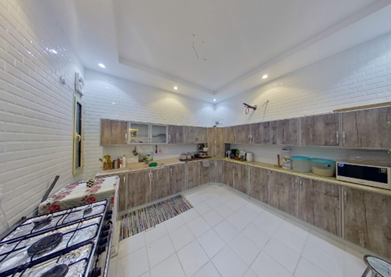
(Above) Kitchen example: An average-sized kitchen. Rental kitchens may be smaller.
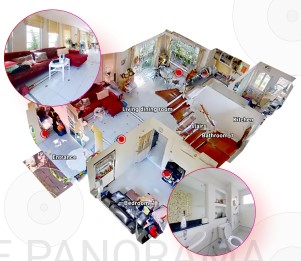
Source: Intage Consumer Database Consumer Life Panorama
What is Consumer Life Panorama?
This is a website-type database that has accumulated visual data on more than 1,000 sei-katsu-sha from 18 countries around the world. The database includes many 3D models of living environments and 2D data of items owned by each sei-katsu-sha, and is useful for understanding overseas sei-katsu-sha, which is difficult to grasp using only letters and numbers.
Using visual data such as those cited in this column,
Compare the differences in the attributes of overseas consumers
To get a realistic understanding of the actual usage of each category
To understand the overall lifestyle of target consumers
etc., can be utilized as a “no-go” home visit survey.
Cooking utensils and appliances commonly used in cooking
Common cooking utensils and appliances include large pressure cookers, large pots, frying pans, gas ovens, and shallow pans called tawa for warming bread. Knives are also used, though many people cut vegetables with a knife without using a cutting board. Food processors are frequently used to prepare sauces for dishes, blending tomatoes, bell peppers, and small amounts of shishito peppers for every meal. Vegetable cutters are also commonly used for making salads.
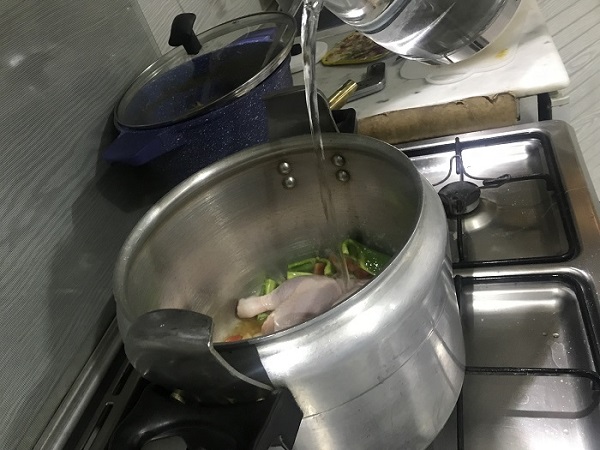
(Above) Making kapsa using a large pressure cooker (Photo taken at a home in a southern regional city)
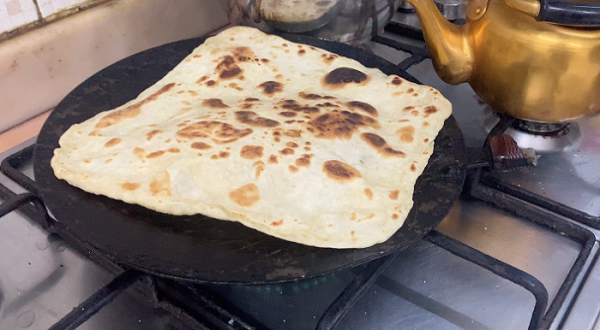
(Above) A tawa, a tool for baking bread and mutabbaq
How to Eat and Present Food How to Eat
In Saudi Arabia, families often eat together, with dishes served on large platters for sharing. Food is roughly placed onto large silver round trays from the pot. There is no set format like one soup and three dishes; instead, a main dish is typically served with side dishes. Hospitality etiquette includes serving guests meat by hand to encourage them to eat freely. Meals are often taken in the large living room or guest room.
Cleaning up and washing dishes
Household chores like cleaning and washing dishes are often handled cooperatively by all the women in the family, but in households with a housekeeper, it is common for them to take charge. The use of dishwashers is also becoming more widespread.
Summary
Saudi Arabia places great importance on communication with others, whether within families, among relatives, between tribes, or among friends. They value others and deepen relationships through cuisine and dining styles. There is also a culture that values communication with relatives of all generations, viewing hospitality and serving others as virtues. Before and after meals, they engage in conversation while enjoying Saudi coffee (Saudi-style Arabic coffee) or tea.

(Above) Saudi coffee to drink before or after meals
※1 Euromonitor International. (2020). Home Cooking Trends in the Middle East and Africa.
https://www.euromonitor.com/cooking-ingredients-and-meals-in-middle-east-and-africa/report