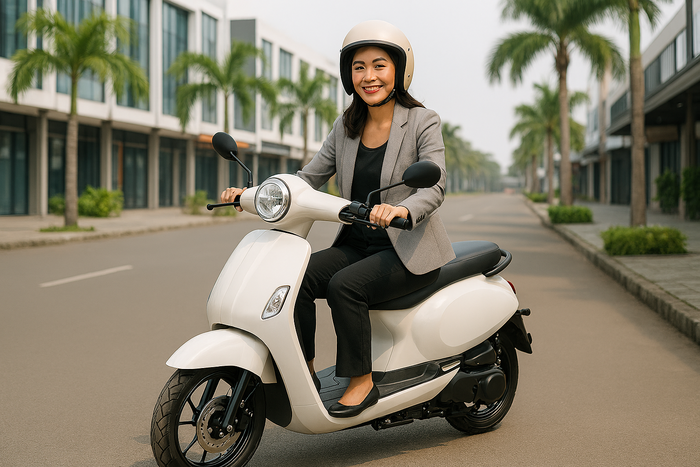
JAKARTA – Let’s take a quick trip down memory lane. Rewind to the early 2000s. The roar of 2-stroke sportbikes still filled the streets, shifting gears was a point of pride, and then—it arrived. The automatic scooter. Quiet, effortless, practical.
And it was marketed almost exclusively to women.
Ads showed stylish young women gliding through traffic, unburdened by the hassle of a clutch or gear-shift. The selling point was ease. Convenience. Something that fit seamlessly into her hectic life of juggling work, family, and social demands. It was, as the industry saw it, a “woman’s bike.”
Sound familiar?
Fast forward to today, and the scene is almost identical—only the technology has changed. The new Intage Indonesia survey shows women are more than twice as likely (4.7% vs. 2.1%) to adopt electric motorbikes. Once again, the narrative is ease: no engine oil, no loud noise, no complex maintenance. Just quiet, clean, effortless mobility.
But history tells us what happens next. Just look out your window.
Nearly 90% of all motorbikes on Indonesian roads today are automatics. Men discovered what women knew all along: hassle-free is just… better. The “woman’s bike” didn’t stay a niche product—it completely reconquered the market, becoming the default choice for everyone.
So what can the auto and EV industry learn from the matic revolution?
目次
1.Lesson 1: Women Are the Early Adopters of Practicality
Women are often the “practicality early adopters.” They don’t care about engine specs or the romantic roar of combustion; they care about solutions. Whether it was the automatic transmission then or the electric motor now, women recognized first that these weren’t just new features—they were fundamental improvements to daily life.
Men followed, not because they were convinced by marketing, but because they experienced the benefit. The same pattern is unfolding with EVs: what begins as a product for “her” quickly becomes a product for “all.”
2.Lesson 2: Don’t Market “For Women.” Market Ease—and Let Everyone Else Catch Up
The mistake then—and now—is ghettoizing the innovation as a “female product.” The automatic scooter succeeded not because it was for women, but because it was objectively easier. The marketing just missed the bigger message at first.
Today, EVs are falling into the same trap. Framing them as “good for women because they’re easy” undersells their universal appeal. The winning message isn’t “No gears, no problem… for ladies!” It’s: “Why would anyone choose complexity when simplicity exists?”
3.Lesson 3: The Future Is Female-Led (Even If Everyone Ends Up Riding It)
The matic revolution started with women. The electric revolution is starting with women. This isn’t a coincidence—it’s a pattern.
Women are the canaries in the coal mine of consumer behavior. They identify what works, what saves time, what reduces stress. Men eventually embrace it once the “cool factor” or peer acceptance catches up. Ignoring the female lead in early adoption means ignoring the most reliable predictor of mass-market trends.
With the world’s fourth-largest population and sustained GDP growth, Indonesia is Southeast Asia’s largest economy.
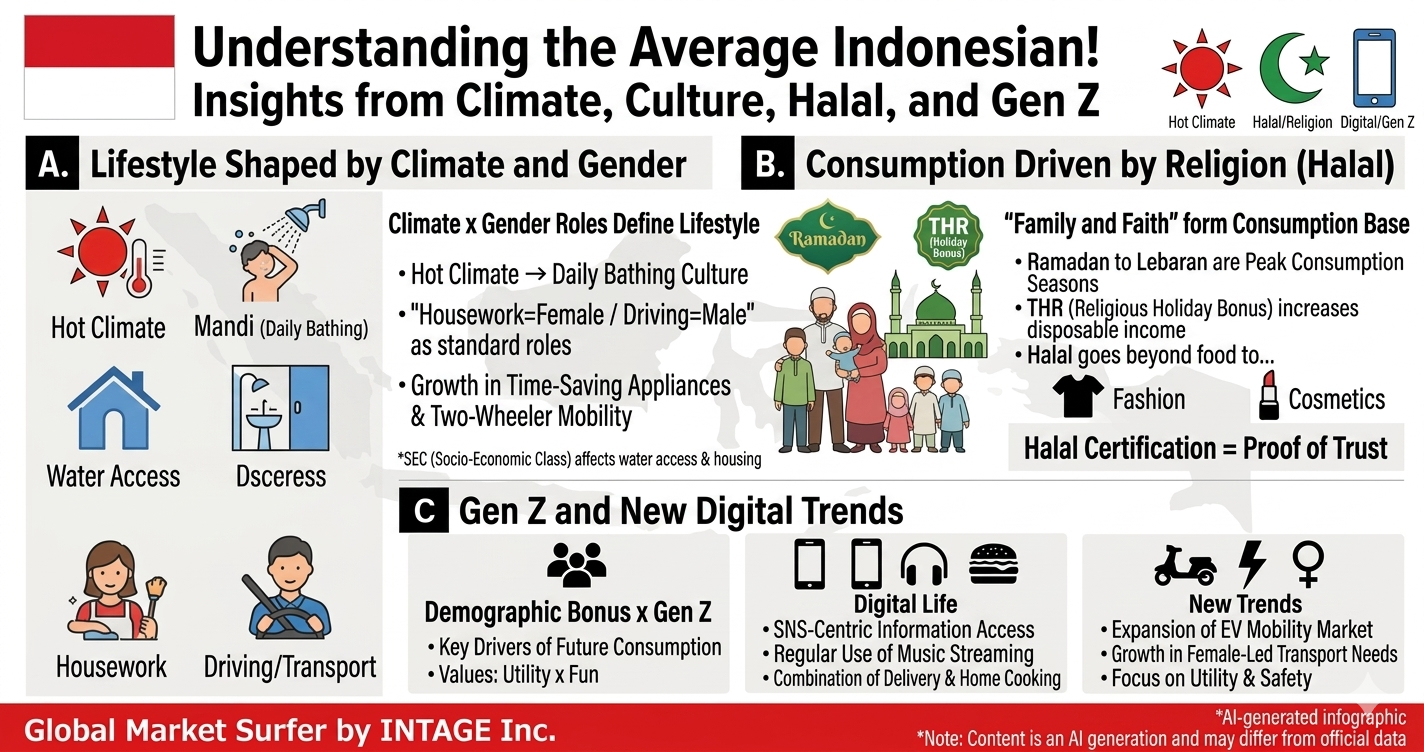
How well do you understand the “average Indonesian lifestyle and values”?
Drawing on various data sources, including Intage’s “Global Viewer” international consumer data, we will organize and explain the “average” that defines Indonesian consumers, as well as the latest trends revealed by this data.
Let’s Get to Know the “Average” Indonesian! Understanding the Lifestyle Through Climate, Culture, Halal, and Gen Z
・Lifestyle and Living Environment: Differences by Socioeconomic Class (SEC)
・Religious and Halal Considerations and Unique Consumer Behavior
4.The Bottom Line: Stop Selling “Women’s Mobility.” Start Selling “The Future.”
Brands today have a chance to learn from the matic phenomenon. Don’t make EVs the new “women’s bike.” Make them everyone’s bike—by leveraging the qualities that resonate with women first: simplicity, sustainability, and smart design.
The women of Indonesia are already leading the charge toward electric mobility. Again. The question is: Will the industry be smart enough to follow their lead this time—or will it take another decade for everyone else to realize they were right all along?
The road to market dominance doesn’t start with the masses. It starts with her. And she’s already on the move.