Have you ever wondered why, right in the middle of the fasting month, Indonesian households suddenly lose their affection for perfectly functional 10-year-old cars?
The surge in car sales, especially for 7-seater multi-purpose vehicles (MPVs)*1, is one of the most predictable phenomena on Indonesia's retail calendar. Here's why Ramadan has become the unofficial car-buying season.
*1 Indonesian family sizes are larger than in many ASEAN countries. See link below for details.
https://www.global-market-surfer.com/market/detail/10/?l=en
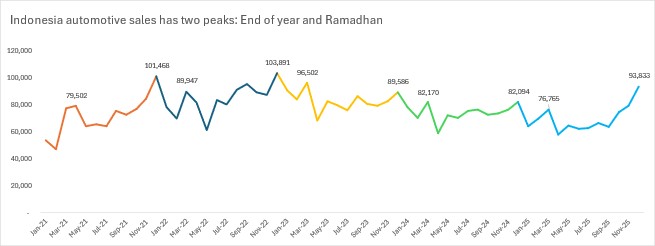
Source:GAIKINDO, the Association of Indonesian Automotive Industries https://www.gaikindo.or.id/en/
目次
- 1. Homecoming Rush (Mudik)
- 2. The Vehicle Becomes a "Mobile Living Room"
- 3. The Intra-Hometown Mobility Solution
- 4. The THR Effect: Settling the "13th Month" Account
- 5. Cooling Tempers, Literally and Figuratively
- 6.What Does It Mean for Foreign Automotive Brands?
- (1)Seven-Seaters Are Not Optional; They Are the Market
- (2)Long Mileage Is the Unspoken Specification
- (3)Timing Is Everything: Align Launches and Campaigns with THR
- (4)Financing Partnerships Matter More Than Brand Prestige**
- (5)The "Second Car" Phenomenon: Target the Upgraders
- (6)After-Sales Service Must Cover the Trans-Java Route
- (7)Understand the "Cemetery Factor"
- 7.The Bottom Line
1. Homecoming Rush (Mudik)
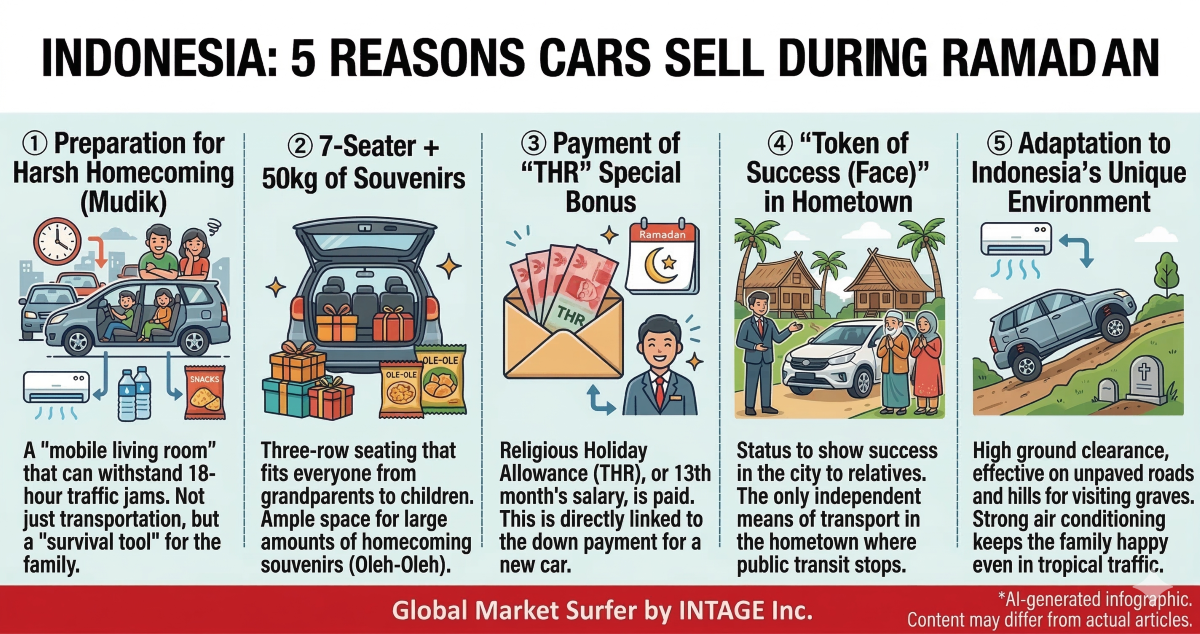
The primary driver is mudik—the annual exodus where millions of Indonesians leave the major cities to return to their hometowns and gather with extended family.
This is not a leisurely weekend drive; it is the longest and most physically demanding journey most Indonesians take all year.
To illustrate the peak, almost every weekend I drive 5 hours from Jakarta to Tegal 285 km. In Mudik peak season last year, my family spent nearly 18 hours, families sit in standstill traffic across Java's north coast. A reliable, comfortable car is not a luxury; it is a survival tool.
2. The Vehicle Becomes a "Mobile Living Room"
During this gruelling trip, the car ceases to be mere transportation. It transforms into a second home on wheels. It must accommodate:
- Crying toddlers who refuse to sleep.
- Sleeping grandparents who need to recline.
- Up to fifty kilograms of oleh-oleh (omiyage) to distribute upon arrival.
Indonesians are not just buying an engine; they are buying a temporary living room that must keep the family sane until they reach the village.
3. The Intra-Hometown Mobility Solution
Once the family arrives in the village, the car's job is far from over. The Eid period is a whirlwind of social obligations that require constant movement:
- Shuttling between the homes of different relatives.
- Transporting the extended family to the mosque for Eid prayers.
- Making the ritual pilgrimage to the cemetery to pay respects to ancestors.
- Visiting neighbors and family friends scattered across the town.
Here is the critical detail:
intracity public transportation in Indonesia's second-tier cities and villages is either extremely limited or does not operate during Eid. Angkot (public minivans) and ojek (motorcycle taxis) often run reduced schedules or close entirely as their drivers also go home to their families. Having one's own vehicle becomes not just a convenience, but the *only* way to navigate the social marathon. A new car means the family can move as one unit, from one obligation to the next, without leaving anyone behind.
4. The THR Effect: Settling the "13th Month" Account
THR (Tunjangan Hari Raya) is often casually called a "bonus" by outsiders, but that is misleading. In reality, most Indonesian employees are paid 12 times a year, leaving four weeks technically unpaid. THR functions as a mandatory "13th month" payment that compensates for this gap, ensuring workers have cash flow specifically for the increased expenses of Lebaran.
For employees who have worked 12 months or more, THR equals one month's salary. This guaranteed injection of cash arrives just before Eid and is psychologically earmarked for "big" purchases.
For many families, it becomes the perfect down payment (DP) on a new family car. It is not "bonus money" they feel they can save—it is "deferred salary" they are ready to spend for family comfort.
5. Cooling Tempers, Literally and Figuratively
Finally, consider the tropical heat. The vehicle's air conditioning system is not just cooling the passengers; it is actively cooling tempers. In an environment where external temperatures and internal frustrations run equally high, a powerful AC is a prerequisite for arriving at Grandma's house—and at every subsequent relative's house—with one's marriage still intact. Indonesians buy these vehicles not merely for the journey there, but for the guarantee of surviving the week of non-stop social visitation without familial discord.
In summary: The car purchase spikes because the vehicle is the vessel that carries Indonesians through their most important social obligation of the year—from the highway trek, to the village shuttle service, to the cemetery visit—funded by the mandatory "13th month" salary that arrives just in time to make the down payment possible. Ramadan sparks this season not despite the fasting, but because of the unique convergence of mobility needs and financial liquidity it creates.
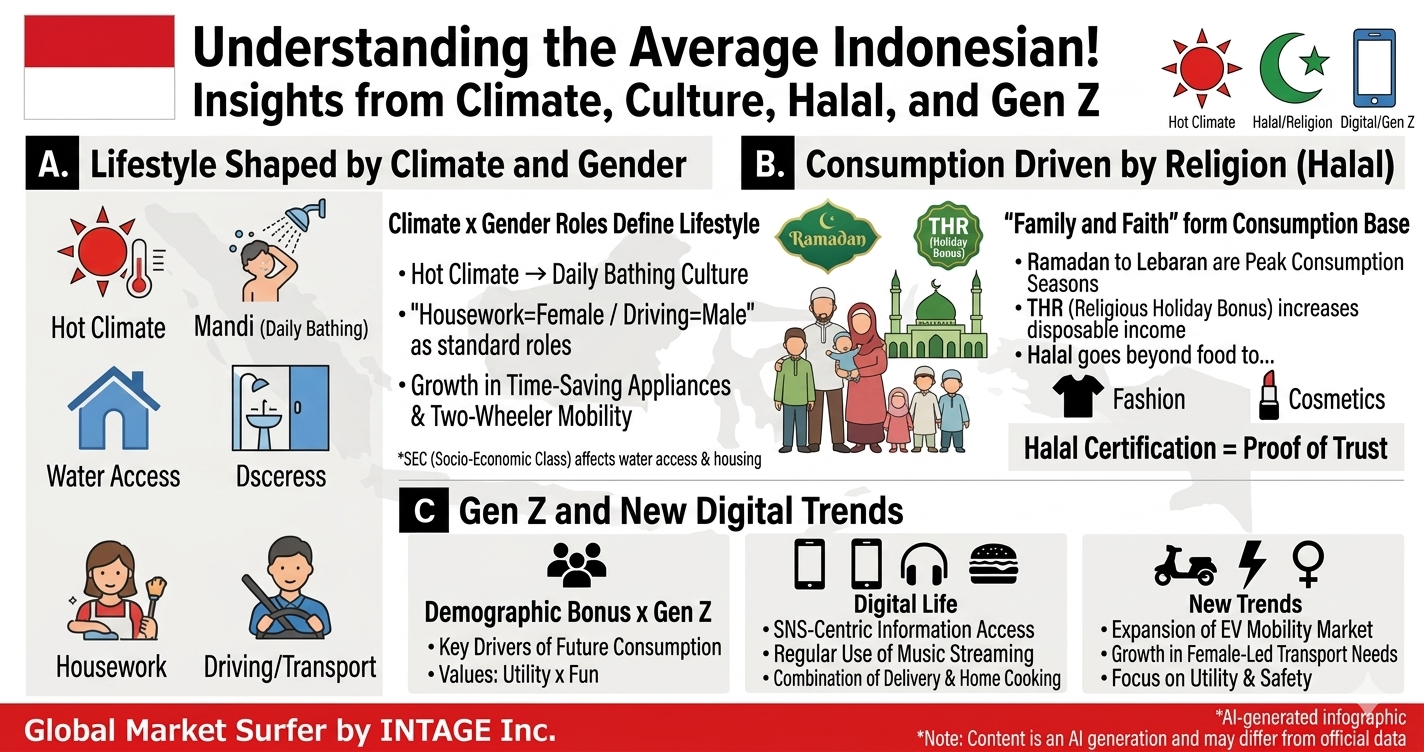
With the world’s fourth-largest population and sustained GDP growth, Indonesia is Southeast Asia’s largest economy.
How well do you understand the “average Indonesian lifestyle and values”?
Drawing on various data sources, including Intage’s “Global Viewer” international consumer data, we will organize and explain the “average” that defines Indonesian consumers, as well as the latest trends revealed by this data.
Let’s Get to Know the “Average” Indonesian! Understanding the Lifestyle Through Climate, Culture, Halal, and Gen Z
・Lifestyle and Living Environment: Differences by Socioeconomic Class (SEC)
・Religious and Halal Considerations and Unique Consumer Behavior
6.What Does It Mean for Foreign Automotive Brands?
For Japanese (or any foreign) automotive manufacturers looking at the Indonesian market, the Ramadan-Eid car-buying phenomenon is not just a cultural curiosity—it is the single most important sales cycle of the year. Here is what the data and cultural drivers mean for your brand strategy.
(1)Seven-Seaters Are Not Optional; They Are the Market
If your portfolio does not include a competitive seven-seater Multi-Purpose Vehicle (MPV), you are essentially sitting on the bench during the fourth quarter of the championship game. The Toyota Avanza, Daihatsu Xenia, Honda Mobilio, and Mitsubishi Xpander dominate not because they are beautiful (they are not), but because they solve the specific problem Indonesians face: moving six or seven people in comfort.
Implication: Invest in developing or importing vehicles with three rows of actual human-sized seating. The third row must accommodate adults, not just children. Test it with grandparents in mind.
(2)Long Mileage Is the Unspoken Specification
The mudik journey is not a 20-minute commute. It is a 10-to-14-hour marathon covering hundreds of kilometers, often through stop-and-go traffic with the AC blasting at maximum. Indonesians calculate fuel efficiency carefully, but more importantly, they calculate range and endurance. Stories of vehicles overheating or struggling on the north coast highway spread like wildfire in family WhatsApp groups.
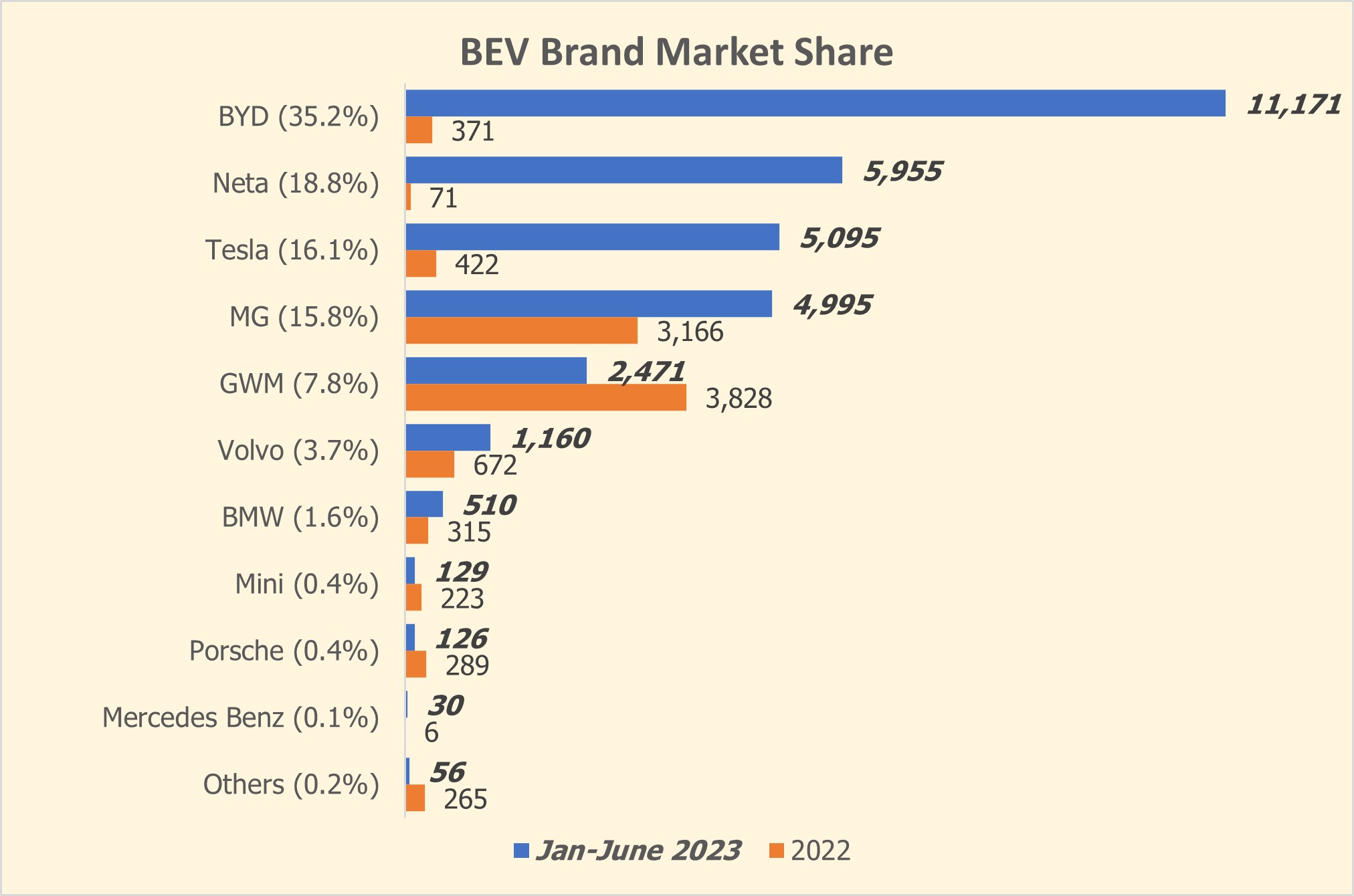
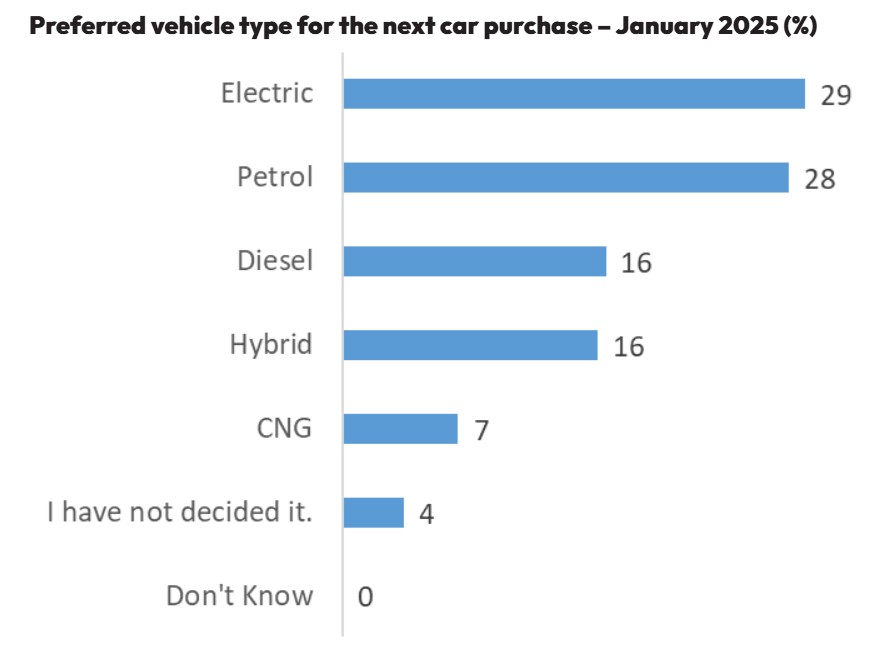
This is where the electric vehicle conversation hits a very real wall. While urban Indonesians in Jakarta may be ready for EVs for their daily commute, the mudik period exposes the current limitations. The anxiety is real:
• Charging infrastructure gap: Charging stations are concentrated in major cities, not along the remote stretches of the Trans-Java route or in small villages.
• Range anxiety multiplied: With full loads of passengers and cargo, plus non-stop AC usage, the real-world range of EVs drops significantly.
• Time pressure: Families already sitting in 14-hour traffic do not want to add "finding a functioning charger" to their stress.
Implication: For now, position hybrids as the "mudik-ready" compromise—better fuel efficiency for the long haul without the charging anxiety. If you are pushing full EVs, you must simultaneously invest in visible charging infrastructure along mudik routes and market it aggressively. Otherwise, Indonesian consumers will default to what they trust: internal combustion engines that can go the distance.
(3)Timing Is Everything: Align Launches and Campaigns with THR
THR payments hit employee bank accounts approximately two weeks before Eid. This is when the down payment decisions are made. If your marketing campaigns peak in January or February, you have missed the window. The purchasing journey—research, showroom visits, test drives—intensifies during Ramadan itself, when families are making their plans for *mudik*.
Implication: Schedule your major promotions, new model launches, and financing campaigns to land squarely in the middle of Ramadan. Ensure your dealer networks are staffed and stocked during this period, even as the rest of the country slows down for fasting. Indonesians are not sleeping during Ramadan afternoons; they are shopping for cars online.
Honda Ramadhan Promo accommodating the Mudik needs
(4)Financing Partnerships Matter More Than Brand Prestige**
Most Indonesians do not buy cars with cash. The THR provides the down payment, but the monthly instalments are what make the purchase possible. Foreign brands that enter the market without strong partnerships with local multi-finance companies will struggle, regardless of how beautiful the car is.
Implication: Establish relationships with Indonesian financing institutions that understand the THR cycle and can offer packages tailored to the Ramadan buyer. Consider "Eid special" financing with lower down payments or extended tenors during this period.
(5)The "Second Car" Phenomenon: Target the Upgraders
Not every car buyer during Ramadan is a first-time purchaser. Many families already own a car—often a 10-year-old model that has survived multiple *mudik* journeys. They are not replacing it because it is broken; they are replacing it because it is no longer worthy of the family's social-economic presentation (gengsi). The new car is a signal to relatives back in the village that the family member living in the city has "made it."
Implication: Position your brand as the "upgrade" choice. Marketing should acknowledge the loyalty of the old car while appealing to the desire for progress, comfort, and status. Frame the purchase as an investment in family dignity, not just transportation.
(6)After-Sales Service Must Cover the Trans-Java Route
Indonesians worry, quite reasonably, about what happens if their new car breaks down in the middle of nowhere between Jakarta and Surabaya. A foreign brand with excellent after-sales service only in major cities will lose sales to competitors with a broader network.
Implication: Map your service centre locations against the mudik routes. If there are gaps in Central Java or along the north coast, customers will notice. Consider mobile service units or partnerships with local workshops during the Eid period to provide peace of mind.
MPVs with high ground clearance are tougher for travelling in rural areas
(7)Understand the "Cemetery Factor"
It sounds trivial, but the ability to transport the family to the ancestral cemetery or great-grandmother’s house at the top of the mountain with dignity is a genuine purchase consideration. The car must be able to navigate narrow village roads and unpaved paths. Ground clearance matters. Reputation for handling rough road matters.
Implication: Do not design your vehicles exclusively for Jakarta streets. Test them on Indonesian village roads. If your car scrapes its undercarriage on the way to the cemetery, word will travel.
7.The Bottom Line
For foreign automotive brands, the Indonesian market during Ramadan offers a concentrated period of consumer liquidity and emotional motivation that is unmatched anywhere else in the world. The winner is not necessarily the brand with the most advanced technology or the sleekest design. The winner is the brand that most convincingly says: "I understand that you need to move your entire family, in comfort, with dignity, and arrive without drama."
If you can deliver that message—backed by a vehicle that actually delivers that experience—you will capture the Indonesian consumer's heart, and their THR.