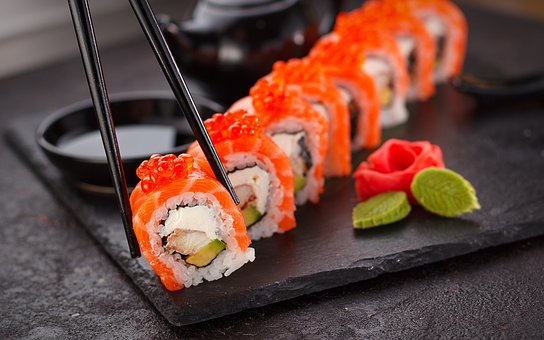
My name is Humphrey, and I have 15 years of experience in international marketing research. My main areas of responsibility include the Asia-Pacific region, the Middle East, and Europe. Although I am originally from Singapore, I have spent about half of my life living outside my home country and have lived in several countries, including through frequent overseas business trips. These experiences have given me a strong appreciation for the fascination of different cultures. In this column, I would like to focus on Japanese sushi and discuss how “sushi culture” has taken root in Eastern Europe. I hope readers will find this an interesting new perspective on cultural differences.
When foreigners are asked, “What comes to mind when you think of Japan?”, it would not be surprising if “sushi” is the first answer.
Japan’s sushi culture has spread around the world. Globally, there are authentic sushi restaurants opened by Japanese sushi chefs, fusion-style restaurants run by locals, and even many Japanese restaurants operated by Chinese owners.
In advanced regions such as the United States and Western Europe, sushi restaurants are no longer uncommon. But what about Eastern Europe, a region that is still relatively unfamiliar to many Japanese people?
◆Discover numerous sushi restaurants (including Japanese and fusion food) in the capitals of six Eastern European countries alone.
"Because the Eastern Europe region is so large, we checked out sushi restaurants in six countries. We selected Russia and Ukraine from the former Soviet Union, Croatia from the former Yugoslavia, Serbia and Georgia from the Caucasus region (home of sumo wrestler Tochinoshin), and Azerbaijan.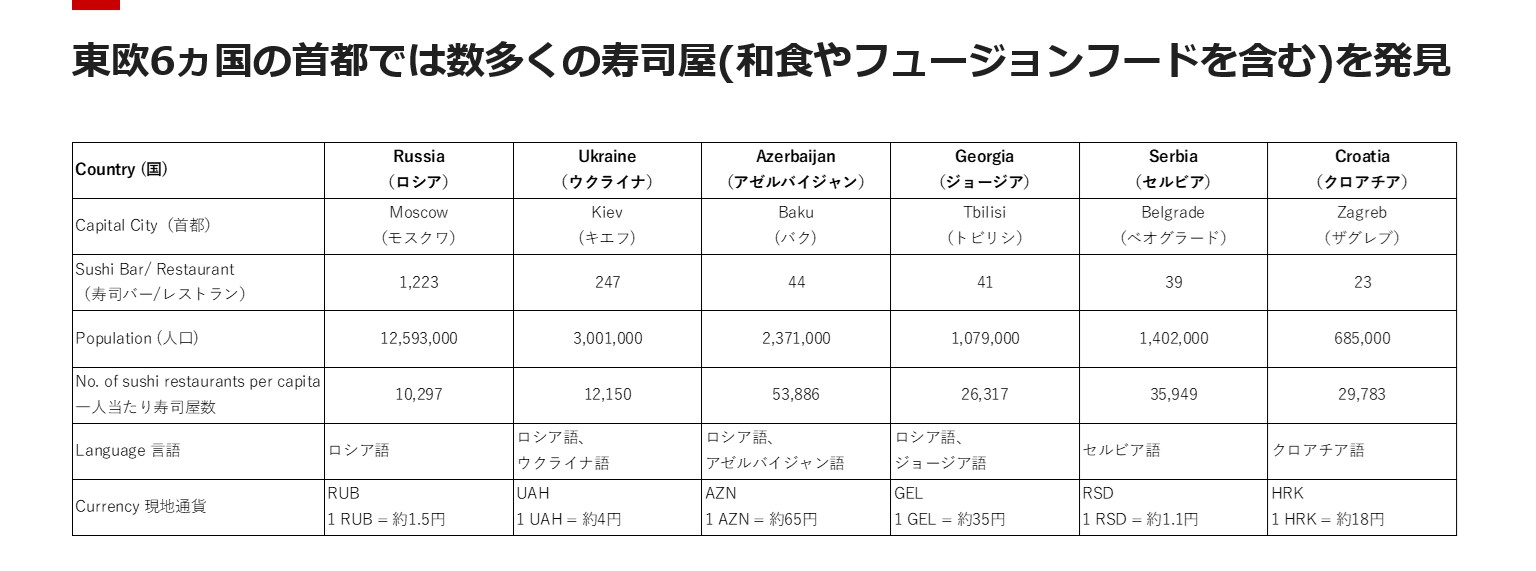
◆What is the difference between "Japanese sushi" and "Eastern European sushi"?
The basic concept of Japanese sushi is to taste the original ingredients as they are, and the Japanese way of eating sushi is to eat it with a little bit of wasabi and shoyu. But what about the Eastern European version of sushi? 1) Ukraine: 299 UAH = about 1,210 yen, eel, avocado, egg, ginger, horseradish, seaweed combination on top, lots of eel sauce and sesame seeds. 2) Serbia: 1,290 RSD = about 1,445 yen, crab, tuna in spicy sauce 3) Georgia: 19 GEL= about 670 yen, avocado, cucumber, cream cheese, takuan, ginger, horseradish (Bottom left photo below) 4) Azerbaijan: 10.60 AZN = about 688 yen, salmon, shrimp tempura, flying fish, lots of mayonnaise, cream cheeseCalifornia salmon roll 8/4 ədəd 10.60/6.60 azn
Nori Sushi Barさんの投稿 2021年1月11日月曜日
Sakuraさんの投稿 2020年8月30日日曜日
Сделать выбор бывает так непросто! 🙃 И мы вас понимаем: решить, что именно заказать из большого меню ВАБИ САБИ — задача...
ВАБИ САБИさんの投稿 2020年1月24日金曜日
Tools Available for Foreigners Who Are Not Used to Using Chopsticks
For the Japanese style "sushi experience", chopsticks are used for eating, but The menu mainly consists of rolls (nori maki) that are easy to grab with chopsticks. Some restaurants also provide utensils to help you learn to hold the chopsticks properly. Sushi is not just a simple dish, but it has become popular because it allows people to experience Japanese style food in their own country. ▼ Scroll [Norimaki]