Who does the laundry?
First, regarding who does the laundry: in households with sufficient financial means that employ a maid, the maid often handles the laundry. Even when a maid is present, the family usually chooses the brand of detergent themselves, though in some cases, they leave the selection to the maid. Practices vary from household to household; for example, some families may entrust all laundry to the maid but have the mother wash baby and children’s clothes herself.
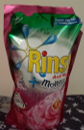
The main item used for laundry is detergent. The type of detergent varies by household; while liquid detergents are commonly used in Classes A and B, powdered detergents are more frequently used in Classes C and D. Fabric softener seems to be used primarily in Class A and B households.
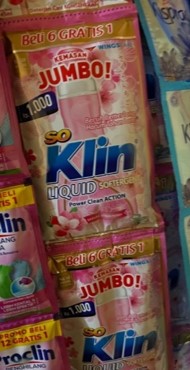
In Indonesia, detergents and fabric softeners are often sold as refills, and it is rare to see them in containers on store shelves. People do not use the refill bottles; instead, they use the refill packets as is. This applies not only to laundry detergents but also to kitchen detergents and other cleaning products. When I first arrived, I searched for detergent in a container and visited over 10 stores, but in the end, I couldn’t find any. When I asked my colleagues how they measure the detergent, they all said in unison, “By feel,” and didn’t seem to worry about precise measurements. I gave up on finding pre-packaged detergent and now use the refills as is, but I can’t help feeling that the detergent runs out quickly. In addition to this, single-use packets are also sold, and these seem to be particularly popular among the C and D classes. Since they’re individually packaged, they’re inexpensive, and because each dose is pre-measured, you don’t use too much, making them economical. Other laundry products available include detergents specifically for batik and fabric bleach.
*Batik refers to traditional Indonesian clothing made from wax-dyed fabric. It is primarily worn as formal attire in business settings and for ceremonial occasions.
What is Consumer Life Panorama?
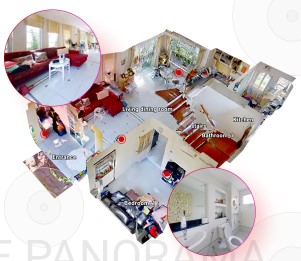
This is a website-type database that has accumulated visual data on more than 1,000 sei-katsu-sha from 18 countries around the world. The database includes many 3D models of living environments and 2D data of items owned by each sei-katsu-sha, and is useful for understanding overseas sei-katsu-sha, which is difficult to grasp using only letters and numbers.
Using visual data such as those cited in this column,
Compare the differences in the attributes of overseas consumers
To get a realistic understanding of the actual usage of each category
To understand the overall lifestyle of target consumers
etc., can be utilized as a “no-go” home visit survey.
Laundry scene
Next, I would like to introduce the laundry scene. First, regarding the location, in a house with many rooms, the room where laundry is done is located at the back of the house, away from the entrance and guest rooms. This is because it is a private space, so it is done out of sight of guests as much as possible. If there is a fully automatic or double-layer washing machine, there is a room/space for doing laundry. On the other hand, if there is no washing machine and laundry is done by hand, especially in C and D classes, laundry is often done in the bathroom. In the case of the SEC D household shown at left, one of the multiple bathrooms is used as a laundry room. The detergent, bucket, and hand tub are used for laundry. They use water from the hose and flush the used water down the toilet while doing the laundry.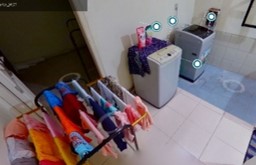
Place for drying laundry
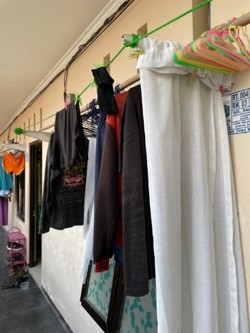
The place where laundry is hung out to dry varies from household to household. Class A households, in particular, are often reluctant to have their laundry visible from the outside, so they often dry their clothes indoors. Instead of drying clothes in living rooms or bedrooms, rooms and spaces are provided for indoor drying, and stand-type indoor clothes driers are sold at home centers. In the C and D classes, people no longer resist the idea of having their laundry visible to others, and they dry their clothes in a space next to the front door or in a location visible from the street. Colorful laundry drying on the street is a common scene in Indonesia.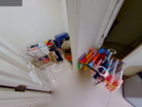
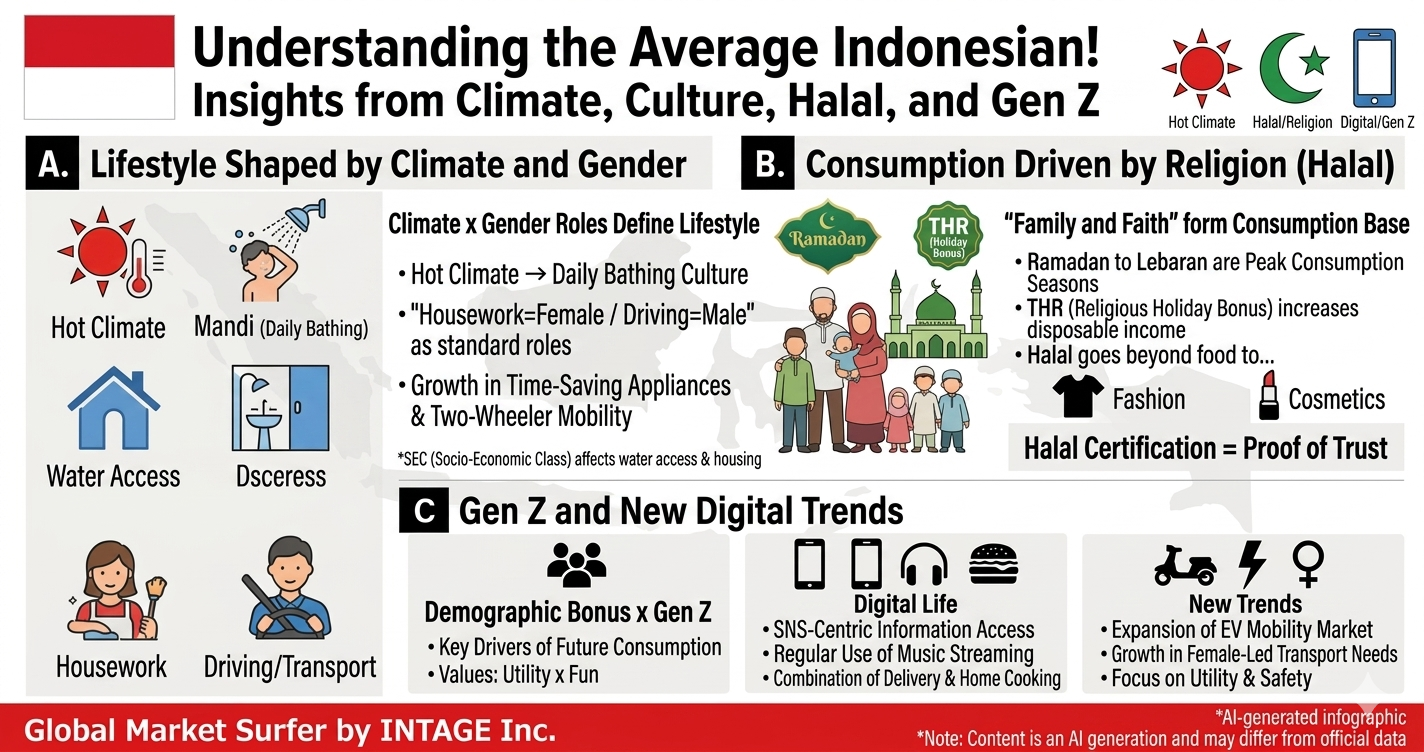
With the world’s fourth-largest population and sustained GDP growth, Indonesia is Southeast Asia’s largest economy.
How well do you understand the “average Indonesian lifestyle and values”?
Drawing on various data sources, including Intage’s “Global Viewer” international consumer data, we will organize and explain the “average” that defines Indonesian consumers, as well as the latest trends revealed by this data.
Let’s Get to Know the “Average” Indonesian! Understanding the Lifestyle Through Climate, Culture, Halal, and Gen Z
・Lifestyle and Living Environment: Differences by Socioeconomic Class (SEC)
・Religious and Halal Considerations and Unique Consumer Behavior