 Global Market Surfer
 CLP
CLP Column
[U.S: World Residence Tour] The U.S-style parenting with a high sense of independence
- Release date: Jun 29, 2023
- 8114 Views
Parenting styles vary significantly by country. Even within Asia, Japan, China, and South Korea each have their own distinct characteristics due to cultural differences. Across the Pacific, the United States is a melting pot of diverse cultures, forming its own unique approach to child-rearing. This time, focusing primarily on American consumers registered with Consumer Life Panorama, we will explain the characteristics of American-style parenting.
For those interested in learning more about the “average American lifestyle,” please also check out this article.
What's the average American's life like? Understanding the “average” of America's diversifying consumers
・America that values the individual
・America that seeks rationality and efficiency
・Values placed on durable goods
etc.

Above all, we place the highest priority on fostering a sense of independence.
A major difference in national character between Japan and the United States is often described as Japan valuing cooperation while America emphasizes the individual. This difference manifests not only in school education but also in home education. It's often said that in American homes, to foster independence, children are asked for their opinions from a young age and are praised rather than scolded.
In fact, fostering this sense of independence begins even when the child is still an infant. In Japan, it's common for a baby's crib to be placed in the same room as Mom and Dad's bedroom. In contrast, in the US, unlike Japan, a child might be given their own room as early as one month old. The purpose is said to be getting them accustomed to sleeping alone from an early stage. For this reason, it's not unusual for a room to be prepared even before the child is born.
Furthermore, while babies often cry at night, American parenting styles involve observing the baby without immediately rushing to them, unlike Japanese parents who respond promptly. This is said to help babies learn to fall asleep on their own after crying themselves out. That said, it's not about complete neglect; many American families install baby monitors in the nursery. They make thorough preparations beforehand to be able to check on the baby at any time, ensuring they can rush over if needed. This difference might also be influenced by the fact that American homes are generally larger than Japanese ones, reducing concerns about disturbing neighbors.
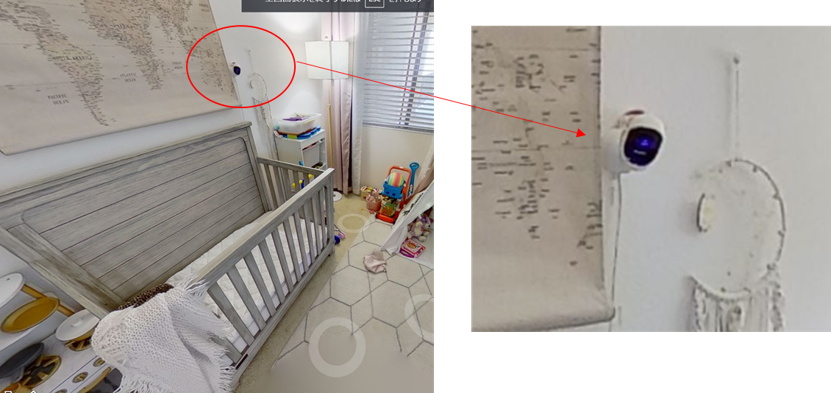
Baby monitor (US_29) in the baby's room and the room
Source: Consumer Life Panorama
What is Consumer Life Panorama?
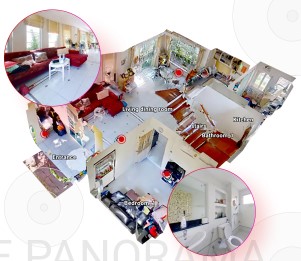
This is a website-type database that has accumulated visual data on more than 1,000 sei-katsu-sha from 18 countries around the world. The database includes many 3D models of living environments and 2D data of items owned by each sei-katsu-sha, and is useful for understanding overseas sei-katsu-sha, which is difficult to grasp using only letters and numbers.
Using visual data such as those cited in this column,
Compare the differences in the attributes of overseas consumers
To get a realistic understanding of the actual usage of each category
To understand the overall lifestyle of target consumers
etc., can be utilized as a “no-go” home visit survey.
Parenting that prioritizes your own time
Earlier, I explained how American families provide children with their own rooms from a young age. In fact, the reason for this isn't just to foster a sense of independence in children; it also serves the purpose of maintaining a healthy marital relationship. It's often said that one common concern for couples with children is frequent arguments over parenting. This happens because having children naturally makes them the center of life, often leading to neglect of time spent just as a couple. In the US, it seems many households recognize the importance of maintaining personal and couple time even after children are born.
That said, while dual-income households are common, finding personal time while raising children is not easy in the U.S., where maternity and childcare leave are short. Therefore, some families manage by employing the following two approaches.
First, families with greater financial means hire babysitters or nannies. Unlike the Japanese approach to hiring babysitters or housekeepers, nannies are a more common service utilized in the US. The scope of their work varies: some are hired solely for childcare, while others are also tasked with household chores like cleaning. Additionally, some families hire nannies to watch the children during occasional couple's dates to maintain a healthy relationship.
Another method is asking a neighbor or acquaintance. In fact, many Americans place significant importance on the neighborhood when moving. This isn't solely for creating a safe environment for children; it also aims to build a positive give-and-take relationship with friendly neighbors. This allows for favors like briefly watching the children in emergencies or helping with tasks like mowing the lawn.
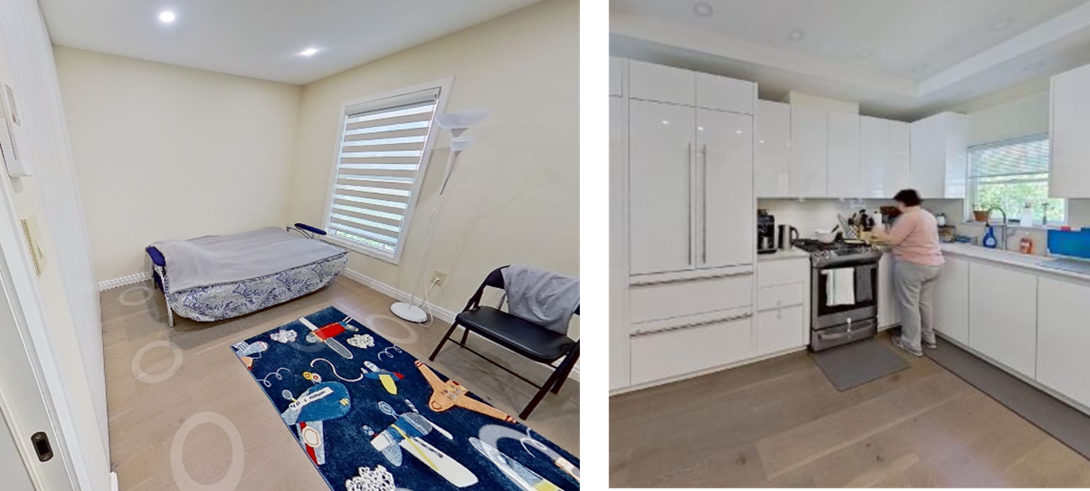
Live-in nanny's room (left) and nanny doing housework (right) (US_59)
Hiring live-in nannies is limited to wealthy families, but hiring part-time nannies is more common than in Japan.
Source: Consumer Life Panorama
In the United States, children are generally viewed as individuals independent from their parents. To foster this sense of independence from an early age, they are often given their own rooms at a young age. Similarly, parents also prioritize their own time rather than devoting all their time to their children, creating opportunities to spend time apart using methods like those mentioned earlier. In any case, this seems rooted in a fundamental value that emphasizes the individual.
-

Author profile
Yang Yan
A Chinese researcher based in Japan shares insights on overseas consumer lifestyles, primarily focusing on China. Observing parenting in the U.S., I feel Chinese parenting styles tend to be somewhat overprotective.
-
Editor profile
Risa Takahama
I was responsible for building the Global Market Surfer website. When my child was 0 years old, I tried practicing American-style parenting where you don't immediately respond when they cry at night. However, since we slept in the same room, I ended up prioritizing my own sleep and gave up. I realized that American-style parenting requires a spacious home.