Global Market Surfer
 CLP
CLP Column
[China] Unraveling the New Growth of the Tea Beverage Market Through History
- Release date: Dec 02, 2025
- Update date: Dec 02, 2025
- 3932 Views

目次
1. Introduction
Tea is one of the symbols of Chinese culture. After thousands of years of development, it has expanded from traditional tea leaf consumption to a more diversified modern tea beverage market. In recent years, China's tea beverage market has undergone rapid changes. Alongside “traditional tea leaves” and “Ready-to-Drink (RTD) tea,” the rapidly growing segment of “freshly brewed tea” has emerged. These three major categories are forming a new market structure where they coexist. Consequently, China's tea beverage market is facing new growth opportunities.
Traditional tea leaves
Ready-to-Drink (RTD) tea
Freshly brewed tea
According to Statista (2025), China's tea beverage market size has reached 755.6 billion yuan (approximately 17 trillion yen), and it is projected to continue growing at a high rate.
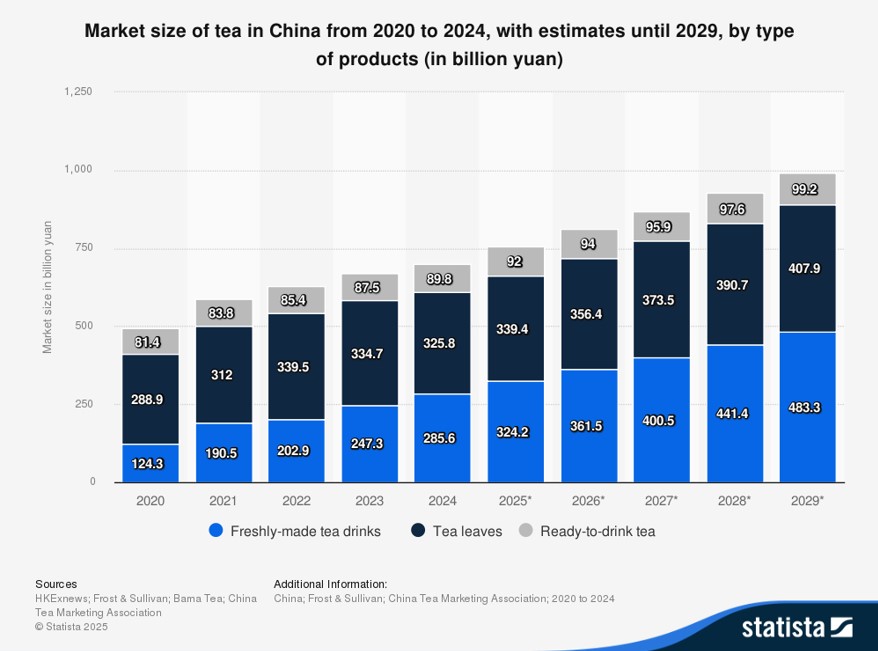
Figure 1: China Tea Market Size (2020–2024) and Forecast to 2029 (by Product Type)
Source: HKExnews, & Bama Tea. (August 28, 2025). Market size of tea in China from 2020 to 2024, with estimates until 2029, by type of products (in billion yuan) [Graph]. In Statista. Retrieved November 04, 2025(Source: Statista)
Therefore, this article analyzes tea-related data from Intage's Global Viewer* overseas consumer database. By examining the penetration rates of green tea and black tea in China, their consumption purposes, and key purchase considerations, we will clarify the characteristics of each.
2. Consumption of Green Tea and Black Tea in China
Upon reviewing data on beverage categories purchased over the past month, we found that green tea is more widely consumed than black tea across all age groups. Meanwhile, while black tea has lower penetration among the elderly, it shows consistent purchase rates among those in their 20s to 40s.
![Beverage Category Purchased in the Past Month [Base: Chinese Men and Women Aged 18-64] (MA)](https://www.global-market-surfer.com/assets/pickup/a2/2QW/en/pickup-2QW.png)
Figure 2: Beverage Categories Purchased in the Past Month
[Base: Chinese Men and Women Aged 18–64] (MA)
Source: INTAGE Global Viewer (2024)
*About Global Viewer
This service provides reports tailored to your issues using questionnaire data on various actual conditions and attitudes of sei-katsu-sha in 11 countries (Asia and US) stocked by INTAGE.
The service covers 400 items, including actual behavioral conditions and awareness, values, and information contact related to various product and service categories.
3. Purposes for Drinking Green Tea and Black Tea in China
Regarding the purposes for drinking green tea and black tea, the following order showed a higher tendency: “when thirsty,” “when wanting to relax,” “when wanting to refresh,” and “when wanting to cool down.” Particularly for “when thirsty,” “when wanting to refresh oneself,” and “when wanting to cool down,” green tea showed a higher level of purposefulness compared to black tea. This suggests that green tea is positioned as a beverage more suited to everyday drinking occasions.
![Drinking Purpose [Base: Chinese individuals aged 18–64 in each category who drank within the past month] (MA)](https://www.global-market-surfer.com/assets/pickup/a2/2QX/en/pickup-2QX.png)
Figure 3: Consumption Purpose [Base: China, 18-64 years old, monthly consumers by category] (MA)
Source: INTAGE Global Viewer (2024)
*Top 7 items (descending order) from Total are excerpted and displayed.
Next, we'll focus specifically on men and women in their 20s and 50s to examine their “reasons for drinking by age groups”
●Reasons for drinking green tea (by age group)
The main reasons people drink green tea are “when thirsty” and “to relax or refresh.”
Particularly among those in their 50s, these reasons were more strongly expressed than among those in their 20s. On the other hand, a relatively high proportion of those in their 20s drink green tea “when they want to concentrate.”
These results suggest that green tea is primarily consumed for everyday, functional purposes like “quenching thirst.” Furthermore, among middle-aged and older adults, the emotional aspects of ‘relaxation’ and “refreshment” are considered more important than among younger age groups.
![Purpose of Green Tea Consumption [Base: Green Tea Drinkers in Past Month (Excerpts from 20s and 50s)] (MA)](https://www.global-market-surfer.com/assets/pickup/a2/2QA/en/pickup-2QA.jpg)
Figure 4: Purposes for Drinking Green Tea [Base: Green Tea Drinkers in Past Month
(Excerpts from 20s and 50s)] (MA)
Source: INTAGE Global Viewer (2024)
*Top 7 items (descending order) from Total are excerpted and displayed.
●Purpose of Drinking Black Tea (by Age Group)
Overall, black tea shows similar trends to green tea. However, among those in their 50s, the purpose of “relaxing or refreshing oneself” was nearly the same level as those in their 20s. Instead, the tendency to drink it “to alleviate heat” was stronger than among those in their 20s.
These results suggest that while black tea is valued for consistent functional benefits across age groups, the specific functional values emphasized vary by age.
![Purpose of Tea Consumption [Base: Tea Drinkers in Past Month (Excerpts from 20s and 50s)] (MA)](https://www.global-market-surfer.com/assets/pickup/a2/2QH/en/pickup-2QH.png)
Figure 5: Reasons for Drinking Black Tea [Base: Black Tea Drinkers in Past Month
(Excerpts from 20s and 50s)] (MA)
Source: INTAGE Global Viewer (2024)
*Top 7 items (descending order) from Total are excerpted and displayed.
4. Key Considerations When Purchasing Green Tea and Black Tea in China
The key factors prioritized when purchasing green tea are, in descending order of importance: “good taste and flavor,” “price,” “natural ingredients,” and “national safety certification.” Notably, when buying green tea, consumers place greater emphasis on “price,” “natural ingredients,” and “place of manufacture,” suggesting they perceive green tea as an “accessible and healthy beverage.”
On the other hand, “good taste and flavor” is particularly emphasized when purchasing black tea, suggesting that black tea is a beverage where “taste satisfaction” and “preference” are more highly valued.
![Key Purchase Considerations [Base: Chinese consumers aged 18-64 who consumed the product within the past month] (MA)](https://www.global-market-surfer.com/assets/pickup/a2/2QY/en/pickup-2QY.png)
Figure 6: Key Purchase Considerations [Base: Chinese consumers aged 18-64
who consumed each category within the past month] (MA)
Source: INTAGE Global Viewer (2024)
*Top 10 items (descending order) from Total are excerpted and displayed.
Next, we'll focus specifically on men and women in their 20s and 50s to examine their key purchase considerations.
Clear differences in purchase priorities for both green tea and black tea emerged across age groups.
Among the younger demographic in their 20s, there is a strong tendency to prioritize factors related to flavor, functionality, and design, such as “good taste/flavor,” “low calories,” and “package design.”
Conversely, among those in their 50s, there was a stronger tendency to prioritize factors related to quality, safety, and reliability, such as “place of manufacture,” “natural ingredients,” “brand image,” and “national safety certification.”
These results suggest that while younger consumers tend to select products based on “functional value” and “design appeal,” middle-aged and older consumers place greater emphasis on “emotional value” and “reliability.”
![Key Purchase Considerations [Base: Green Tea Drinkers in Past Month (Excerpts from 20s and 50s)] (MA)](https://www.global-market-surfer.com/assets/pickup/a2/2QO/en/pickup-2QO.png)
Figure 7: Key Purchase Considerations [Base: Green Tea Drinkers in Past Month
(Excerpts from 20s and 50s)] (MA)
Source: INTAGE Global Viewer (2024)*Top 10 items (descending order)
from Total are excerpted and displayed.
![Key Purchase Considerations [Base: Black Tea Drinkers in Past Month (Excerpts from 20s and 50s)] (MA)](https://www.global-market-surfer.com/assets/pickup/a2/2QQ/en/pickup-2QQ.png)
Figure 8: Key Purchase Considerations [Base: Black Tea Drinkers in Past Month
(Excerpts from 20s and 50s)] (MA)
Source: INTAGE Global Viewer (2024)
*Top 10 items (descending order) from Total are excerpted and displayed.
5. Historical and Cultural Perspectives
So why are “price,” “natural ingredients,” and “place of production” more important for green tea, while “flavor and aroma” are prioritized for black tea? Let's explore the background from a historical and cultural perspective.
China boasts many renowned green teas with long histories of being cherished by royalty and scholars. Representative examples include Longjing (Dragon Well) from Zhejiang Province, Biluochun (Green Snail Spring) from Jiangsu Province, and Huangshan Maofeng (Yellow Mountain Hairy Peak) from Anhui Province. Beyond their historical value, the environmental conditions unique to each production area—such as climate and soil—directly influence the quality of the tea leaves. Consequently, even the same tea variety struggles to replicate the same quality when grown elsewhere. Due to their rarity, prices are relatively high, leading to a greater emphasis on factors like “natural” and “place of origin.”
While black tea is considered to have originated in China's Fujian Province, green tea and oolong tea were dominant in China at the time. Black tea primarily developed as an export product for Europe. It was Britain that spread black tea worldwide. In recent years, the rising popularity of milk tea, which uses black tea as its base, has made black tea increasingly familiar to Chinese consumers. This historical and cultural context likely fosters a perception of black tea as “enjoying a foreign flavor,” contributing to the particular emphasis placed on its “excellent taste and aroma.”
6. Summary
This article examines the differences in penetration rates, consumption purposes, and key purchase considerations for green tea and black tea within China's tea beverage market. Analysis reveals that green tea consumption is primarily routine and functional, with factors like “price,” “natural ingredients,” and “production region” being prioritized. Conversely, black tea tends to be valued more for its “taste and flavor.”
For green tea, appealing to consumer confidence and the value of origin is effective, while enhancing taste and aroma is key for black tea. To grow a brand within China's rapidly expanding tea beverage market, clearly defining “who the brand serves, what value it provides, and in what scenarios” will become increasingly crucial.

-

Author profile
Jixiang Yan
Since 2023, I have been engaged in supporting and assisting with marketing activities for manufacturers of daily necessities, beverages, and sundries in my current position.
-
Editor profile
Risa Takahama
After working in marketing research support for Japanese FMCG manufacturers (cosmetics, baby products, food and beverages, etc.) in Asia, Europe, and the U.S., from 2019, in his current position, he develops solutions for overseas marketing research for Japanese companies and conducts seminars and other outward communications.