Global Market Surfer
 CLP
CLP Column
[South Korea, Thailand, Vietnam] What cosmetics and beauty products do men start using when they enter the workforce?
- Release date: Dec 16, 2025
- Update date: Dec 16, 2025
- 2560 Views
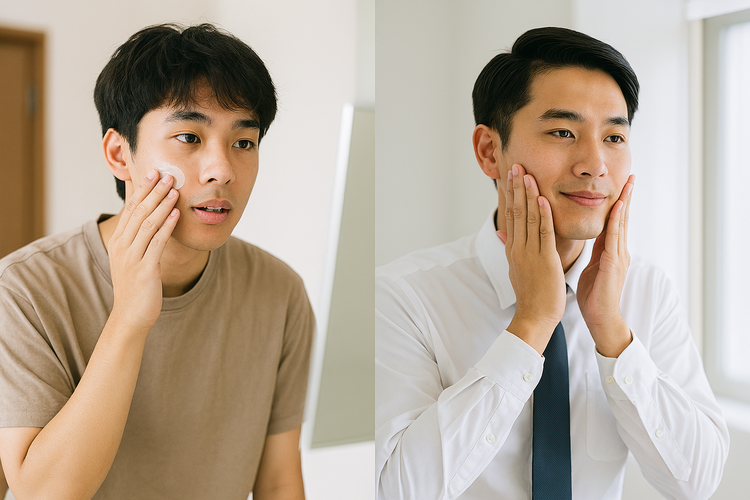
This site has been delivering articles on men's cosmetics and beauty in Asia over several installments.
(Reference article:
Do all Korean men wear makeup? A comparison of men's cosmetics in Korea, China, and Taiwan
Skin Concerns and Beauty Habits Among Men in ASEAN Countries: What Are Their Skin Issues and How Do They Address Them?)
This demonstrates that men's cosmetics and beauty is a rapidly growing field, one that we researchers find highly intriguing. Particularly among younger men, attitudes toward beauty and grooming may differ significantly from older generations, making them a new target group attracting considerable attention.
This article compares the beauty habits of young men in their teens and twenties across three Asian countries—South Korea, Thailand, and Vietnam—based on quantitative data from Intage's Global Viewer* survey (conducted in 2024). What differences exist between teenage students and working adults in their twenties? We examine the cosmetics demanded during this life stage transition from student to income-earning professional, along with each country's distinctive beauty characteristics.
目次
1. Frequency of makeup application
According to the “Global Viewer* (2024 survey),” the percentage of people wearing some form of makeup (base makeup, point makeup) was clearly higher among working adults (20s) than students (18-19 years old) in every country.
South Korea showed a notably high makeup rate of nearly 50% even among teenage students. Thailand and Vietnam revealed a significant increase, with the makeup rate among working adults in their 20s being approximately double that of teenage students.
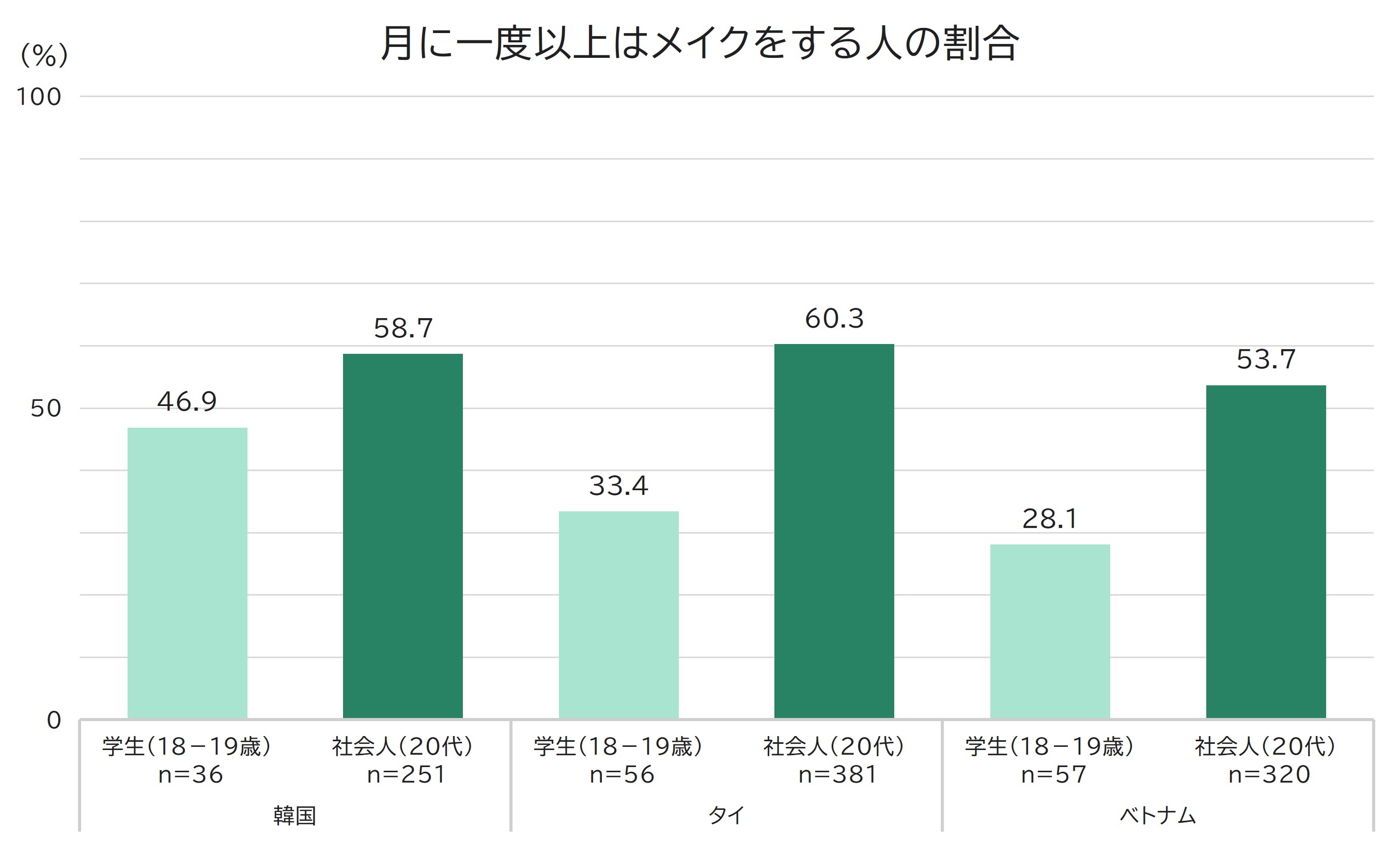
Figure 1: Percentage of people who apply makeup at least once a month
(Base: Teenage students and working adults in their 20s in each country)
Source: INTAGE Global Viewer (2024)
*About Global Viewer
This service provides reports tailored to your issues using questionnaire data on various actual conditions and attitudes of sei-katsu-sha in 11 countries (Asia and US) stocked by INTAGE.
The service covers 400 items, including actual behavioral conditions and awareness, values, and information contact related to various product and service categories.

2. Currently used items
(1) Makeup items
Looking at the makeup items currently in use, it's clear that the most frequently used items in all three countries are concentrated in base makeup.
In Thailand and Vietnam, makeup primers are used by both students and working adults, suggesting they are basic items even students use. In Thailand, BB cream, and in Vietnam, concealer, show higher usage rates among working adults than students, suggesting they are items added as an extra step once people reach their 20s.
In South Korea, the base makeup items with the highest usage rates are BB cream, primer, and foundation, with working adults showing higher usage rates than students for all three. This suggests that upon entering the workforce, individuals begin experimenting with various base makeup products.
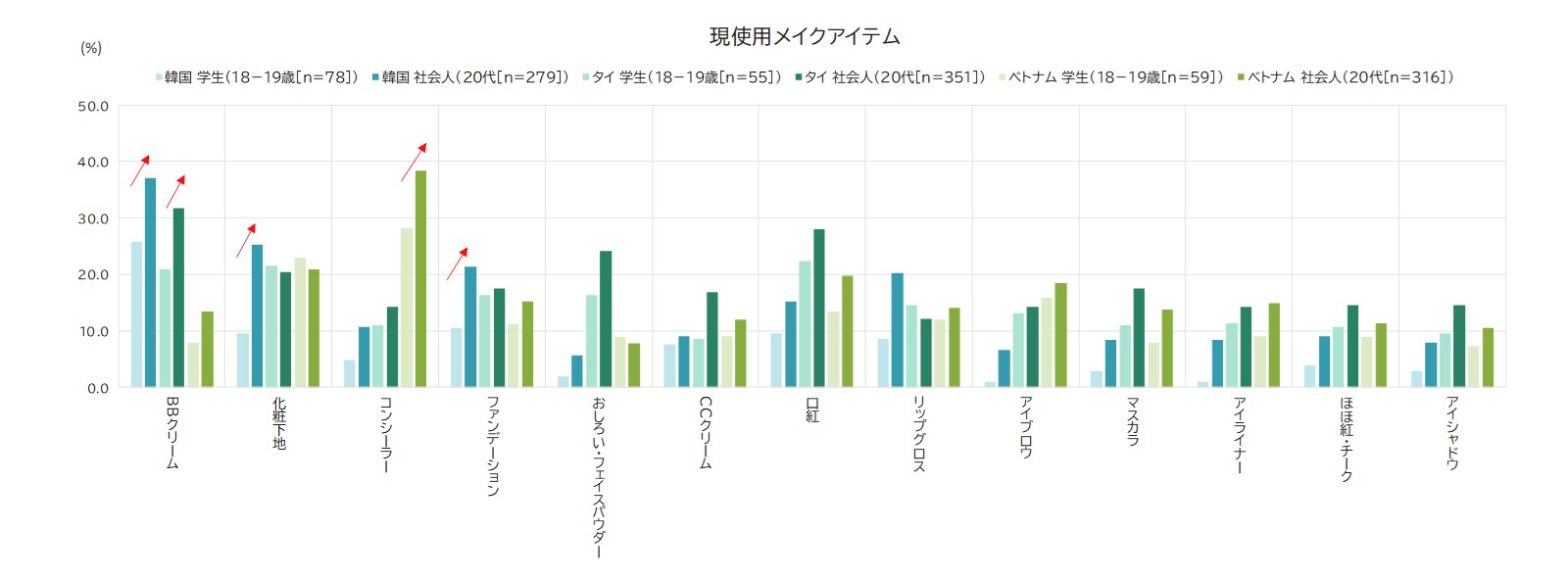
Figure 2: Current Makeup Items Used
(Base: Teenage Students and Working Adults in Their 20s in Various Countries)
Source: INTAGE Global Viewer (2024)
(2) Skincare Items
Next, looking at the skincare items currently in use, we see that facial cleanser usage is high across all age groups.
Sunscreen usage was also generally high across all groups except Vietnamese teenage students.
In South Korea, emulsion usage stands out as exceptionally high, exceeding 60% among both teenage students and working adults in their 20s. This suggests emulsion has achieved broad penetration among South Korea's younger demographic.
Furthermore, items showing increased usage among working adults in their 20s compared to teenage students include: in South Korea, toner, all-in-one products, and serums; and in Thailand, serums. Usage rates for these items rise significantly among working adults in their 20s compared to teenage students. These items appear to be products often started after entering the workforce.
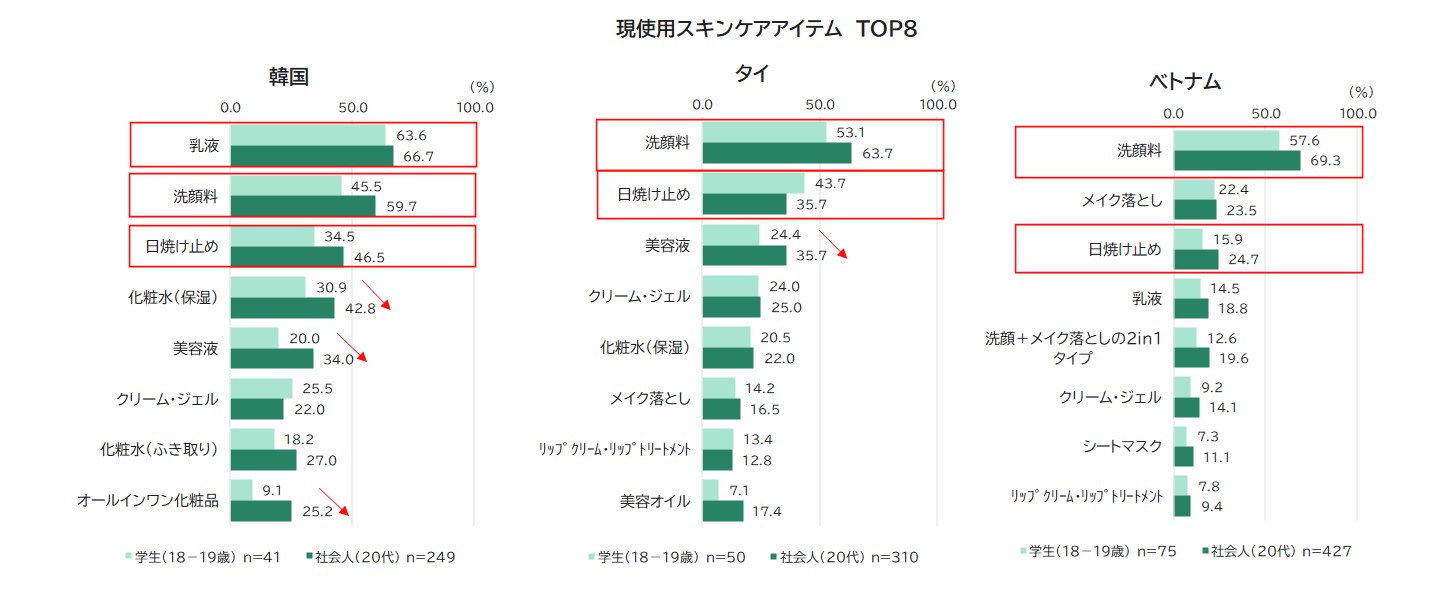
Figure 3: Current Skincare Items in Use
(Base: Teenage Students and Working Adults in Their 20s in Each Country)
*Top 8 items selected from the total of teenage students and working adults in their 20s
in each country
Source: INTAGE Global Viewer (2024)
3. Experience in Aesthetic Medicine
Comparing cosmetic medical treatment experience across life stages in the three countries reveals that working adults in their 20s in all countries have undergone some form of cosmetic medical treatment more frequently than students in their teens. Among those with cosmetic medical experience, approximately 40% are working adults in their 20s in Thailand and Vietnam, while over 50% are working adults in their 20s in South Korea.
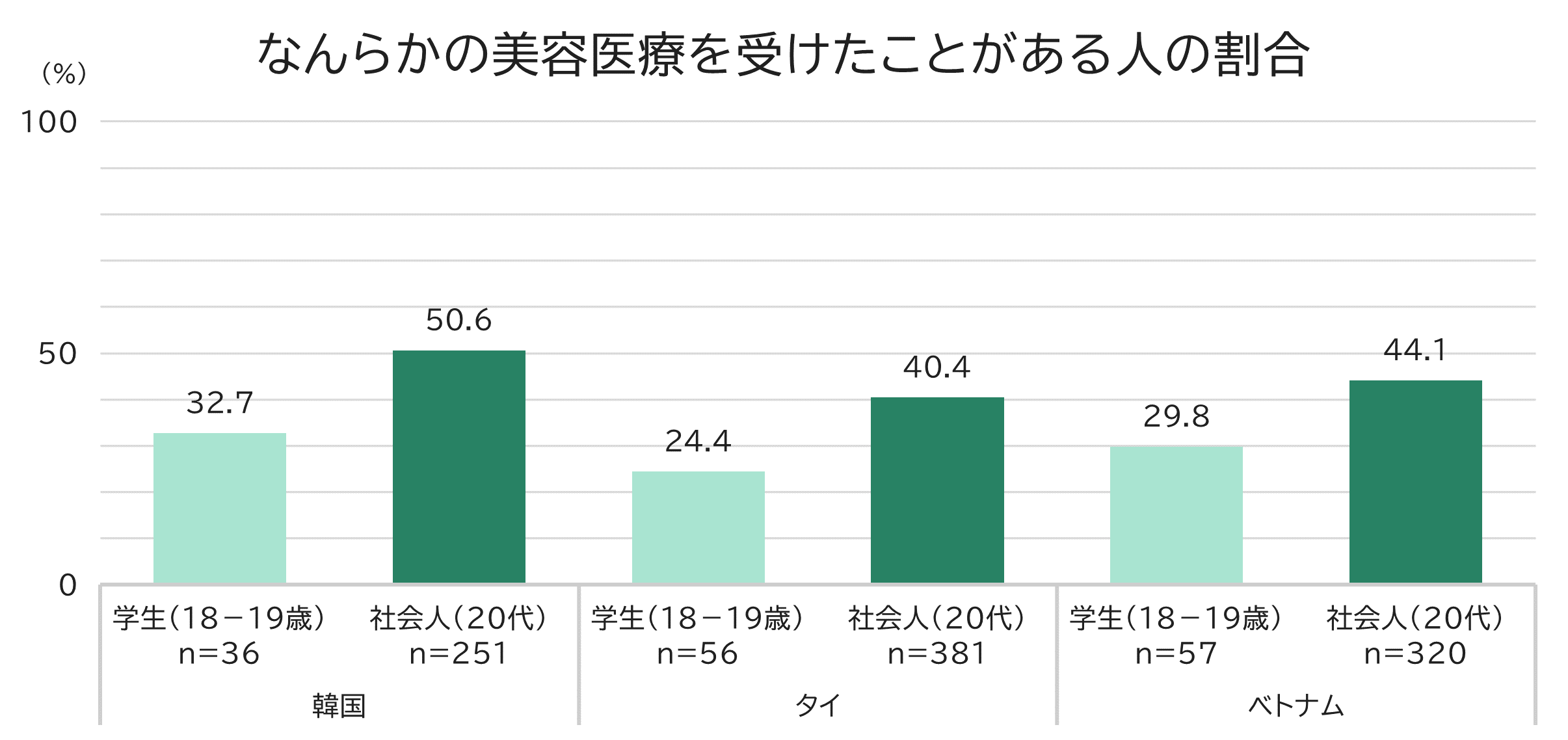
Figure 4: Cosmetic Medical Treatment Experience Rate
(Base: Teenage Students and Working Adults in Their 20s in Each Country)
Source: INTAGE Global Viewer (2024)
Looking at actual aesthetic medical procedures, while the rates are not particularly high at under 20% for most treatments, across all countries, working adults in their 20s scored higher than students in their teens for many aesthetic medical procedures.
The top procedures across countries were skin-enhancing treatments like peels, hair removal, and laser treatments. Notably, Vietnamese working adults in their 20s showed higher scores for “peels,” while Korean working adults in their 20s had higher scores for “other laser treatments” and “spot removal (laser treatment)” compared to other demographics. Since aesthetic medical procedures often cost more than cosmetics, these treatments may be perceived as “something I'd like to try once I become a working adult with more disposable income.”
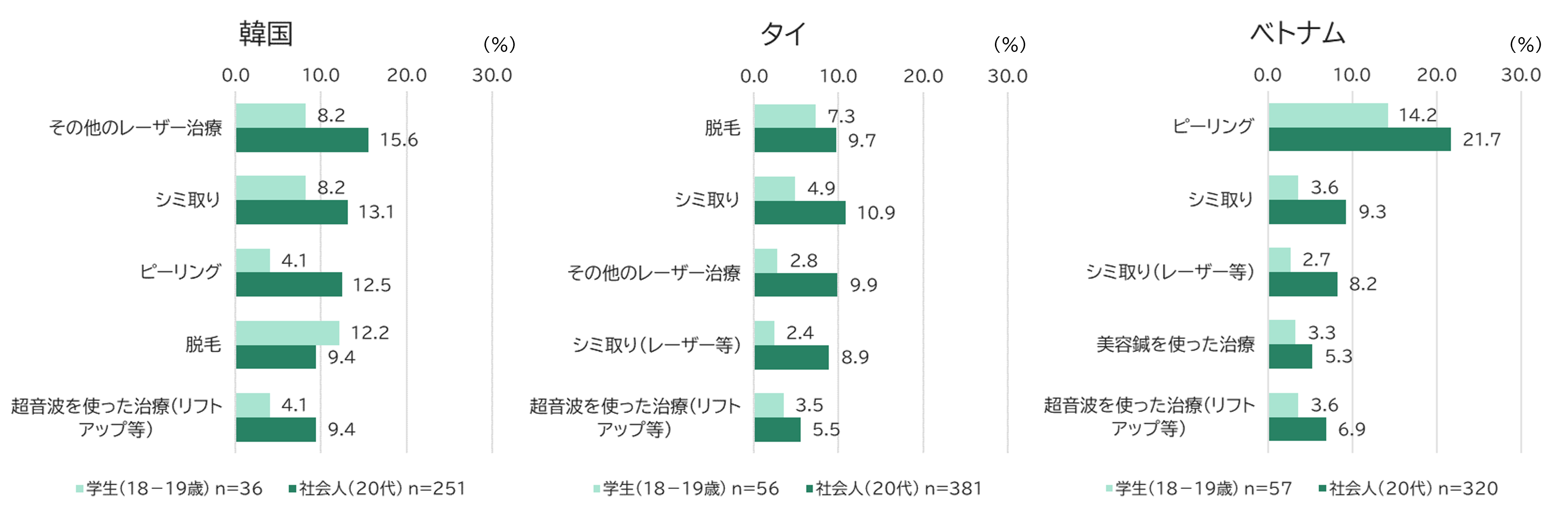
Figure 5: Aesthetic Medical Treatments Experienced
(Base: Teenage Students and Working Adults in Their 20s in Each Country)
Source: INTAGE Global Viewer (2024)
4. Summary
The transition from student to working adult appears to be a key trigger for young men in various countries to start using cosmetics and aesthetic medical treatments.
Compared to Thailand and Vietnam, South Korea showed higher scores among both teenage students and working adults in their 20s, indicating a higher usage rate of items and greater penetration of men's cosmetics. Furthermore, Thailand and Vietnam also have a significant number of men using skincare and makeup items. Overall, it appears that young men in all countries share the desire to “make their skin look beautiful.”
This data reveals that men in each country use certain categories of products starting in their student years, while other cosmetic categories and aesthetic medical treatments are adopted when they enter the workforce and gain increased disposable income. The transition from student to working adult thus represents a crucial entry point for cosmetic categories.
For teenage students, appealing to them with basic skincare items, base makeup products, or aesthetic medical treatments that improve skin condition to cultivate their aspiration for “beautiful skin” is key. Furthermore, when these students become working adults with increased purchasing power, capturing them as entry-level users for the brand will be crucial.
-

Author profile
Ayako Taketani
After working in global mobility research, I am now responsible for global research in cosmetics.
My high school son's interest in cosmetics makes me keenly aware of the modern world. -
Editor profile
Risa Takahama
After working in marketing research support for Japanese FMCG manufacturers (cosmetics, baby products, food and beverages, etc.) in Asia, Europe, and the U.S., from 2019, in his current position, he develops solutions for overseas marketing research for Japanese companies and conducts seminars and other outward communications.