Global Market Surfer
 CLP
CLP Column
【Japan・Korea】What is a Convenient “Semi-Outdoor Balcony”? Differences in Laundry Habits Between Japan and Korea
- Release date: Dec 23, 2025
- Update date: Dec 23, 2025
- 1985 Views
目次
1. Introduction
In our daily lives, washing machines are indispensable for keeping our clothes clean. Looking at the global “laundry detergent market,” Asia is the largest market as of 2024.
The “laundry detergent market” refers to the market for the sale and distribution of laundry detergents (powder, tablets, liquid, etc.) used to wash clothing and textile products, regardless of whether they are for household or commercial use.
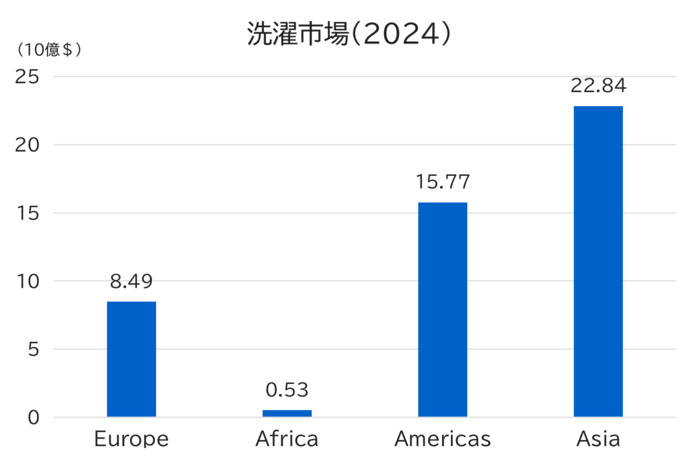
Figure 1: Laundry Market Size by Region
Source:
Looking at washing machine ownership rates by country in Asia, South Korea has the highest rate, with household ownership exceeding 97%.

Figure 2: Washing Machine Ownership Rates in Asian Countries (2024)
Source:
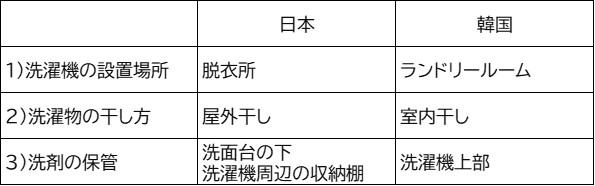
This article compares laundry habits in Japan and South Korea—the country with the highest washing machine ownership rate in Asia—based on actual photos from Intage's overseas residents visual database “Consumer Life Panorama” (commonly known as CLP). We examine three key aspects: “washing machine placement,” “laundry drying methods,” and “detergent storage.”
2. Washing Machine Installation Location
First, let's look at where washing machines are placed in Japan.
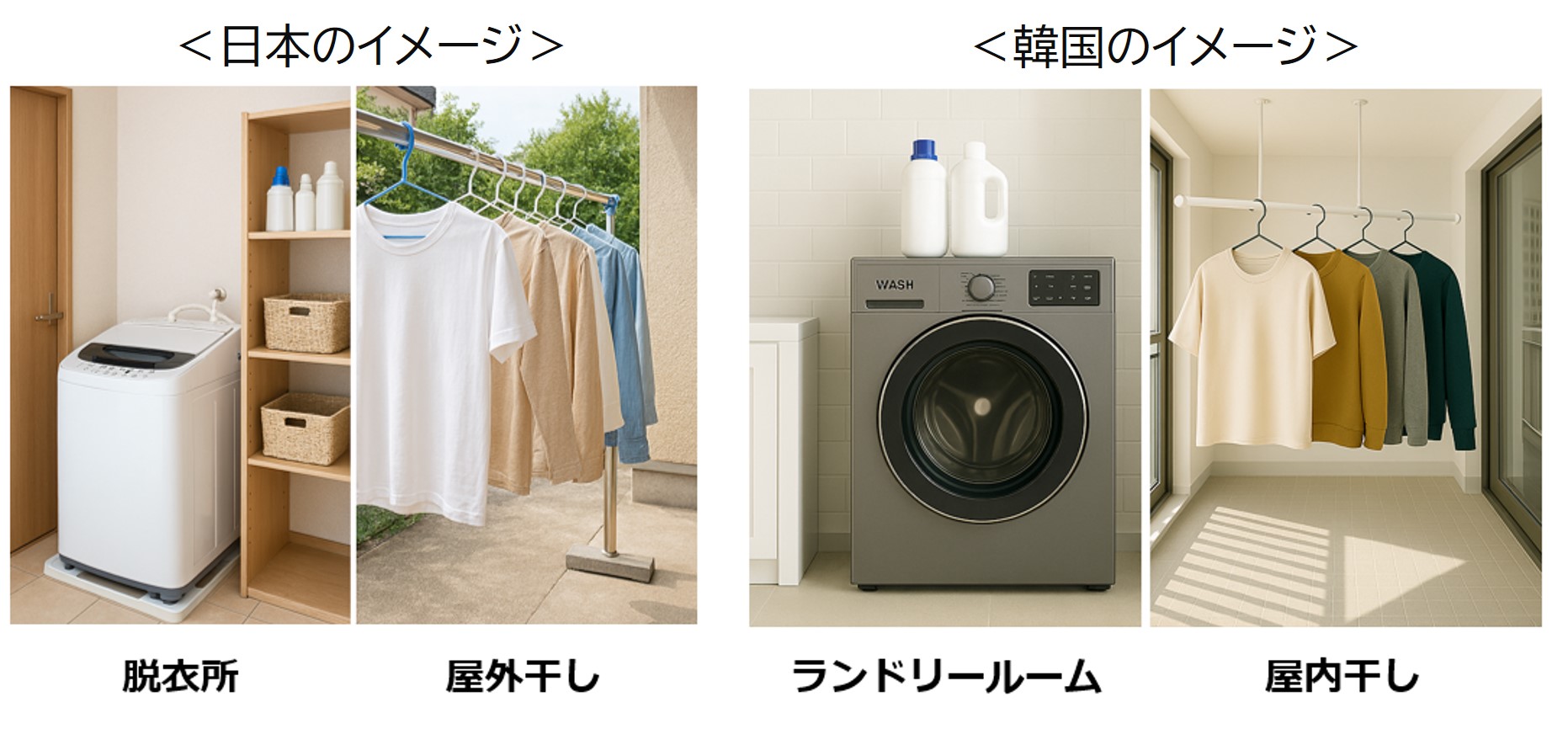
Reviewing the CLP photos, we often saw washing machines installed inside the changing room in Japan. This allows clothes removed during bathing to be placed in a basket or the washing machine, making laundry more efficient.
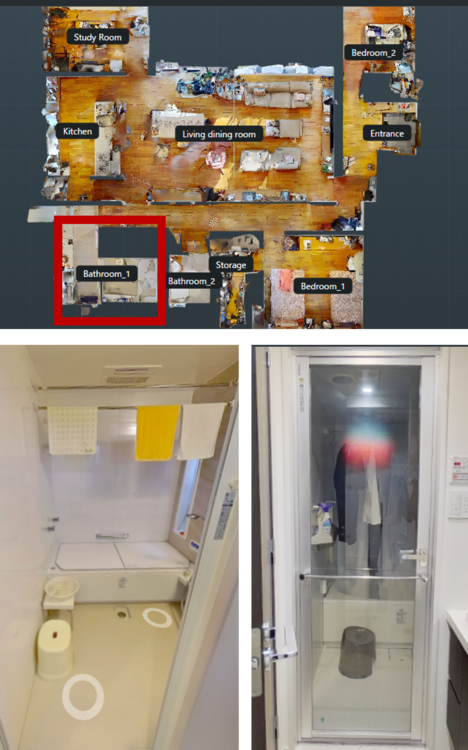
Photo 1:
(Bottom) Washing machines are often placed near the bathroom changing area
Source: Intage Consumer Life Panorama
What is Consumer Life Panorama?
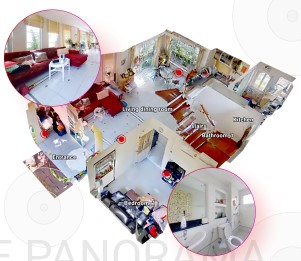
This is a website-type database that has accumulated visual data on more than 1,000 sei-katsu-sha from 18 countries around the world. The database includes many 3D models of living environments and 2D data of items owned by each sei-katsu-sha, and is useful for understanding overseas sei-katsu-sha, which is difficult to grasp using only letters and numbers.
Using visual data such as those cited in this column,
Compare the differences in the attributes of overseas consumers
To get a realistic understanding of the actual usage of each category
To understand the overall lifestyle of target consumers
etc., can be utilized as a “no-go” home visit survey.
In contrast, in Korea, there is a laundry room with a washing machine installed inside. It appears the laundry room is located near the kitchen. Since there is a distance between the changing area and the laundry room, one can imagine that after undressing in the changing area, clothes are placed in a basket and carried to the laundry room. In the household shown in the lower left photo, there were four large baskets. Additionally, in the household shown in the lower right photo, clothes are placed in a net-like container.

Photo 2:
Source: Intage Consumer Life Panorama
3. How to Hang Laundry
In Japan, drying laundry outdoors on balconies or in gardens is the norm. When the weather is bad, people use bathroom dryers for indoor drying, but on sunny days, you often see households drying their laundry outside. Also, many households seem to use clotheslines that are either “free-standing with side supports” or “wall-mounted or pole-mounted types.”
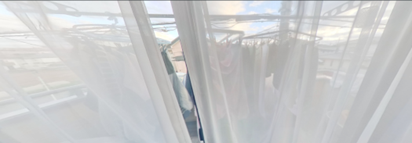
Photo 3:
Source: Intage Consumer Life Panorama
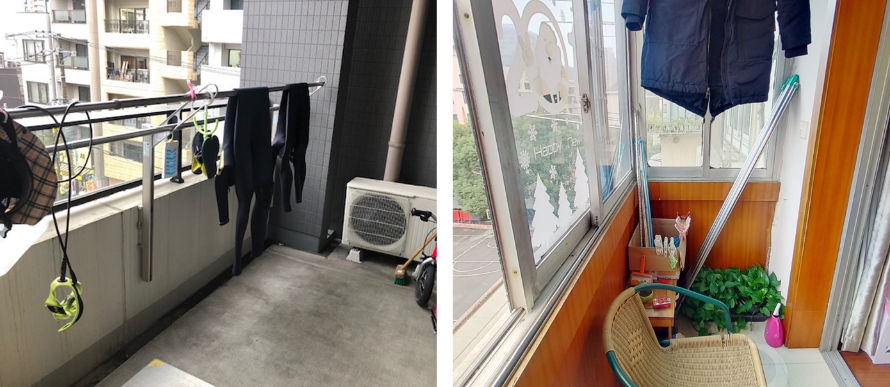
On the other hand, in Korea, there are no balconies facing outside, and indoor drying is common. Due to high levels of air pollution particles like fine dust and yellow sand in Korea, indoor drying is the mainstream practice. The appeal lies in being unaffected by weather and having ample space for drying.
Additionally, Korean balconies are wider than Japanese ones, providing ample space for drying laundry. In Korea, a balcony refers to a semi-outdoor space separated from the living area by windows. While Japanese balconies are spaces directly exposed to the outside air, Korean ones are enclosed by glass windows. Looking at photos of Korean balconies, some homes even have enough space to place trampolines or exercise equipment. Clothes drying rods are mounted on the balcony ceiling. They feature an accordion-style design and allow for height adjustment. This differs from the drying rods commonly seen in Japan. Additionally, some households use portable, compact drying rods indoors.
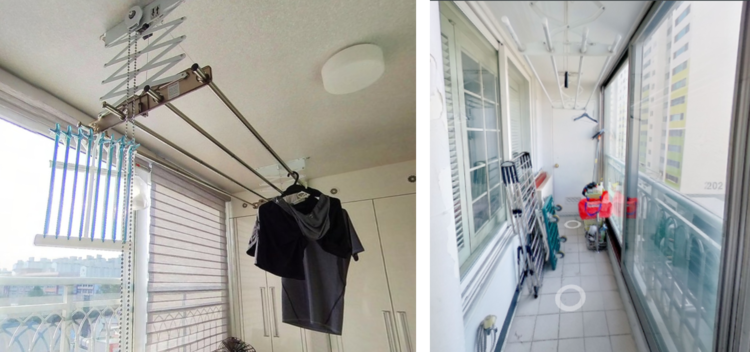
Photo 4:
Height-adjustable drying rods are installed.
(Right) Portable drying rods are also placed there.
Source: Intage Consumer Life Panorama
4. Storage Location for Detergent
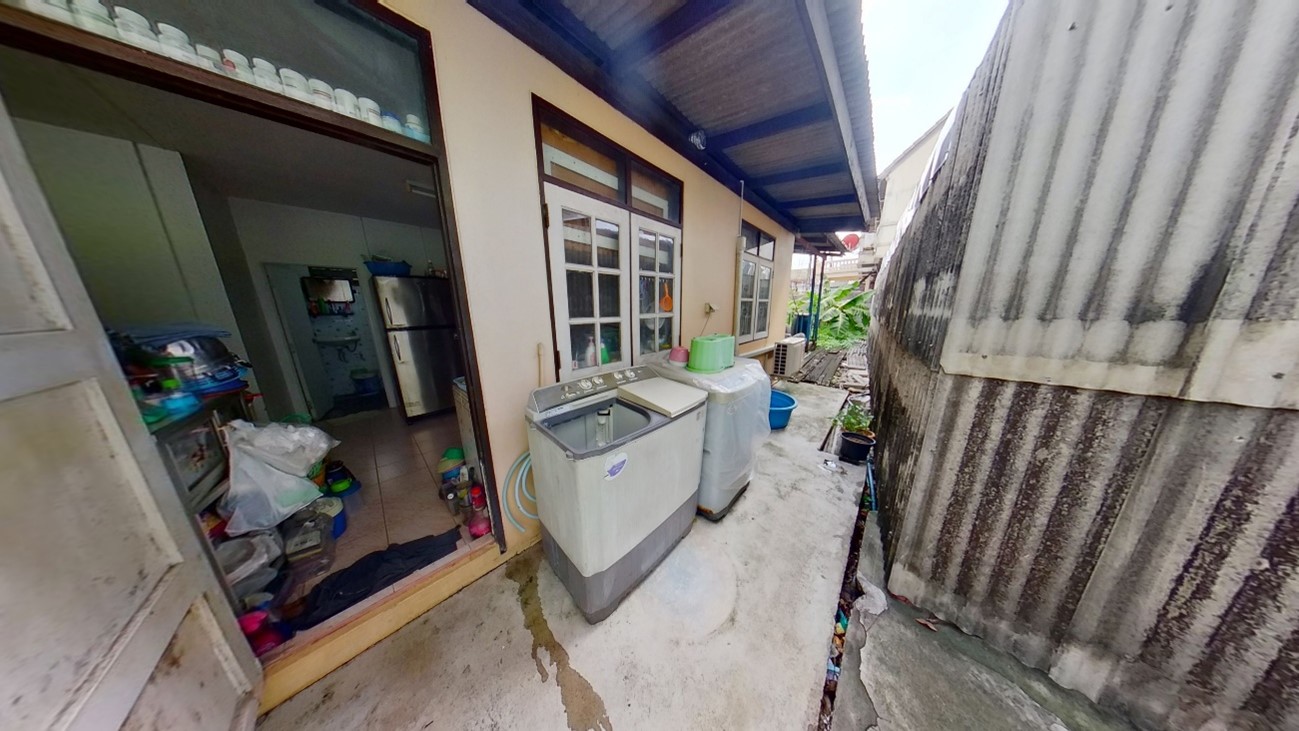
In Japan, detergent is stored under the sink or in the storage cabinet next to the washing machine. Some homes also place it directly near the washing machine.
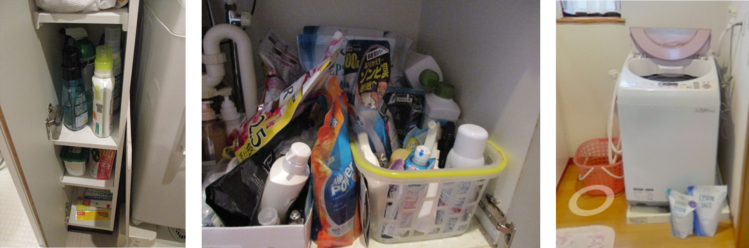
Photo 5:
Source: Intage Consumer Life Panorama
Meanwhile, in South Korea, they place it directly on top of the washing machine. Unlike Japan, “front-loading washing machines” are the mainstream in South Korea, and it seems they make effective use of the space above the washing machine. There isn't a big difference from Japan; detergent is stored around the washing machine.
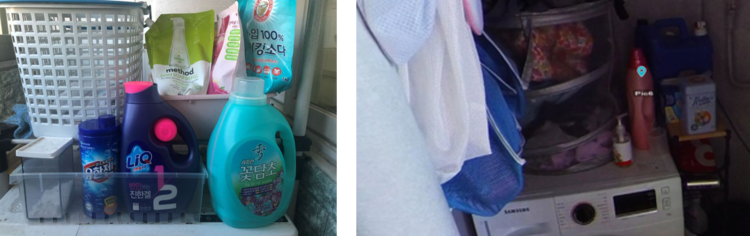
Photo 6:
Source: Intage Consumer Life Panorama
(Reference) Major Washing Machine Manufacturers
Looking at the washing machine brands owned in Japan and South Korea, both countries have a higher proportion of owners who own domestic brands.
In Japan, major manufacturers are spread out, with HITACHI and Panasonic each holding around 20%, and SHARP and TOSHIBA each holding around 10%.
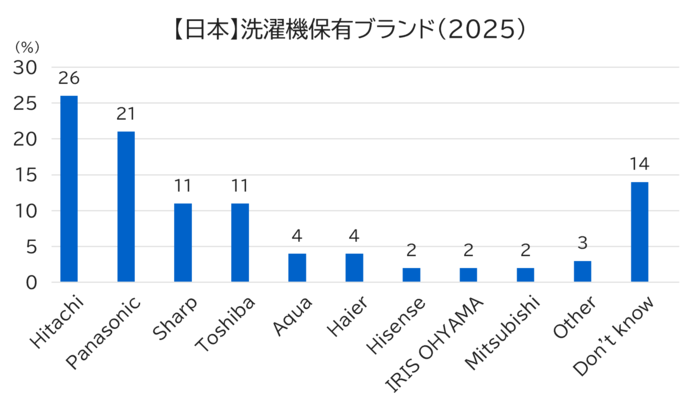
Figure 3: Washing Machine Ownership by Brand in Japan (2025)
Source:
Upon reviewing the CLP photos, it was confirmed that the top four manufacturers' washing machines were in use.

Photo 7:
Source: Intage Consumer Life Panorama
Meanwhile, in South Korea, LG (about 50%) and Samsung (about 40%) account for roughly 90% of the market. There seems to be no room for other brands to enter.

Figure 4: Washing Machine Ownership by Brand in South Korea (2025)
Source:
Upon reviewing the CLP photos, it was confirmed that LG and SAMSUNG washing machines are being used.
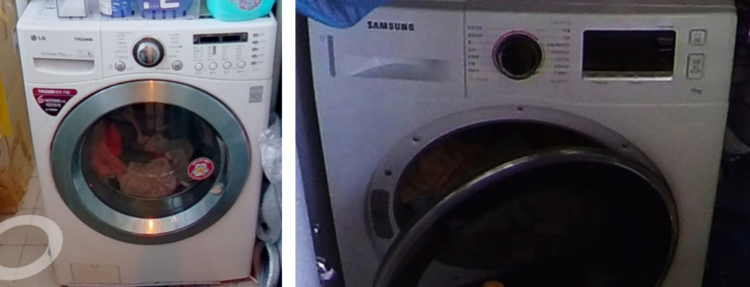
Photo 8:
Source: Intage Consumer Life Panorama
5. In Conclusion
Differences in housing and climate between Japan and Korea have led to distinct placements for washing machines and drying clothes. We hope this article helps you better understand Korean lifestyles.
-
Author profile
Momoka Kobayashi
Joined INTAGE in 2024. Engaged in marketing research in the DCG field, primarily within the electrical equipment industry.
-
Editor profile
Kenichiro Takahashi
INTAGE Inc. Global Business Division Overseas Business Promotion Department Business Planning Group
After extensive involvement in global research within the mobility industry, has been engaged in overseas business promotion, establishing global research services, and developing new solutions since 2023.