 Global Market Surfer
 CLP
CLP Column
【Indonesia】Check Instagram Before Starting a Business in Jakarta: The Power of Jastip (Personal Shopping Service)
- Release date: Mar 02, 2026
- Update date: Mar 02, 2026
- 93 Views
目次
1. Introduction
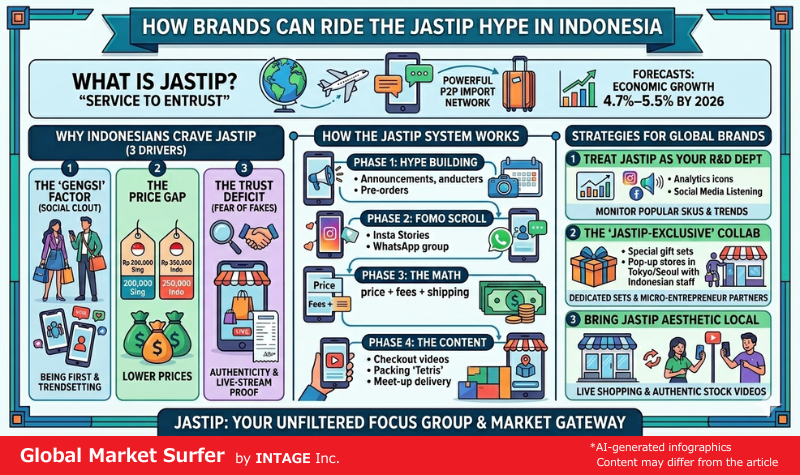
2.What is Jastip? (And Why It’s More Than Just Shopping)
3.Why Jastip Has Demand: The Early Warning System for Brands
4.How Jastip Works: The Anatomy of an Informal Distribution Network
5.How Brands, Especially from Outside Indonesia, Can Ride the Jastip Hype
6.The Bottom Line: Why This Invisible Touchpoint Matters
1. Introduction
Dateline: JAKARTA – It’s a balmy Tuesday at 11 PM in Jakarta, but I was poised with my phone like a hawk. The word from a Jastip admin is that she'll be doing live shopping at Dior UK for the coveted Rouge Dior Sequin Liquid Lip. This limited-edition shade might not grace the shores of Jakarta anytime soon, and Dita is ready for battle.
My WhatsApp group lights up as shoppers scramble to type "Fix" first, aiming for that checkmark emoji from the admin to secure their lip color. Meanwhile, another Jastip is off in Japan, snapping pics of goodies from a nearby minimarket. I have my notifications switched on, praying to snag the Acnes Mentholatum cream—still a rare find in Indonesia.
Image 1 :A Jastiper creates FOMO of Japan's Acnes Cream with its price in IDR
What follows next might give every global brand strategist a mix of excitement and dread. Jastip users like me aren’t just a shopper; we’re immersed in the most powerful yet unseen facet of Indonesia's market: Jasa Titip, or Jastip.
Forecasts show that by 2026, Bank Indonesia projects economic growth between 4.7% and 5.5%, and this informal economy is gearing up to become a titan, driven by resilient household consumption. Here’s the kicker: for international brands, Jastip isn’t merely a distribution channel. It’s your earliest warning system, an unfiltered focus group, and the most genuine gateway into the world’s fourth-most populous nation.
2.What is Jastip? (And Why It’s More Than Just Shopping)
At its core, Jasa Titip translates to “Service to Entrust.”
Jastip is the digital-age version of asking your wealthiest friend who is going on a vacation to buy you a specific brand of dates, except now the “friend” is a hyper-connected gig-economy warrior, and the “dates” are likely a limited-edition Dior liquid lip or a specific Acnes cream from Japan.
Basically, Jastip is a person-to-person import service. A jastiper (the provider) is off gallivanting in another country or city, offering to fetch goods for their followers back home—at a fee, of course.
It addresses consumer challenges in 2026, like navigating overseas purchases, lacking international payment options, unpredictable shipping times, customs woes, and the ever-present fear of scams or counterfeit items.
But what brands often overlook is that every Jastip transaction is a data point. Each purchase is a vote for what Indonesian consumers crave but can’t yet get locally.
3.Why Jastip Has Demand: The Early Warning System for Brands
You might think, “Isn’t that just… shopping?”
Oh no, my friend. This is Indonesia we’re talking about.
The demand for Jastip isn’t just about logistics; it’s a cultural and economic phenomenon fueled by three potent ingredients—each one a flashing signal for brands observing from a distance.
1. The “Gengsi” Factor (Social Clout): In Indonesia, being first is everything. Products go viral on TikTok and Instagram, igniting instant demand for items exclusive to certain countries.
If you’re spotted sporting the latest New Balance collab six months post-launch from a local shop, the response will be, “Oh, ketinggalan zaman (outdated).” But if you have it while it’s still flying off the shelves in Tokyo? You’re the trendsetter.
The Invisible Touchpoint: When a jastiper snags 50 pairs of a quirky sneaker variant, they aren’t just reselling. They’re shouting, “This SKU will fly in Indonesia!” The real question is: are you paying attention?
2. The Price Gap (The Sephora Effect): Let’s face it. Luxury items and even mid-range cosmetics in Indonesia come with a “Rich People Tax” (thanks to import duties, luxury taxes, and inflated retailer margins). A lipstick priced at Rp 200,000 in Singapore can mysteriously hop up to Rp 350,000 here. Even with the jastiper fee, it often still comes out cheaper.
The Invisible Touchpoint: This price sensitivity data is pure gold. If your product consistently pops up in Jastip hauls despite hefty shipping fees, it signals that your local pricing strategy might be skewed—or that demand is so elastic, you could have more room to play.
3. The Trust Deficit (The Fear of Fakes): Indonesian consumers are no fools. They know the counterfeit game all too well. Purchasing from a random e-commerce seller claiming to offer direct imports is a risky roll of the dice. But buying from Mba Rina, the trusted Instagrammer, who’s live-streaming from an actual store in Harajuku—showcasing the real item, complete with receipts and packing in front of you? That’s legit.
The Invisible Touchpoint: This trust economy reveals that every transaction whispers insights about what consumers truly desire, offering brands a unique lens into their market strategy.
4.How Jastip Works: The Anatomy of an Informal Distribution Network
How does this informal economy, moving billions of Rupiah, actually function? It’s a beautifully chaotic ballet that has evolved. We’re now in the era of the “Professional Jastiper”—they have brands, customer databases, and clear SOPs . And for brands watching, it’s a masterclass in Indonesian consumer behavior.
Phase 1: The Hype Building.
The jastiper announces their trip. “OPEN PRE-ORDER JAPAN 18 – 28 JAN!” Top countries for this? Japan for mom-and-baby goods, Korea for cosmetics and K-pop merch, the US for sneakers, and Europe for luxury fashion.
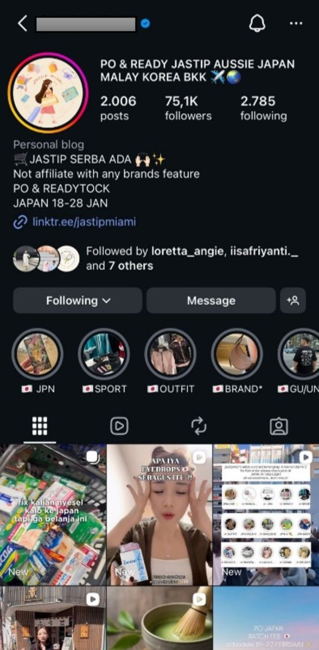
Image 2: A jastiper announces the trip on the Instagram bio
https://www.instagram.com/jastip.miami/
Phase 2: The FOMO Scroll.
They flood Instagram Stories and WhatsApp Groups with photos from the store. “Last piece of this!” “They have the blue one here!”
Phase 3: The Math.
The buyer pays: (Item Price in Yen) + (Service Fee / Item) + (Estimated Shipping Weight) .
To give you an idea of the scale: a semi-professional jastiper might handle around 50 orders a month with a net fee of Rp 200,000 per item, pulling in Rp 10 million monthly. The pros? They’re managing 150 orders a month at Rp 250,000 a pop, grossing Rp 37.5 million .
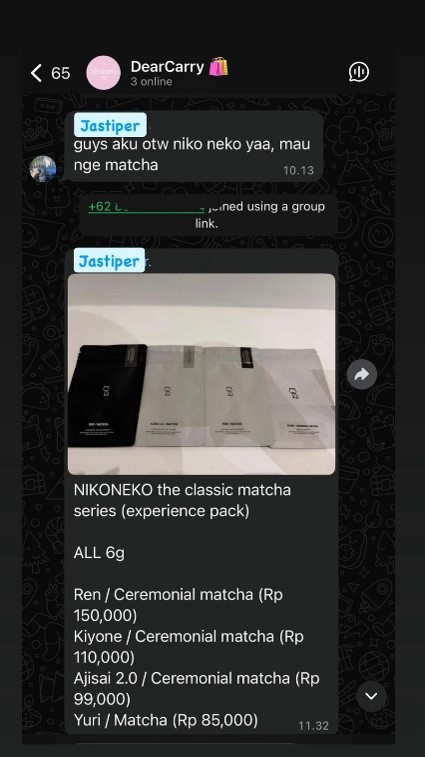
Image 3. A jastiper announces they're about to go to Nikoneko and share the price in IDR
Phase 4: The Content.
The jastiper films themselves checking out, packing the suitcase Tetris-style, and finally, handing the bag to the buyer at a chaotic meet-up point. This video is the “proof of work” and the marketing for the next trip.
For brands, this entire process is a living focus group. You can see exactly which products generate FOMO, which price points survive the markup, and which demographics are buying.
5.How Brands, Especially from Outside Indonesia, Can Ride the Jastip Hype
Now, for the part where we put on our market researcher hats. If you are a brand outside Indonesia looking to capture the hearts and wallets of Indonesians, you cannot ignore Jastip. With the government targeting household consumption growth of 5.5% in 2026, this consumer base is too big to ignore . But you also need to move from being a victim of this invisible touchpoint to a participant.
1. Treat Jastip as Your R&D Department.
Stop fighting it. Start monitoring it. If a specific SKU of yours is flying off the shelves via Jastip, that tells you exactly what your Indonesian consumer wants before you even launch there.
• Action: Hire a social listening tool—or, cheaper yet, hire a local intern—to monitor Jastip accounts. Track what’s being ordered. If your obscure “Matcha Latte-scented candle” is trending in Jakarta Jastip circles, launch that exact variant first when you enter Indonesia. You’ve just saved yourself millions in failed market research.
2. The “Jastip-Exclusive” Collab: Make the Informal Formal.
Most perfume sellers in Mecca and Madina speak Bahasa Indonesia to connect with jastipers. Now, elevate your brand's profile. You are a Japanese skincare brand introducing a special “Jastip Set”—perhaps with a unique box design or a bundle of bestsellers accompanied by a free cosmetic pouch, exclusively accessible to Indonesian buyers purchasing through these micro-entrepreneurs.
• Action: Partner with top-tier jastipers for your pop-ups in Tokyo. Dedicate a special corner in your Shibuya or Ginza store with an Indonesian-speaking staff member. Make them feel like VIP wholesalers, because that’s exactly what they are. You’re not bypassing your distribution; you’re strategically seeding your market.
3. Bring the Jastip Aesthetic to Your Local Launch.
Why do Indonesians love Jastip videos? Because they show reality. They show the shelf, the stock, the hands-on interaction. When you finally open your store in Jakarta, don’t just do a sterile PR launch.
• Action: Train your staff to act like jastiper. Take videos of new stock. Show the shelves. Create that same sense of “I am here, buying this for you right now” urgency on your official TikTok channel. Announce the “live shopping”. Replicate the trust and transparency that made Jastip work in the first place.

Image 4. A jastiper show the try-on with admiration that encourages purchasing
6.The Bottom Line: Why This Invisible Touchpoint Matters
Jastip isn’t just a shopping service—it’s an invisible handshake linking global brands with Indonesia’s eager consumers. For those ready to leave their mark, embracing Jastip as their first touchpoint doesn’t just grant access—it sparks connections, and who knows? Maybe even a little global gossip.

-

Author profile
Tika Widyaningtyas
Tika is a market researcher from Indonesia who once dropped Rp 300,000 (about 2,800 yen) on a Jastip to snag a signed Michelle Obama book from the U.S.—all for a splash of 'gengsi' (prestige). She truly believes the suitcase is the most underrated tool in the Indonesian market research arsenal.