目次
1. Introduction
In recent years, India has been attracting attention around the world. With keywords such as “the world’s most populous country,” “the world’s fifth-largest economy,” and “an IT powerhouse,” it is rapidly increasing its presence in the international community.
On the other hand, the image many people have of India is somewhat negative and contrasting, characterized by terms like “chaotic,” “dirty,” “sloppy,” and “dangerous.” Why are opinions so divided?
The reason behind this lies in the unique national character of India.

India is a multi-religious and multi-ethnic nation, with caste systems, regional cultures, and lifestyle habits intricately intertwined. For this reason, it is difficult to define the “Indian national character” in a single phrase. However, there is one value that is common throughout the entire country.
That is the concept of “Jugaad” (pronounced similarly to “Jugaar” in Hindi).
Jugaad is a term that means “making do with what you have” or “finding the best solution within limited conditions.” It is not merely a stopgap measure or a money-saving trick; rather, it is a way of thinking—and a guiding principle for action—that allows people to move forward even in imperfect circumstances.
This spirit of Jugaad is deeply ingrained in every aspect of Indian life, from daily necessities to business. It should be viewed not so much as a personality trait, but rather as a “way of life” cultivated through history and social context.
2. What is Jugard?
“Jugaad” is a term that refers to the ‘wisdom’ and “ability to take action” involved in adapting to limited circumstances and solving problems with on-the-spot ideas. At its core lies the mindset of “making do with what is available,” such as repairing broken items with spare parts or substituting missing items with whatever is at hand.
It is unclear whether the term came first or whether the concept existed first. However, it is certain that this concept is deeply rooted in India’s history and social context.
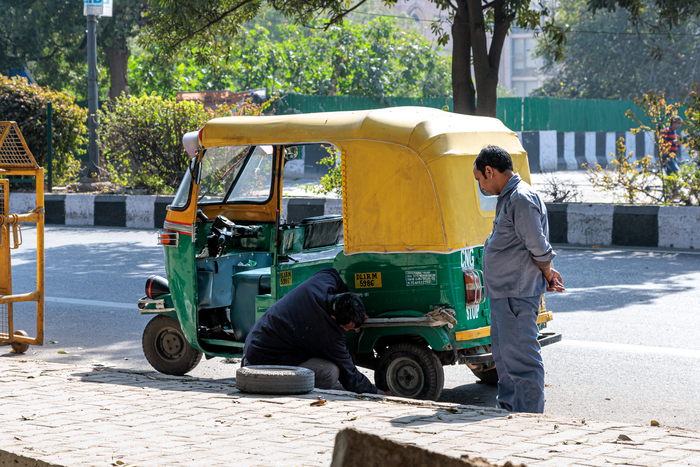
For a long time in India, many regions have lacked sufficient resources and infrastructure relative to their large populations. As a result, rather than giving up and saying “it can’t be done,” people have naturally adopted the mindset of “making do with what we have.” Furthermore, due to poverty during the colonial era and import restrictions after independence, which made it difficult to obtain necessary goods, the ability to solve problems independently became essential. It can be said that this historical background has firmly rooted the culture of jugad.
While the spirit of jugad is common throughout India, its manifestations vary by region.
In rural northern India, it manifests as a practical, results-oriented mindset—such as repairing broken machinery with spare parts or combining a tractor with a trailer to create a unique vehicle—based on the principle that “as long as it works, that’s all that matters.”
In contrast, in Western India, it often manifests as commercial ingenuity, taking the form of efficient systems and cost-saving ideas. In Southern India, backed by high educational standards and technical expertise, it tends to appear as technical innovations in the IT and mechanical engineering sectors.
Furthermore, in the Northeast and the Himalayan regions, this spirit can be seen in bridges and houses built using natural materials like bamboo, reflecting the wisdom of living in harmony with the natural environment.
In this way, while jugad takes different forms in each region, it exists as a value shared across Indian society as a whole. It is not a culture limited to a specific region, but rather a “principle of thought and action for adapting to the environment.”

3. It’s not just about things. Jugard: Solving Problems Through Networks
Jugaad is not merely about finding ingenious solutions to material problems. In real life, its true power is realized within the context of human connections.
In India, relationships with family, relatives, friends, and the local community are highly valued. When faced with difficulties, people naturally turn to “consulting someone” or “relying on an acquaintance,” and in many cases, this leads to a resolution. Conversely, without such networks, things may not proceed smoothly.
In this way, the very mechanism of solving problems by leveraging interpersonal connections can be considered a form of jugad.
This value is also strongly reflected in the context of marriage. Arranged marriages remain common in India today, and marriage partners are selected based on factors such as region, caste, and religion. In this process, searching for the most suitable partner through networks of family, relatives, and acquaintances is a crucial step.
In a sense, this mechanism—which maximizes the use of personal connections to arrive at the optimal solution—is an extension of the jugard concept. The intermediaries are not merely introducers; they function as “mediators” who identify the best possible match based on the circumstances.

4. Jugard-type products that prioritize “reality over ideals”
The spirit of jugad is clearly evident in products and services originating in India. A defining characteristic is that, rather than “pursuing an ideal,” the top priority is “functioning within the constraints of reality.”
One prime example is the “Tata Nano,” known as the world’s cheapest car.
In India, it is a common sight to see an entire family riding on a single motorcycle. Safety risks have long been pointed out, such as children riding without helmets and women in saris sitting sideways on the bike. Against this backdrop, the Tata Nano was developed based on the concept of “creating a car that anyone can afford.”
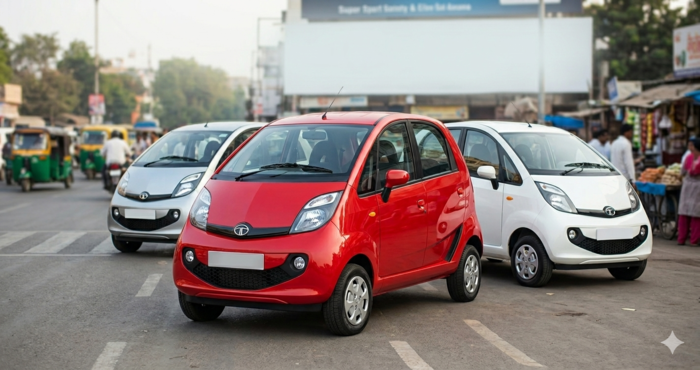
*The image above is an AI-generated image.
The Tata Group, which developed the vehicle, reduced the number of parts and simplified the design and interior to the absolute minimum in order to cut costs. This was the result of a relentless focus on “functioning as a means of transportation” rather than on comfort or luxury. Although it ultimately did not achieve commercial success, its philosophy attracted significant attention worldwide.
Another iconic example is the “Mitti Cool Refrigerator,” a refrigerator that operates without electricity.
Made of terracotta (unfired clay), this product cools food by utilizing the natural principle of heat absorption through water evaporation. It can be used in regions with unstable power supplies or in areas without electricity.
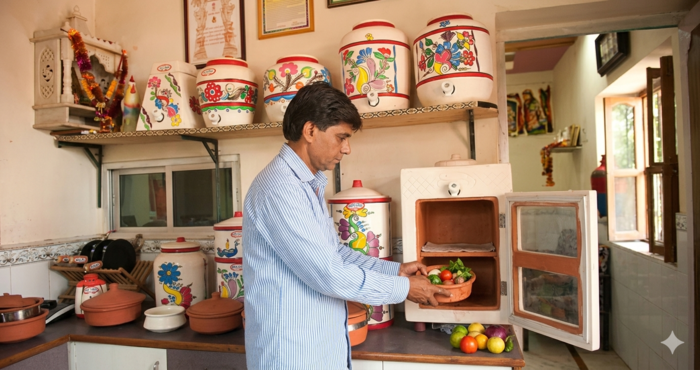
*The image above is an AI-generated image.
It originally arose from the practical challenge of “frequent power outages making refrigerators unusable,” and the very concept of “finding alternative ways to keep things cool when there’s no electricity” is a classic example of Jugard.
What these two products have in common is an approach that prioritizes “reality over idealism.” Rather than pursuing luxury or perfection, the top priority is whether a product is “usable” in everyday life. Making up for what is lacking through ingenuity and deriving the optimal solution within limited conditions—that is the very essence of jugard.
5. Jugard Expands into the Digital Realm
Jugad’s philosophy is strongly reflected in the realm of digital services. In fact, it is precisely because of infrastructure constraints that simple and flexible systems have spread so rapidly.
A prime example of this is digital payment, epitomized by services like Paytm.
In India, the emphasis has been on “ease of use above all else.” Even at street stalls and small shops, payments can be made simply by displaying a QR code, eliminating the need for dedicated terminals or expensive equipment. Users can complete transactions with just a smartphone, eliminating the need to carry cash.
In regions with insufficient banking infrastructure and environments dominated by small businesses, the concept of “simplifying complex systems to the absolute minimum” is quintessentially Juggad.
This characteristic is also evident in the way delivery services operate.
In India, many areas have vague addresses, and it is not uncommon for precise street numbers—as found in Japan—to be absent. Consequently, delivery personnel do not rely solely on GPS but complete deliveries through phone conversations and by asking people in the vicinity for directions.
They reach their destinations based on intuitive information such as “near the temple,” “the house with the large gate,” or “the home of Mr. X, who works at Y.” The fact that the service operates through such flexible approaches is another example of a jugad-style mechanism unique to India.

*The image above is an AI-generated image.
Furthermore, WhatsApp—India’s most widely used communication app—has transcended its role as a mere messaging tool to function as a vital part of daily life.
It is used for a wide range of purposes, extending beyond simply keeping in touch with family and friends to include business transactions, school communications, and medical consultations. Even in situations that would normally require dedicated systems, using WhatsApp as a substitute allows for quick and easy handling.
In the business sector in particular, combining simple features—such as sending product photos to take orders or handling customer service directly through the app—has established WhatsApp as a practical service.

6. The “Jugard” Mindset Behind the IT Nation
India’s digital services prioritize “making things work within the existing environment” over “building a perfect system.” They make services viable by flexibly combining existing tools—such as completing restaurant reservations via chat or using messaging apps to handle inquiries for online shops.
This way of thinking is all an extension of jugad. It involves adapting to the environment while achieving goals by the shortest route. This cumulative process is what shapes India’s digital society.
The reason India is known as an IT powerhouse is deeply rooted not only in its educational standards and English proficiency but also in this jugad-style thinking. The habit of asking, “How can we make this happen?” within limited constraints is the very essence of an engineer’s mindset.
In other words, it can be argued that India was not transformed by IT; rather, the jugad mindset it already possessed ultimately led to its strength in the IT sector.

From a Japanese perspective, India might seem somewhat “casual and chaotic.” In fact, when living in India or working with Indians, there are plenty of situations that can leave you feeling bewildered. While Japan strives for perfection in creating systems designed to avoid failure—a society built on planning and systems—India is a society that, even when things go wrong, manages to bounce back, find a way to make it work, and adapt to the situation. Once you understand this background, you can grasp “why they do things that way,” and conversely, you begin to find the resilience of Indians endearing and fascinating. If India’s “juggad”-style flexibility were combined with Japan’s strengths of precision and planning, it could potentially create new value. Understanding the Indian market could also serve as a clue to broadening that perspective.