目次
1. Introduction
Coffee is a beverage enjoyed around the world, but the ways it is consumed and the meanings attached to it vary greatly from country to country. Even when it comes to the same coffee, there are clear differences in the reasons consumers choose it and the value they expect from it depending on the country.
In this article, we will examine coffee trends among consumers in Japan and China from four perspectives—frequency, location, timing, and purpose—using Intage’s “Global Viewer” database of international consumer data. We will then explore the potential implications and insights this offers for corporate marketing activities.
2.Japan and China: How Coffee Is Consumed (Frequency, Location, Time, and Purpose)
(1) Frequency of consumption
First, looking at drinking frequency based on Intage’s “Global Viewer” database of international consumers, it becomes clear that coffee consumption in Japan is highly habitual.
While the largest group in Japan drinks coffee 5 to 7 times a week—meaning almost every day—in China, the most common frequency ranges are 3 to 4 times a week or 2 times a week. This suggests that while the Japanese market is already mature and coffee is deeply ingrained in daily life, the Chinese market still has room for growth, and consumption frequency could increase as drinking occasions and the role of coffee expand. Based on the author’s personal observations, while the habit of drinking coffee is relatively widespread among office workers in urban China—particularly among younger generations—many people choose milk tea or fruit tea instead of coffee, indicating that caffeine consumption does not necessarily come from coffee. For this demographic, there is significant potential for coffee to become an even more integral part of daily life in the future.
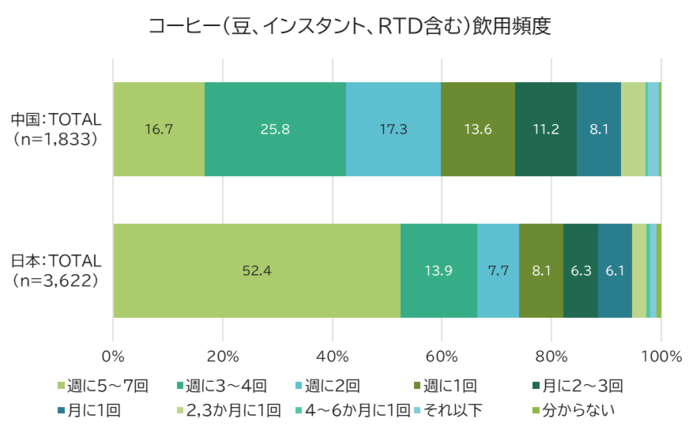
Figure 1: Frequency of coffee consumption (including beans, instant, and RTD)
(Base: Men and women aged 18–64 in Japan and China)
Source: Intage Global Viewer (2025)
Accelerate decision-making with smart overseas resident data
Global Viewer
This service provides reports tailored to your issues using questionnaire data on various actual conditions and attitudes of sei-katsu-sha in 11 countries (Asia and US) stocked by INTAGE.
The service covers 400 items, including actual behavioral conditions and awareness, values, and information contact related to various product and service categories.
(2) Drinking establishments
Differences in where coffee is consumed also strongly reflect the lifestyles of both countries.
In Japan, drinking coffee at home (89.8%) is overwhelmingly the most common, followed by the workplace (38.6%), with a significant number of respondents also indicating they drink it in their cars (22.2%). This suggests that coffee is consumed as a personal beverage within daily life, where people make efficient use of limited time and space.
In China, on the other hand, while drinking at home (68.3%) is most common, the percentage of people drinking at work (52.7%) and in cafes (37.9%) is also high. This suggests that coffee is consumed not only while out and about or in social settings but also as a form of self-expression. In particular, drinking coffee at cafes and similar venues is often associated with a sophisticated lifestyle and an urban, modern image, serving as a means to project values such as “stylish” and “refined.” In such contexts, factors such as the café’s design and brand image are considered to hold significant importance, alongside the taste and effects of the coffee itself.
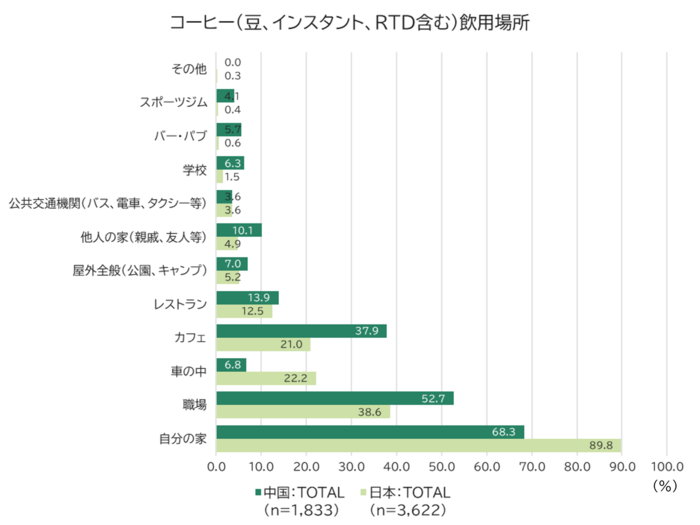
Figure 2: Places where coffee (including beans, instant, and RTD) is consumed
(Base: Men and women aged 18–64 in Japan and China)
Source: Intage Global Viewer (2025)
(3) When to drink
Looking at when people drink coffee, the survey found that in Japan, the majority (44.4%) drink it after meals, while drinking it during work (32.1%) or during meals (25.4%) is also relatively common. This suggests that in Japan, coffee is naturally integrated into daily routines such as meals and breaks, and has become established as a beverage of choice and a habitual drink that is an extension of everyday life.
In contrast, in China, coffee is strongly associated with “work.” The most common time to drink it is during work (44.7%), followed by after meals (20.4%) and before work (16.2%). It can be said that coffee is strongly positioned as a “functional beverage” used to shift one’s mindset during work breaks or before starting work, as well as to improve efficiency and performance.
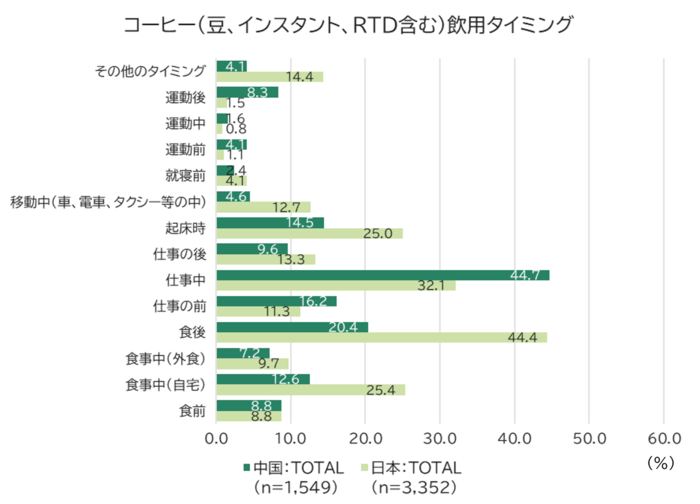
Figure 3: Timing of Coffee Consumption (including beans, instant, and RTD)
(Base: Men and women aged 18–64 in Japan and China)
Source: Intage Global Viewer (2025)
(4) Purpose of consumption
The data also reveals differences between Japan and China in terms of drinking purposes. In Japan, “when I want to relax” (51.4%) and “when I want to refresh myself” (51.1%) are both high at nearly the same level, and “when I’m thirsty” (26.9%)—a more everyday reason—also accounts for a significant proportion. This suggests that coffee has become a drink people can easily reach for, rather than a special “switch” to flip.
In contrast, in China, “when I want to refresh myself” (46.4%) ranks highest, followed by “when I want to relax” (32.4%) and “when I want to concentrate” (28.9%). The fact that purposes such as needing to concentrate or seeking a change of pace rank so highly suggests that, against the backdrop of busy urban life and a results-oriented work environment, coffee is chosen as a “switch to reset one’s mindset.”
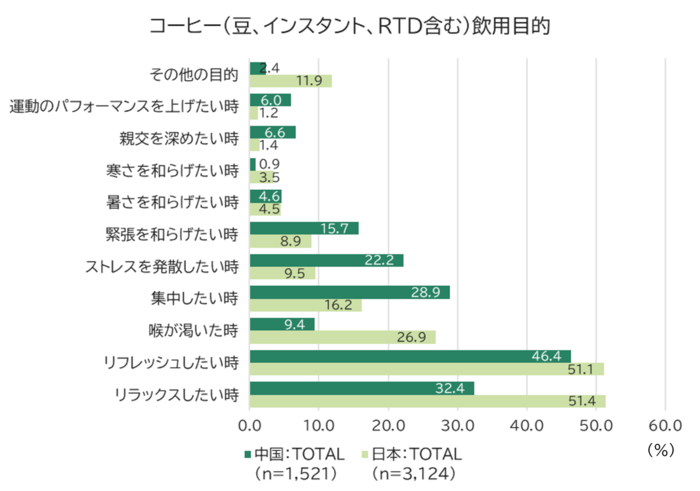
Figure 4: Reasons for drinking coffee (including beans, instant, and RTD)
(Base: Men and women aged 18–64 in Japan and China)
Source: Intage Global Viewer (2025)
3. Marketing Insights Derived from Differences in Lifestyles
As shown by these data on coffee consumption in Japan and China, there are differences in the roles consumers expect from the product.
In Japan, coffee is deeply rooted in daily life and is naturally consumed as part of the daily rhythm—after meals, during breaks, or while commuting. The primary purposes for drinking it are “relaxation” and “refreshment”; it can be said that people seek comfort and a sense of security rather than efficiency or productivity. Carefully communicating emotional values—such as taste, aroma, brand trust, and brand stories—is likely the key to remaining a consumer favorite. Furthermore, since home consumption is overwhelmingly dominant in Japan, product designs that support household consumption—such as large-volume or bulk options, and convenient formats like drip coffee and PET bottles—will be crucial.
In China, however, coffee is perceived as a beverage linked to work and self-management. Since a high percentage of consumption occurs during or before work, and purposes such as “wanting to concentrate” or “wanting to switch gears” are prominent, it is likely effective in marketing to clearly highlight functional value and results. Messages such as “concentration,” “work efficiency,” and “switch” are considered to resonate directly with consumers’ experiences. However, given the current low frequency of consumption, rather than promoting concentration or efficiency benefits in isolation, there is room to expand drinking habits by proposing scenario-specific value propositions such as “an afternoon refreshment” or “a small treat for yourself.” Furthermore, considering that coffee is consumed not only in the workplace but also in cafes and while out and about, it is important to design packaging that looks good in both office and cafe settings, as well as brand experiences that are easy to share on social media.
4. Conclusion
Even though it’s the same coffee, in Japan it serves as “a cup that accompanies daily life,” while in China it functions as “a cup to elevate oneself.” Designing value propositions that take this difference into account is the key to successful marketing in both the Japanese and Chinese markets.