目次
1. Introduction
In recent years, one of the kitchen appliances experiencing rapid global growth is the air fryer (or non-fryer). It is gaining popularity, particularly in Europe, the United States, and China, due to its ability to produce fried-food-like results using very little oil by circulating hot air.
On the other hand, while awareness of air fryers is growing in the Japanese market, the reality is that they are still viewed more as “appliances of interest” rather than “must-have appliances.” Why is there such a difference in acceptance between countries for what is essentially the same product?
Market data shows that the air fryer market is expanding globally, with projections indicating it will reach approximately $2.1 billion (about 333 billion yen) by 2026 and approximately $4.3 billion (about 682 billion yen) by 2030. With an annual growth rate exceeding 17%, it demonstrates exceptionally high growth potential as an emerging appliance category1. However, this growth is not uniform, and significant disparities exist between countries.
According to Intage’s international consumer data, “Global Viewer” (conducted in 2025), the percentage of households owning an air fryer is close to 50% in China, South Korea, Singapore, Malaysia, and the U.S. In contrast, the rate in Japan is extremely low at 4.2%, and future purchase intent is also sluggish compared to other countries.
1 Air Fryers - Japan | Statista Market Forecast
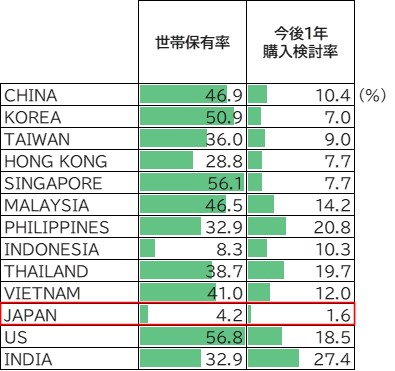
Figure 1: Household Ownership / Purchase Intentions for the Next Year: Home Appliance Categories (MA) (Base: Men and women aged 18–64 in each country)
Source: Intage Global Viewer (2025)
What is the key to their popularity? In this article, we will explore the reasons behind this by comparing China and the United States—where air fryers are widely used—with Japan.
2. Differences in Health Awareness: Is a Low-Fat Diet Really Worth It?
The primary selling point of air fryers is their health benefit: “no oil and reduced fat content.” However, the importance placed on this benefit varies significantly from country to country.
According to the same data, the percentage of respondents who cited “reducing fat intake” as something they pay attention to in their diet is significantly lower in Japan than in China or the United States.
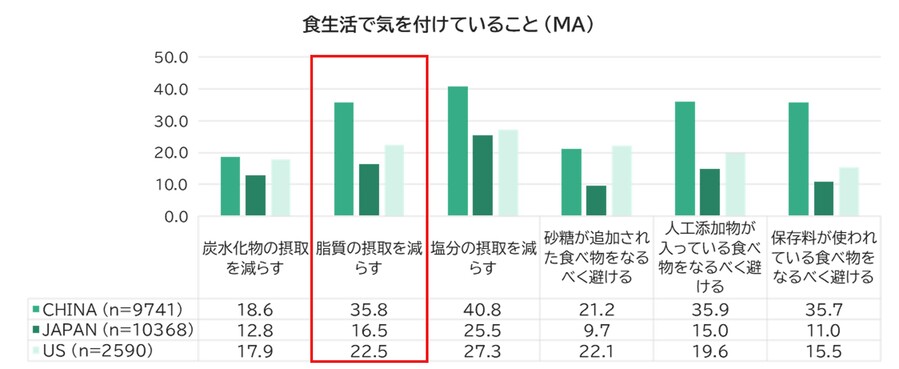
Figure 2: Dietary Habits (MA) (Base: Men and women aged 18–64 in each country)
Source: Intage Global Viewer (2025)
Looking at the ownership rate of air fryers among people concerned about fat intake, the percentage in Japan is lower than in China and the United States, suggesting that the functional USP (unique selling point) of “reducing oil” does not resonate strongly with Japanese consumers. This health-conscious attitude may be a factor in the low adoption rate.
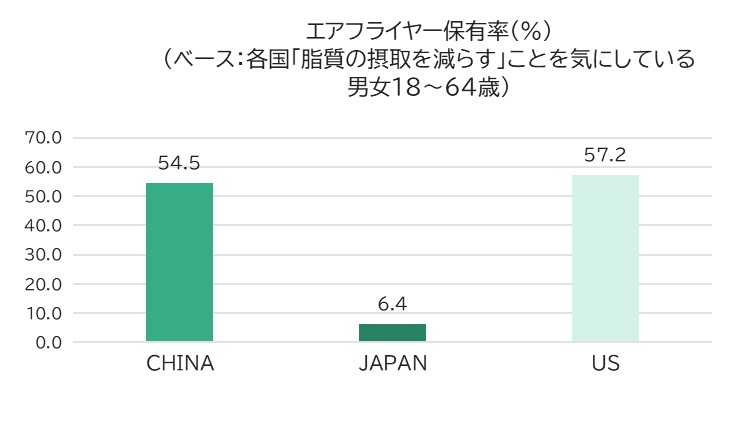
Figure 3: Air Fryer Ownership Rate
(Base: Men and women aged 18–64 in each country who are concerned about “reducing fat intake”) Source: Intage Global Viewer (2025)
This does not mean that Japanese people have low health awareness. In Japan, there is a tendency to prioritize a comprehensive view of health—such as “moderation,” “balance,” and “not overburdening the stomach”—and I believe that cutting back on specific nutrients is unlikely to serve as a strong purchasing motivation in and of itself. Therefore, emphasizing a single function such as “reducing fat” may not necessarily align with Japanese consumer values.
3. Differences in Home Cooking Menus: Are These Appliances Necessary for Existing Eating Habits?
The widespread adoption of home appliances is closely tied to the meals people prepare on a daily basis. Japanese home cooking centers on dishes that use relatively little oil, such as simmered dishes, grilled fish, and stir-fries. As a result, the question of “how to cook fried foods in a healthier way” does not play a particularly significant role in everyday life.
In contrast, in the United States, high-fat foods such as french fries, fried chicken, and hamburgers are consumed on a daily basis. Air fryers serve as a means for people to continue enjoying their favorite foods without having to deprive themselves, making them an extremely practical appliance.
In other words, air fryers are likely accepted not as appliances that create a new food culture, but rather as appliances that positively affirm existing eating habits. Since the dietary habits that form the basis for this do not exist in Japan, there is little perceived need for them.
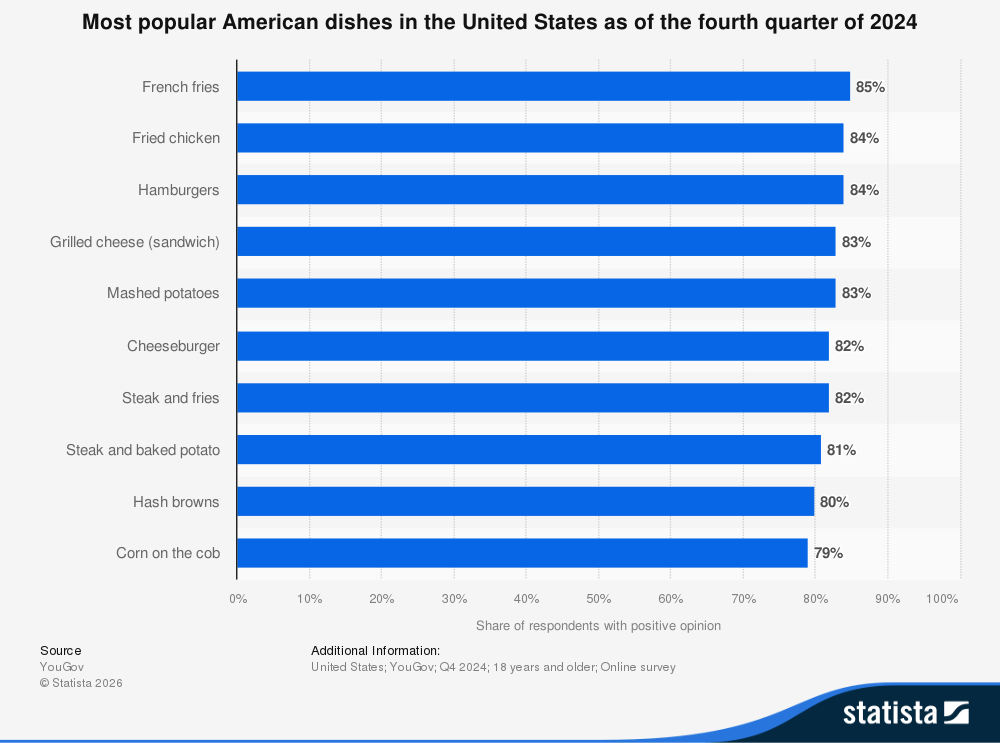
Figure 4: Most Popular American Dishes in the U.S. (2024)
Source: Statista Most popular American food dishes US Q4 2024| Statista
4. Space considerations: Can it be easily placed?
Looking at images of kitchens in various countries from “Consumer Life Panorama” (commonly known as CLP), Intage’s visual database of overseas consumers, we see that kitchens in China and the United States are larger than those in Japan and have enough space to accommodate multiple kitchen appliances. In contrast, Japanese kitchens have limited space, so the appliances placed there are carefully selected based on frequency of use.
Since air fryers are about the same size as rice cookers, they are appliances that are unlikely to be prioritized unless used daily. This is not merely a matter of housing conditions; it can also be said to reflect the mindset of Japanese consumers, who soberly evaluate frequency of use and cost-effectiveness.
(1) Japan
Here is an example of a typical Japanese kitchen. Counter space is limited, so there is little room to place kitchen appliances. Since frequently used appliances like microwaves and rice cookers take priority, there is rarely enough space to permanently set up additional kitchen appliances.
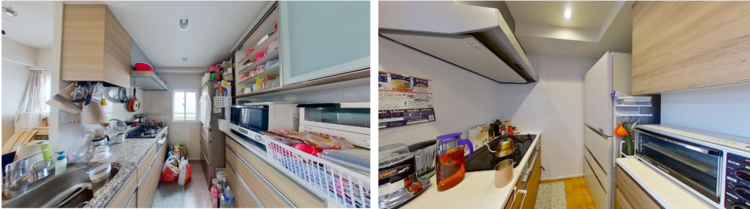
Source: Intage Consumer Life Panorama
(2) China
Here is an example of a kitchen in China. It features a long, wide countertop that provides ample space to line up multiple kitchen appliances. The space is designed with the assumption that multiple appliances will be used simultaneously on a daily basis, creating an environment that easily accommodates new appliances.

Source: Intage Consumer Life Panorama
(3) United States
Here is an example of a kitchen in the United States. The design features a spacious, open layout that integrates the counter, storage, and dining areas, allowing for the installation and storage of multiple large appliances. A key feature of this design is that it allows for flexible switching between “displaying” and “storing” items based on frequency of use, thereby lowering the psychological and physical barriers to introducing new appliances.

Source: Intage Consumer Life Panorama
(4) Air Fryers: Reference Images
The photos below show examples of air fryers used in households in China (right) and the United States (left). Both are permanently installed on kitchen counters, indicating that they are appliances used on a daily basis. Since they are similar in size to rice cookers, they require a certain amount of space for installation, and whether or not they can be installed depends on the kitchen layout.

Source: Intage Consumer Life Panorama
5. Conclusion: The Importance of Localizing Value Propositions
Based on the above, it can be said that in aiming for growth in the global market, it is crucial to optimize not only the product itself but also the “reasons for purchase” and “value propositions” for each country.
Although air fryers are the same product, overseas they are accepted as offering a value that balances health and taste—specifically, “enjoying fried foods with less oil.” In Japan, however, this value does not necessarily serve as a strong purchasing motivation.
Rather, in Japan, reinterpreting it as practical benefits—such as “saving time on daily cooking” and “reducing cooking mishaps”—has the potential to strengthen its appeal to consumers.
As illustrated by the example of the air fryer discussed here, it is crucial to design value propositions that resonate with consumers in each country by localizing the value proposition in accordance with the lifestyle context, including dietary habits, living environments, and health perspectives.
Are you really getting the information you need?
Intage’s International Research
Open data alone may not always provide sufficient grounds for making business decisions.
In such cases, we recommend Intage’s international research services.
Leveraging our in-house offices in 9 countries and a research network spanning over 60 countries,
we specialize in helping you understand local values, purchasing behavior, and
the latest trends.
We support a wide range of research methods—including quantitative and qualitative studies—to help you refine your international strategies. Drawing on our extensive track record and local insights, we provide robust support to help companies advance their global business initiatives.