目次
- 1. Introduction: Differences in Child-Rearing Across Countries, as Reflected in Children’s Rooms
- 2. Two Trends Revealed by Correspondence Analysis
- 3. Differences in Values That Emerge in Children’s Rooms
- 4. The Discrepancy Between Values and Reality: Who Takes on the Responsibility of Raising Children
- 5. Summary
1. Introduction: Differences in Child-Rearing Across Countries, as Reflected in Children’s Rooms
While everyone uses their living spaces differently, the design of “children’s rooms” in particular varies greatly by country and region.
Some rooms feature desks and school supplies neatly arranged, while others are free-form spaces centered around playthings.
These differences may not simply be a matter of personal preference, but could stem from values regarding child-rearing and the actual ways in which parenting responsibilities are shared.
In this article, we will first use correspondence analysis to organize the values surrounding child-rearing in various Asian and American countries and regions, and then interpret the differences in children’s rooms based on the trends revealed by this analysis.
Furthermore, we will examine how these values relate to who actually takes on the responsibilities of child-rearing.
2. Two Trends Revealed by Correspondence Analysis
In this study, Intage conducted a correspondence analysis using Intage’s “Global Viewer” (2025 survey) data on consumers overseas, focusing specifically on parents of children aged 13 and under and employing multiple items related to parenting values.
The results revealed two distinct value orientations: one group primarily held the value of “raising children within the family with a clear educational philosophy,” while the other group held the value of “raising children through social interactions and daily life while utilizing external resources.”
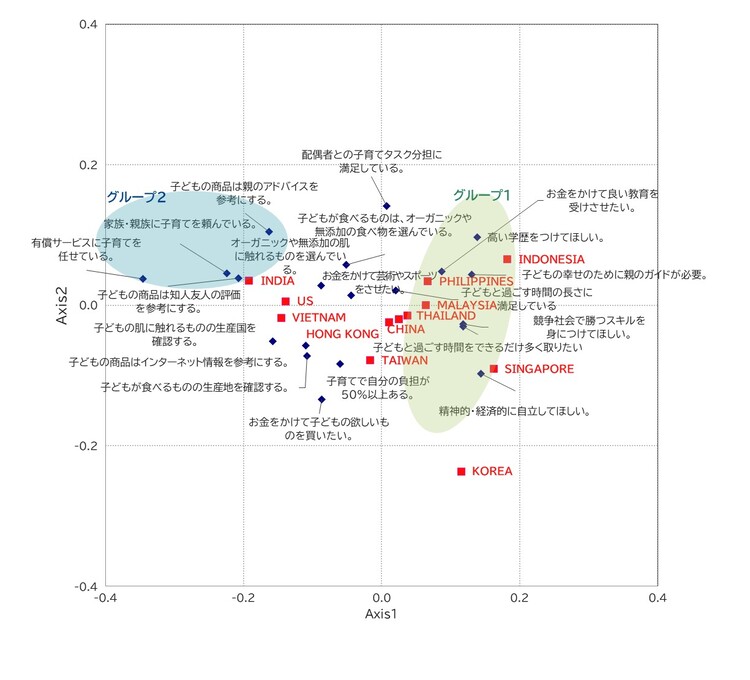
Figure 1: Values Regarding Child-Rearing by Country (Correspondence Analysis)
(Base: People in each country with children aged 13 or younger)
Source: Intage Global Viewer (2025)
[Group 1]: Child-rearing within the family, guided by a clear educational philosophy
o We want our children to become emotionally and financially independent
o We want our children to attain a high level of education
o We want our children to acquire skills to thrive in a competitive society
o Parental guidance is necessary for our children’s happiness
[Group 2]: Child-rearing that incorporates social interactions and daily life, utilizing external resources
o We entrust child-rearing to paid services
o Rely on family and relatives for child-rearing
o Rely on the opinions of acquaintances and friends when selecting products for children
Looking at the placement of each country in Figure 1, a contrast emerges between “Indonesia, South Korea, and Singapore,” which prioritize “child-rearing within the family with a clear educational philosophy (Group 1),” and “the United States and India,” which tend to practice “child-rearing through social interactions and daily life by utilizing external resources (Group 2).”
In this article, we will focus on four of these countries—“South Korea and Singapore” and “the United States and India”—to examine the child-rearing practices and values in each.
3. Differences in Values That Emerge in Children’s Rooms
The following images show actual living rooms and children’s rooms in “South Korea and Singapore” and “the United States and India,” as seen in “Consumer Life Panorama,” Intage’s visual database of overseas consumers. A look at these actual living spaces clearly illustrates the differences between these two sets of values.
■ [Group 1] South Korea and Singapore: Homes Function as Learning Spaces
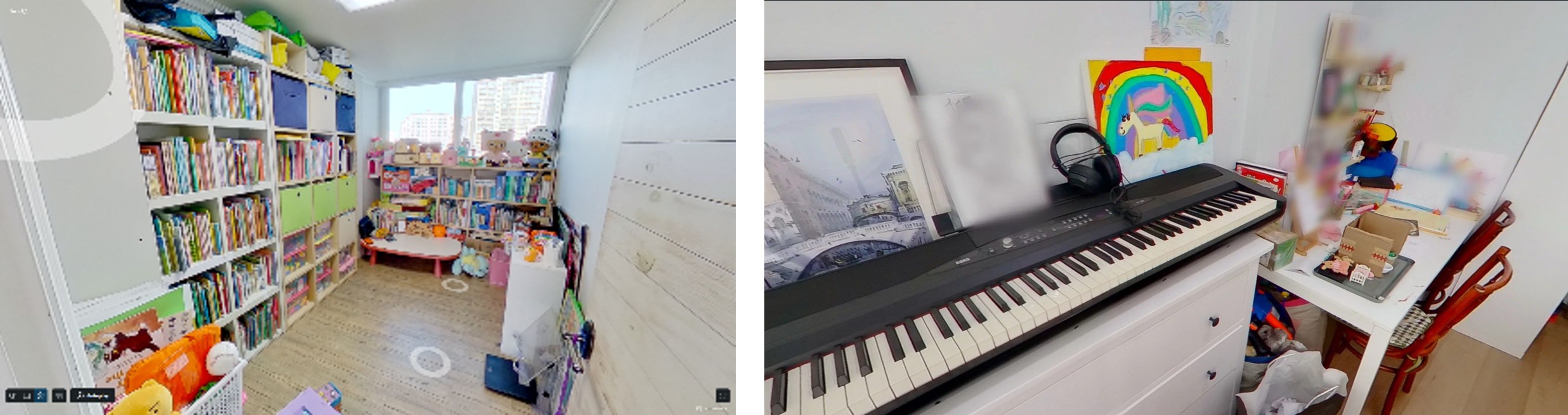
Photo on the left: South Korea (KR_1) Photo on the right: Singapore (SG_4)
Source: Intage Consumer Life Panorama
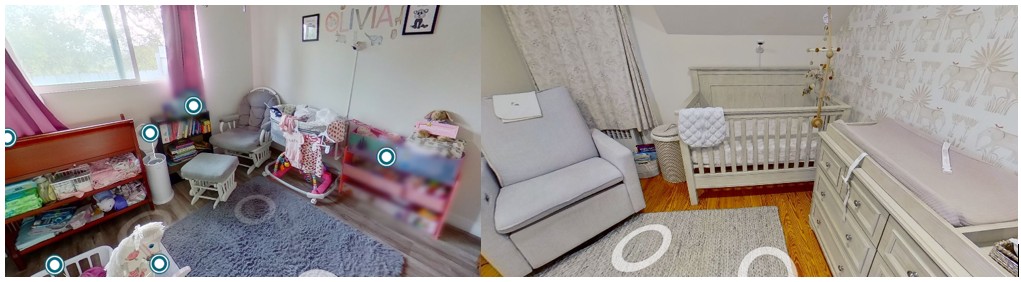
■ [Group 2] United States: A Free Space for Play and Growth
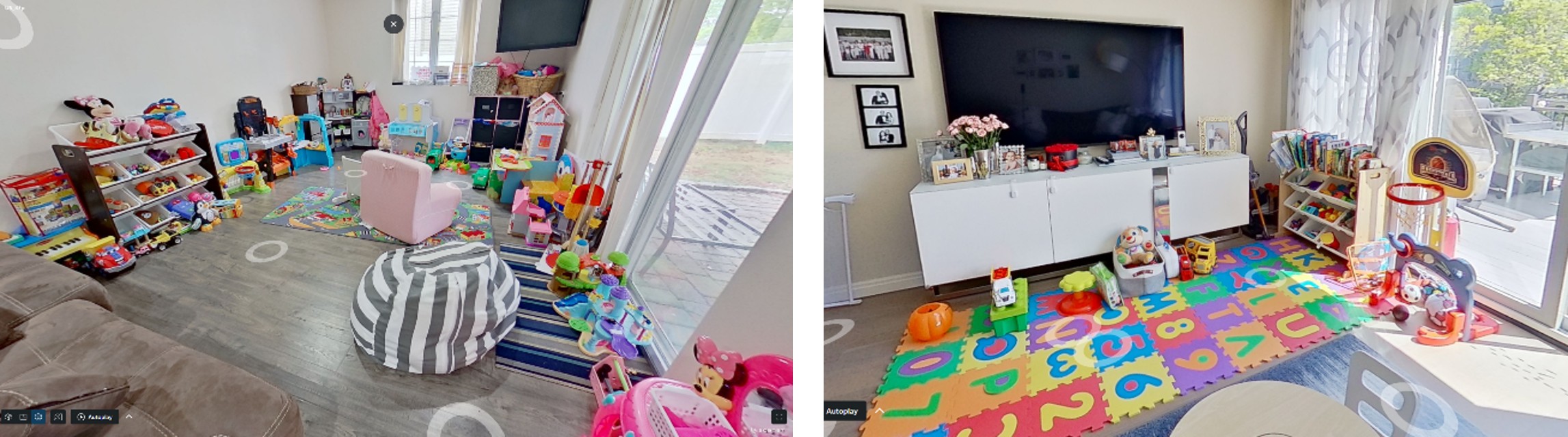
Photo on the left: United States (US_37) Photo on the right: United States_2 (US_60)
Source: Intage Consumer Life Panorama
Compared to “South Korea and Singapore,” “the United States” features a more spacious area filled with a large number of toys. Study desks and other learning equipment are rarely seen, and the space is characterized by its focus on play.
■ [Group 2] India: Few toys. Raising children in everyday life
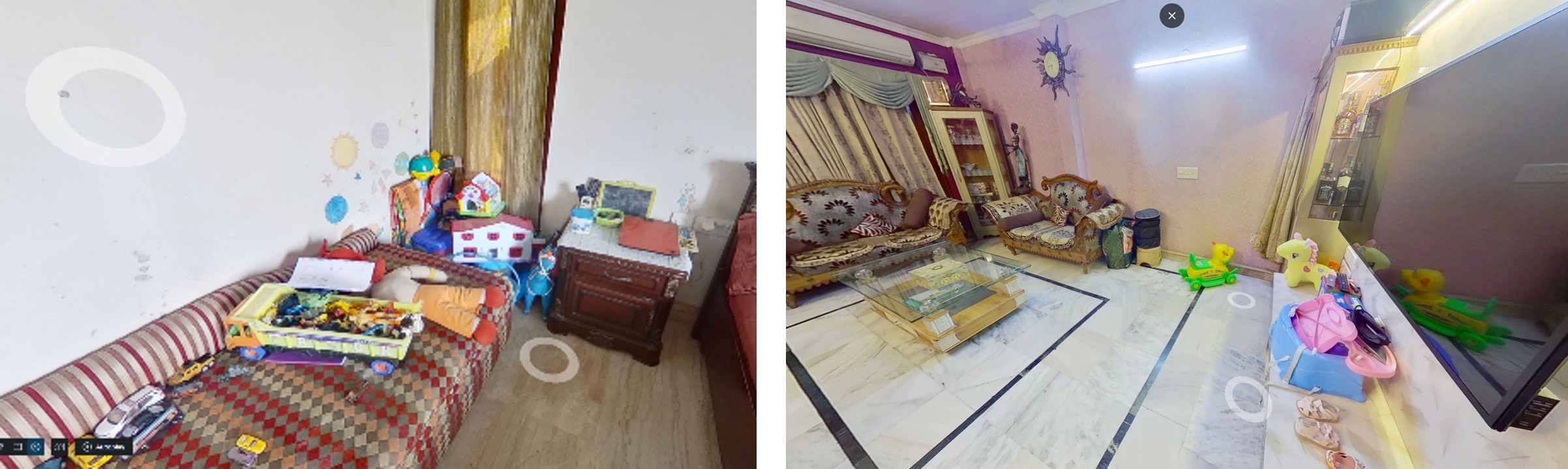
Photo on the left: India (IN_25) Photo on the right: India_2 (IN_192)
Source: Intage Consumer Life Panorama
In “India,” even in households with children, there were few toys, and it was rare to find homes with a designated space for “play and learning.” It appears that child-rearing takes place primarily within the context of daily life rather than in a specific space.
As described above, it is clear that values regarding child-rearing are reflected in living spaces: in South Korea and Singapore—where “education is prioritized by families and individuals”—the home serves as a “learning space,” whereas in the United States—where “child-rearing is carried out within daily life while relying on external support and the surrounding community”—dedicated, open spaces for play are provided.
4. The Discrepancy Between Values and Reality: Who Takes on the Responsibility of Raising Children
However, it is important to note that values do not necessarily align with actual parenting practices. The following data, drawn from Intage’s “Global Viewer (2025)” database on overseas consumers, compares who cares for the youngest child during weekday afternoons across the same four countries.
![People who take care of their youngest child on weekdays during the day [Based on: Children under 6 living in the same household]](https://www.global-market-surfer.com/assets/pickup/fs/4y3/en/nXe02Rybxr.jpg)
Figure 2: People Who Care for Their Youngest Child During the Day on Weekdays
(Base: Households with children under 6 living with them)
Source: Intage Global Viewer (2025)
This is a complete reversal of the values mentioned earlier. On weekdays during the day, it appears that families in “South Korea and Singapore” rely more on external services—such as daycare centers—to raise their children. Furthermore, in “the United States and India,” a higher percentage of parents rely on themselves or their spouses, and in “India” in particular, grandparents’ involvement is extremely high.
Although these results may seem contradictory at first glance, they can be explained by cultural and institutional factors: “South Korea” has a public childcare system similar to Japan’s; “Singapore” has a high proportion of dual-income households; and in “India,” the extended family structure makes it easier for grandparents to participate in childcare. Furthermore, it’s possible that precisely because these are countries that prioritize educational policies, they expect childcare centers and kindergartens to provide opportunities for learning and skill development.
It seems that while parents embody their “beliefs and values” regarding child-rearing at home, they are actually raising their children in the best possible way by making use of cultural and institutional factors.
5. Summary
It has become clear that while families embody their values regarding child-rearing within the home, in practice they optimize their approach by utilizing institutional systems and social resources.
By understanding the relationship between the “true feelings” and “reality” of child-rearing—which are often difficult to perceive from the outside—we may be able to take a more tailored approach to designing future child-rearing support and services.
The “Next Step” in Data Collection
Intage's International Research
Have you ever searched through public information and market reports only to find that the information you're looking for isn't there?
Intage’s international research has a track record of over 500 projects across more than 60 countries.
Intage supports the global business operations of many companies through our research, helping them find the answers they need.
We can accommodate a variety of research methods, including quantitative and qualitative research, as well as online and offline surveys.
If you’re struggling with issues such as “I need more consumer data from this country” or “I can’t find the information I’m looking for,”
please contact Intage’s international research team.