Commentary
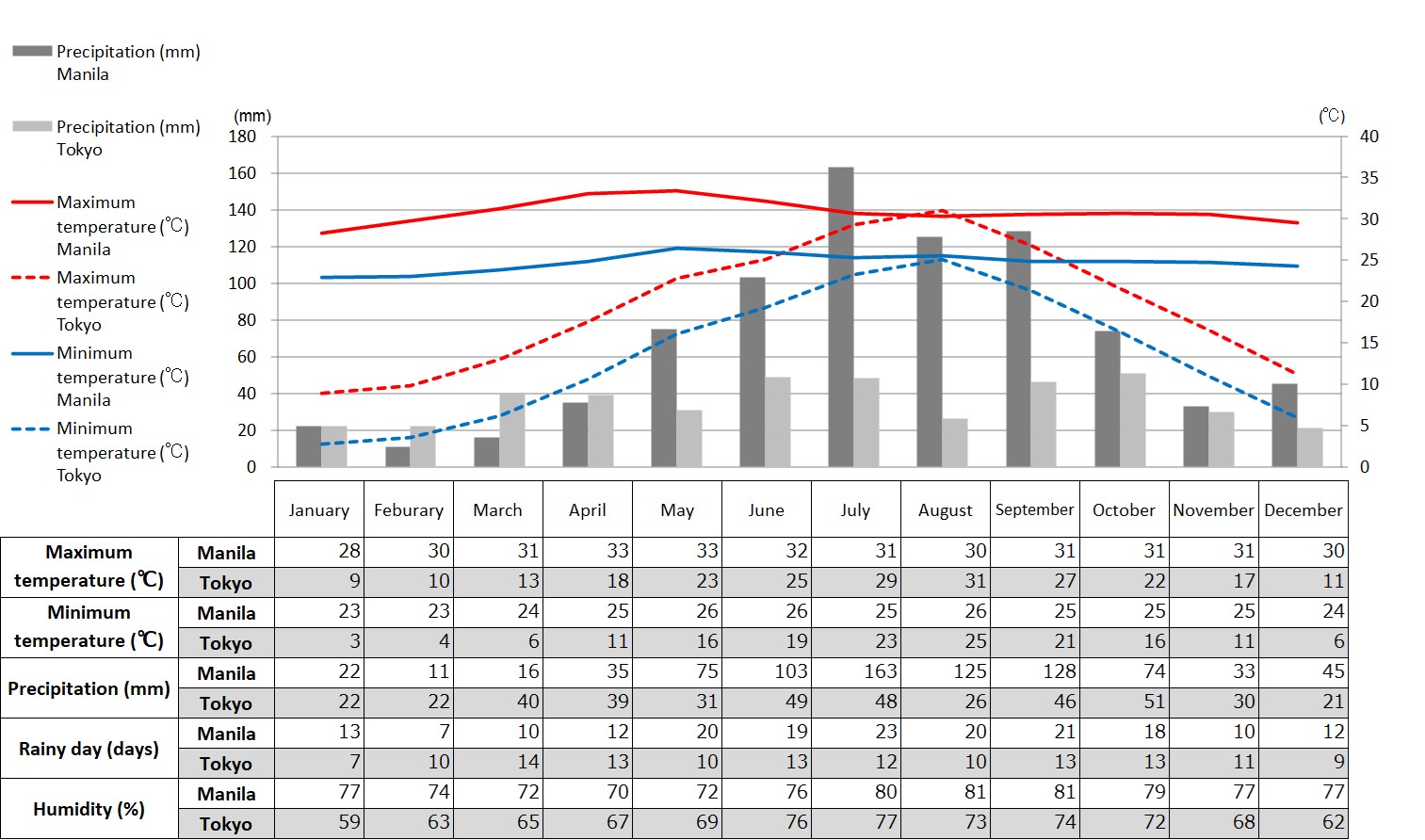
The Philippines has a tropical monsoon climate with high temperatures and humidity year-round, and an average annual temperature of 26–27°C.
The year is divided into three seasons: the rainy season (June–October), the cool dry season (November–February), and the hot dry season (March–May); temperatures rise during April and May, even within the dry season.
Summer clothing from Japan is fine, but it’s a good idea to bring a long-sleeved shirt to protect against air conditioning.
---
Generation Z, which accounts for about a quarter of the world’s population, is garnering attention as the largest consumer demographic of the future.
In this article, we use Intage’s consumer database “Global Viewer” to compare Generation Z across 10 Asian countries and explain their commonalities and differences.
Understanding Generation Z Around the World: Country-Specific Trends Through Values and Daily Life
・Generation Z’s Values (Health, Parenting, Shopping, etc.)
・Generation Z’s Lifestyle
Reference
Commentary
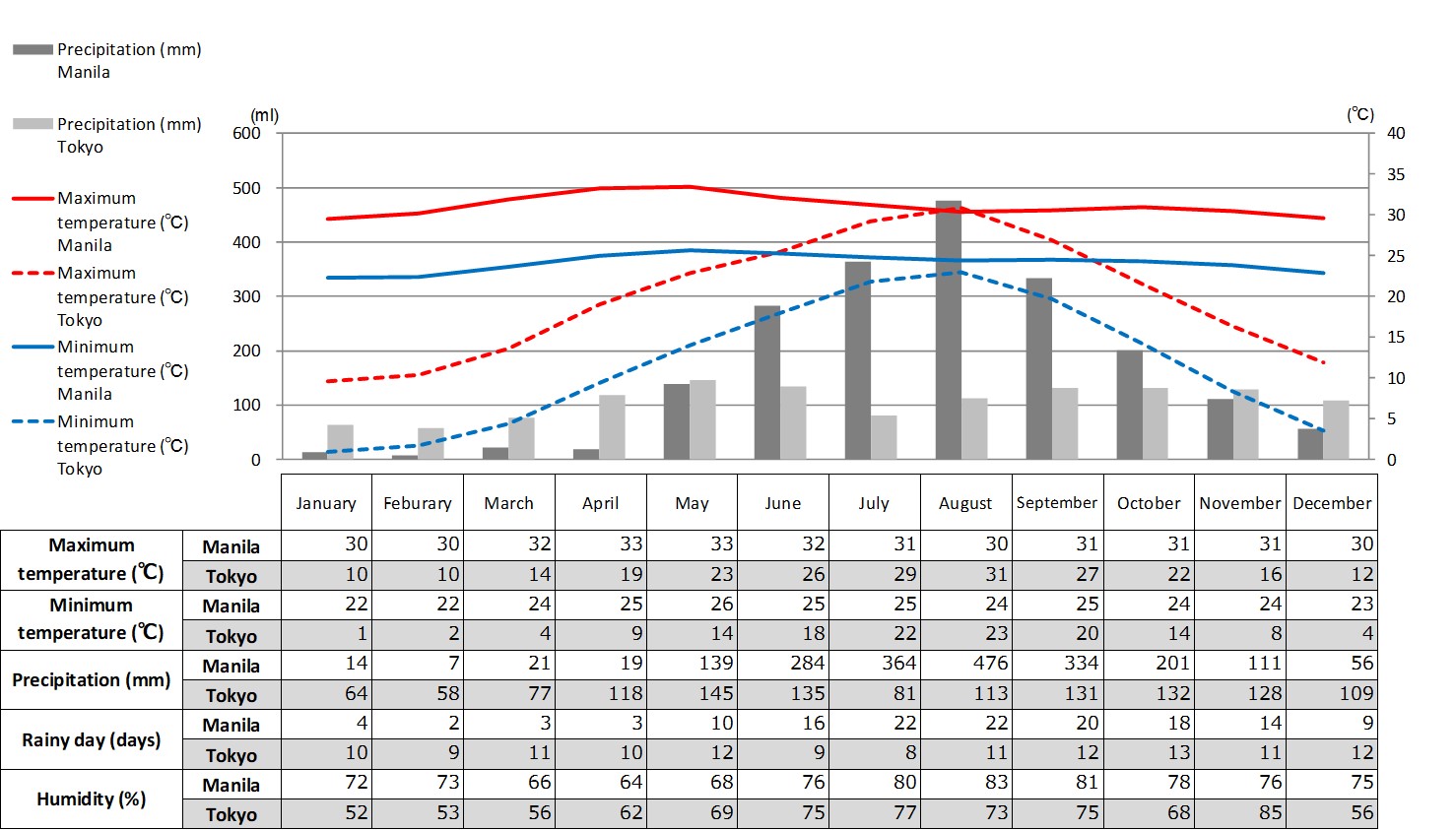
It has a tropical monsoon climate with high temperatures and humidity throughout the year, with an average annual temperature range of 26-27 degrees C. There is a rainy season (June to November) and a dry season (December to May), and in the dry season, temperatures rise during April to May. Japanese summer clothes are fine, but long-sleeved shirts to avoid air conditioning are recommended.
Reference
Reference
Tokyo's climate
Weather Altas "Monthly weather forecast and climate Tokyo, Japan"
Retrieved June 5, 2020, from https://bit.ly/3dBbSTF
Manila's climate
Weather Altas "Monthly weather forecast and climate Manila, Philippines"
Retrieved June 9, 2020, from https://bit.ly/3dGWdlT
Comment
Philippine Department of Tourism, "It's more fun in the Philippines"
Retrieved July 27, 2020, from https://bit.ly/3hHZRgK