Commentary
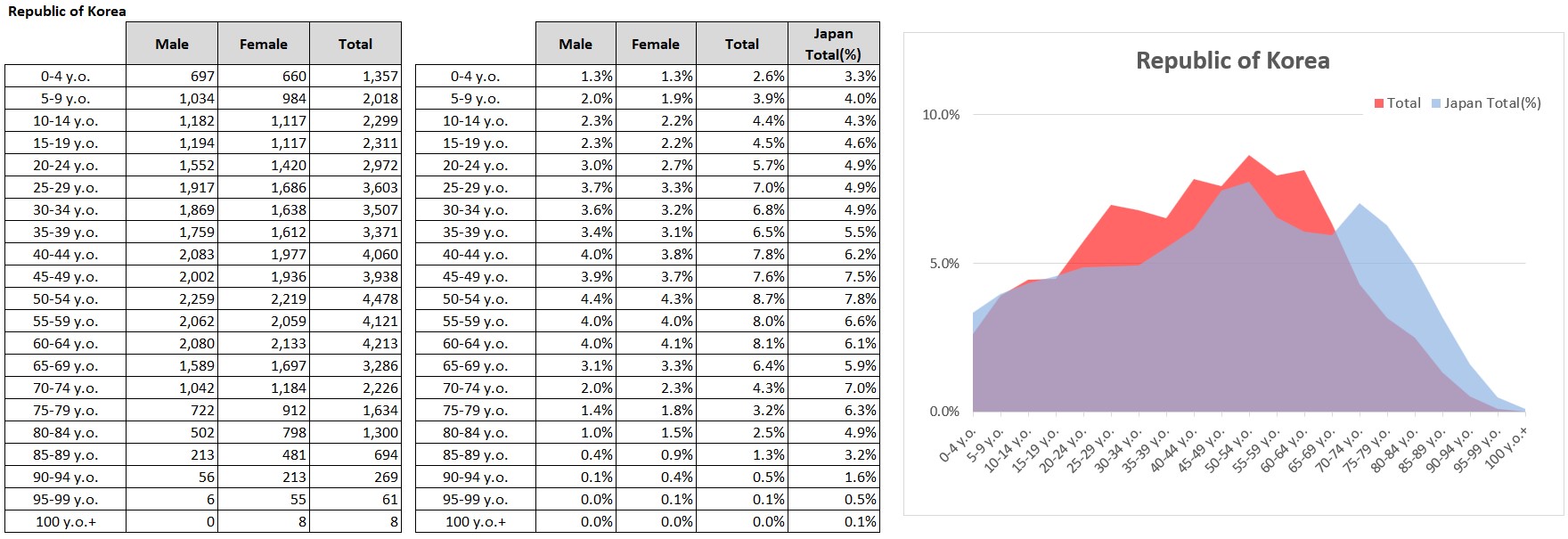
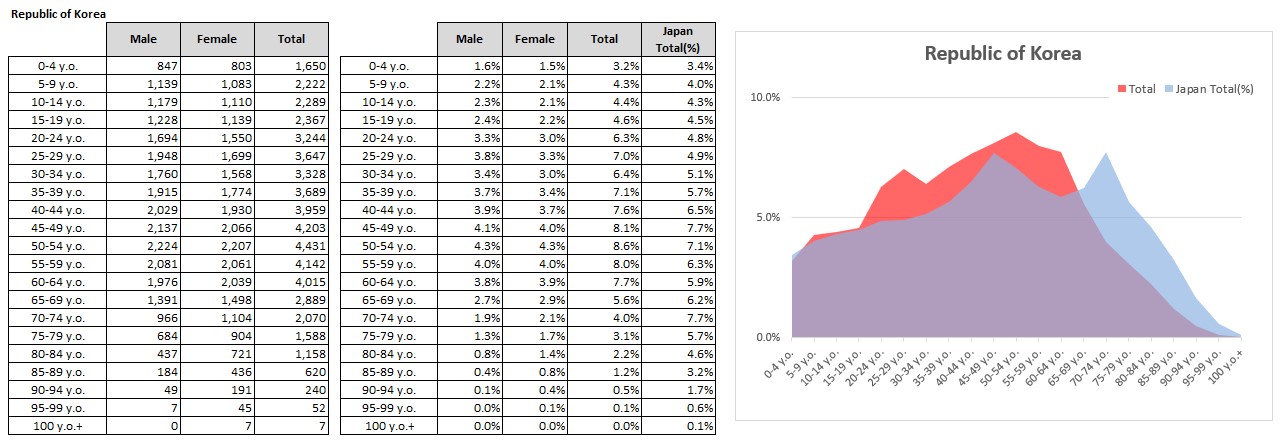
In the Republic of Korea, 20s to 60s are populous generations, while the proportion of those in their 40s to 70s is large in Japan.
Although the proportion of people in their 20s to 60s in the total population is larger than in Japan, looking at Below 10 years old to 40s, the younger the age group, the smaller the population.
―――
South Korea, one of the most accessible overseas markets for Japan, is seeing a growing number of opportunities for Korean trends to take hold in Japan as well.
In this article, based on various data sources—including Intage’s “Global Viewer” data on overseas consumers—we’ll organize and explain the “averages” that form the foundation of South Korean consumer behavior, as well as the latest trends revealed by these figures.
Average and Real-Life Spending Habits of Koreans: Essential Information You Should Know
・Lifestyle: Housing, Environment, Housework, Marriage
・Lifestyle and Consumer Values: Emphasis on Speed and Efficiency / Beauty and Health, Trends
Reference
Commentary
In the Republic of Korea, 40s to 50s are populous generations, while the proportion of those in their 40s to 70s is large in Japan.
Although the proportion of people in their 20s to 60s in the total population is larger than in Japan, looking at Below 10 years old to 40s, the younger the age group, the smaller the population.
Reference
United Nations ”World Population Prospects 2022”
Retrieved February 9, 2023, from https://bit.ly/2URh0vE
Commentary
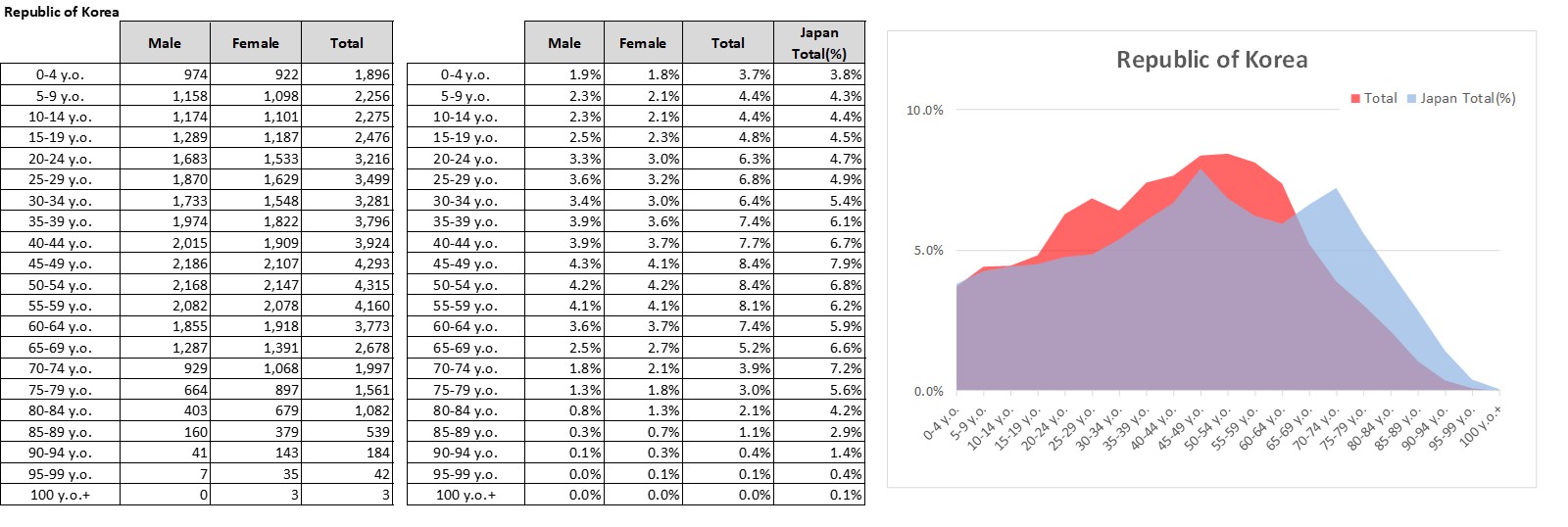
In the Republic of Korea, 40s to 50s are populous generations, while the proportion of those in their 40s to 70s is large in Japan. Although the proportion of people in their 20s and 30s in the total population is larger than in Japan, looking at Below 10 years old to 40s, the younger the age group, the smaller the population.
Reference
Reference United Nations ”World Population Prospects 2019” Retrieved June 15, 2020, from https://bit.ly/2URh0vE