Search Results
Living Environment/Climate - 26 results
-
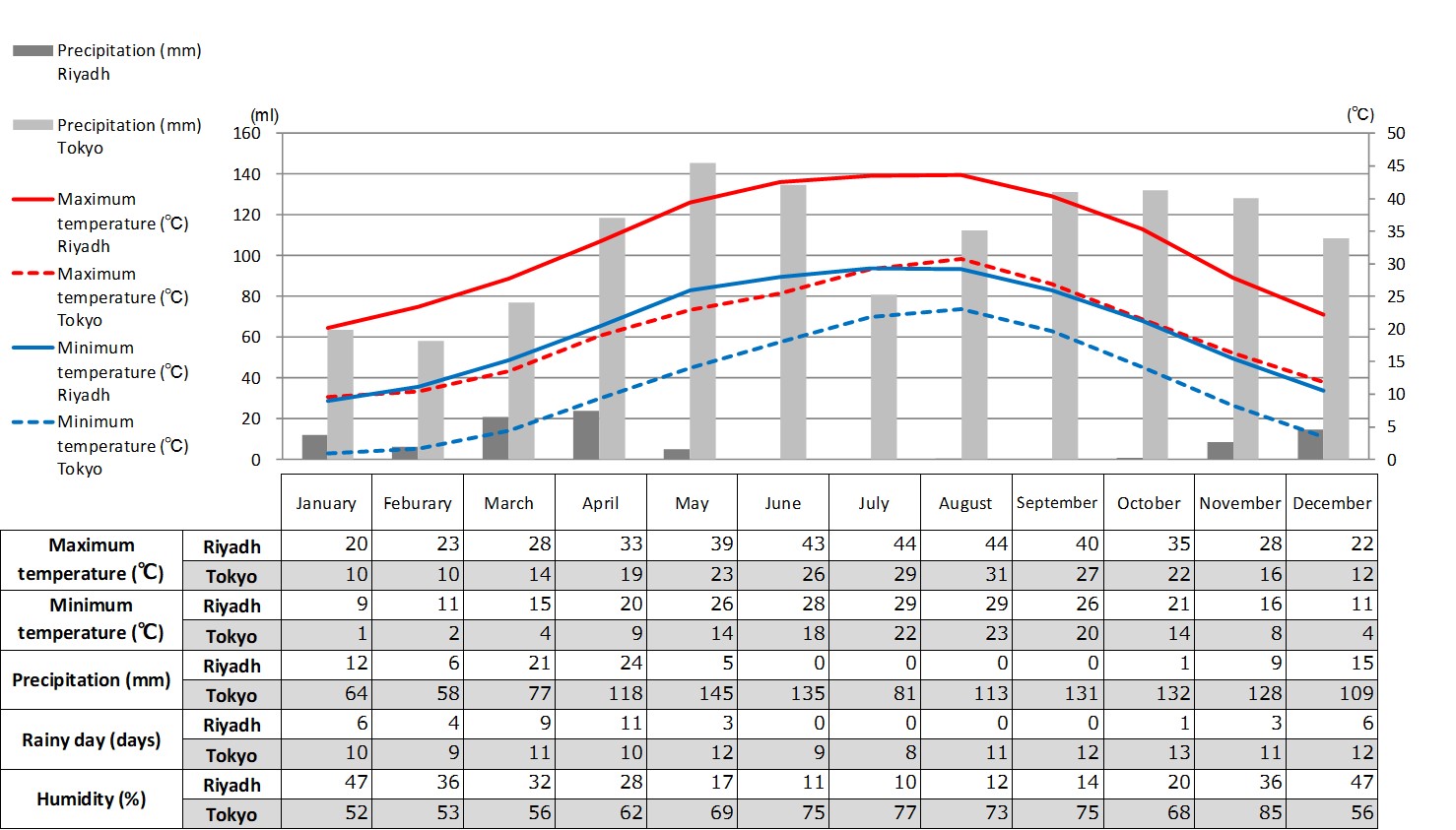
Maximum and minimum temperatures, precipitation, number of days with rain, and humidity for Riyadh and Tokyo
calendar_monthAug 05, 2020
Spring is a brisk climate. The central area where Riyadh is located is warmer, with an average temperature of about 20 degrees C after dark. Temperatures begin to rise in the summer, with highs of over 40 degrees C. Early mornings and nights are more pleasant with mild winds. Autumn brings mild weather and cool breezes. Winters are more pleasant with crisp days and cool nights. There is very little precipitation throughout the year, with a few showers around March and April.---Through consumer surveys in the UAE and Saudi Arabia, as well as virtual home tours, we present a realistic look at daily life and consumer behavior in the Middle East.This article offers insights to deepen your understanding of the Middle Eastern market and explore new business opportunities. [UAE, Saudi Arabia] Experience virtual tour! ~New Market Opportunities~・Women’s increased participation in the workforce, changes in living environments, and characteristics of household chores and purchasing behavior・High trust in Japanese brands and growing interest in the latest technology and environmental considerations
-
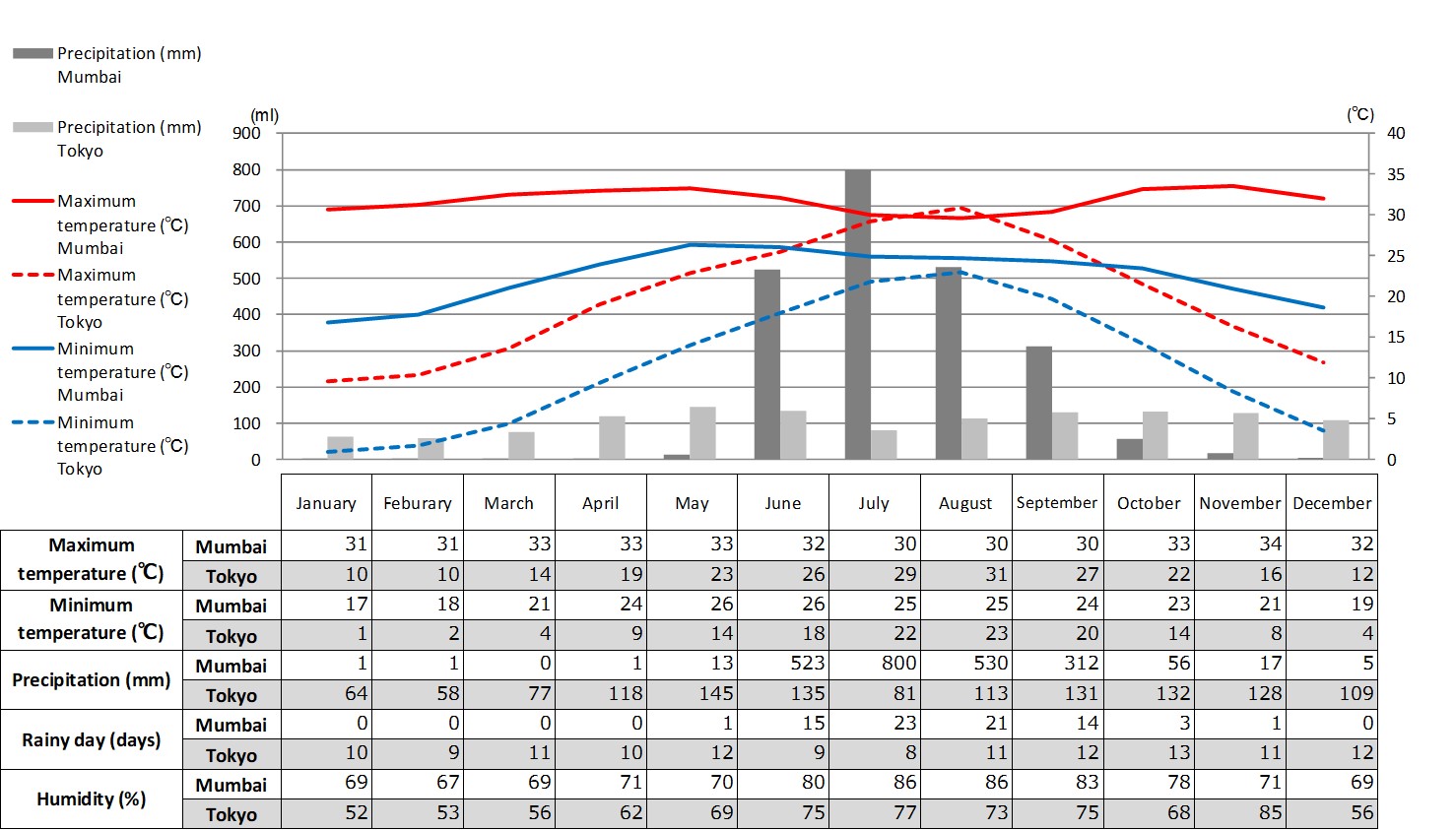
Maximum and minimum temperatures, precipitation, number of days with rain, and humidity for Mumbai and Tokyo
calendar_monthAug 05, 2020
Maharashtra state, where Mumbai is located, has a typical monsoon climate. Summer (March-May) is the hottest time of the year, with temperatures above 30 degrees C. Thunderstorms are frequent. The rainy season begins in early June and lasts until early September, with the most rains in July. In winter (November to February), there are a pleasant breeze and clear skies.---If you'd like to learn more about the “average lifestyle” of people in India, please also check out this article. What Is the Average Indian Like? A Comprehensive Guide to Demographics, Family Values, Dietary Habits, and Gen Z Trends・Household Structure in India: Average Household Size and Large Families・India’s Diversity: Viewing the Market with an Understanding of Religious, Linguistic, and Regional Differences・Housing Conditions in India: Consumer Insights from Kitchens and Bathroomsand more
-
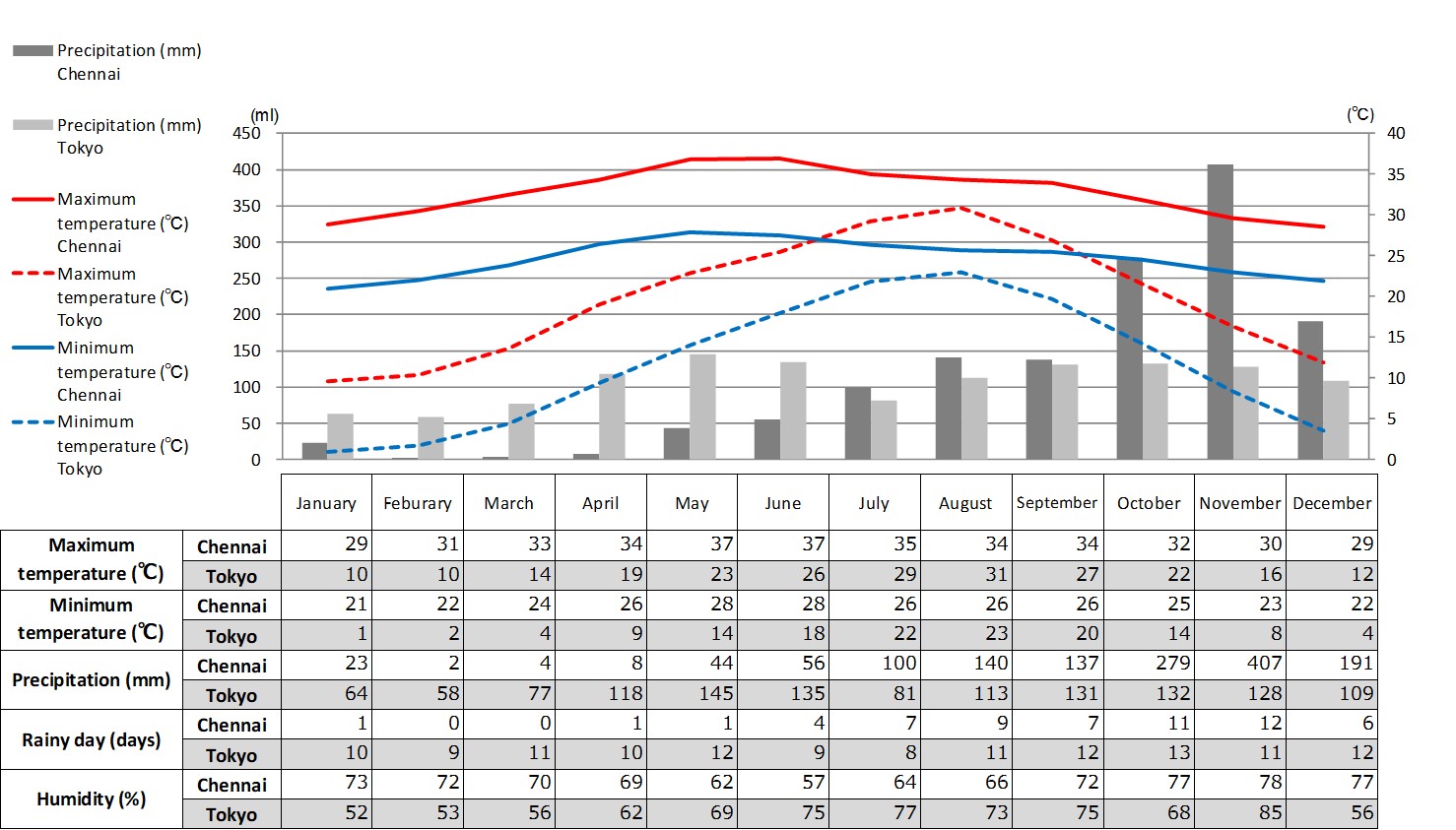
Maximum and minimum temperatures, precipitation, number of days with rain, and humidity for Chennai and Tokyo
calendar_monthAug 05, 2020
(The climate of India) Summer (April to June), many parts of India experience high temperatures of 30 degrees C. In winter (December to February) clouds and a dry northeastern monsoon pass through and temperatures are much lower. The rainy season in India generally begins in the second week of July and lasts until the second week of October; around the second week of June, a wet monsoon enters various parts of India, causing rainfall in all parts of the state.---Accelerate decision-making with smart overseas resident dataGlobal Viewer This service provides reports tailored to your issues using questionnaire data on various actual conditions and attitudes of sei-katsu-sha in 11 countries (Asia and US) stocked by INTAGE.The service covers 400 items, including actual behavioral conditions and awareness, values, and information contact related to various product and service categories. ▼Click here for detailshttps://www.global-market-surfer.com/lp/gv/
-
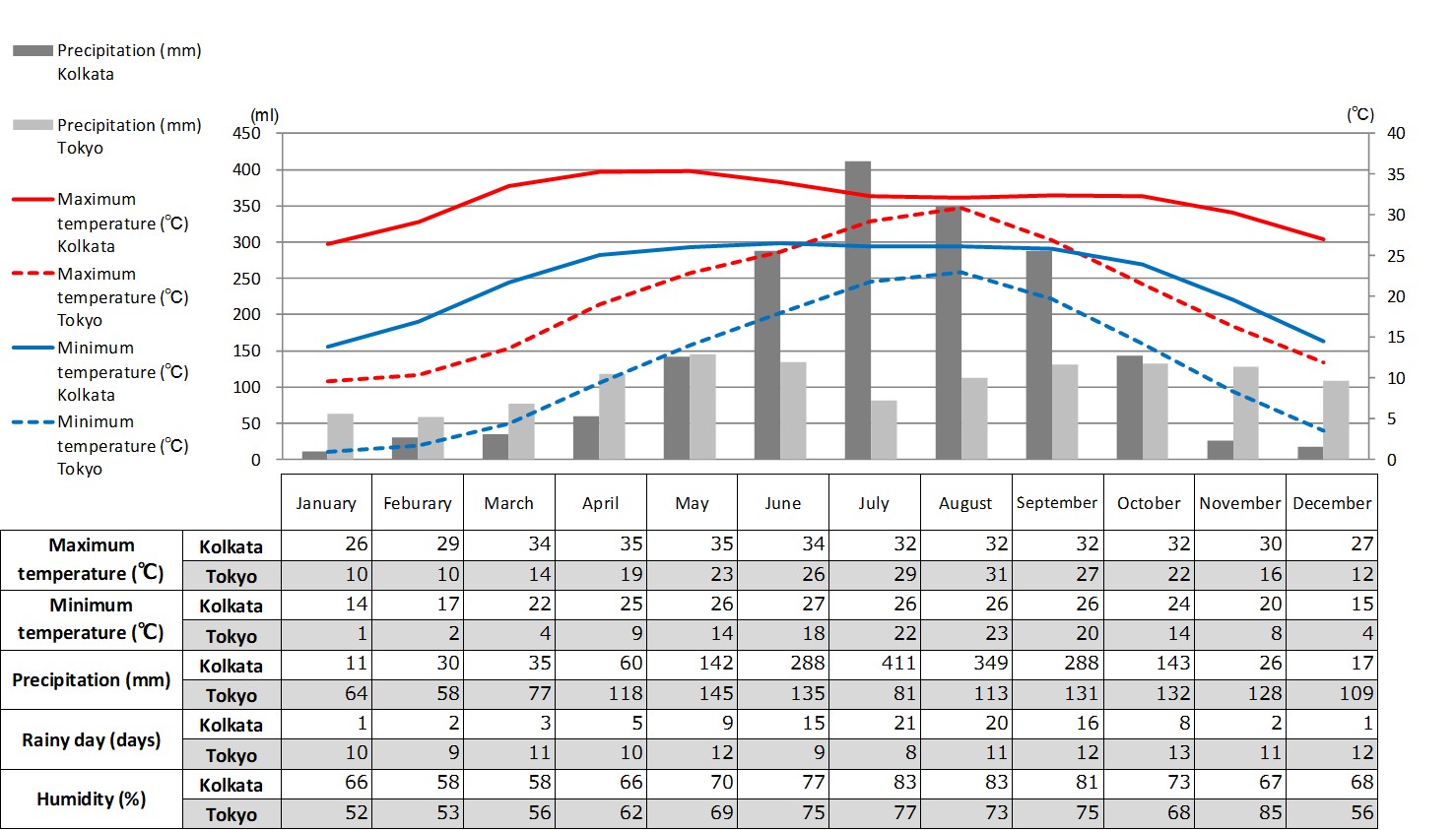
Maximum and minimum temperatures, precipitation, number of days with rain, and humidity for Kolkata and Tokyo
calendar_monthAug 05, 2020
(The climate of India) Summer (April to June), many parts of India experience high temperatures of 30 degrees C. In winter (December to February) clouds and a dry northeastern monsoon pass through and temperatures are much lower. The rainy season in India generally begins in the second week of July and lasts until the second week of October; around the second week of June, a wet monsoon enters various parts of India, causing rainfall in all parts of the state.---Accelerate decision-making with smart overseas resident dataGlobal Viewer This service provides reports tailored to your issues using questionnaire data on various actual conditions and attitudes of sei-katsu-sha in 11 countries (Asia and US) stocked by INTAGE.The service covers 400 items, including actual behavioral conditions and awareness, values, and information contact related to various product and service categories. ▼Click here for detailshttps://www.global-market-surfer.com/lp/gv/
-
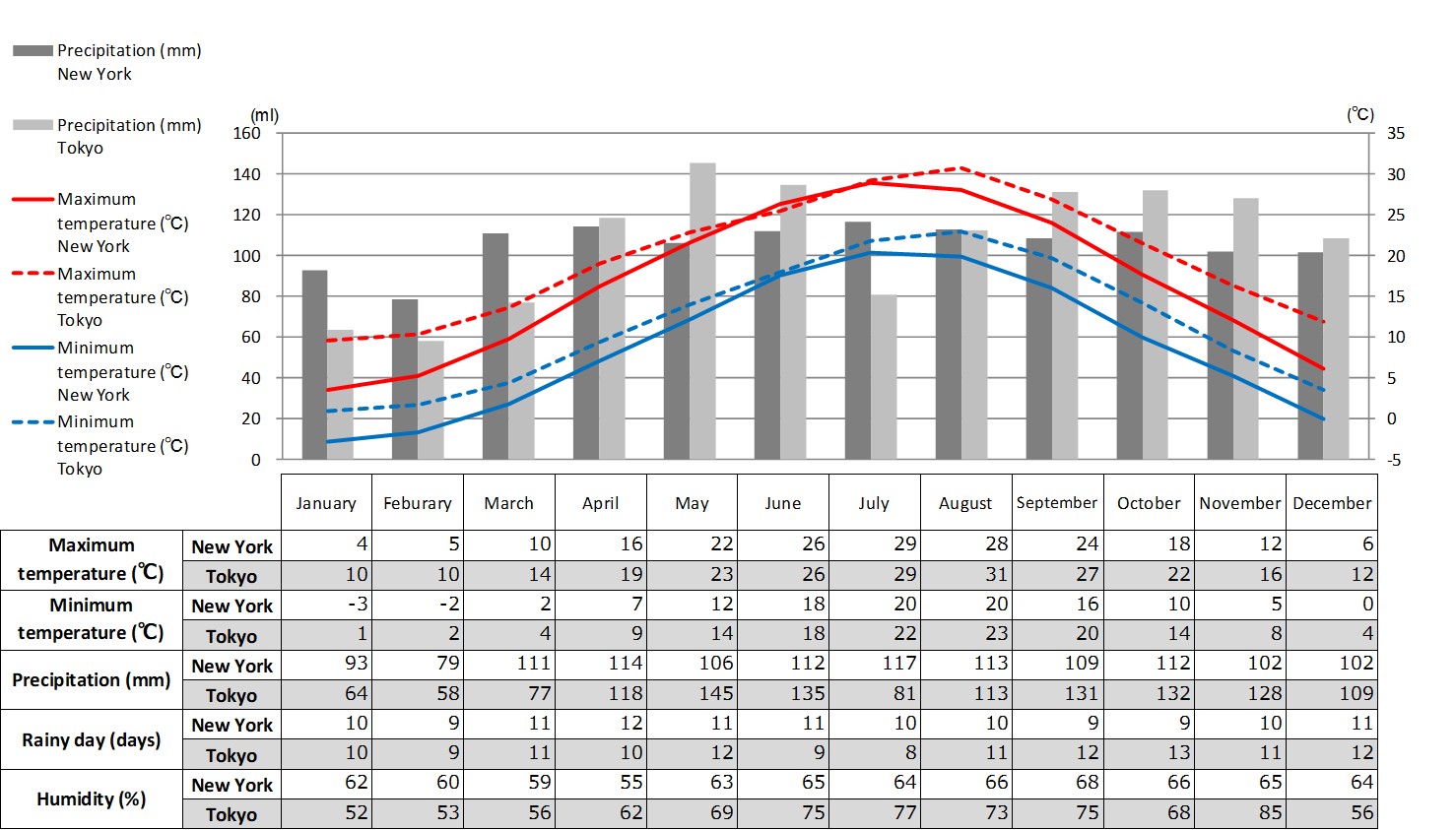
Maximum and minimum temperatures, precipitation, number of days with rain, and humidity for New York and Tokyo
calendar_monthAug 05, 2020
Spring in New York City is a crisp, warm season, with light winds and rain. Summer is characterized by bright, sunny, hot days and late sunsets. Fall can be chilly, so it's wise to wear multiple layers of clothing. Winter is cold and snowy, and there are less hours of sunshine. However, it is often sunny.
-
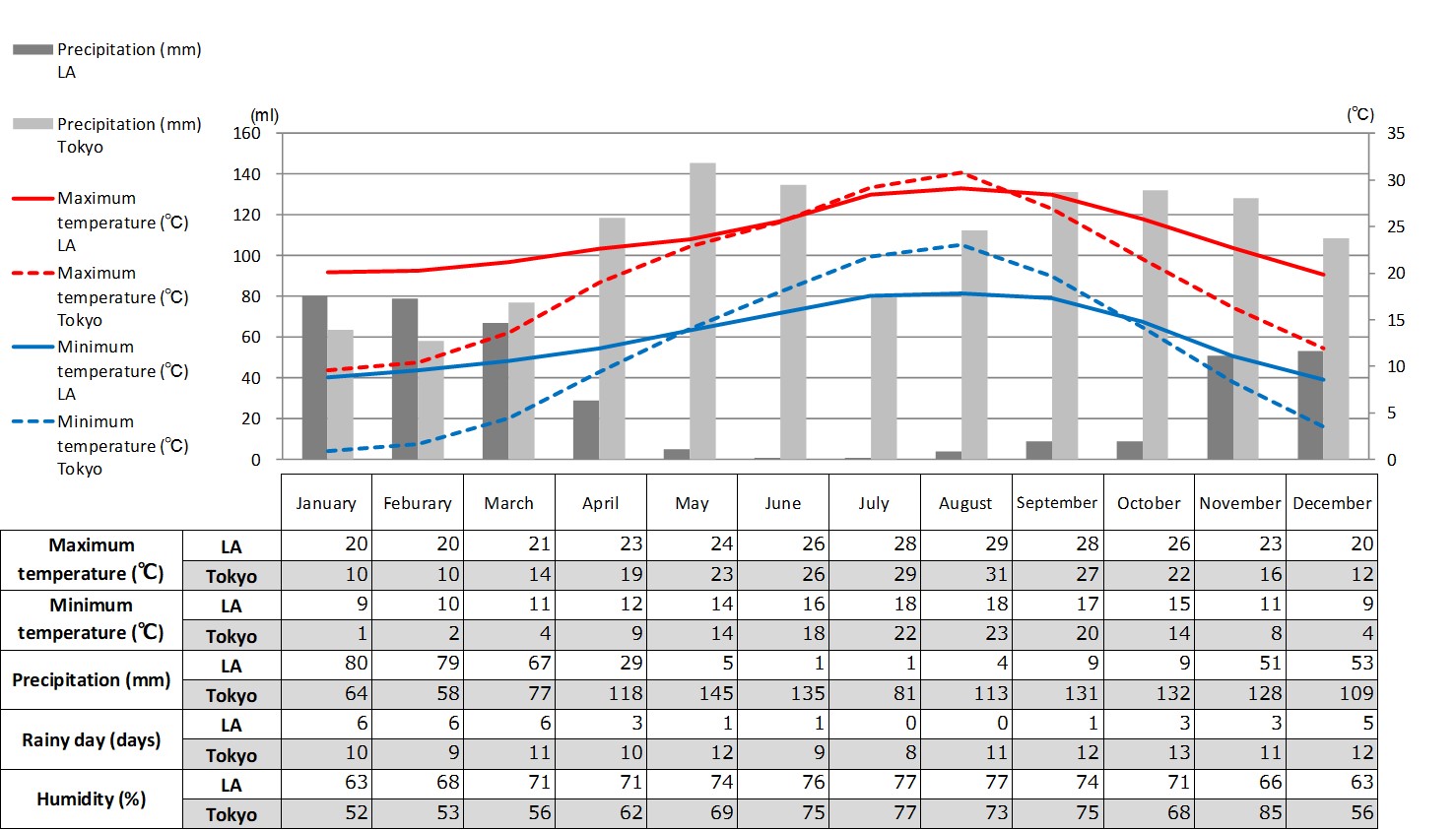
Maximum and minimum temperatures, precipitation, number of days with rain, and humidity for Los Angeles and Tokyo
calendar_monthAug 05, 2020
A large part of California has a Mediterranean-like climate, with warm, dry summers and mild, wet winters. On the coast, average daily highs hover above 21 degrees C, but on hot summer days the temperature can reach 27 degrees C or higher. The state's legendary fog usually covers the coast from around north of Monterey during the summer months, with the fog disappearing by noon and reappearing at dusk.
-
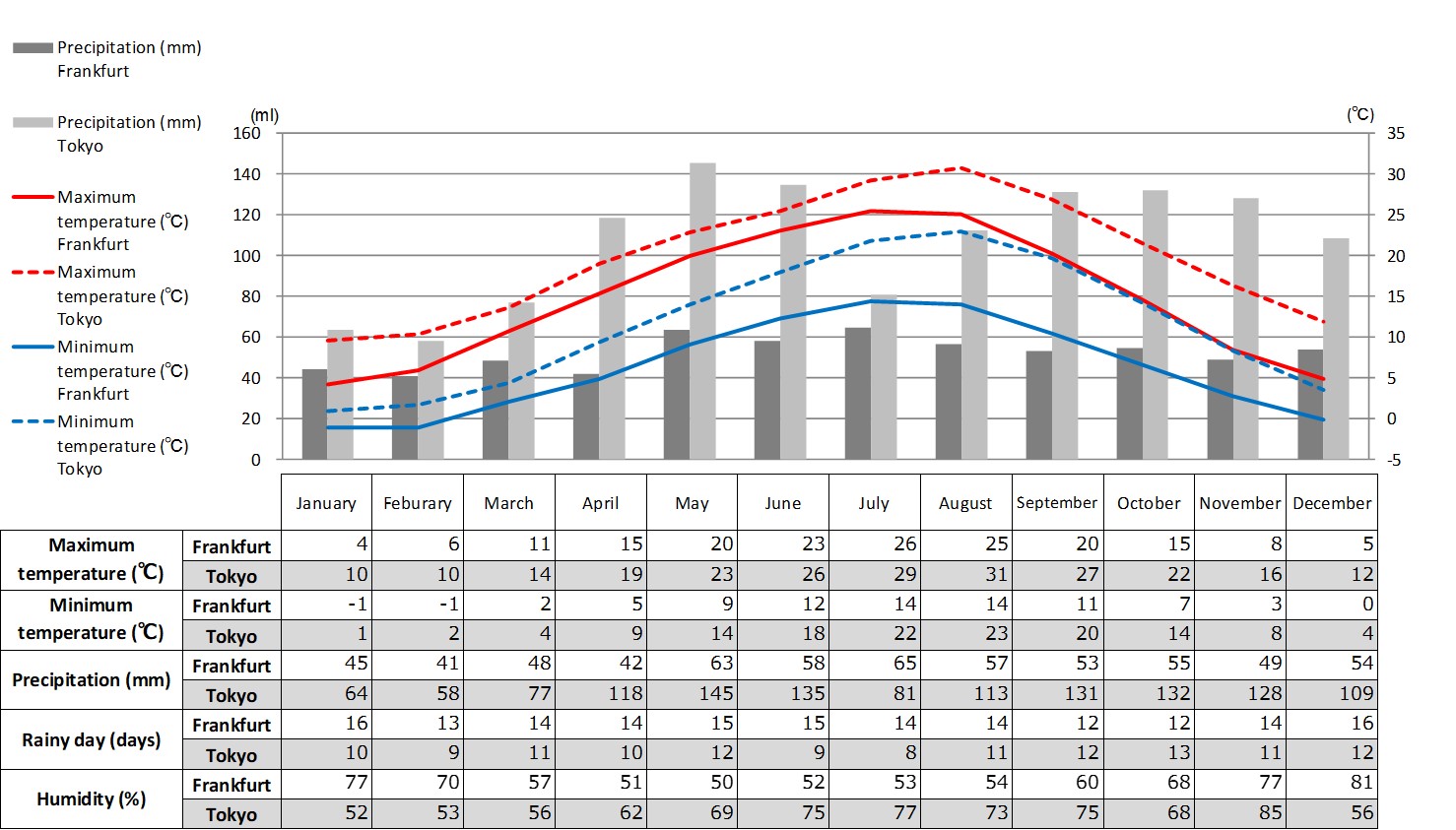
Maximum and minimum temperatures, precipitation, number of days with rain, and humidity for Frankfurt and Tokyo
calendar_monthAug 05, 2020
Regarding the summer in Frankfurt, even in the hottest month of July-August, highs are around 25 degrees C. December-February is particularly cold, with lows occasionally go below freezing. Rain falls throughout the year.--- Generation Z, which accounts for about a quarter of the world’s population, is garnering attention as the largest consumer demographic of the future.In this article, we use Intage’s consumer database “Global Viewer” to compare Generation Z across 10 Asian countries and explain their commonalities and differences. Understanding Generation Z Around the World: Country-Specific Trends Through Values and Daily Life・Generation Z’s Values (Health, Parenting, Shopping, etc.)・Generation Z’s Lifestyle
-
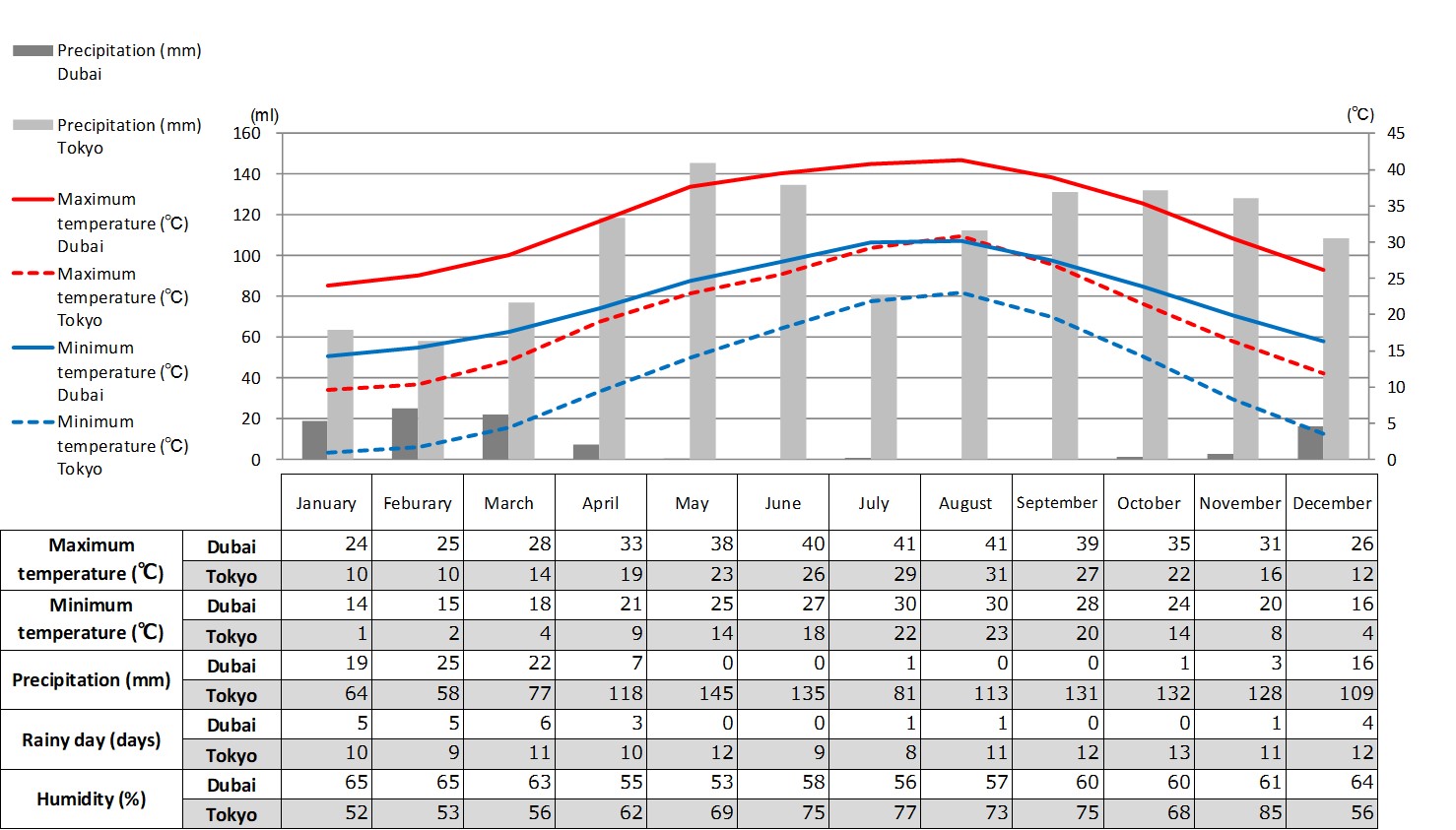
Maximum and minimum temperatures, precipitation, number of days with rain, and humidity for Dubai and Tokyo
calendar_monthAug 05, 2020
Dubai's climate is mild most of the year, with very little rain and long hours of sunshine. However, in July and August, the temperature and humidity are high, with highs reaching around 45 degrees C at times. But public transportation, shopping malls, hotels, restaurants and tourist attractions are all air-conditioned and well prepared for high temperatures.
-
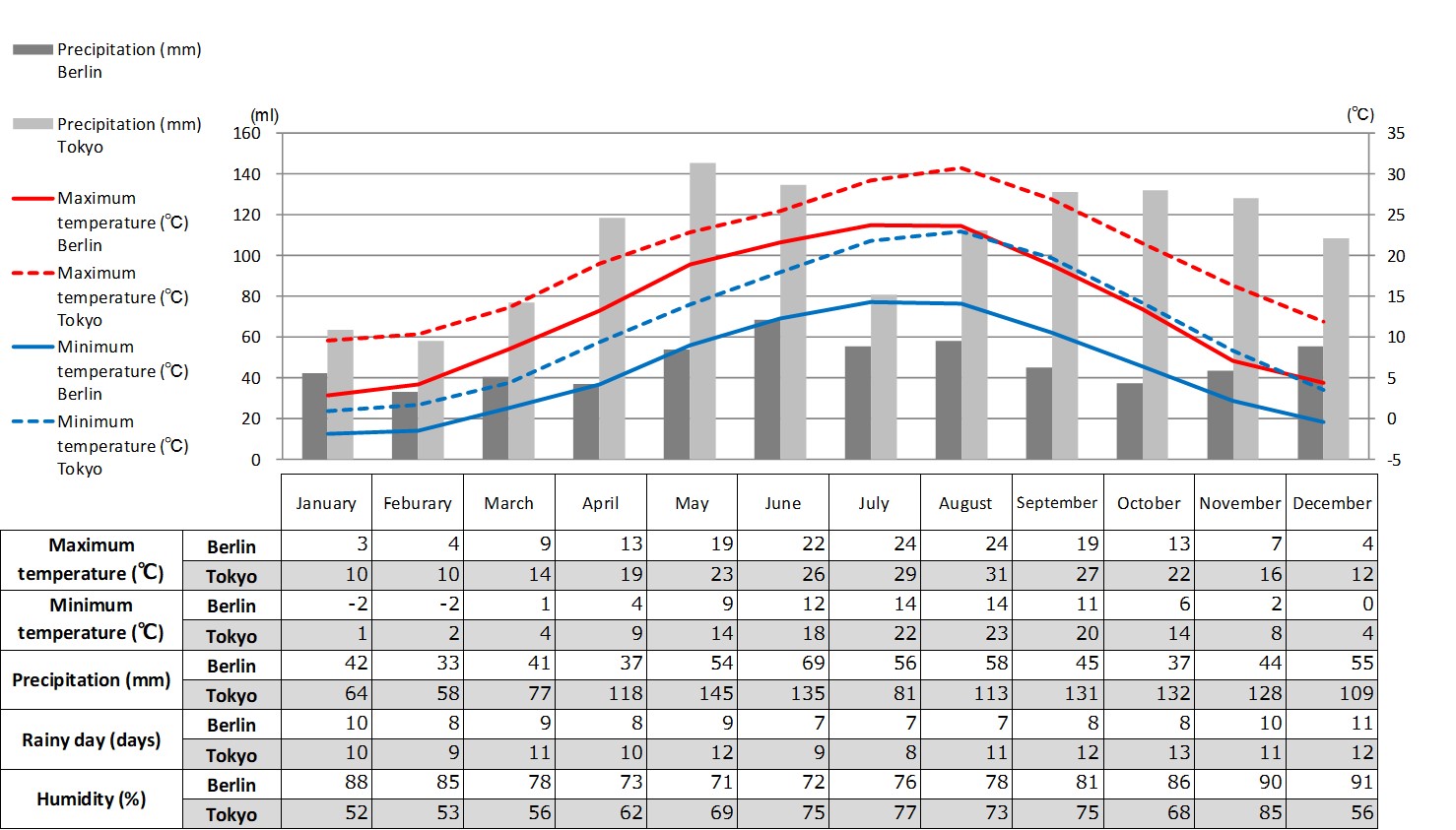
Maximum and minimum temperatures, precipitation, number of days with rain, and humidity for Berlin and Tokyo
calendar_monthAug 05, 2020
Summer in Berlin is generally pleasant, with highs of around 25 degrees C even in the hottest months of July and August, but December to February is particularly cold, with lows below freezing.
-
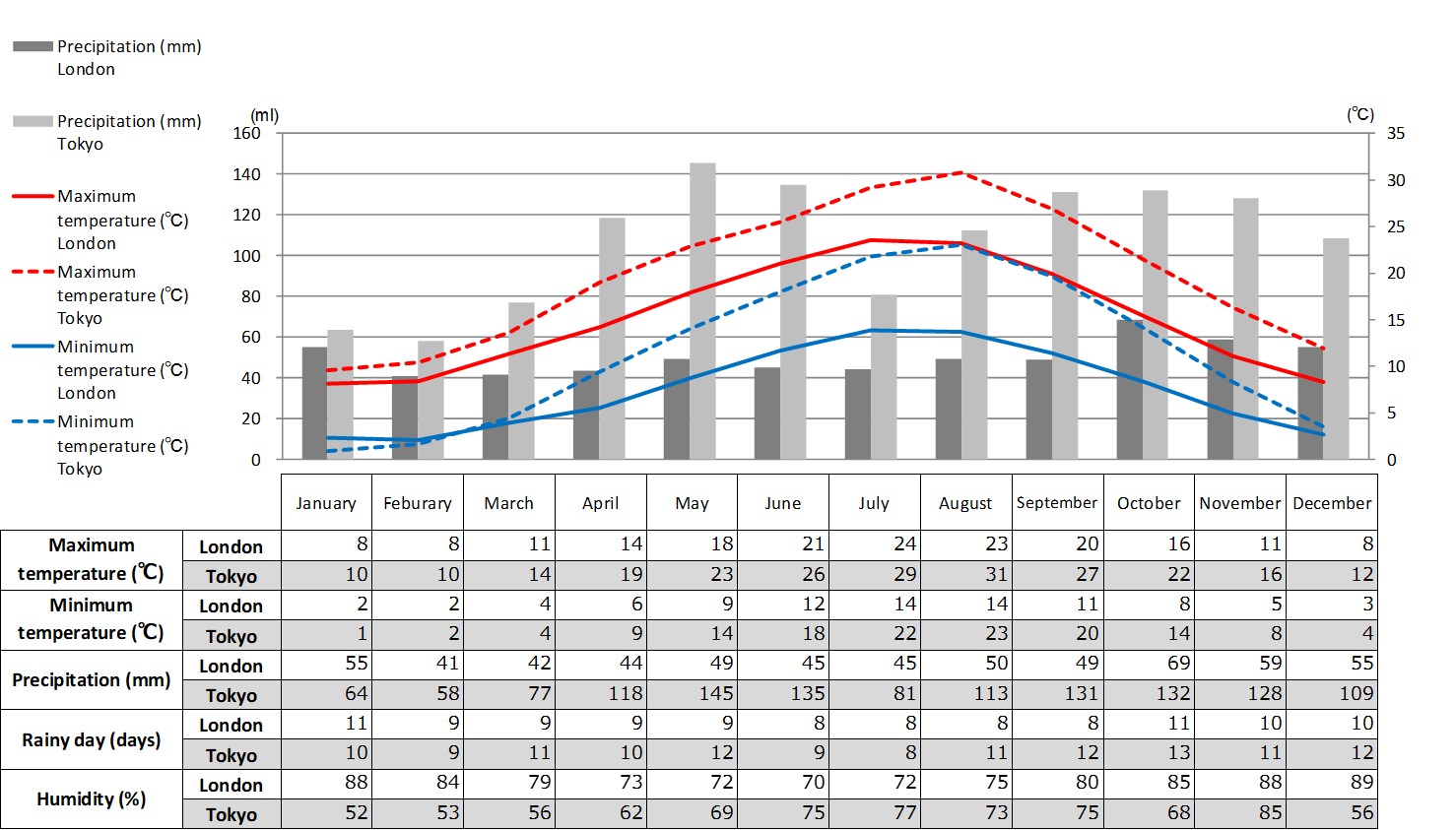
Maximum and minimum temperatures, precipitation, number of days with rain, and humidity for London and Tokyo
calendar_monthAug 05, 2020
Summers are very pleasant with an average temperature of 18 degrees C, often falling below 20 degrees C. However, in recent years, London has also experienced heatwaves in excess of 30 degrees C. Temperatures in spring and autumn are around 11-15 degrees C. With the start of British Summer Time at the end of March (to the end of October) results in cooler nights. Typical winter temperatures range from 2-10 degree C (35-50 degrees F). Temperatures don't often drop below freezing and snowfall isn't usual, but in some rare cases, it snows really heavily. The number of rainy days (days with 0.25 mm or more of rain) is fairly consistent throughout the year, with 11 to 15 days of rain each month. Overall rainfall is highest in November and August, with March and April having the least amount in most years.
-
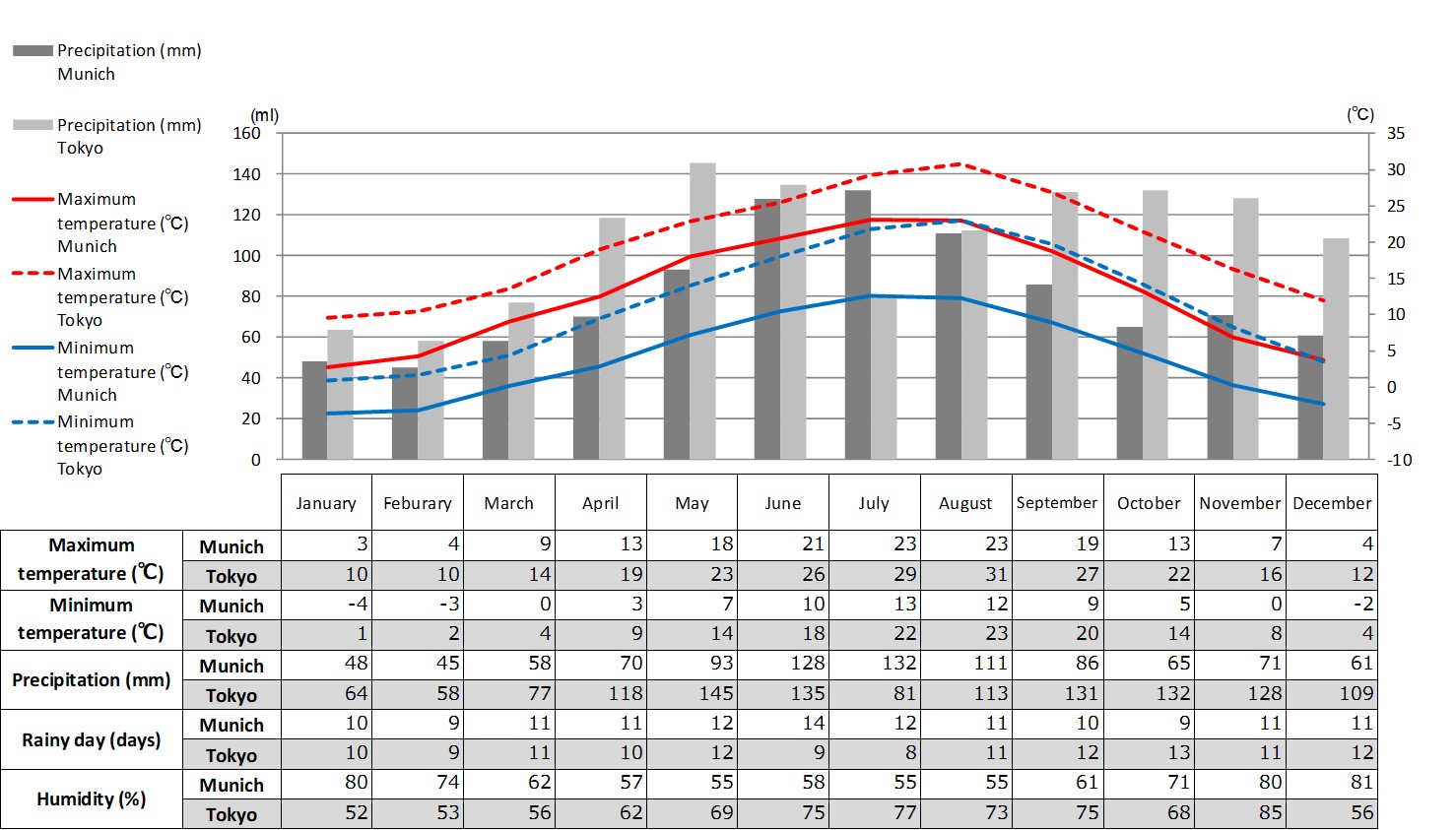
Maximum and minimum temperatures, precipitation, number of days with rain, and humidity for Munich and Tokyo
calendar_monthAug 05, 2020
Summer in Munich is generally pleasant, with highs of less than 25 degrees C even in the hottest months of July and August. December to February is particularly cold, with lows below freezing. Rain falls throughout the year, and precipitation is slightly more than in other German cities (Frankfurt, Berlin, etc.).---Generation Z, which accounts for about a quarter of the world’s population, is garnering attention as the largest consumer demographic of the future.In this article, we use Intage’s consumer database “Global Viewer” to compare Generation Z across 10 Asian countries and explain their commonalities and differences. Understanding Generation Z Around the World: Country-Specific Trends Through Values and Daily Life・Generation Z’s Values (Health, Parenting, Shopping, etc.)・Generation Z’s Lifestyle
-
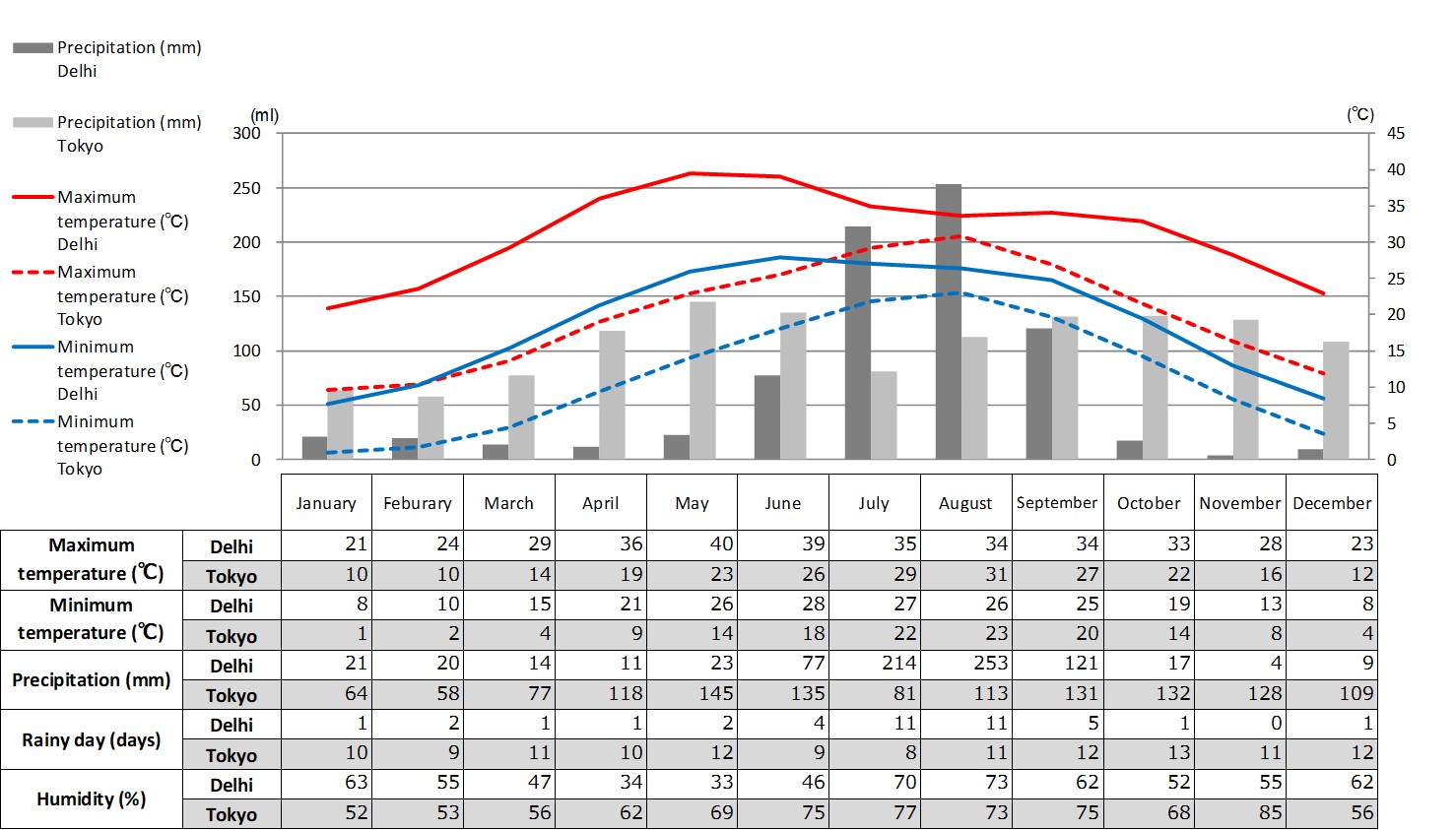
Maximum and minimum temperatures, precipitation, number of days with rain, and humidity for Delhi and Tokyo
calendar_monthAug 04, 2020
Delhi's climate is very extreme. Summers (April-July) are very hot and winters (December-January) are cold; July to mid-September is the monsoon season, which can be hot and humid. In summer, light, airy clothing, hats and sun shades are essential. In winter, you need to wear woolen clothing to protect yourself from the cold.