Search Results
Living Environment - 69 results
-
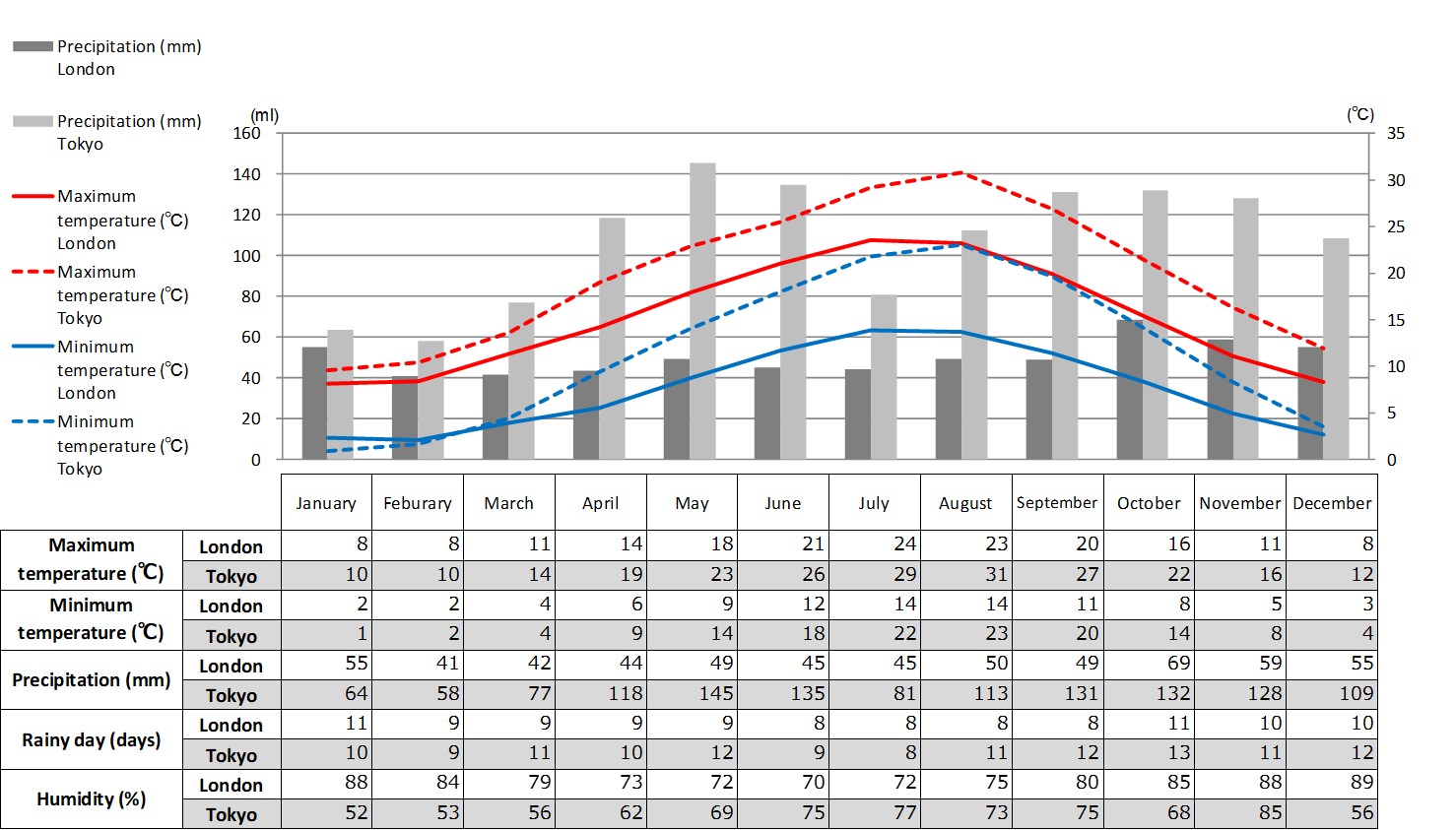
Maximum and minimum temperatures, precipitation, number of days with rain, and humidity for London and Tokyo
calendar_monthAug 05, 2020
Summers are very pleasant with an average temperature of 18 degrees C, often falling below 20 degrees C. However, in recent years, London has also experienced heatwaves in excess of 30 degrees C. Temperatures in spring and autumn are around 11-15 degrees C. With the start of British Summer Time at the end of March (to the end of October) results in cooler nights. Typical winter temperatures range from 2-10 degree C (35-50 degrees F). Temperatures don't often drop below freezing and snowfall isn't usual, but in some rare cases, it snows really heavily. The number of rainy days (days with 0.25 mm or more of rain) is fairly consistent throughout the year, with 11 to 15 days of rain each month. Overall rainfall is highest in November and August, with March and April having the least amount in most years.
-
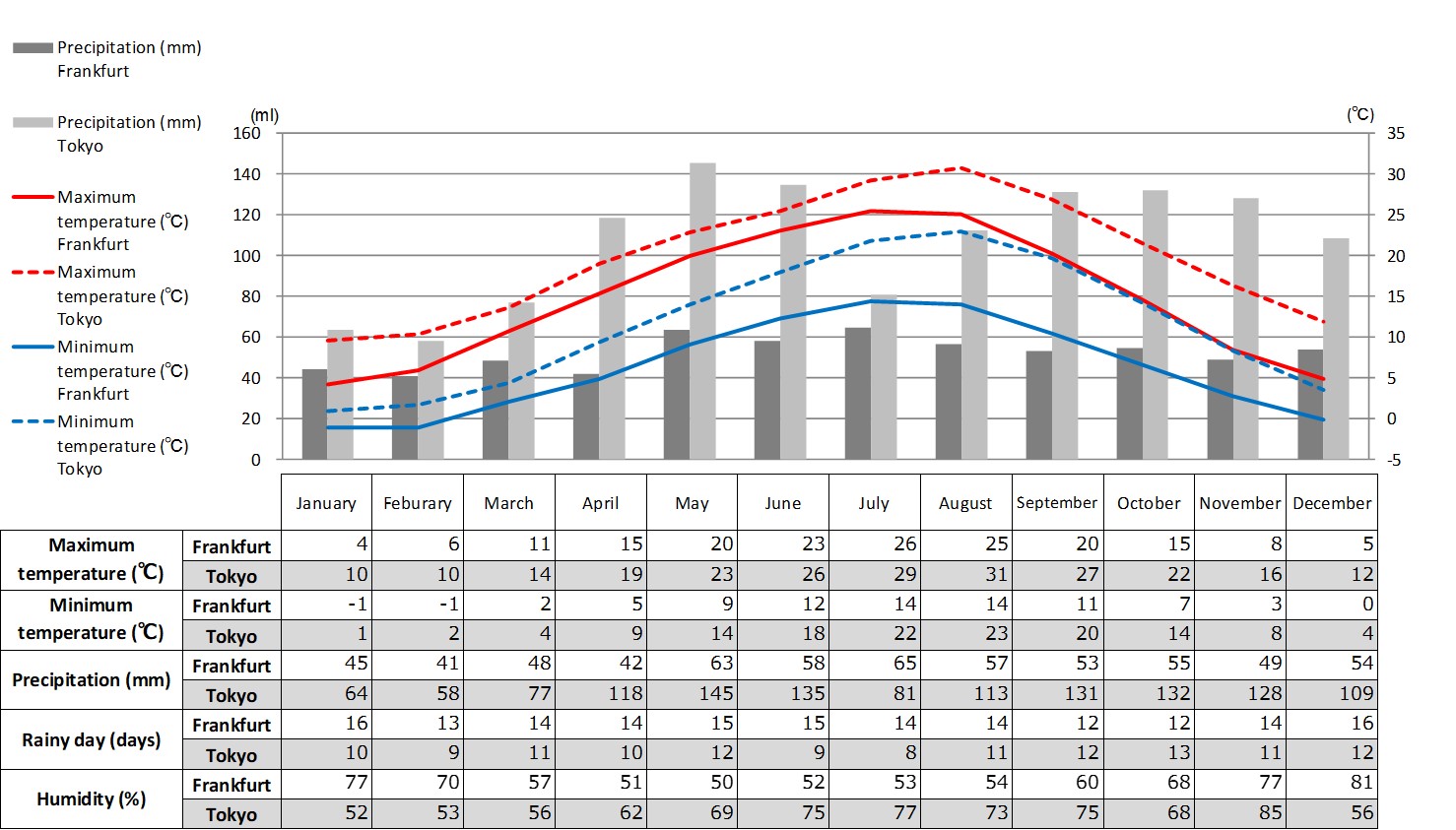
Maximum and minimum temperatures, precipitation, number of days with rain, and humidity for Frankfurt and Tokyo
calendar_monthAug 05, 2020
Regarding the summer in Frankfurt, even in the hottest month of July-August, highs are around 25 degrees C. December-February is particularly cold, with lows occasionally go below freezing. Rain falls throughout the year.--- Generation Z, which accounts for about a quarter of the world’s population, is garnering attention as the largest consumer demographic of the future.In this article, we use Intage’s consumer database “Global Viewer” to compare Generation Z across 10 Asian countries and explain their commonalities and differences. Understanding Generation Z Around the World: Country-Specific Trends Through Values and Daily Life・Generation Z’s Values (Health, Parenting, Shopping, etc.)・Generation Z’s Lifestyle
-
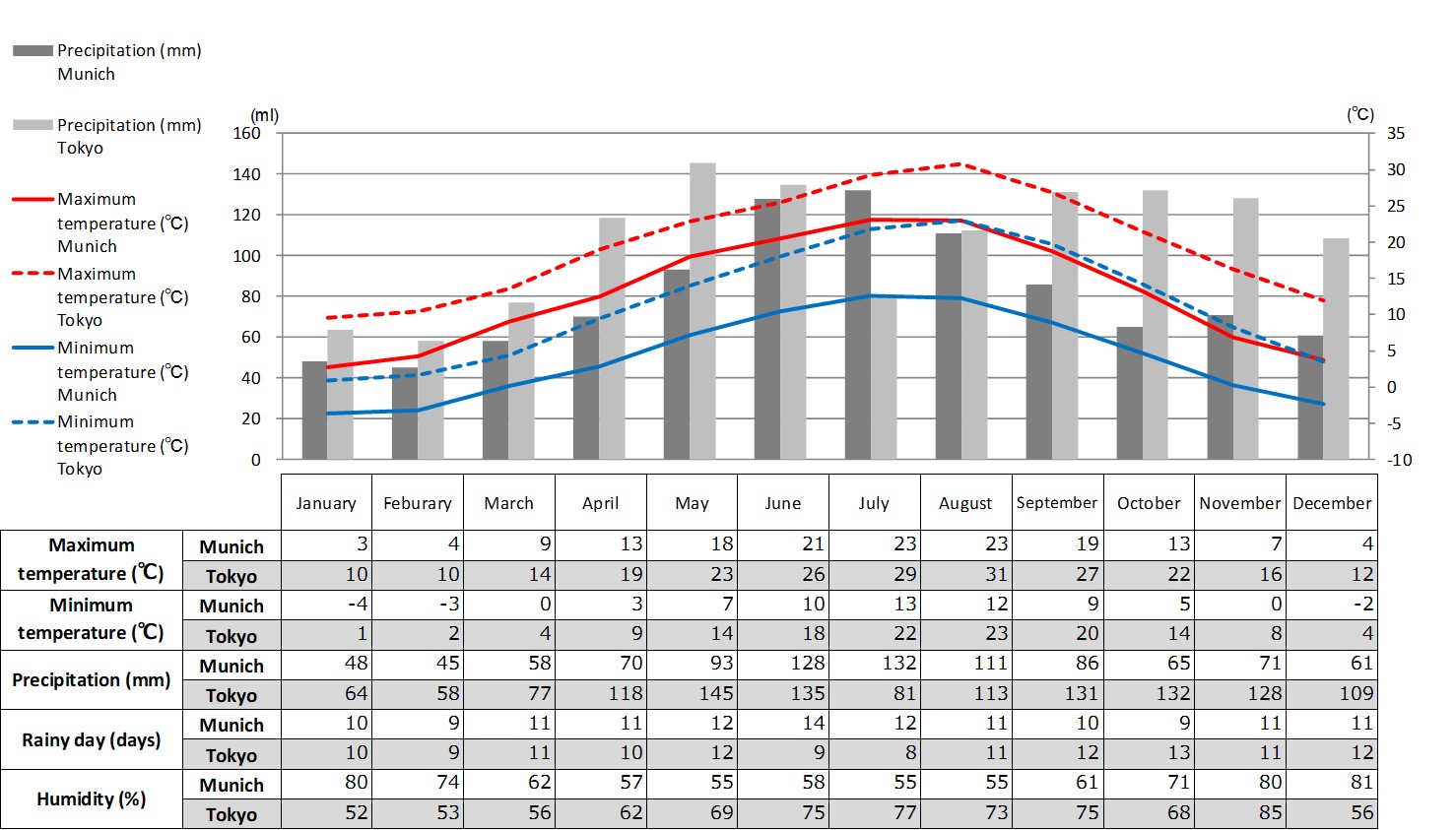
Maximum and minimum temperatures, precipitation, number of days with rain, and humidity for Munich and Tokyo
calendar_monthAug 05, 2020
Summer in Munich is generally pleasant, with highs of less than 25 degrees C even in the hottest months of July and August. December to February is particularly cold, with lows below freezing. Rain falls throughout the year, and precipitation is slightly more than in other German cities (Frankfurt, Berlin, etc.).---Generation Z, which accounts for about a quarter of the world’s population, is garnering attention as the largest consumer demographic of the future.In this article, we use Intage’s consumer database “Global Viewer” to compare Generation Z across 10 Asian countries and explain their commonalities and differences. Understanding Generation Z Around the World: Country-Specific Trends Through Values and Daily Life・Generation Z’s Values (Health, Parenting, Shopping, etc.)・Generation Z’s Lifestyle
-
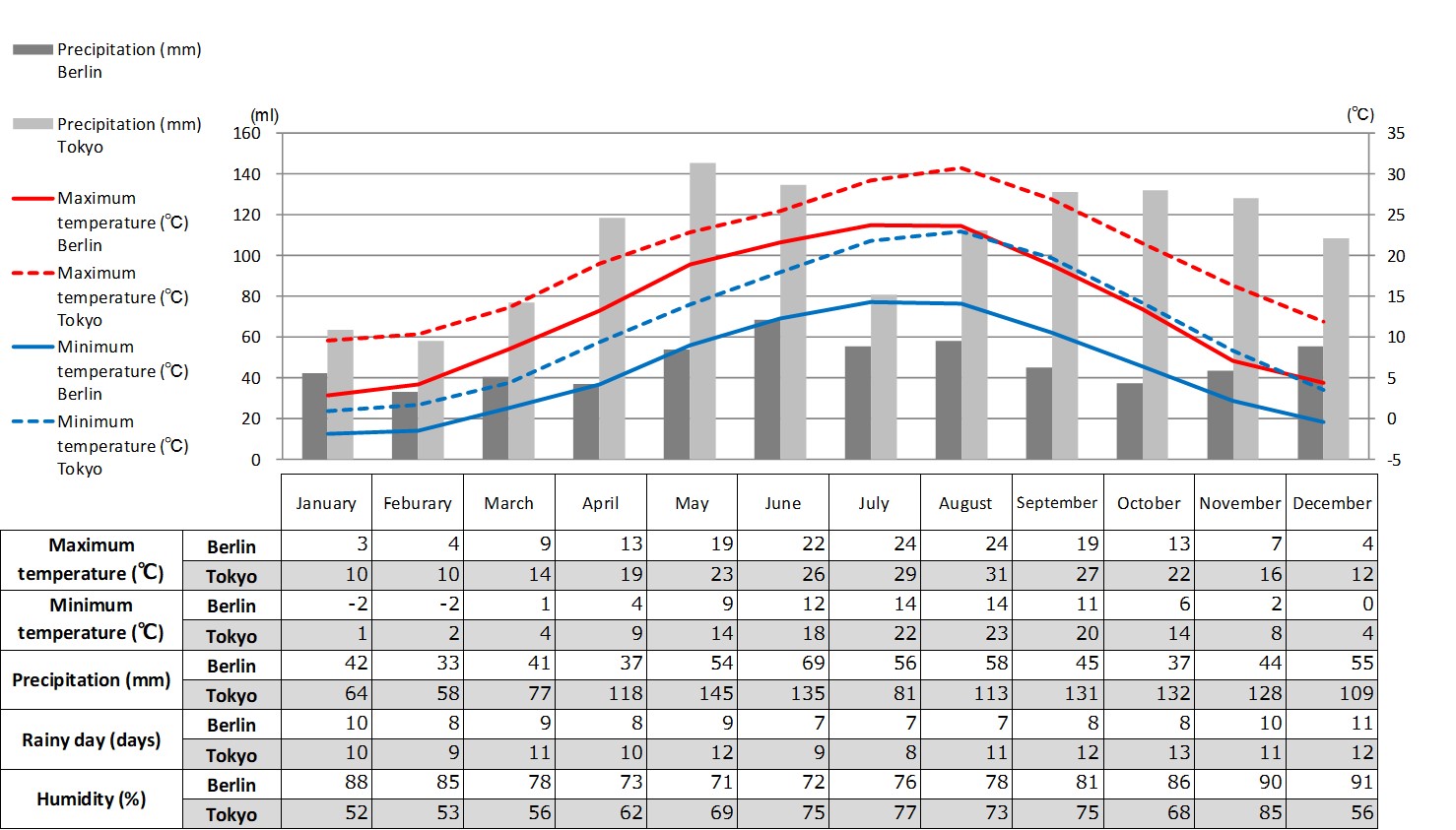
Maximum and minimum temperatures, precipitation, number of days with rain, and humidity for Berlin and Tokyo
calendar_monthAug 05, 2020
Summer in Berlin is generally pleasant, with highs of around 25 degrees C even in the hottest months of July and August, but December to February is particularly cold, with lows below freezing.
-
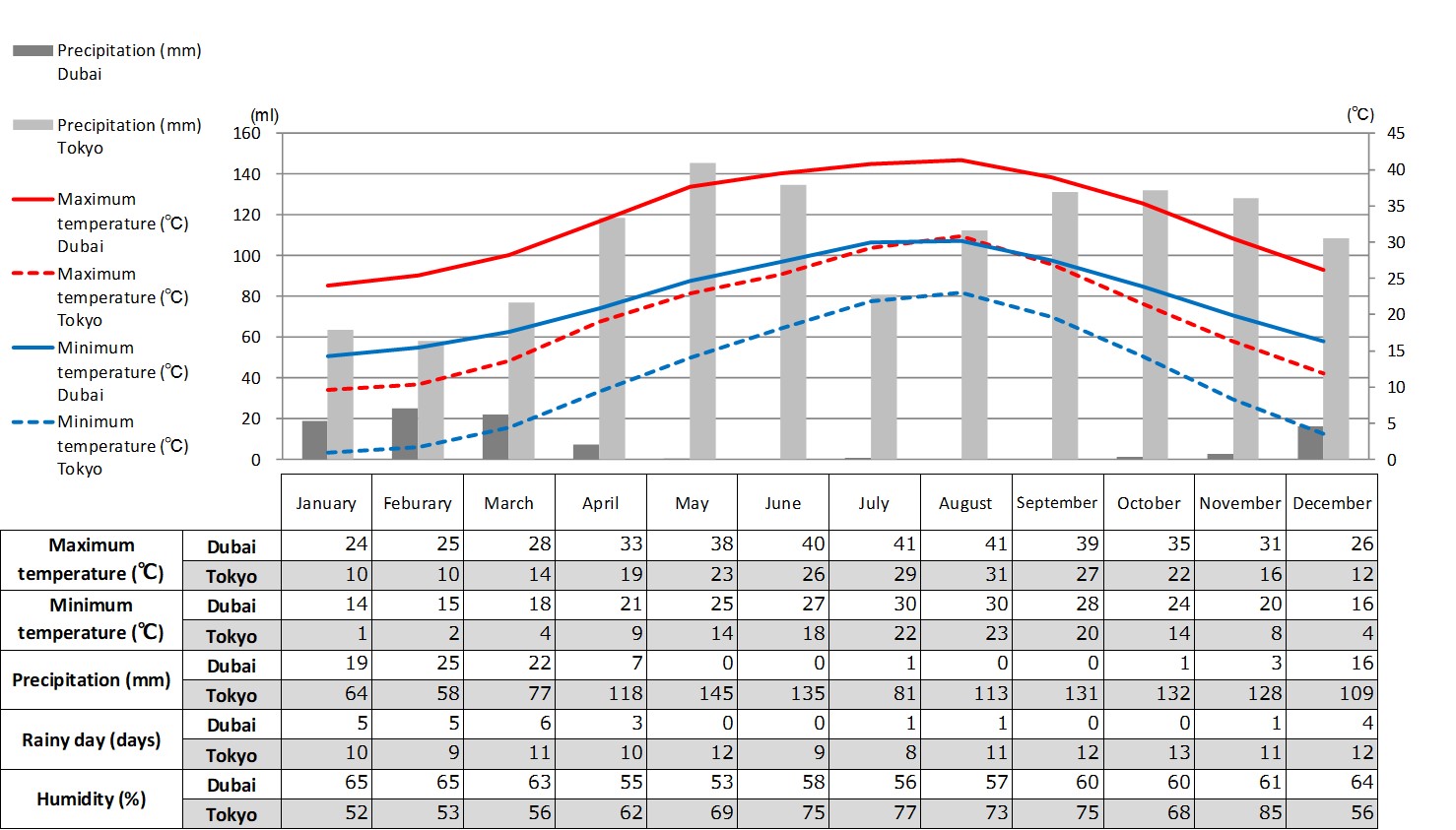
Maximum and minimum temperatures, precipitation, number of days with rain, and humidity for Dubai and Tokyo
calendar_monthAug 05, 2020
Dubai's climate is mild most of the year, with very little rain and long hours of sunshine. However, in July and August, the temperature and humidity are high, with highs reaching around 45 degrees C at times. But public transportation, shopping malls, hotels, restaurants and tourist attractions are all air-conditioned and well prepared for high temperatures.
-
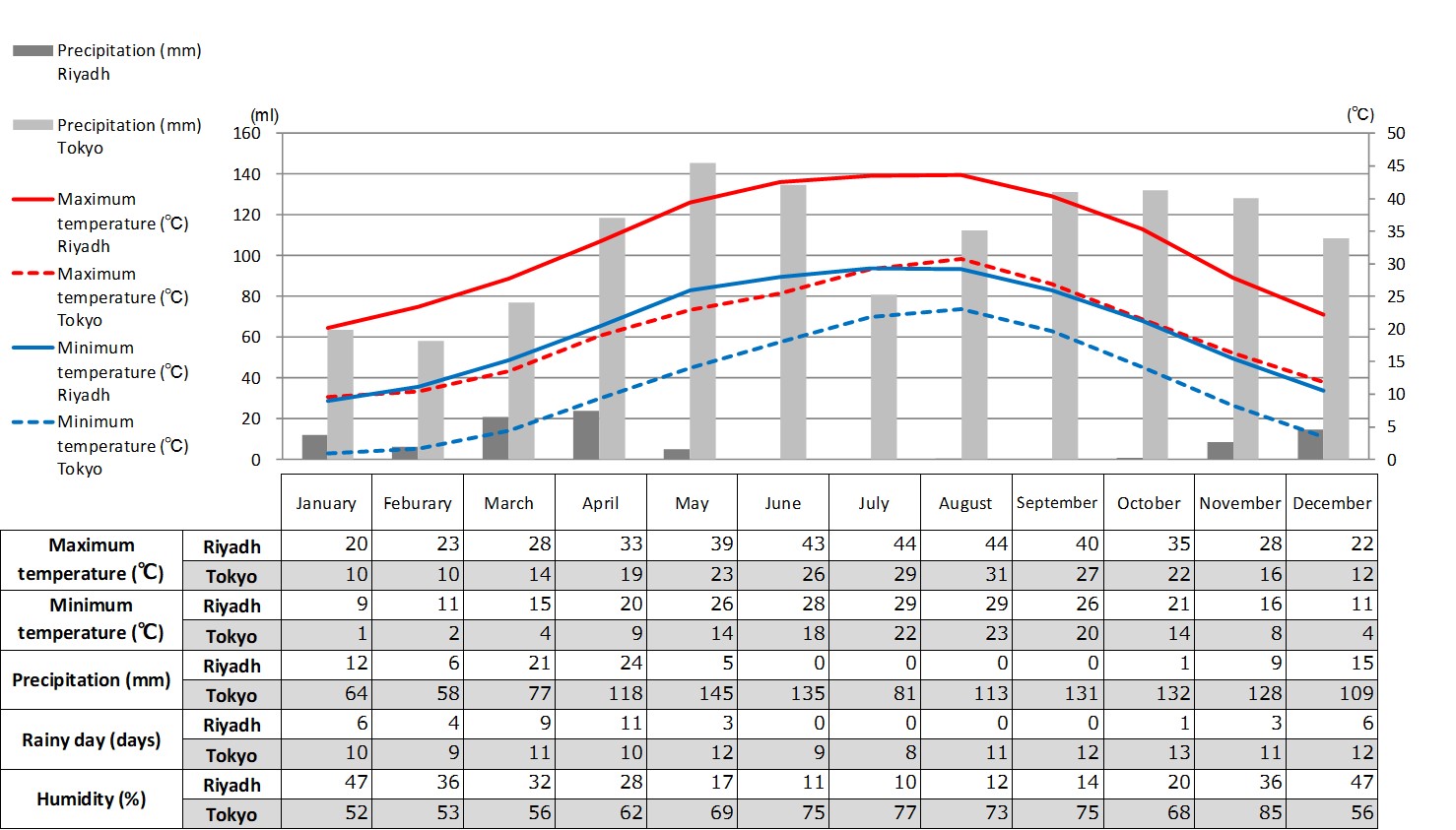
Maximum and minimum temperatures, precipitation, number of days with rain, and humidity for Riyadh and Tokyo
calendar_monthAug 05, 2020
Spring is a brisk climate. The central area where Riyadh is located is warmer, with an average temperature of about 20 degrees C after dark. Temperatures begin to rise in the summer, with highs of over 40 degrees C. Early mornings and nights are more pleasant with mild winds. Autumn brings mild weather and cool breezes. Winters are more pleasant with crisp days and cool nights. There is very little precipitation throughout the year, with a few showers around March and April.---Through consumer surveys in the UAE and Saudi Arabia, as well as virtual home tours, we present a realistic look at daily life and consumer behavior in the Middle East.This article offers insights to deepen your understanding of the Middle Eastern market and explore new business opportunities. [UAE, Saudi Arabia] Experience virtual tour! ~New Market Opportunities~・Women’s increased participation in the workforce, changes in living environments, and characteristics of household chores and purchasing behavior・High trust in Japanese brands and growing interest in the latest technology and environmental considerations
-
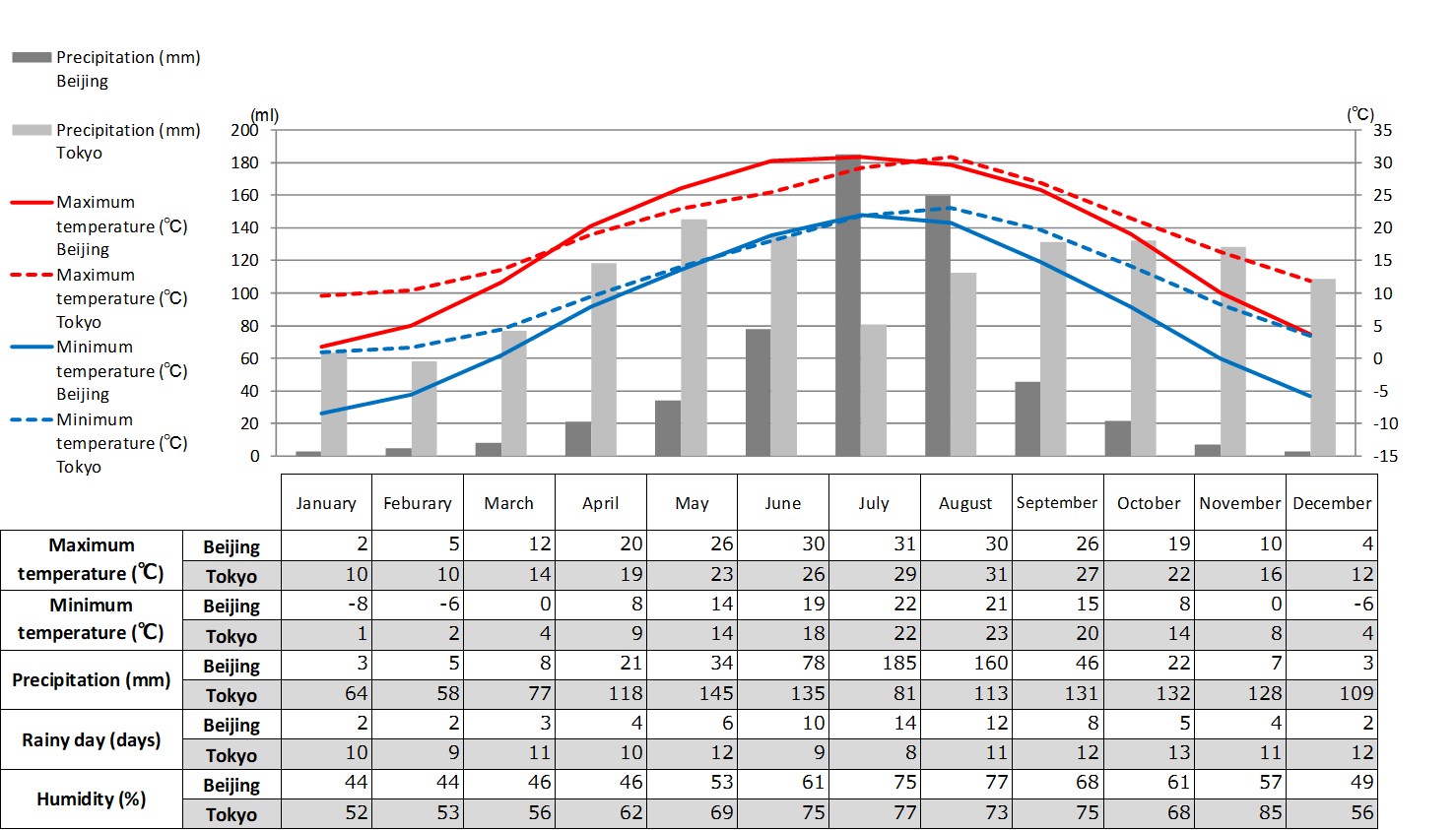
Maximum and minimum temperatures, precipitation, number of days with rain, and humidity for Beijing and Tokyo
calendar_monthAug 04, 2020
Beijing has four distinct seasons. Spring (March-May) is a time of frequent cold and warm air activity, frequent temperature changes, a large temperature difference between day and night, heavy winds and dust. Summer (June-August) is a period of high temperatures and frequent rainfall, with frequent convective weathers such as thunderstorms and heavy rains. Autumn (September-November) is sunny and dry, with high autumn skies and crisp, clean air. Winter (December-February) is cold and dry, with strong winds and occasional snowfalls. The weather is somewhat cold in spring and autumn, so you'll need to bring a light sweater and jacket. From around the end of October, winter gears such as down jackets, hats and gloves will be needed.--- For those interested in learning more about daily life in China, please also check out this article. What is Real Life in China? Daily Habits and Current Trends Marketers Should Know・Urban Housing Conditions: Surprisingly Not That Spacious? Floor Plans and Features・Ways to Maximize Space Utilization・Refrigerators in the Living Room? And Entranceways: Different Approaches Compared to Japan・Chinese Households Focusing on Indoor Air Qualityetc.
-
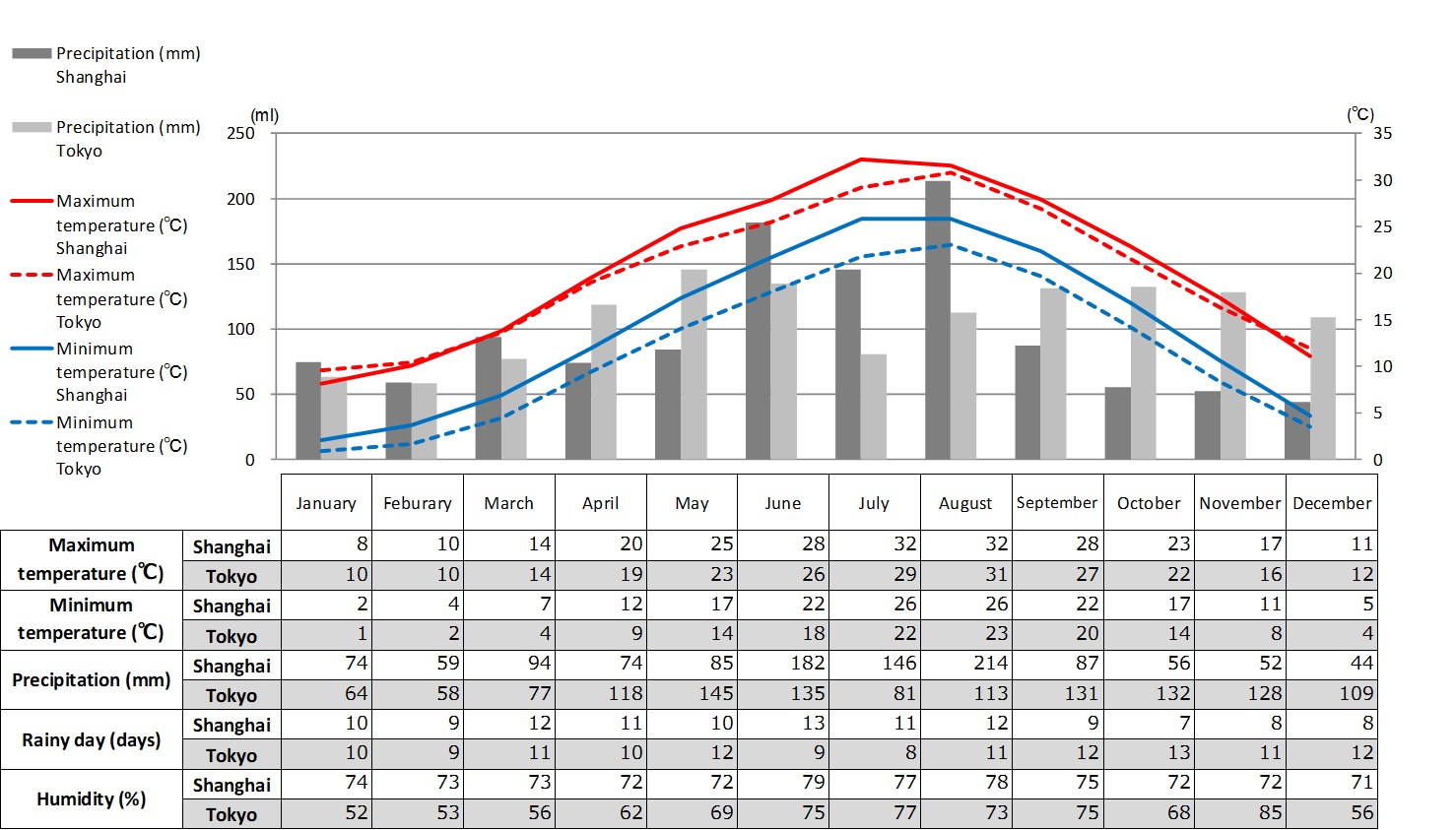
Maximum and minimum temperatures, precipitation, number of days with rain, and humidity for Shanghai and Tokyo
calendar_monthAug 04, 2020
Shanghai has four distinct seasons, with long hours of sunshine and abundant rainfall. Spring and autumn are relatively short compared to summer and winter. The annual average temperature is 18 degrees C. The frost-free period is as long as 230 days. The average annual rainfall is 1,200 millimeters (about 50 inches), but nearly 60% of the rainfall is during the flood season from May to September, which is divided into three rainy seasons: spring rains, plum season rains and autumn rains. The plum rainy season is from mid-June to early July. There are influences of typhoons in the late August to the first 20 days of September. But the rainy season has not caused significant damages in recent years. High temperatures of the day become higher than in the other months in July and August, when temperatures can reach 28 degrees C. The coldest period is the end of January to early February, usually during the Chinese Spring Festival. This very cold period lasts about three days, but it rarely snows. March to May is the best time to travel because of the nice weather. Generally, you need a light coat and sweater in the spring and a short-sleeved shirt in the summer. In the autumn, long-sleeved shirts, sweaters and coats are needed, and in the winter, sweaters and overcoats are appropriate.--- For those interested in learning more about daily life in China, please also check out this article.What is Real Life in China? Daily Habits and Current Trends Marketers Should Know・Urban Housing Conditions: Surprisingly Not That Spacious? Floor Plans and Features・Ways to Maximize Space Utilization・Refrigerators in the Living Room? And Entranceways: Different Approaches Compared to Japan・Chinese Households Focusing on Indoor Air Qualityetc.
-
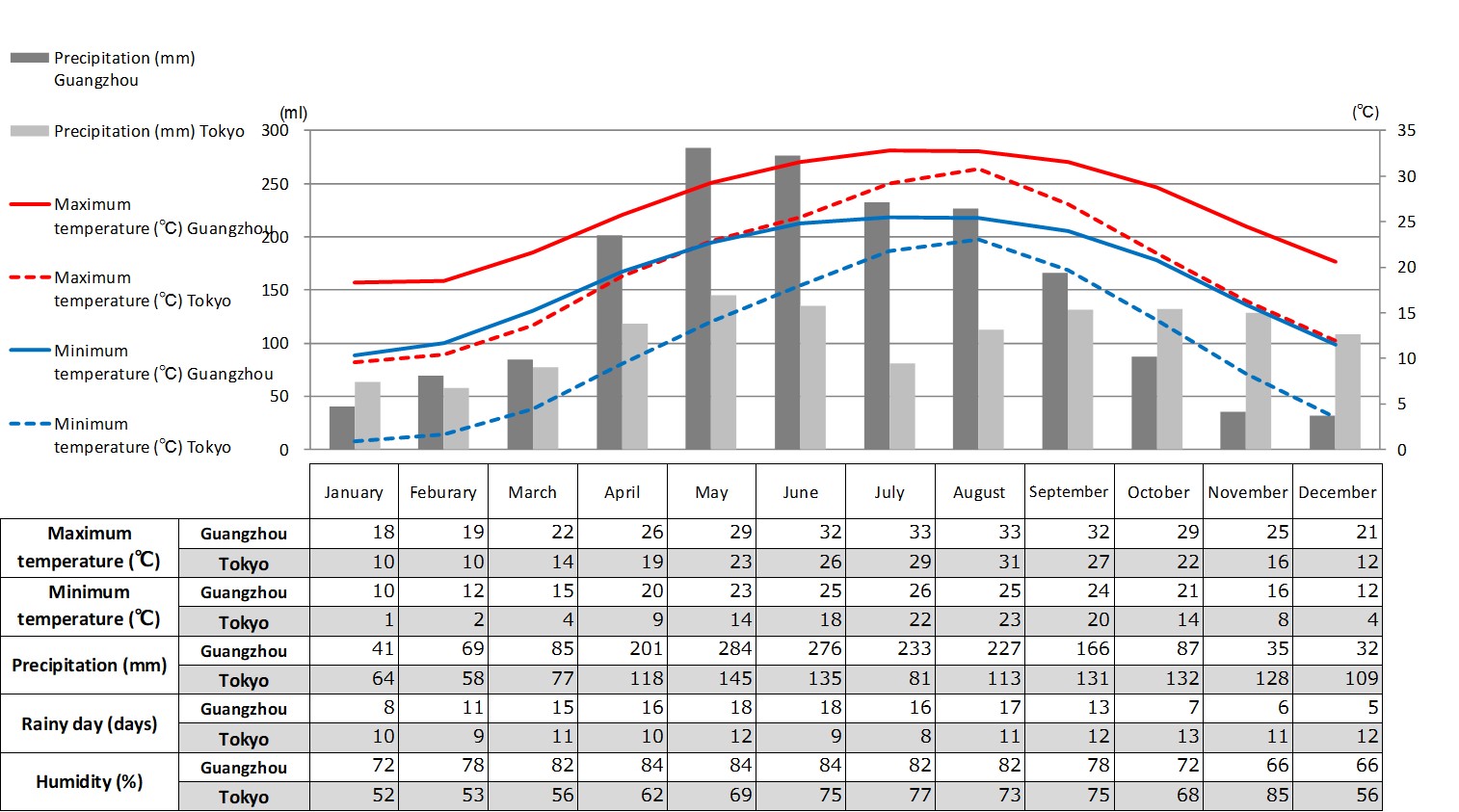
Maximum and minimum temperatures, precipitation, number of days with rain, and humidity for Guangzhou and Tokyo
calendar_monthAug 04, 2020
.
-
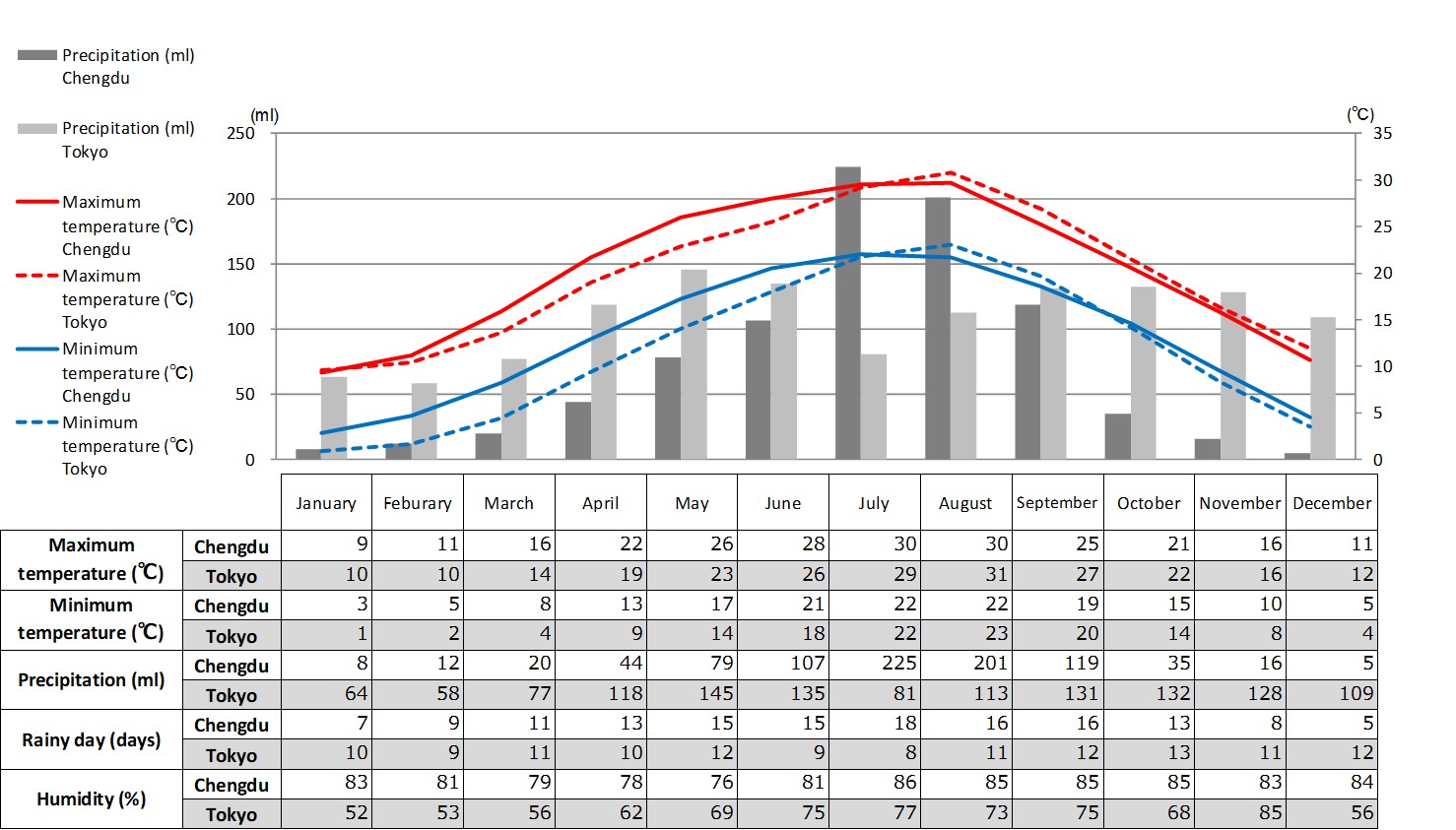
Maximum and minimum temperatures, precipitation, number of days with rain, and humidity for Chengdu and Tokyo
calendar_monthAug 04, 2020
.
-
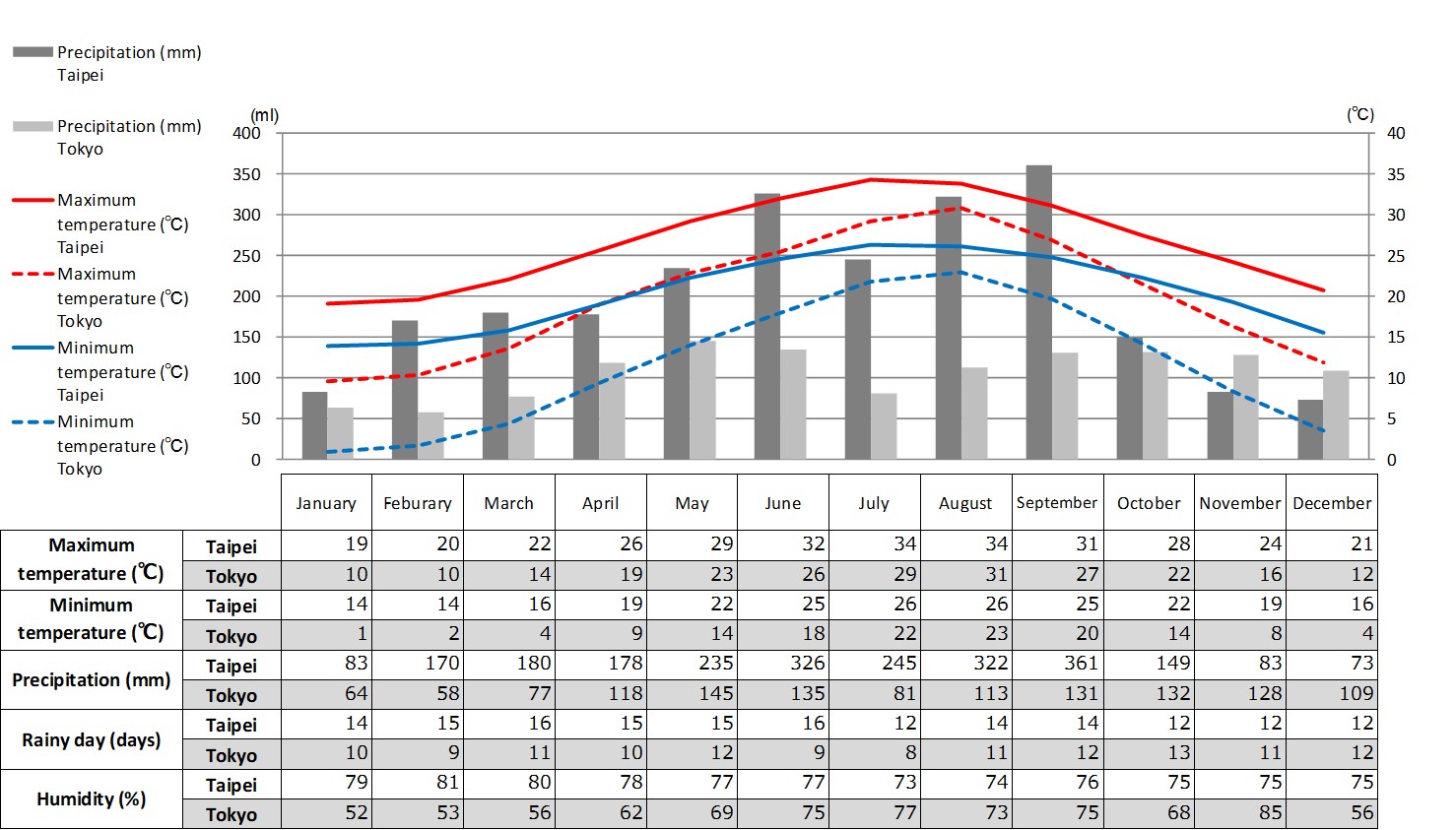
Maximum and minimum temperatures, precipitation, number of days with rain, and humidity for Taipei and Tokyo
calendar_monthAug 04, 2020
Taiwan's climate is basically warm all year round, making it ideal for travel. The annual average temperature is about 22 degrees C, and the average minimum temperature is 12-17 degrees C (54-63 degrees F). As a result, there is no snowfall in the plains in winter and only a few in the high mountains. During the transition from spring to summer (March to May), the occasional rain front can produce long drizzling, so an umbrella is necessary when traveling during this period. In summer (June-August), typhoons occasionally come through. In autumn (September to November), you can enjoy clear skies and crisp air every day to your heart's content. During the short, warm winter months (December to February), the occasional cold wave is a real treat for spa fans. All in all, Taiwan has a spring-like climate in all four seasons.---Taiwan is known for its pro-Japanese sentiment and is attracting significant attention as a destination for Japanese companies looking to expand. But how well do you understand the “average” lifestyle and values of Taiwanese people?Drawing on various data sources, including Intage’s “Global Viewer” survey of overseas consumers, we’ll break down and explain the “average” that defines Taiwanese consumers, as well as the latest trends emerging from this data. Let’s Get to Know the “Average” Taiwanese Person! A Comprehensive Guide to the Typical Consumer Profile and the Latest Trends・Lifestyle: Housing, Environment, Housework, and Marriage・Food Culture, Health, and Sports Awareness
-
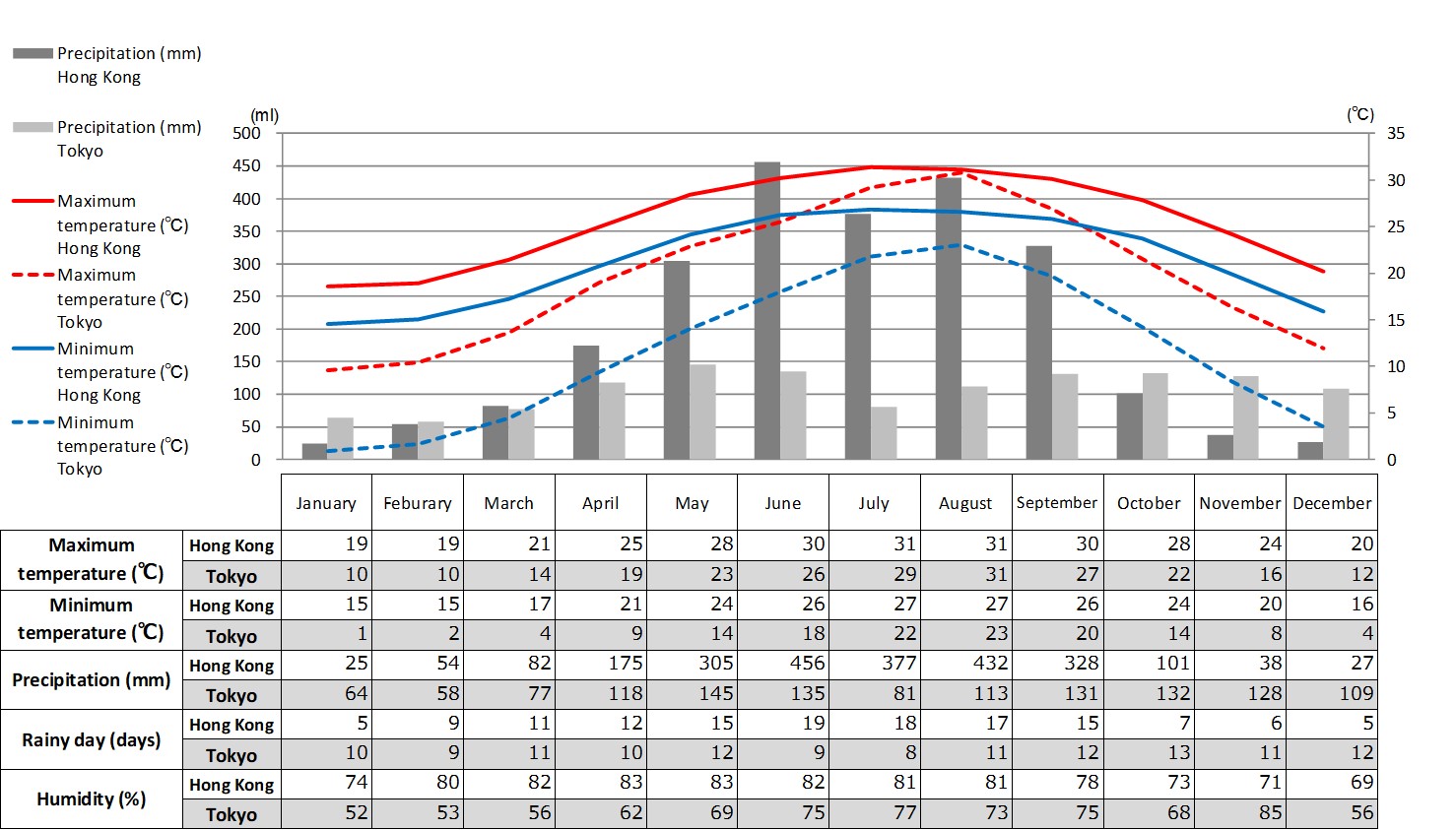
Maximum and minimum temperatures, precipitation, number of days with rain, and humidity for Hong Kong and Tokyo
calendar_monthAug 04, 2020
Being in the subtropical climate zone, Hong Kong's seasons are unique, with the typhoon season from May to November. Spring (March to May) is a time of gradual increase in both temperature and humidity. Nights can be chilly. Summer (June-August) is hot and humid, with clear skies, but occasionally there are showers and severe thunderstorms. The temperature can top 31 degrees C, but the humidity is so high that the temperature feels much higher. In the fall (September to November), there are many clear, sunny days with a fresh breeze, and the temperature is comfortable. Winter (December to February) is cooler and drier, with often cloudy skies. Occasionally cold fronts visit. The temperature in the city can drop below 10 degrees C.---This report focuses on “marriage”—a major turning point in life that significantly alters consumer behavior—and explores the cultures and customs deeply rooted in various Asian countries.How does consumer behavior change as people transition from single life to marriage and parenthood? By analyzing the significant event of marriage, we offer insights that will help you gain a more comprehensive understanding of Asian consumers. How Do “Marriages” Differ Across Asian Countries!? And the Consumption Behaviors That Come With Marriage ~ Bride Price? Groom Price? What About the Funds? ~・How are “weddings” conducted in various Asian countries?・Consumption Patterns Related to Marriage: Preparations and Purchases Made Upon Getting Marriedetc.---Accelerate decision-making with smart overseas resident dataGlobal Viewer This service provides reports tailored to your issues using questionnaire data on various actual conditions and attitudes of sei-katsu-sha in 11 countries (Asia and US) stocked by INTAGE.The service covers 400 items, including actual behavioral conditions and awareness, values, and information contact related to various product and service categories. ▼Click here for detailshttps://www.global-market-surfer.com/lp/gv/