Global Market Surfer
 CLP
CLP Column
[China: World Residence Tour] Why bathroom and toilet are relatively small in Chinese households?
- Release date: Sep 28, 2020
- Update date: Oct 10, 2025
- 41252 Views
Japan and China Have Very Different Views on Bathing
First of all, the difference between Japan and China in terms of bathrooms can be summed up in one word: the presence or absence of a bathtub. In Japan, the custom of taking a bath in a bathtub is traditionally strong. For this reason, even if the bathroom itself is very small, it often comes with a bathtub. For example, if you see a prefabricated unit bath called a “Unit bath” in Japan, the bathtub takes up about half the space. In China, on the other hand, most homes are equipped with showers only, and bathtubs are rarely seen except in villas or hotels where there is a lot of space.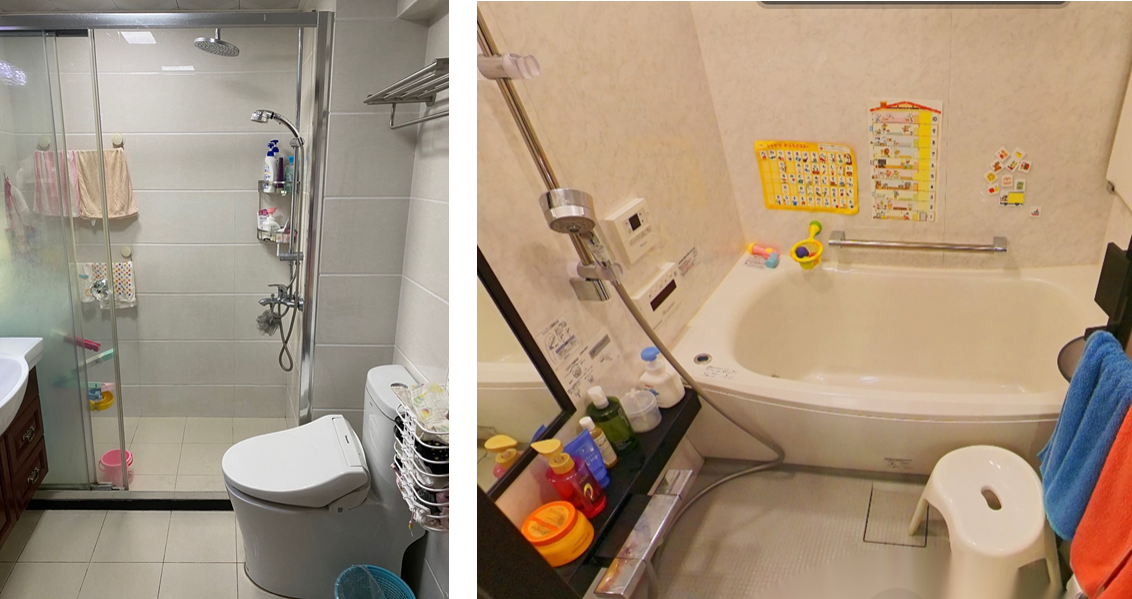
Shower-only bathrooms in China (left) and bathrooms with bathtubs in Japan (right)
(Source:Consumer database (Consumer Life Panorama))
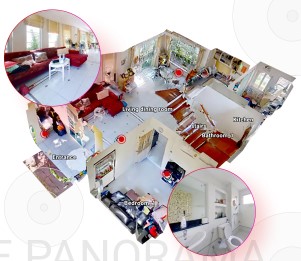
What is Consumer Life Panorama?
This is a website-type database that has accumulated visual data on more than 1,000 sei-katsu-sha from 18 countries around the world. The database includes many 3D models of living environments and 2D data of items owned by each sei-katsu-sha, and is useful for understanding overseas sei-katsu-sha, which is difficult to grasp using only letters and numbers.
Using visual data such as those cited in this column,
Compare the differences in the attributes of overseas consumers
To get a realistic understanding of the actual usage of each category
To understand the overall lifestyle of target consumers
etc., can be utilized as a “no-go” home visit survey.
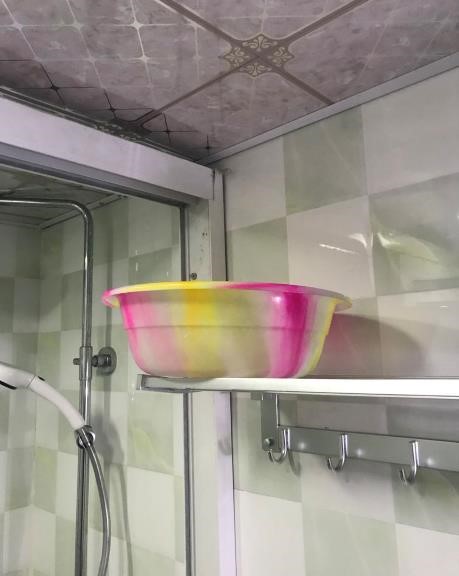
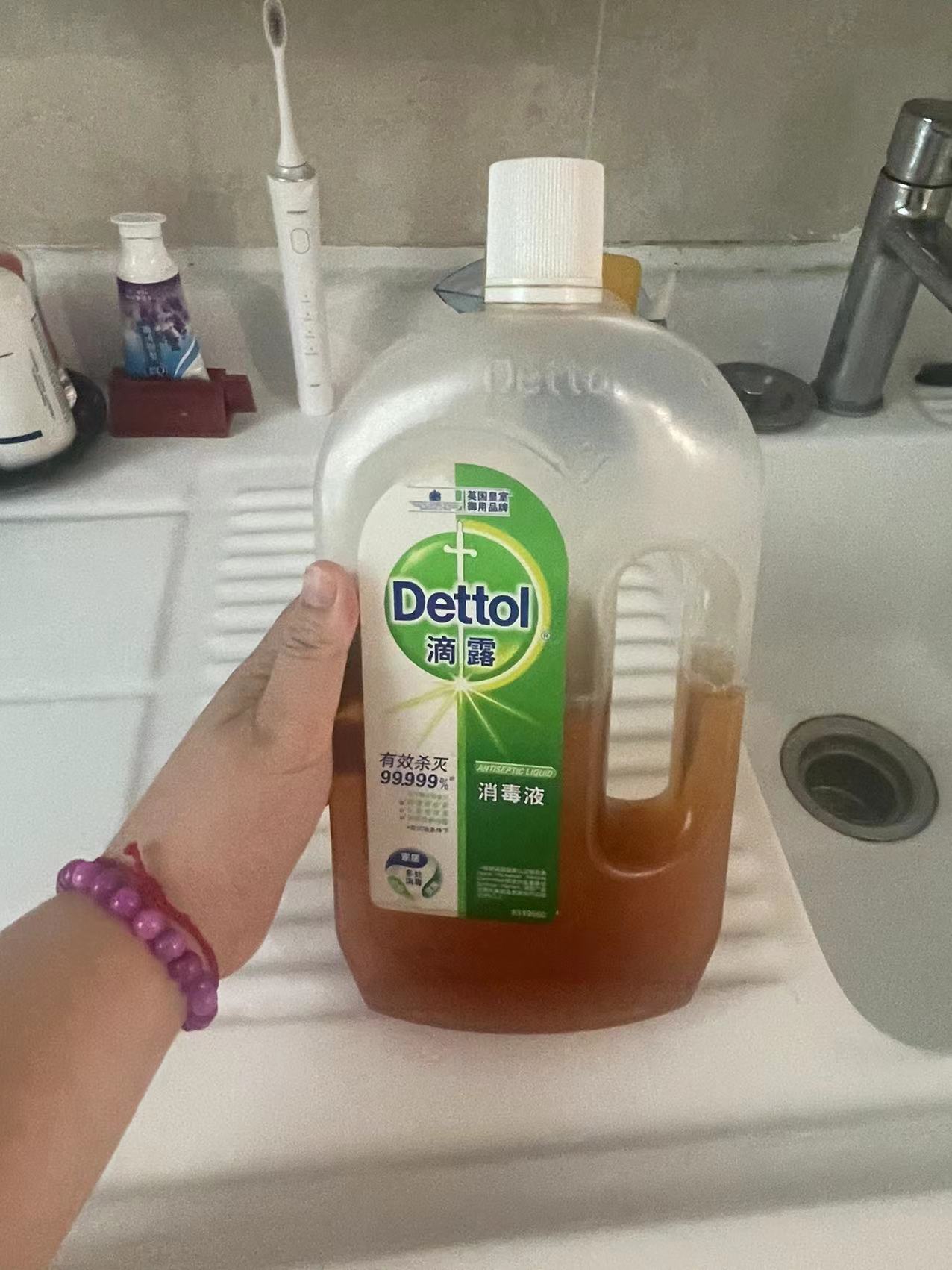
washbowl, a common sight in Chinese shower rooms
(Source:Consumer database (Consumer Life Panorama))
The living area of Chinese households is still not large enough
Besides the presence or absence of a bathtub, if you look at the overall layout, you will see another difference. It is the spatial arrangement of the following three areas: the bathroom, washbasin, and toilet. In Chinese households, the shower room, washbasin, and toilet are often in the same space, while in Japanese households, they are often independent of each other.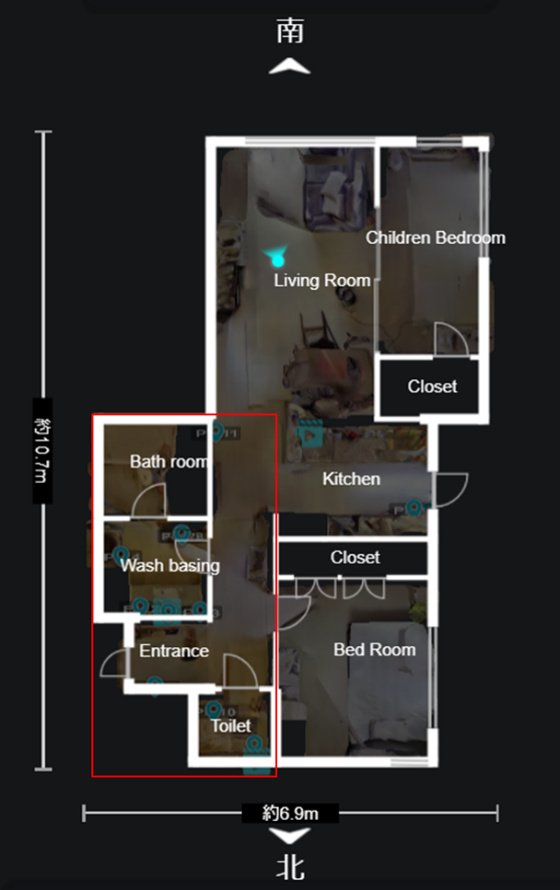
Layout of bathroom, washbasin, and toilet in a typical Japanese home (red boxes)
(Source:Consumer database (Consumer Life Panorama))
Nevertheless, for the first time in 2019, China's urban areas have reached Japan's 2013 level, which suggests that the dwelling floor area of Chinese urban households is not that large.
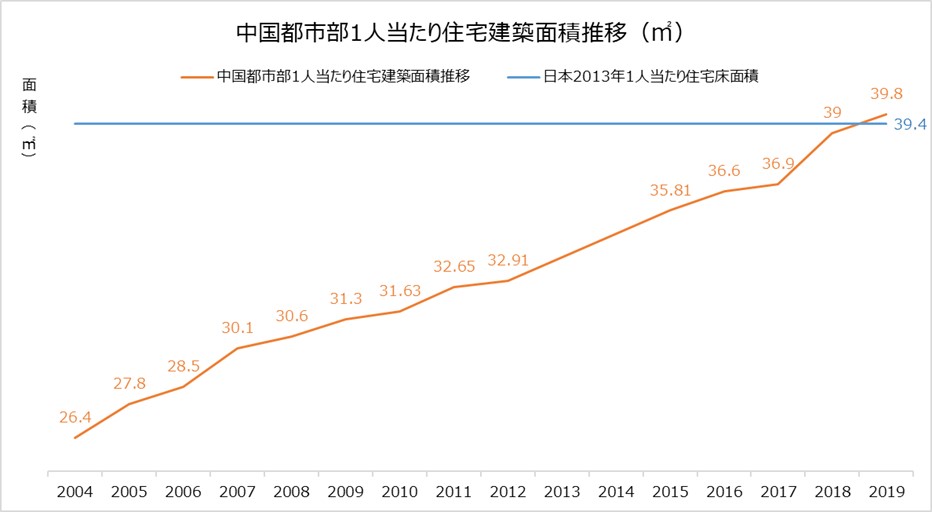
Source:China:China National Bureau of Statistics
Japan:Ministry of Internal Affairs and Communications, "2013 Housing and Land Survey(2013’s data) In China, people who live in apartments built ages ago often sacrifice the space for bathrooms and toilets in order to make their living rooms and bedrooms as spacious as possible.
However, in recent years, with economic growth, the dwelling floor area per person has also increased. With this background, now that people are becoming more particular about their living environment, there will be an increasing demand for interiors that at least separate the washbasin and toilet from the shower room, in order to achieve "dry-wet separation. Nevertheless, it will still be a long time before all rooms are independent spaces like in Japan.
-

Author profile
Mr. Yang Yan
Chinese researcher living in Japan, providing information on the actual living conditions of overseas consumers, mainly in China. I am a shower person who has not yet made it a habit to take a bath even though it has been five years since I came to Japan.
-
Editor profile
Mr. Yusuke Tatsuda
Is in charge of creating the Global Market Surfer website. I'm a true bath enthusiast who enjoys relaxing in the bathtub at home or on business trips.