Introduction.
Since the beginning of the corona pandemic, the U.S. has become the country with the highest number of infected people in the world, and this has had a major social and economic impact. In particular, the impact of the state-by-state lockdowns on the business environment has been significant, and many companies and their employees continue to search for a different way of working than before the Corona.
In this article, we will focus on the retail and restaurant industries, which are closest to consumers and directly affected by the lockdown. We will introduce the latest changes in the U.S. due to the impact of Corona and some examples of specific services that may indicate the direction of new business models in the future.
The author lives in the Los Angeles area of California.
1. Amazon Fresh, a contactless shopping supermarket
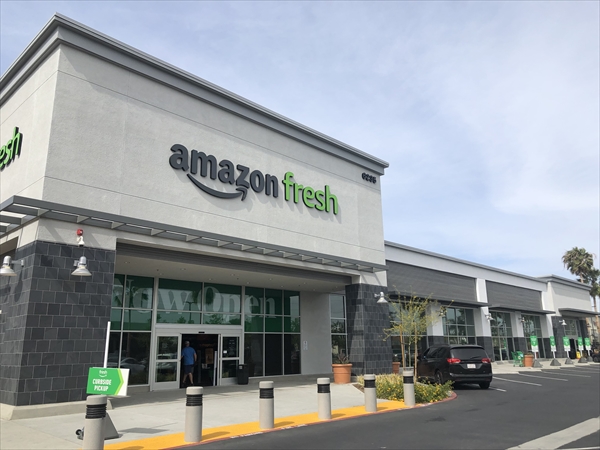
Photo: taken by the author
Under Corona, Amazon Fresh has been expanding its handling of fresh food delivery, and as the next step, Amazon Fresh supermarkets in brick-and-mortar format are now opening one after another, mainly in California.
In terms of infection control for employees, the fewer staff members working in the store, the better, and for shoppers, the contactless shopping method, where contact with employees is kept to a minimum, also reduces the risk of infection. Another point is that large stores are more advantageous in terms of limiting the number of shoppers entering based on the size of the store. Of course, from a different perspective than Corona, there must be an intention to expand the Amazon Fresh business model as part of Amazon's business strategy to mix e-commerce and brick-and-mortar purchases.
Amazon acquired WholeFoods supermarkets in 2017.
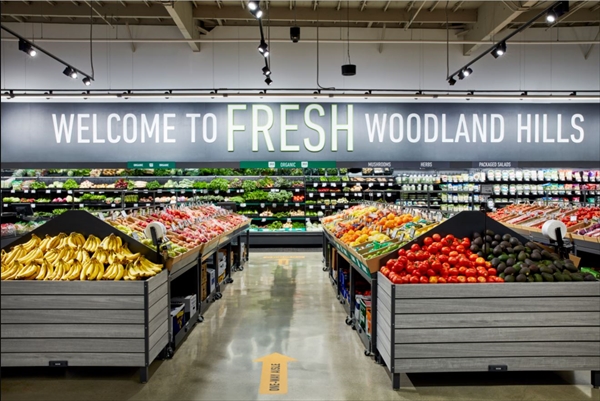
The size and selection of the store is comparable to other large supermarkets in the United States. With such a large number of items, the employees are constantly going around to restock the store.
The shopping cart is equipped with four cameras plus a barcode reader, so basically all you have to do is add items to the cart and they will be automatically registered on the screen. There is no need to register the items again at the register.
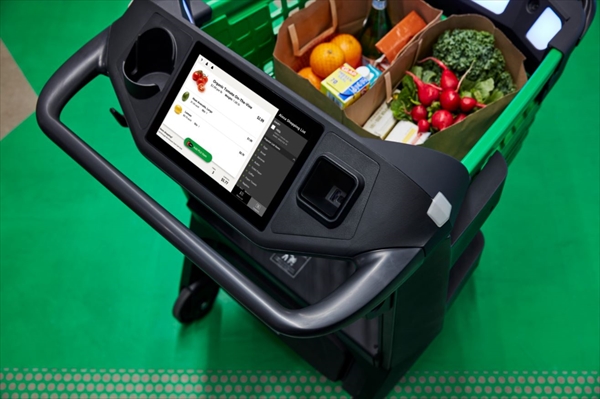
Photo: Shopping cart used at Amazon Fresh (”Amazon Dash Cart")
(Reference:
Amazon Press Center)
You can ask your Alexa device to tell you where the product is.
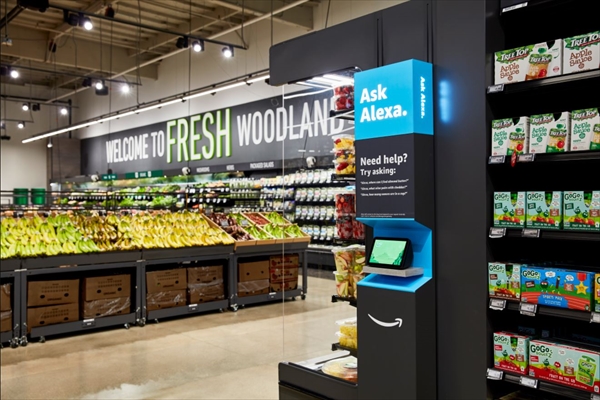
If you have the Amazon app, your purchase history will be registered instead of a receipt.
Finally, return the cart at the checkout lane. (At this point, there is a final human check to make sure the purchase is complete.
2. Fast food stores specializing in order pickup
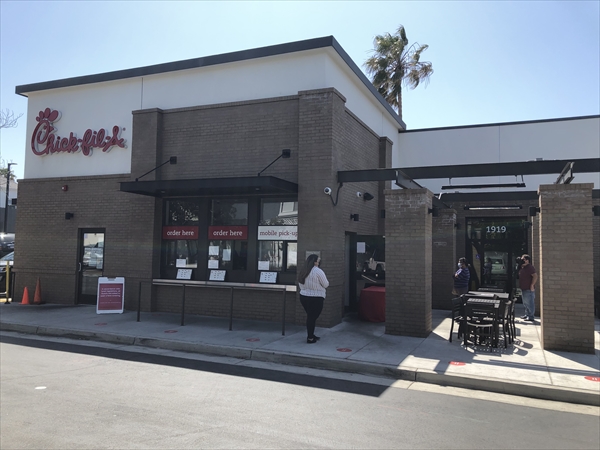
Store Photo (Photo: taken by the author)
When the lockdown was implemented in the U.S., eating and drinking inside restaurants was completely banned. Restaurants were forced to shift their operations to take-out, and the number of restaurants that specialize in "order pickup" has been increasing, mainly in the fast food industry. In addition to ordering through apps such as Uber Eats, DoorDash, Postmates, etc., there are also restaurants that allow you to order directly on their website.
I know it's hard to tell from the picture, but this restaurant has no customer service or eating area inside. Customers are basically expected to take their purchases home with them, so there are only a few tables set up outside for those who really want to eat on the spot.
If you order and pay online in advance, all you have to do is go to the Mobile Pickup counter and pick up the product, which is easy and fast, and I think this is a very fast food-oriented format.
3. Expand outdoor dining at Patio Dining restaurant
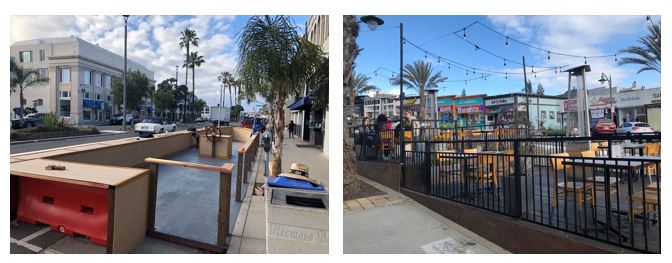
Outdoor eating space
(Photo: taken by the author)
In the face of the restrictions on eating and drinking inside restaurants, traditional restaurants are exploring ways to operate under the corona and are implementing various measures. In California, in particular, there are many areas where local governments and restaurateurs are working together to increase the number of outdoor eating spaces in the public and private sectors.
As you can see in the photo, there is a rapid increase in the number of restaurants that are setting up Patio Dining style eating areas outside their restaurants, using the road space in front of their stores where they were not legally allowed to operate in front of Corona.
4. The birth of personal store-less restaurants and the growth of Venmo and other personal payment e-money services to support them
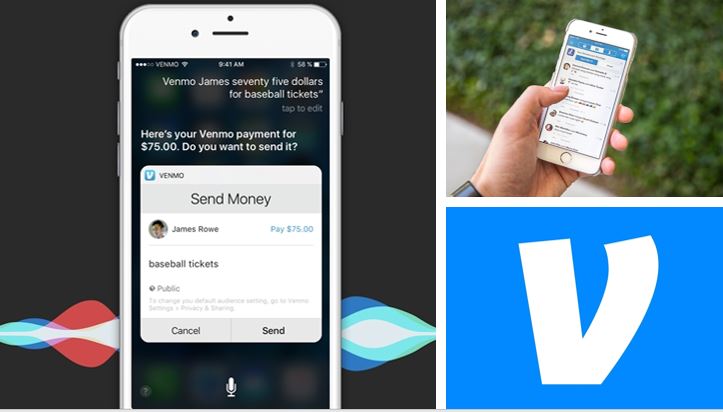
As the impact of COVID-19 continues, it has become difficult to launch and open new restaurants in the traditional way. Against this backdrop, a new type of business model has emerged: an increasing number of individuals are starting restaurant businesses without physical storefronts, using their own homes or ghost kitchens and focusing on order pickup and delivery.
Examples include selling cakes or donuts made in a home kitchen through online channels, or several people pooling investments to purchase a large BBQ pit and launch a catering-only business.
To support these new types of restaurants, online payment systems are essential. While electronic payment services such as PayPal were previously the mainstream option, peer-to-peer payment services—most notably Venmo—are now seeing rapid adoption among young people in the United States.
Venmo originally grew its user base through use cases such as splitting bills among friends, but now that it has surpassed 50 million users, it is gradually becoming established as a lower-cost and easier-to-use payment method for the kinds of small, individual-run businesses described above.
Finally.
The new business models that are growing under Corona, as described above, will continue to expand even after Corona comes to an end. From a management point of view, efficiency mechanisms such as reducing the number of employees, reducing store space, and systematizing cashless payments make sense in terms of maximizing profits.
I will continue to report on the signs of new services in the US and introduce them to you. Translated with AI Translator