How do I get a driver's license in Singapore?
First, regardless of whether it's Singapore or not, foreigners need a “driver's license” to drive in a country other than their home country. Long-term residents coming to Singapore from Japan for work or study, if they are of legal age, often already hold a Japanese license. In this case, if their stay is 12 months or less, they can drive using a “valid International Driving Permit (IDP) issued in Japan” or a “Temporary Driving Permit (TDP)”.
On the other hand, if you plan to stay in Singapore for over a year and wish to drive, you must “convert” your Japanese license to a local one. While the practical test is waived for this conversion, you must pass the written test (Basic Theory Test, commonly known as BTT) within the validity period of your Japanese license. This BTT is scored out of 50 points, with a passing score of 45 points or higher. The questions themselves are not difficult, but for Japanese individuals, it is an English-language test in a foreign language, and the frequent use of specialized terminology means achieving 45 points or higher is challenging without some study. It is said that few people pass this threshold on their first attempt. However, since many study materials are commercially available and online “mock tests” are also accessible, the typical pattern is to study using these materials, take several mock tests, and only attempt the actual test once you consistently score above the passing mark. You can check the mock test schedules on several websites. For example, the Singapore Safety Driving Centre website (https://ssdcl.com.sg/) is one such source. Note that if you have no valid license obtained abroad and are starting from scratch, you must pass both the “written” and “practical” tests, similar to Japan.
To take this BTT exam, you will need to go to one of the three driving centers on the island of Singapore. In Japan, many students obtain their driver's license while still in school. However, in Singapore, new students enter local universities in August. There is a gap of about six months between the graduation period of Junior College (equivalent to Japanese high school) in December and this August enrollment. Consequently, the period from January to the end of July is extremely busy every year. Especially during the COVID-19 pandemic, securing an appointment has been difficult, and it is often reported that many students fail to complete their license acquisition before university enrollment.
Driving Centers on Singapore Island
· ComfortDelGro Driving Centre (https://www.cdc.com.sg/)
· Singapore Safety Driving Centre (https://ssdcl.com.sg/)
· Bukit Batok Driving Centre (https://www.bbdc.sg)
You can't buy a car freely⁉ Singapore's unique system and its background
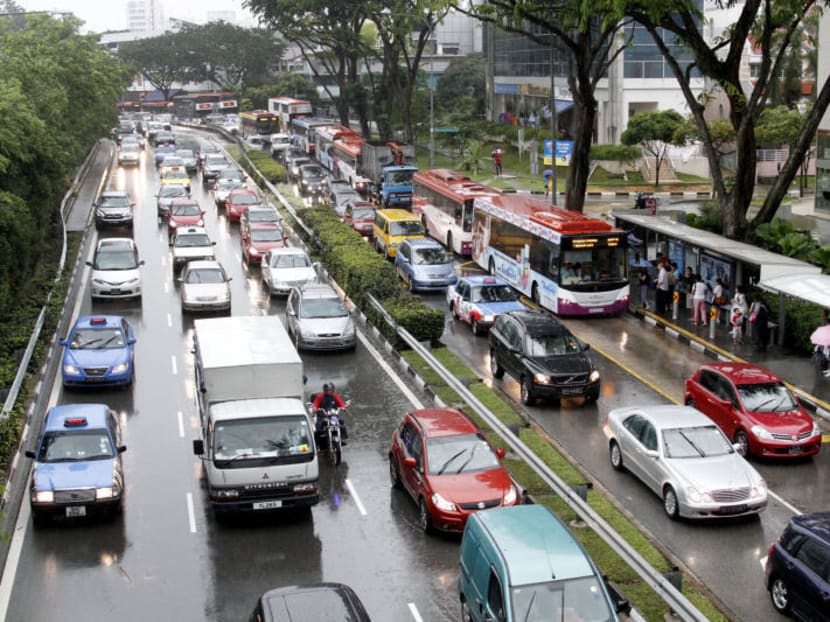
When you come to Singapore from Japan or other countries, you may be surprised to know that you cannot buy a car freely in Singapore. In order to purchase a car in Singapore, you must first obtain a "Certificate of Entitlement" (COE). In simple terms, this is the government's permission to purchase a car. As I mentioned earlier, Singapore is a very small country with a high population density. In such a country, if there are no restrictions on the number of vehicles, there is a high possibility of frequent heavy traffic jams, which would have a serious impact on all economic activities, not to mention logistics, one of the lifelines that make Singapore a hub within Southeast Asia. For this reason, the Land Transport Authority (LTA), a government agency similar to Japan's Ministry of Land, Infrastructure, Transport and Tourism, closely controls the total number of cars and motorcycles. The COE is divided into several categories depending on the vehicle's displacement, use, etc., and the amount varies from one category to another. The COE is valid for a maximum of 10 years and is obtained through a bidding process. Since the number of quotas is limited, it makes sense to have some kind of criteria, but in essence, the rights are given to those who are willing to pay a higher price, which is a system based on the Singaporean way of thinking that is businesslike in many ways. The information required for this "bidding" process is outlined below. - Age: 18 years and above - Method: Name, ID, and bank account are required. Bid via ATM or online banking - Timing. o Usually 1st and 3rd Monday of the month o Starts at 12:00 pm and ends at 4:00 pm on the 3rd working day (Wednesday) - Bid amount can be changed during the period. For example, in January 2022, bidding prices will be increased for all vehicle categories. One thing to keep in mind is that these prices are not for the vehicle, but for the right to purchase the vehicle. One thing to keep in mind is that this price is not for the vehicle, but for the right to purchase the vehicle. If you are successful in winning the bid, you will be purchasing the vehicle itself, not a family member's car or a rental car, and the government would really like you to use public transportation as much as possible.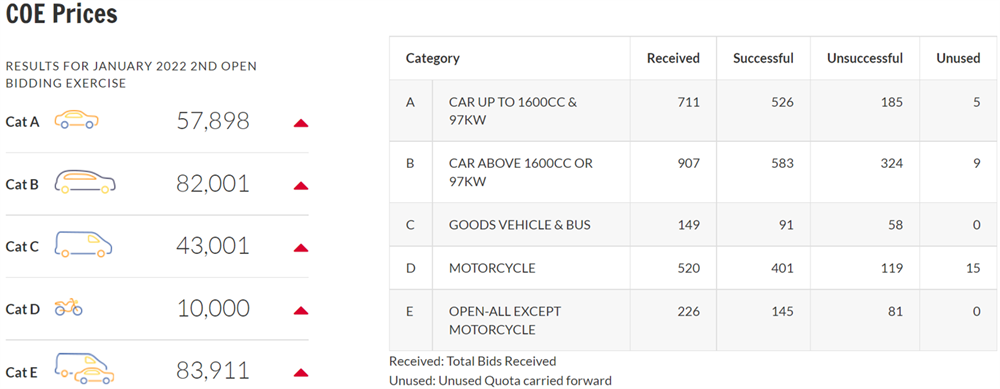
Source:https://www.onemotoring.com.sg/
Singapore, a leader in innovation across Southeast Asia, sees industry, government, and academia collaborating on various initiatives in the mobility sector. While it hosts many influential companies like Grab that are headquartered locally and cover the region, the country also implements unique management approaches regarding the vehicle situation for so-called general consumers—an intriguing aspect characteristic of Singapore. We will continue to closely monitor developments in the nation's mobility industry.
Translated with AI TranslatorClick here to read an article about car purchases in Indonesia, a country in Southeast Asia.
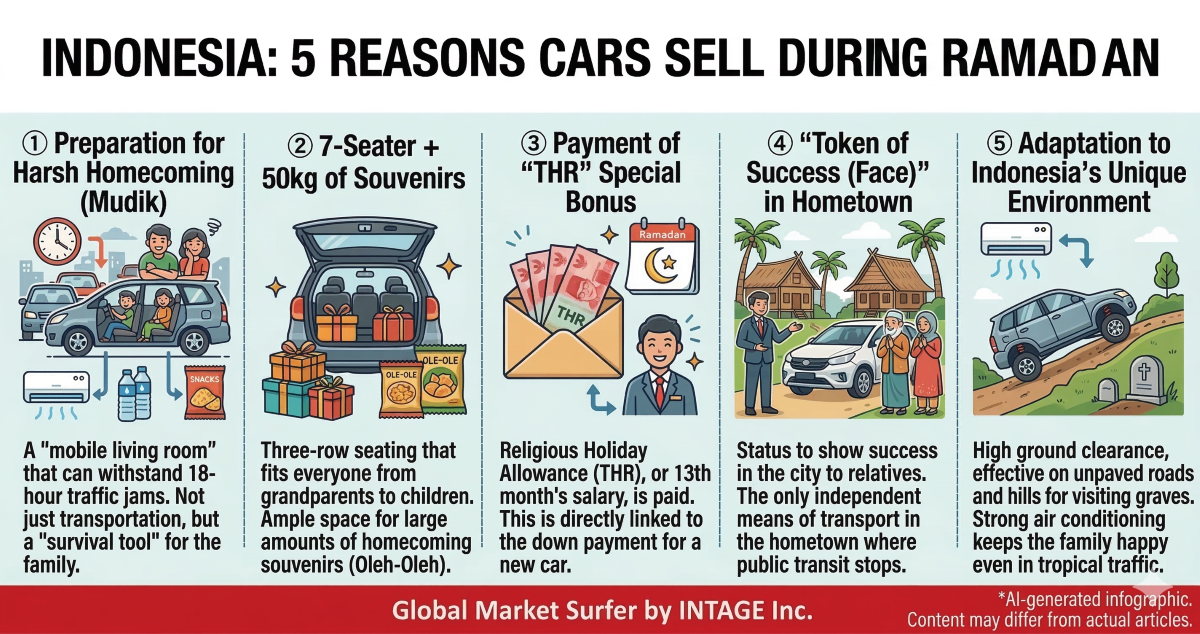
Why Ramadan Sparks Indonesia's Biggest Car-Buying Season
・The rush to return home for the holidays in Indonesia
・Cars are a necessity for returning home
・The impact of THR (religious holiday bonuses)