[Global Series: Marriage and Assets] Laos: Preparing for Marriage
- Release date: Feb 20, 2023
- Update date: Oct 14, 2025
- 5185 Views

Laos is a country with relatively small wealth disparities within Southeast Asia, but in recent years, the gap in development between urban and rural areas has widened significantly. Approximately 10% of the population lives in the capital, Vientiane, and in the specially designated cities of Luang Prabang City in Luang Prabang Province, Pakse City in Champasak Province, and Khaosong Phomvihane City in Savannakhet Province, differ significantly from other districts and villages in terms of wedding customs and post-marriage lifestyles. Furthermore, as Laos lacks comprehensive, reliable official data, this article primarily introduces the situations in the capital Vientiane and the three major cities, based on past experiences and information gathered from local residents.
Cash and gold are the mainstream choices for betrothal gifts.
In Laos, it is common for the groom's family to present the bride's family with cash or gold as a so-called “betrothal gift” during the wedding ceremony. The amount and details are decided beforehand through discussions between both families. Traditionally, marriage in Laos involves the groom joining the bride's family. Consequently, the bride's family often has significant influence over the betrothal gift amount. There are even cases where the groom's family couldn't afford the betrothal gift demanded by the bride's family, leading them to abandon the marriage. For middle-class families, the dowry amount typically ranges from $6,000 to $12,000 (approximately ¥800,000 to ¥1,600,000). Considering Laos' per capita GDP of $2,551 (World Bank, 2021) and its minimum monthly wage of 1.2 million KIP (approximately $80 as of August 2022), this is a very high amount. However, only about 10% of Laos' population lives in the capital Vientiane and other major cities. Urban areas account for 35.6% (UNData, 2021), while nearly 70% reside in rural and mountainous areas. Consequently, the income of the urban population is higher than the per capita GDP reported by the World Bank, and annual incomes exceeding $10,000 (approximately ¥1.33 million) are not uncommon. Nevertheless, a dowry amounting to roughly the same as one's annual income represents a significant expense and is undoubtedly a major life event for both the family and the individual. Laos has relatively low confidence in its currency, the KIP, and banking itself has a short history, leading to high trust in gold. People tend to prefer holding assets like gold or cars over cash. Gold is easily convertible to cash by weight and can be readily bought or sold at jewelry stores selling gold in forms like necklaces or rings, making it considered nearly equivalent to cash. Therefore, sending gold as a dowry is common. However, younger generations today increasingly prefer depositing cash in banks or holding assets like cars over gold. Consequently, dowries are often given solely in cash. This shift stems from a decline in preference for gold rings or necklaces and an increase in alternative purchases like cars, motorcycles, and electronics. Additionally, separate from the betrothal money, both or one set of parents or family members often give cash or some form of property to the marrying couple. Among the affluent, especially in urban areas, they may even provide land, a car, or the residence where the couple will live.
About the Wedding Ceremony and Reception
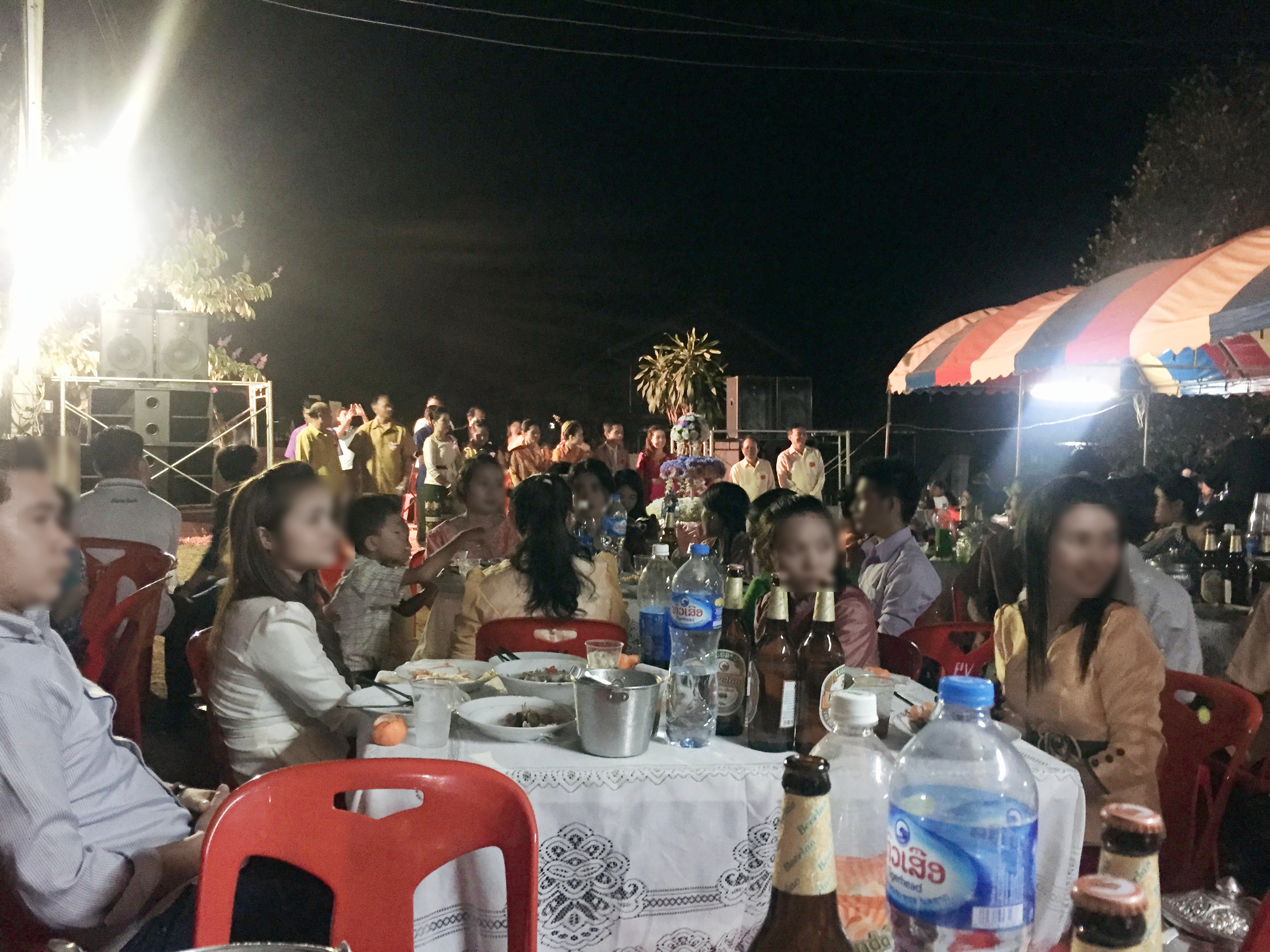
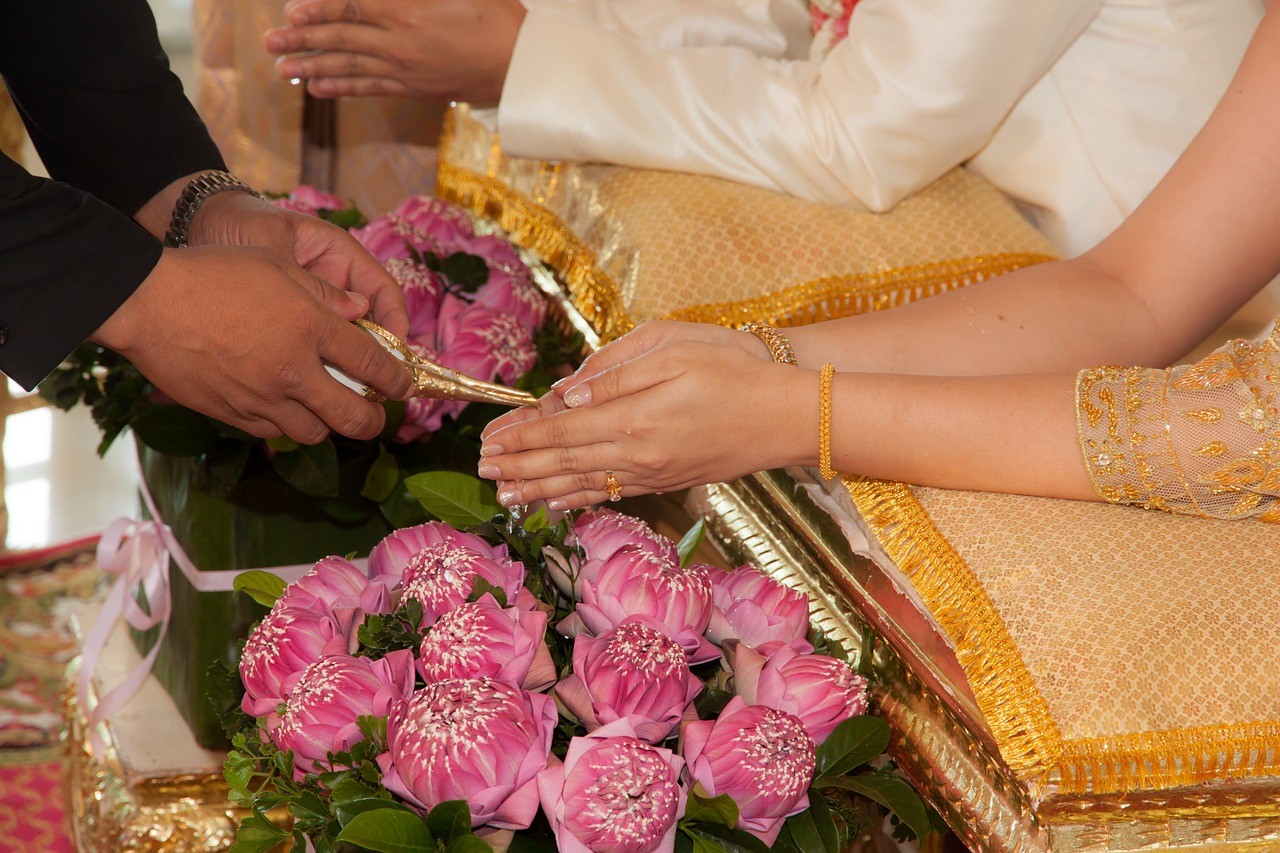
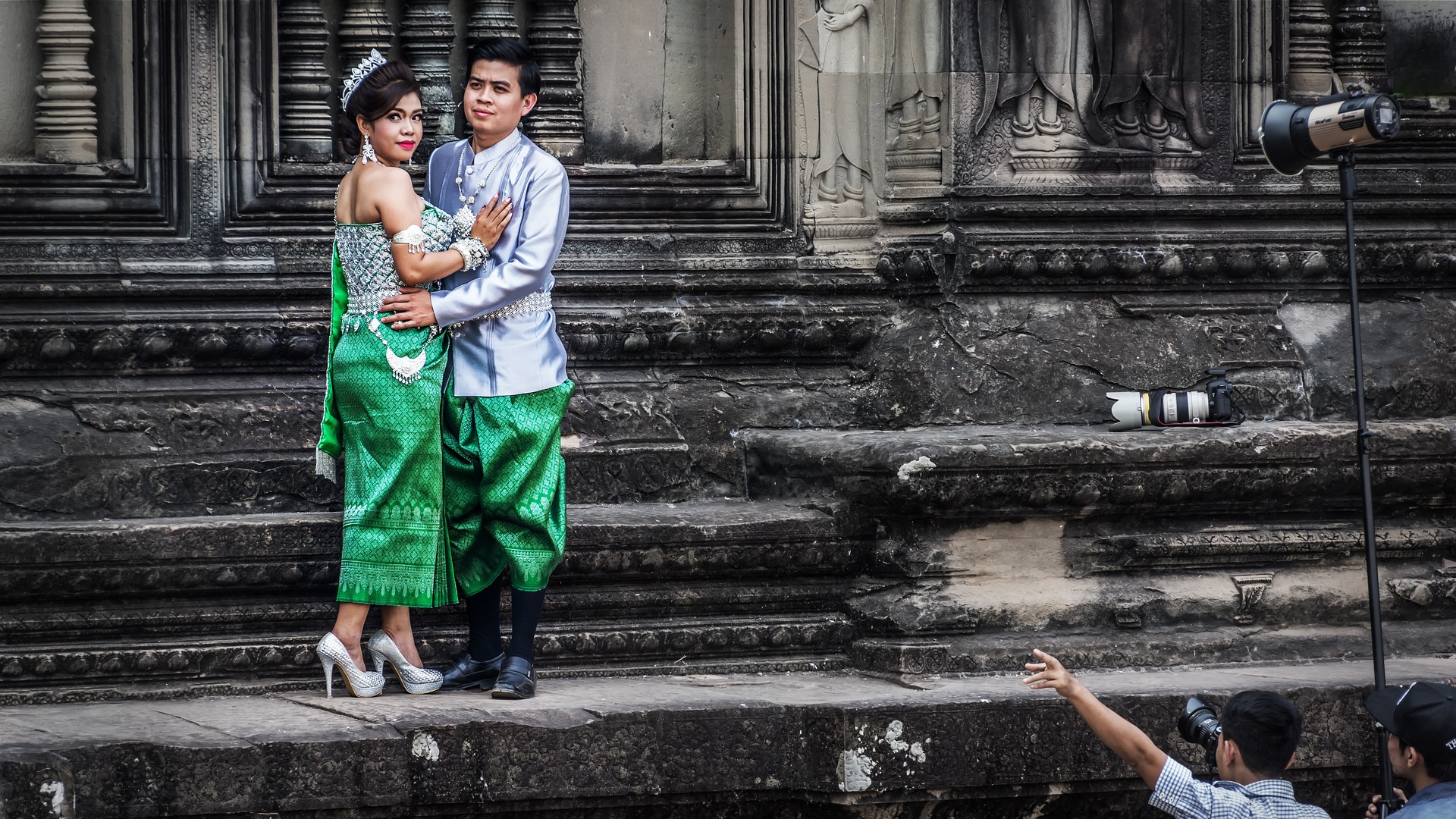
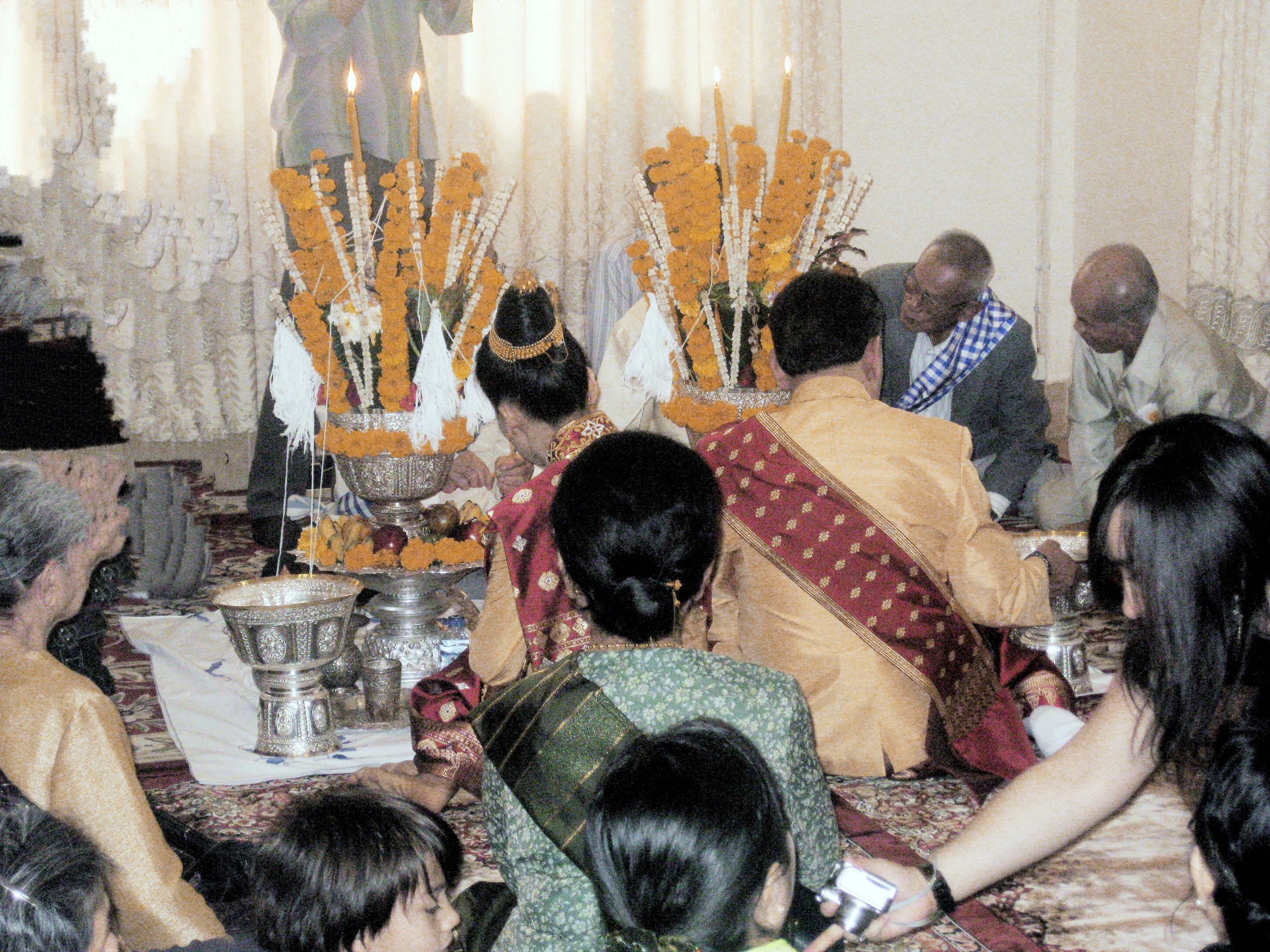
Laotian weddings are generally divided into the wedding ceremony and the reception. The wedding ceremony is traditionally held at the bride's family home to welcome the groom. For smaller ceremonies, family and relatives may prepare food and drinks, though catering services are increasingly used nowadays. On the wedding day, the marriage ceremony and a traditional ritual called the Basi are performed in the morning, followed by a meal at the bride's home. The Phra Si ceremony is not exclusive to weddings; it is performed during all celebratory occasions such as childbirth or recovery celebrations. Guests recite words wishing good fortune for the honoree while wrapping a white thread around their wrist. Only immediate family, close relatives, and relatively close friends of both the bride and groom attend the wedding ceremony itself, typically numbering around 50 to 60 people, rarely exceeding 100. The meal is primarily prepared by the bride's family. Tents and tables are often set up in the garden, with equipment typically rented. In Laos, it's common to use rental services for tents, tables, chairs, and sound equipment not only for weddings but also for large gatherings at home, such as New Year's parties, funerals, and memorial services. The reception is held on the evening of the same day as the wedding ceremony. Traditionally, it was held at the bride's family home where the ceremony took place. Even today, in rural areas, it is still commonly held at the bride's home, but in urban areas, it is increasingly held at hotels or wedding venues. For the middle class, it is common to hold it at a wedding venue with 400 to 500 guests. For the wealthy, it can be held at a luxury hotel with up to 1,000 guests. Overall, the cost for a middle-class reception averages around $15,000 to $20,000 (approximately ¥2,000,000 to ¥2,660,000) for parties at wedding venues or hotels, and around $5,000 to $10,000 (approximately ¥660,000 to ¥1,330,000) for receptions held at home.

After marriage, it is common to live with the wife's family.
In Laos, marriage by marriage into the wife's family is the norm, and traditionally, couples often live with the wife's family after marriage. Even today, living with the wife's family remains common in rural areas, but in urban areas, it has become increasingly common for newlyweds to live alone. This shift is driven by factors such as more young people moving from rural areas or other provinces to cities to work for companies rather than farming with their families, and the increased availability of housing tailored for singles or nuclear families. However, while luxury apartments and condominiums are being built continuously in the capital Vientiane, many are targeted at foreigners or investors. Laotians from the middle class and above tend to prefer larger detached houses. Consequently, even if they intend to build a house in the future, they rarely prepare new housing upon marriage. The pattern is often to live in the wife's family home or rent a house suitable for a nuclear family initially, then build their own house several years later after saving money.
Laos lacks the custom of honeymoons; newlyweds rarely travel immediately after the wedding. Similarly, wedding rings are not considered a mandatory purchase. While some young couples do buy them, it is not a widespread custom.
What is Consumer Life Panorama?
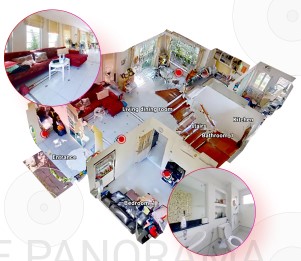
This is a website-type database that has accumulated visual data on more than 1,000 sei-katsu-sha from 18 countries around the world. The database includes many 3D models of living environments and 2D data of items owned by each sei-katsu-sha, and is useful for understanding overseas sei-katsu-sha, which is difficult to grasp using only letters and numbers.
Using visual data such as those cited in this column,
Compare the differences in the attributes of overseas consumers
To get a realistic understanding of the actual usage of each category
To understand the overall lifestyle of target consumers
etc., can be utilized as a “no-go” home visit survey.

-

Author profile
TNC Lifestyle Researcher
Lifestyle Researchers, a network of 600 Japanese women living in 100 regions across 70 countries worldwide, operated by TNC Inc., uncovers trends invisible in statistics and captures the authentic voices of consumers. Based on this raw information, we provide proposals for solving corporate challenges and develop product concepts. https://www.tenace.co.jp/
Profile: Based in Pakse, Laos for 7 years. Since first arriving in Laos in 1999, I have witnessed the country's development and transformation. I never imagined I would one day marry a Laotian, but I look forward to continuing to observe Laos as it evolves. -

Editor profile
Chew Fong-Tat
I am a Malaysian researcher. I came to Japan 15 years ago and am still based in Tokyo, sharing insights about Southeast Asia and other overseas markets.