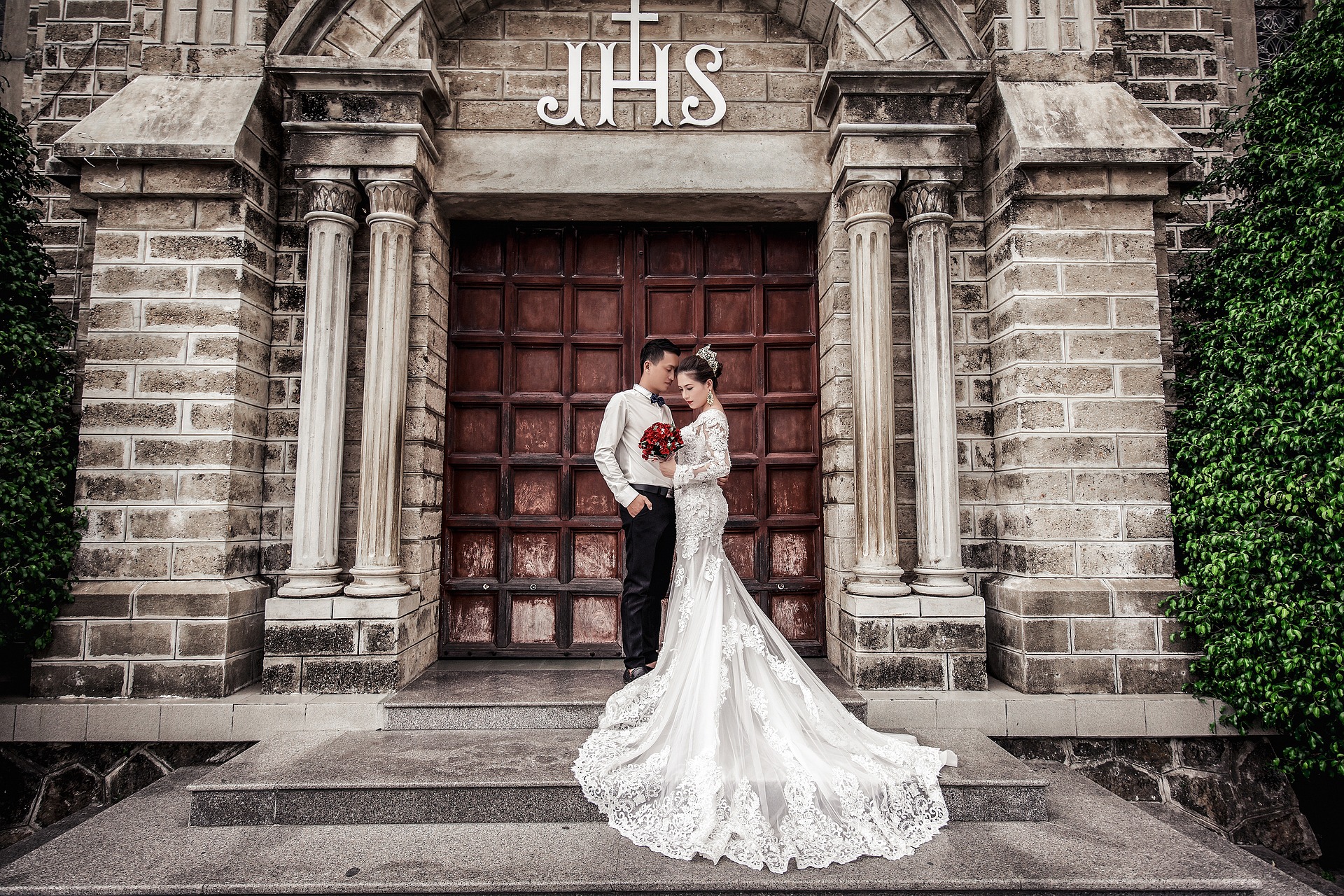
Cambodia has maintained an annual GDP growth rate of nearly 7% since the 2000s, except during the Lehman Shock. Although growth stagnated during the pandemic, its 2022 GDP growth rate is projected to be 4.5% (World Bank Global Economic Prospects 2021). Upgraded from a low-income country to a lower-middle-income country in 2016, Cambodia aims to become an upper-middle-income country by 2030. This article explores the marriage landscape in Cambodia, a nation experiencing remarkable economic growth.
Construction boom and citizens buying land
The capital Phnom Penh is in the midst of a construction boom. By 2030, nearly one million new housing units are deemed essential nationwide, with Phnom Penh alone projected to require approximately 52,000 new homes (Cambodian Ministry of Land Management, Urban Planning, and Construction).
Land purchases are trending among young people from the middle class and above, who believe “land in the suburbs is a sure bet to sell.” However, for men preparing to marry, “I want land, but marriage funds come first.”
Sok (24), who earns about 100,000 yen per month, explains, “I borrowed money from the bank to buy land in Kandal Province, adjacent to Phnom Penh. Because of the monthly repayments, I can't save for a marriage fund and can't even propose.”
The groom covers all wedding expenses.
In Cambodia, once a marriage is decided, the groom must provide all the wedding funds. Therefore, families are delighted when a daughter is born, as they consider her potential future marriage.
In some cases, marriage itself may not even be permitted without a certain amount of funds. The most expensive part is the wedding reception. Traditionally, it was held at or near the bride's home, often involving large tents set up that blocked the road. However, in recent years, luxurious wedding venues have been built one after another in cities like Phnom Penh, and more couples are using these venues.
A wedding reception costs at least 1 million yen (approx. $7,000 USD) even at the low end. Costs are rising yearly, sometimes exceeding 2 million yen. Even for a typical office worker earning around 50,000 yen monthly, Cambodian men must prepare funds for a reception costing over 20 months' salary.
Regarding wedding rings, the mainstream practice is for each partner to buy what they like, and there is no strict necessity to purchase expensive ones. If anything, the tendency is to spend money on aspects visible to family and friends rather than necessarily for the bride and groom themselves.
A wedding reception is a once-in-a-lifetime grand occasion.
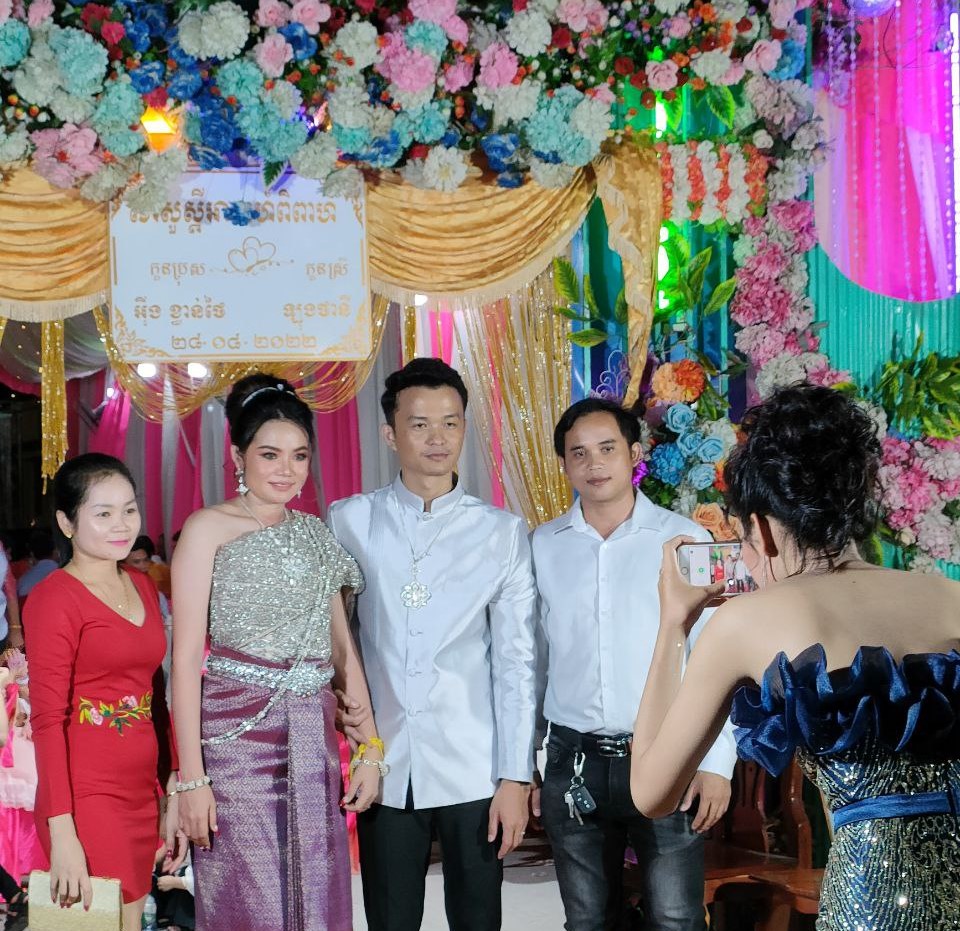
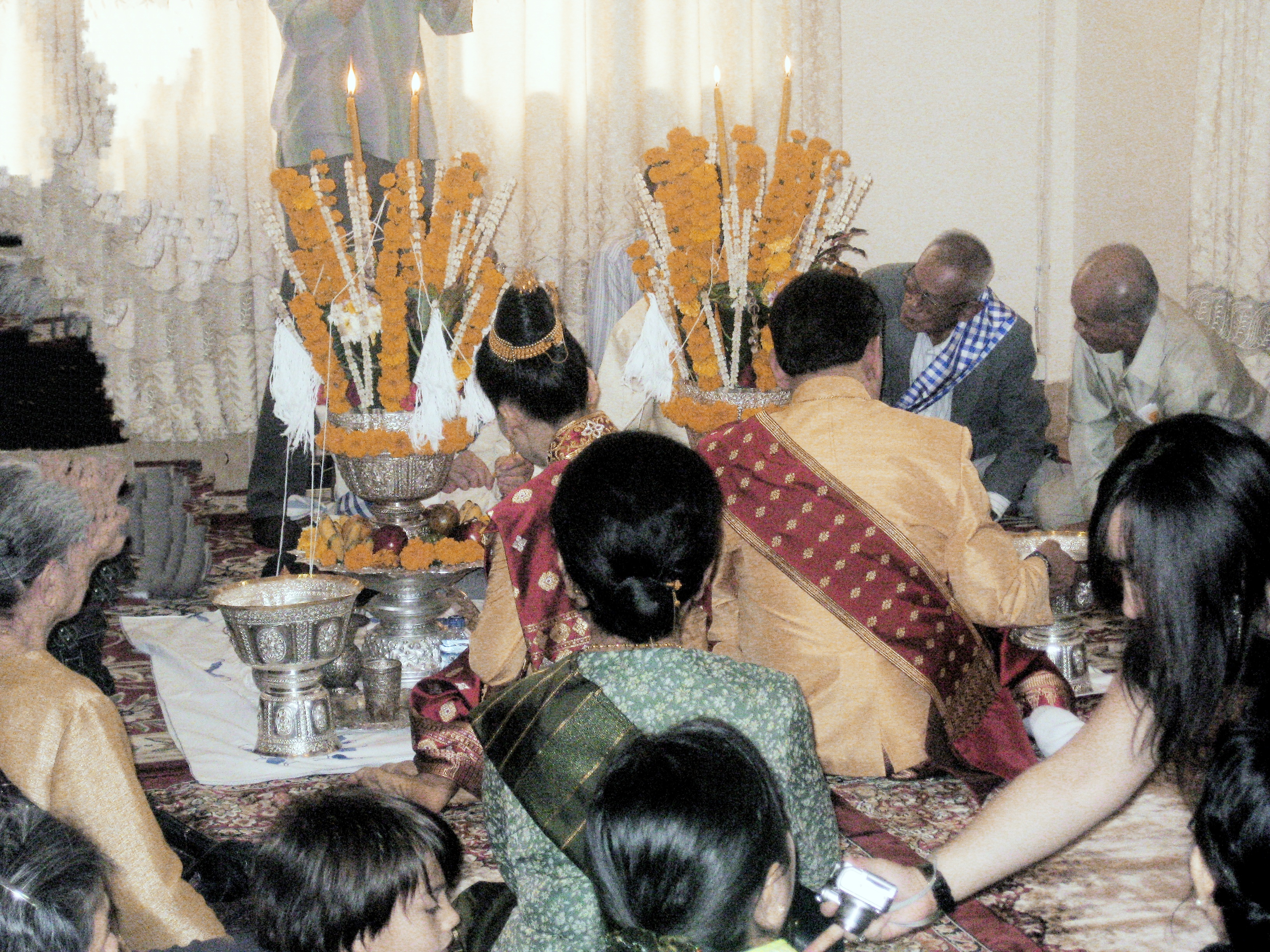
A glimpse of my friend's wedding
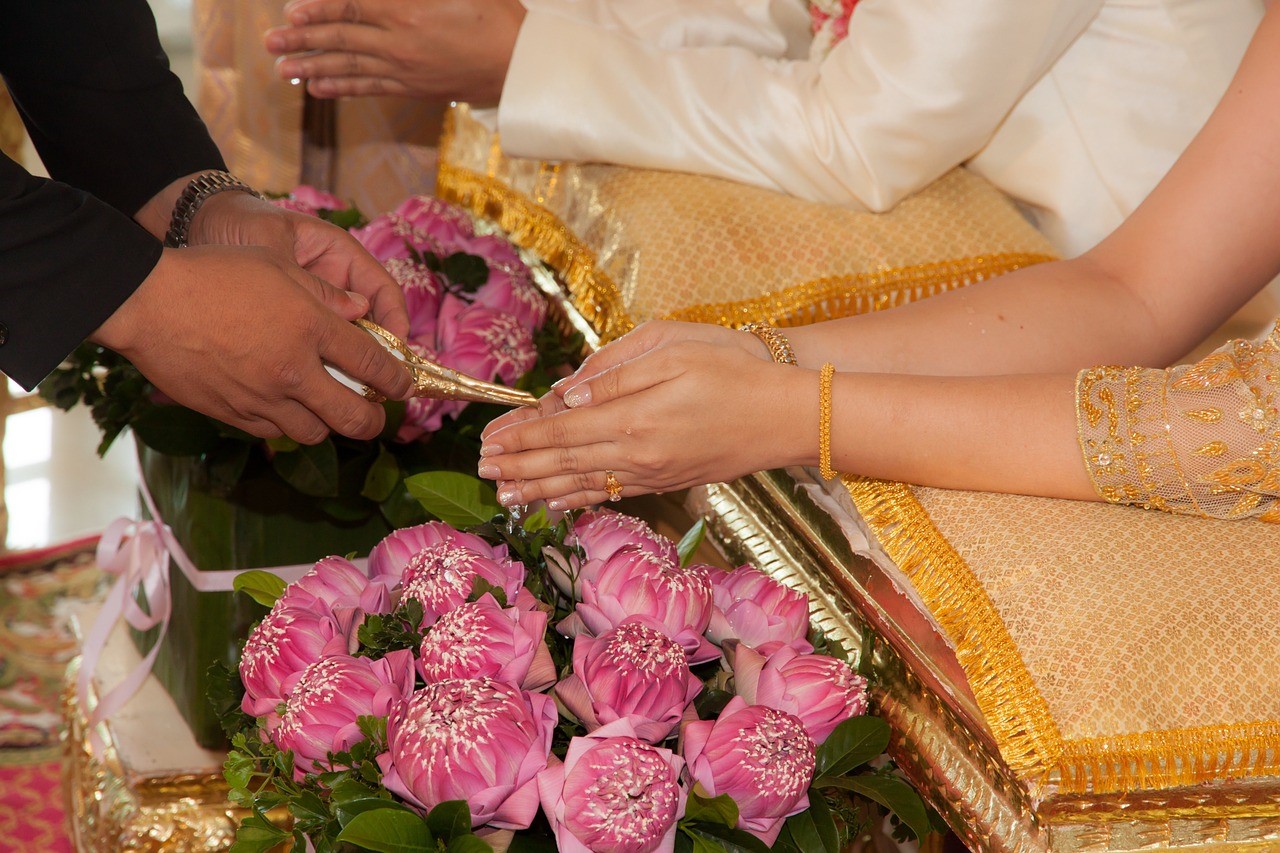
Cambodian wedding receptions tend to be extravagant. For this once-in-a-lifetime event, the bride and groom change outfits multiple times, from traditional attire to modern dresses and tuxedos, incurring significant clothing costs.
Family and friends also buy new outfits from tailors for each wedding, making the dry season—known as wedding season—a time when wedding-specific spending money is needed. Phnom Penh alone hosts 5,000 to 6,000 weddings annually (Phnom Penh Municipal report).
Cambodian wedding receptions are like open-door dinner parties, with many guests leaving after eating. Since it's customary to give the wedding gift upon departure, the lavishness of the cuisine is also important. Stories even circulate about guests reducing their gift amount because they were disappointed with the food. Payments to the banquet hall are often calculated per table, meaning if all prepared tables aren't filled, the bride and groom end up in the red. Since there's no obligation to RSVP in advance, determining how many invitations to hand-deliver is also a test of the couple's skill. Incidentally, because Cambodia lacks a well-established postal system, invitations are typically delivered by hand.
It is common for newlyweds to live with the wife's family in their new home.
In Cambodia, there is no expression like “going to be a bride” for marriage, and separate surnames for married couples are common. Very few couples live alone together immediately after marriage; most live with the wife's family.
For Cambodians, family includes relatives like uncles, aunts, and cousins, so many households are extended families. Even after children are born, the wife's family takes care of them, making it unnecessary to send them to daycare for work. In fact, daycare centers and nurseries are scarce. It's common for children to start attending kindergarten, called “school,” as early as age two or three for educational purposes. The child-rearing generation born after Cambodia achieved peace tends to spare no expense on their children's education, even if it means stretching their finances. This necessitates both parents working.
Due to the previously mentioned construction boom, Phnom Penh's residential areas are rapidly expanding into the suburbs. With skyrocketing land prices making new properties in central Phnom Penh difficult to obtain, many couples purchase homes in emerging suburban neighborhoods with 15- to 17-year mortgages. However, in Cambodia, where public transportation is scarce and motorbikes are the primary mode of transport, suburban homes are often distant from workplaces and children's schools. Consequently, it's common for families to continue living at the wife's parents' home during the week and only spend weekends and holidays at their new home.
Young Cambodians spend their money first on wedding receptions when they marry. After marriage, they live with the wife's family while saving money, buy a house in the suburbs, purchase a car for commuting between the suburbs and the city, spend money on their children's education, and continue working dual-income jobs—this is the new family model.
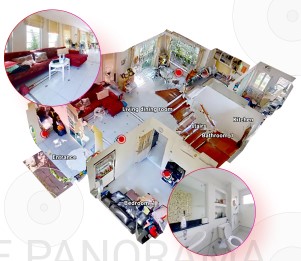
What is Consumer Life Panorama?
This is a website-type database that has accumulated visual data on more than 1,000 sei-katsu-sha from 18 countries around the world. The database includes many 3D models of living environments and 2D data of items owned by each sei-katsu-sha, and is useful for understanding overseas sei-katsu-sha, which is difficult to grasp using only letters and numbers.
Using visual data such as those cited in this column,
Compare the differences in the attributes of overseas consumers
To get a realistic understanding of the actual usage of each category
To understand the overall lifestyle of target consumers
etc., can be utilized as a “no-go” home visit survey.