Global Market Surfer
 CLP
CLP Column
How Do “Marriage” Customs Differ Across Asian Countries⁉ And the Spending That Comes With It ~ Bride Price? Groom Price? What About the Funds? ~
- Release date: Dec 19, 2025
- Update date: Dec 19, 2025
- 95 Views
目次
1. Introduction
2. Grasping the Overall Picture of “Marriage” Across Asian Countries Through Numbers
(1) Age- and Sex-Specific Marital Status Rates
(2) Which countries show the strongest interest in marriage?
3. How are “weddings” conducted in various Asian countries?
(1) Customs Revealed Through Wedding Ceremonies and Receptions
(2) Who pays for the betrothal money and wedding expenses?
4. Consumption Patterns Related to Marriage: Preparations and Purchases Made Upon Getting Married
(1) Post-marriage residence (marrying into the wife's family, marrying into the husband's family, living with parents)
(2) If you're getting married, do you need a car too?
(3) Interest in Gold, Gold Bullion, and Jewelry
5. Summary
1. Introduction
For marketers in Japan looking to overseas markets, a major hurdle is the difficulty in gaining a deep understanding that extends to the “background of consumers.” While purchase data can be obtained, the underlying context—values, culture, and lifestyle—often remains elusive due to a lack of information.
This article focuses on “marriage,” a major life transition that significantly alters consumption behavior, explaining the cultures and customs rooted in various Asian countries. How do consumption patterns evolve as individuals transition from single life to marriage and parenthood? By deciphering the significance of marriage as a pivotal event, we offer insights to help marketers gain a more multidimensional understanding of Asian consumers.
This article utilizes data from an Intage proprietary research project.
▶ Global Report: Life Events and Assets Survey Across 9 Countries
2. Grasping the Overall Picture of “Marriage” Across Asian Countries Through Numbers
In Japan, where people now live to 100, late marriages are becoming more common. How are marriage trends changing across 12 Asian countries? We explore different values and life stages compared to Japan.
(1) Age- and Sex-Specific Marital Status Rates
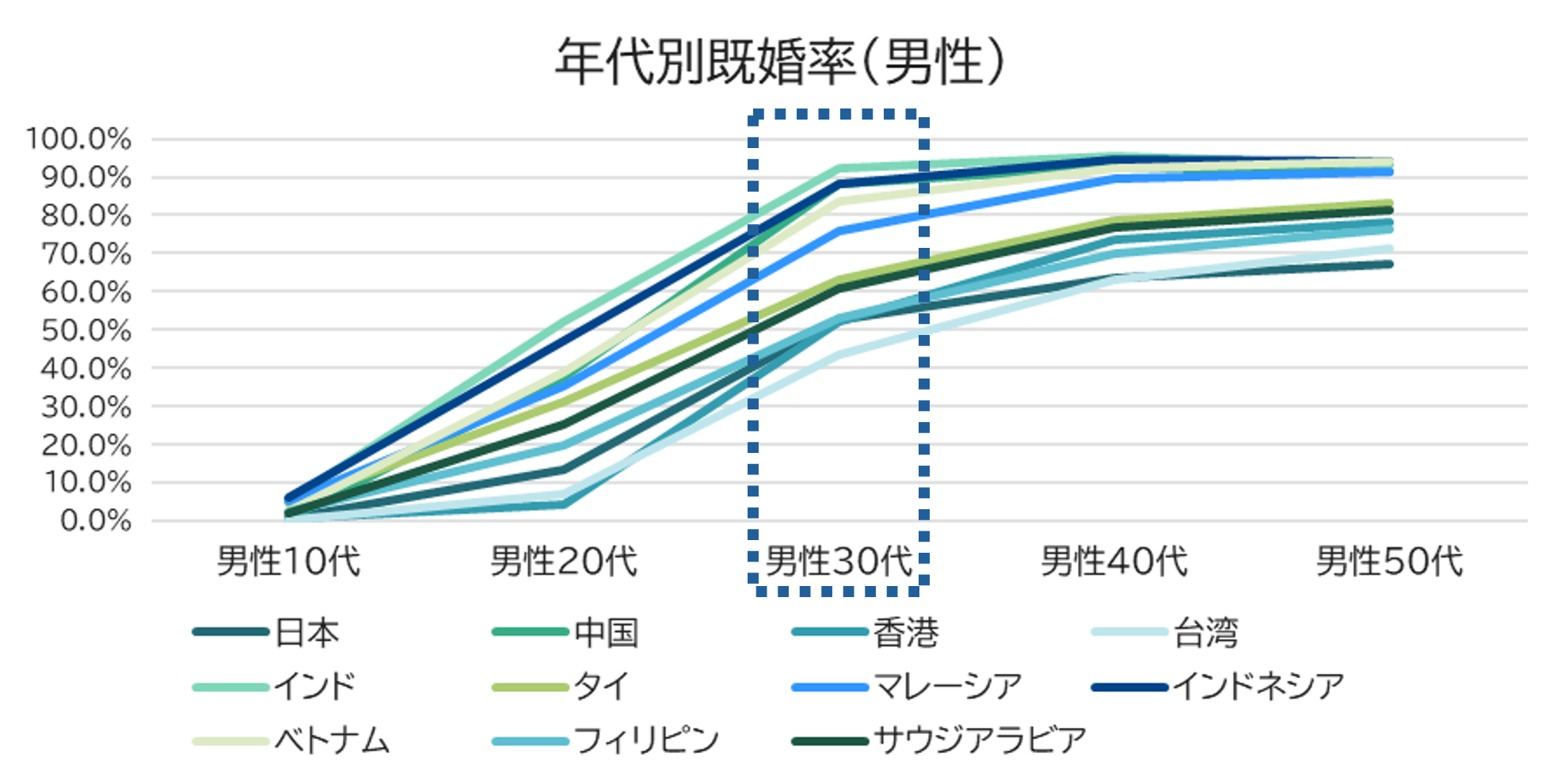
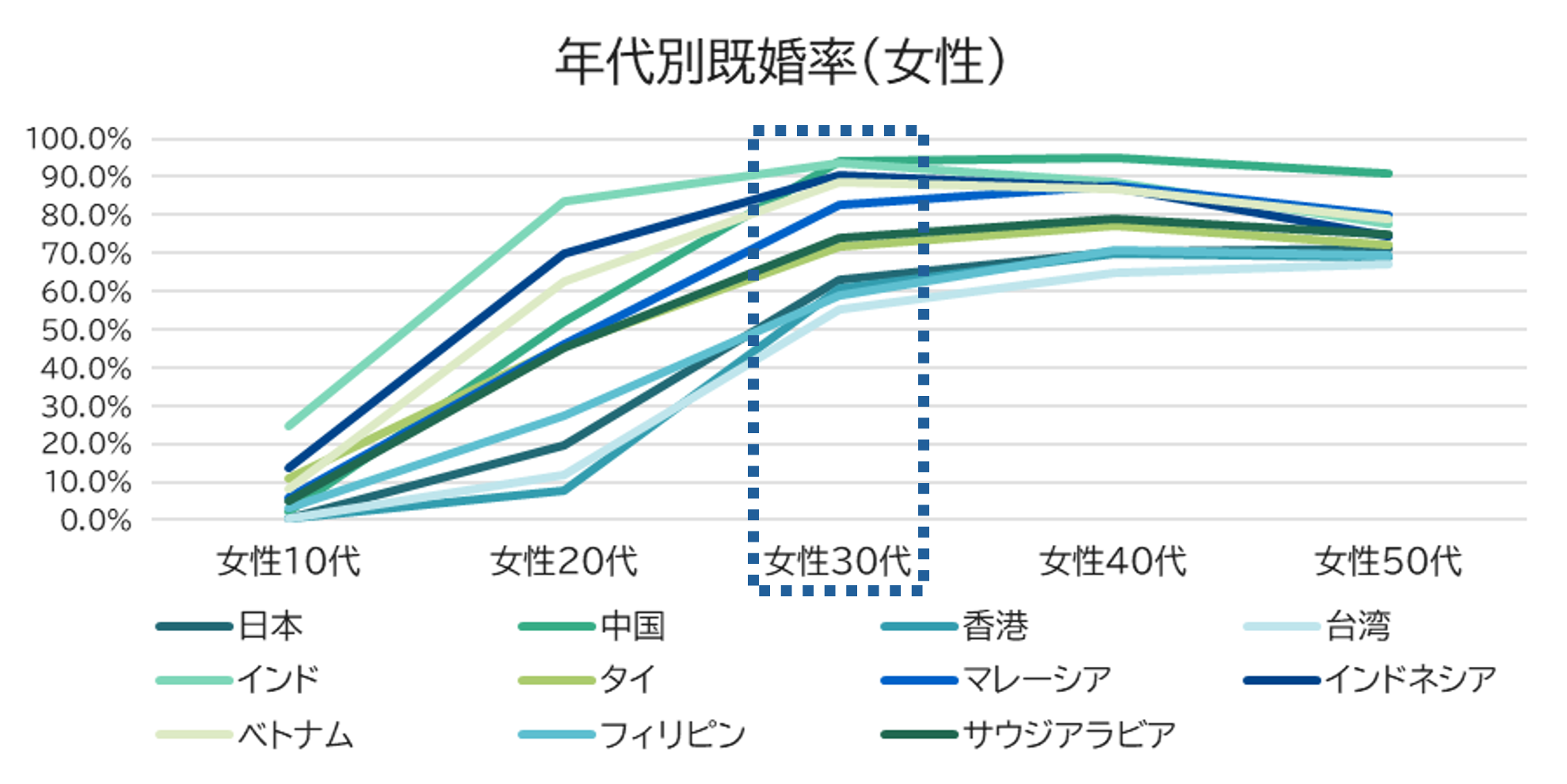
At what age do consumers in various countries typically marry? Data indicates that the marriage rate peaks in the 30s for both men and women.
Detailed information on age groups by country can be found here
Japan: https://www.global-market-surfer.com/market/detail/38
China: https://www.global-market-surfer.com/market/detail/37
Hong Kong: https://www.global-market-surfer.com/market/detail/40
Taiwan: https://www.global-market-surfer.com/market/detail/39
India: https://www.global-market-surfer.com/market/detail/49
Thailand: https://www.global-market-surfer.com/market/detail/46
Malaysia: https://www.global-market-surfer.com/market/detail/42
Indonesia: https://www.global-market-surfer.com/market/detail/48
Vietnam: https://www.global-market-surfer.com/market/detail/43
Philippines: https://www.global-market-surfer.com/market/detail/44
Saudi Arabia: https://www.global-market-surfer.com/market/detail/50
(2) Which countries show the strongest interest in marriage?
According to a survey on “Life Events of Interest” conducted by INTAGE, Japan has the lowest percentage of people expressing interest or concern about marriage, with only about 30% showing such interest.
Conversely, India showed the highest level of interest, with over 70% expressing “interest in marriage.” This reflects a strong cultural emphasis on celebrating marriage as a significant life-defining ceremony. Deep religious faith and a strong regard for unique traditions are also thought to influence this high level of interest in marriage.
In Indonesia, rising living standards alongside economic growth have increased career-oriented attitudes. Nevertheless, the value that “marriage is better sooner” remains deeply rooted, with 70% expressing interest in marriage. Partners are often found through introductions by friends, arranged meetings, or matching apps. Because “dating equals marriage” is strongly emphasized, the Japanese style of marrying after a long-term relationship is not common.
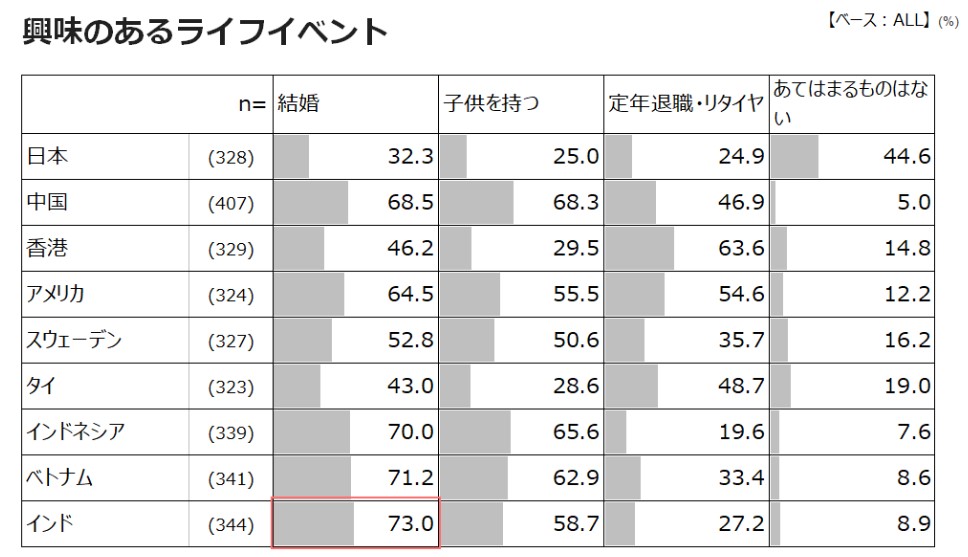
Life Events of Interest
Source: Intage Independent Survey (Survey on Life Events and Assets in 9 Countries)
3. How are “weddings” conducted in various Asian countries?
In countries where interest in marriage—a major milestone in life—is high, distinctive characteristics emerge in the amount spent on weddings and the scale of ceremonies and receptions. Here, based on data from various countries, we will delve into these trends in detail.
(1) Customs Revealed Through Wedding Ceremonies and Receptions
In Cambodia, a country experiencing remarkable economic growth, weddings and receptions are renowned for their extravagance. It is customary for the groom's family to cover all expenses, with the reception being the most costly part. Often, roads near the bride's home are closed off to erect large tents for the event. In recent years, luxurious dedicated wedding venues have also been constructed in urban areas like Phnom Penh.
With the average monthly salary for a company employee being around ¥50,000, reception costs start at a minimum of ¥1 million and can exceed ¥2 million in some cases. The wedding ceremony itself is always extravagant, and the bride and groom often change outfits multiple times, ranging from traditional attire to modern dresses and tuxedos, leading to high clothing expenses.
Receptions are typically open-ended dining events, and many guests leave after eating. It is customary to present the wedding gift upon departure. Consequently, the opulence of the cuisine, which influences the amount of the gift, becomes a crucial element of the reception.
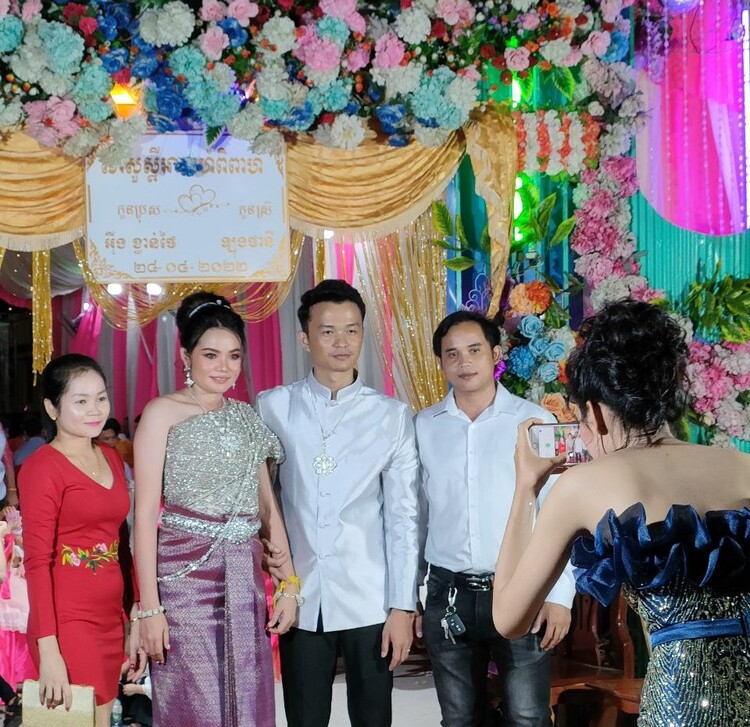
In Cambodia, there is no custom of confirming attendance for wedding receptions in advance, so the number of invitations to distribute is where the bride and groom's skills come into play. Due to the postal system not being fully established, invitations are generally distributed by hand.
For more details on marriage and assets in Cambodia, please refer to this article.
In the Philippines, a culture of holding weddings has long been established, primarily among the middle class and above. While it is common for the groom to bear the costs, there are also cases where both families split the expenses. For example, a wedding at the five-star New World Hotel in Makati costs around 1 to 5 million pesos (approximately 2.3 to 11.5 million yen).
Additionally, the “money dance” remains a traditional custom. During this ceremony, guests attach cash to the bride and groom's dance costumes using safety pins.
Furthermore, with 85% of Filipinos being Catholic and the strong influence of nearly 400 years of Spanish rule, marriage is considered a ceremony that should be blessed by the church. As such, weddings are positioned as essential life events.
For detailed information on marriage and assets in the Philippines, please refer to this article.
▶Related Article: [Global Series: Marriage and Assets] Philippines: Preparing for Marriage
Laotian weddings consist of two parts: the “wedding ceremony” and the “reception.” First, a traditional ceremony welcoming the groom is held at the bride's home in the morning. That evening, the reception is held at the bride's home as well.
Often, tents and tables are set up in the garden. However, in urban areas, it is increasingly common to use dedicated wedding venues, making more formal and elaborate receptions the norm.
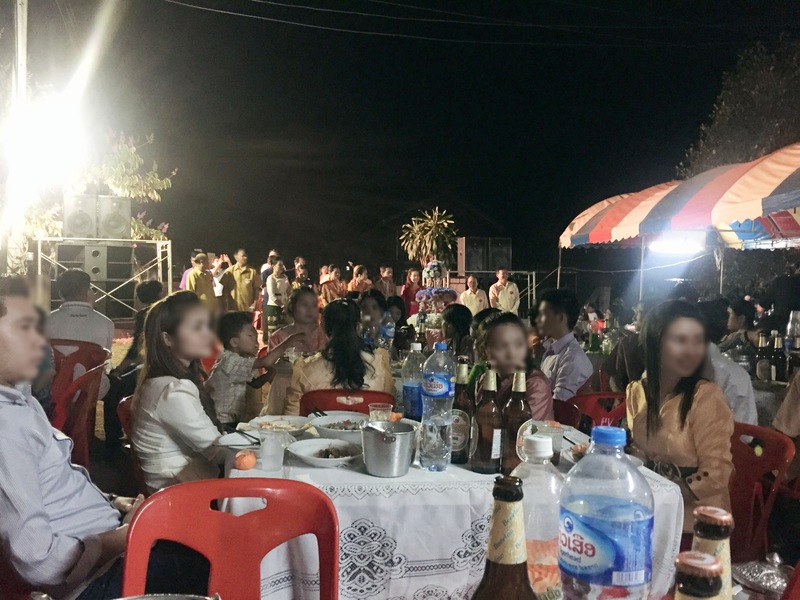
For more details on marriage and assets in Laos, please refer to this article.
▶Related Article: [Global Series: Marriage and Assets] Laos: Preparing for Marriage
In India, where weddings command significant attention, many people aspire to celebrate their marriage in grand style. Religious ceremonies span approximately one week, culminating in various Hindu rites of prayer before the couple is formally recognized as husband and wife.
Wedding venues are typically specialized halls, though affluent families may rent out entire five-star hotels or suburban palace hotels. The venue is lavishly decorated, and professional photography and videography are essential. Furthermore, it's common to hold a dedicated photo session before the ceremony, reflecting a deeply rooted culture of beautifully preserving life's most significant event.
For more details on marriage and assets in India, see this article.
▶Related Article: [Global Series: Marriage and Assets] India: Preparing for Marriage
(2) Who pays for the betrothal money and wedding expenses?
① Who bears the costs, and the approximate expenses for a wedding
Once marriage is decided, the first necessities are the betrothal gift and preparations for the wedding ceremony. How are these costs covered, and who bears them? Looking at the situation in various countries, the trend shows a greater burden on the male side: seven countries primarily bear the costs, one country primarily bears the costs, and five countries share the costs.
Additionally, in many countries, it is characteristic that expenses related to marriage are diverse, extending beyond the betrothal gift and wedding/reception costs to include jewelry (rings, bracelets), vehicles, land, and attire.
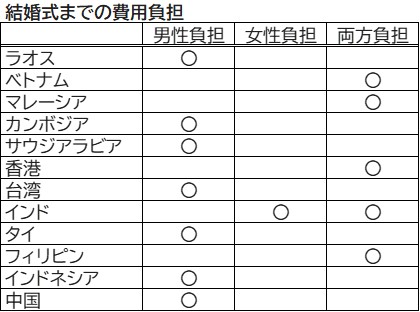
Source: From local staff
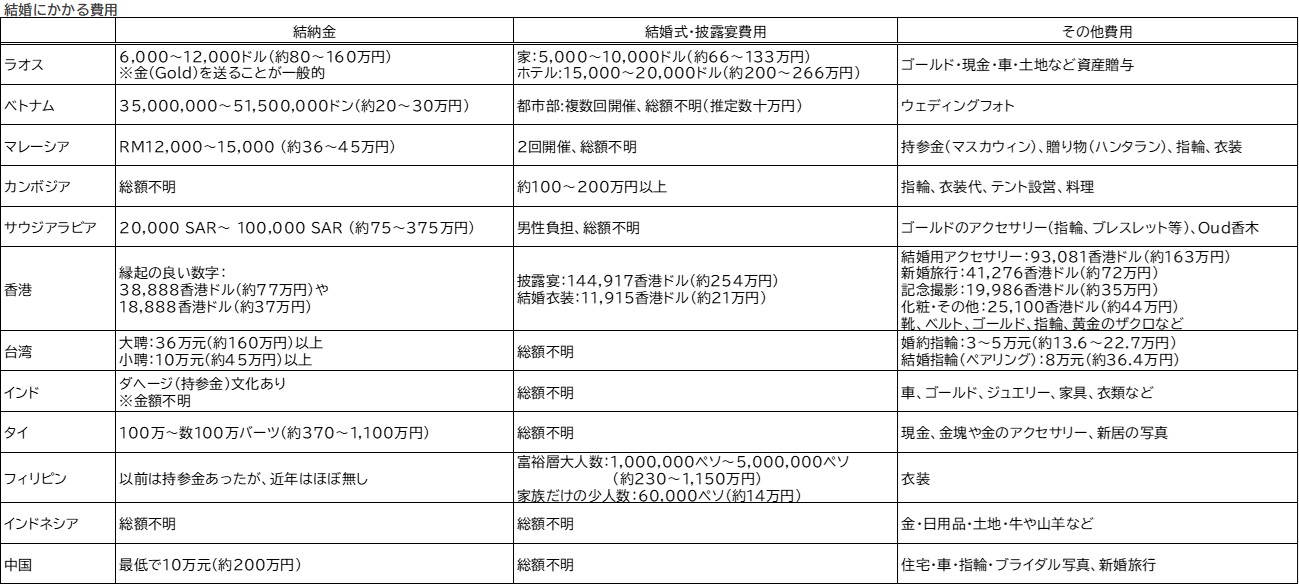
Source: From local staff
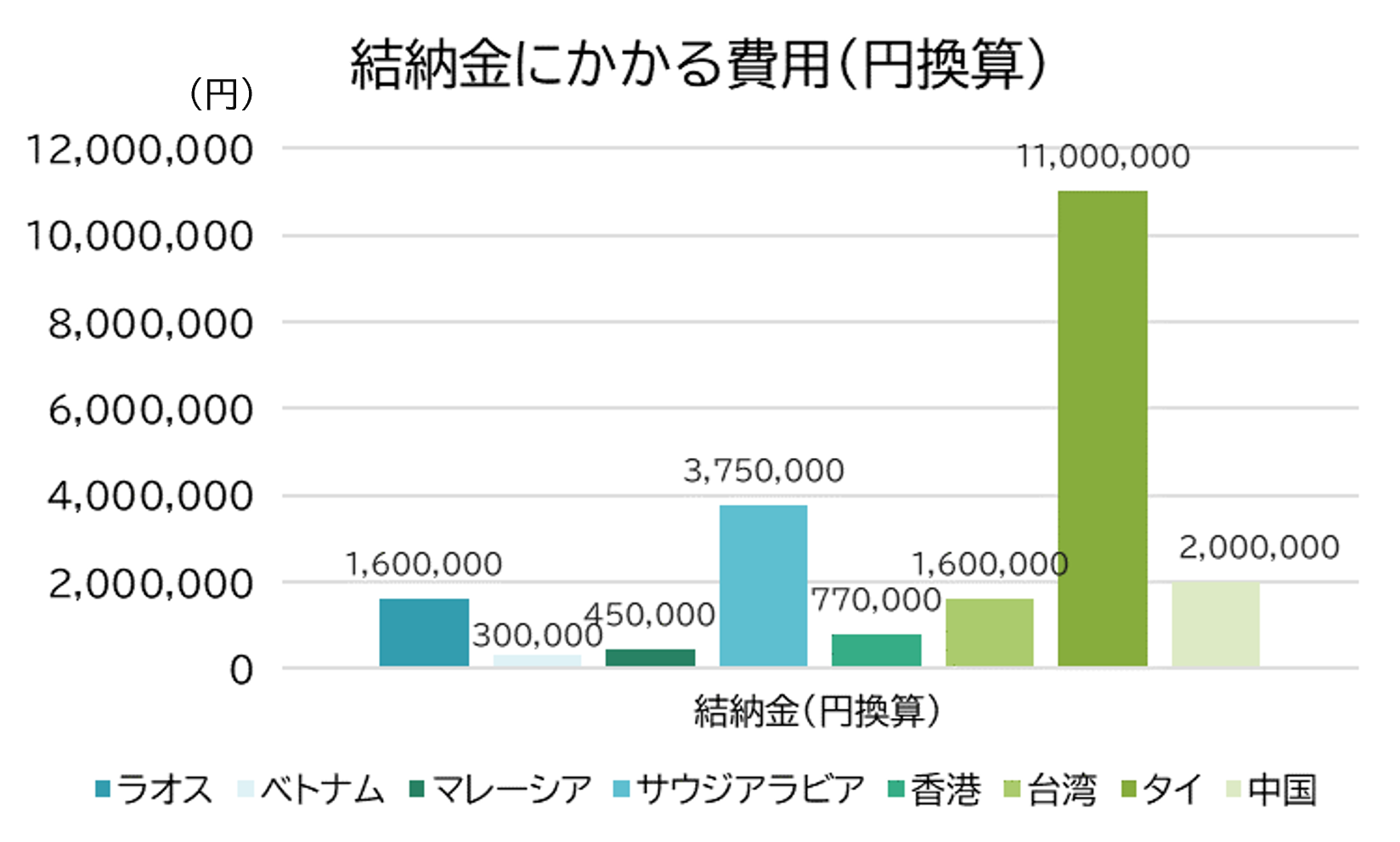
②Engagement Gift Amounts by Country
Comparing data on engagement gift costs across eight countries, Thailand stands out as the most expensive, with an overwhelmingly high average of approximately ¥11 million.
Saudi Arabia follows at around ¥3.75 million, highlighting significant regional differences in engagement gift culture.
Conversely, Vietnam has the lowest average at approximately ¥300,000, demonstrating substantial variation in engagement gift amounts between countries.
Source: From local staff
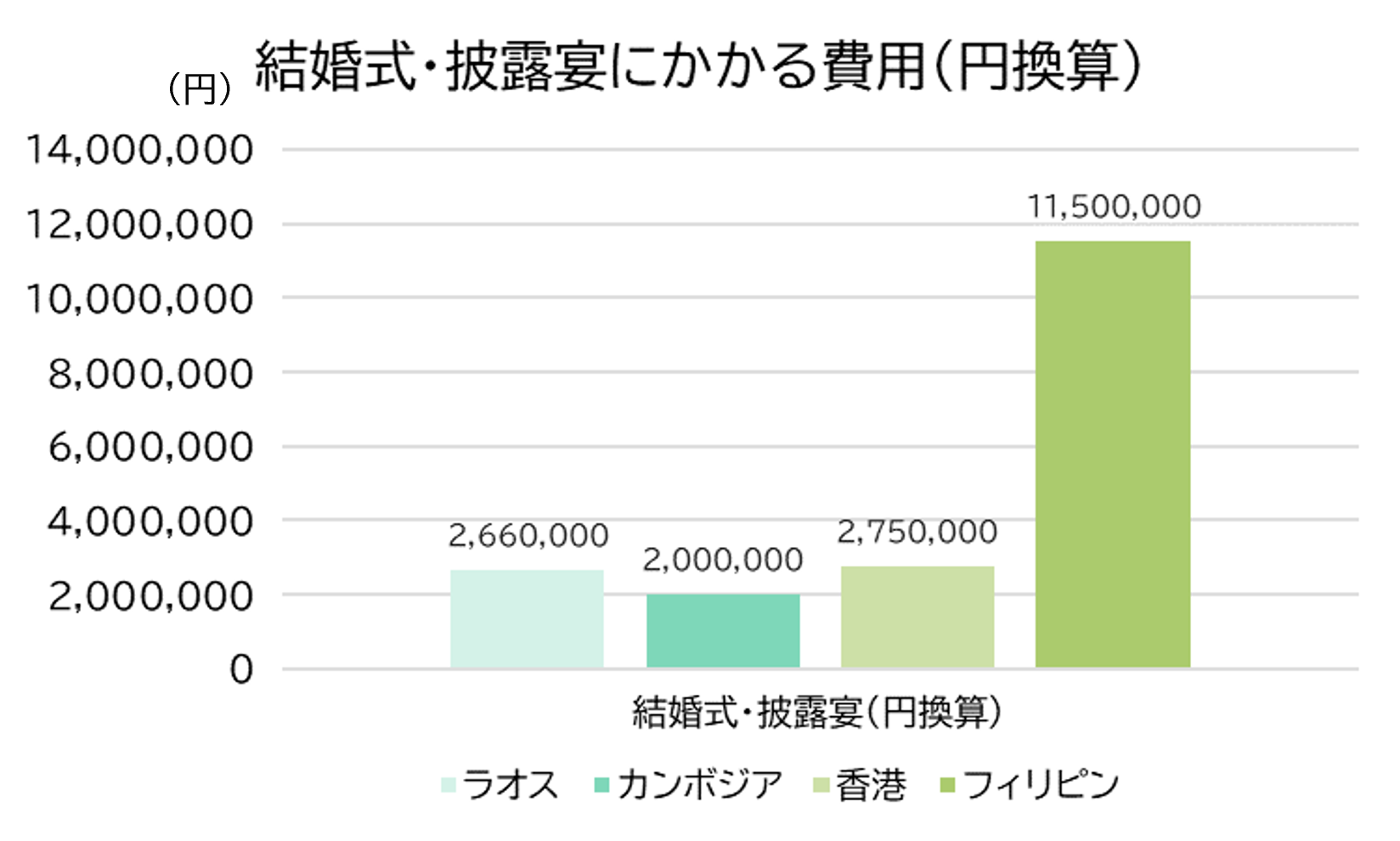
③Wedding Ceremony and Reception Costs by Country
Comparing four countries with available wedding ceremony and reception cost data, the Philippines stands out as the most expensive, with costs reaching approximately ¥11.5 million.
The other three countries show little difference: Hong Kong at approximately ¥2.75 million, Laos at approximately ¥2.66 million, and Cambodia at approximately ¥2 million. This highlights how significantly the mindset and scale of wedding spending differ by country.
Source: From local staff
④ Financial Customs and Traditions
Beyond the financial aspects introduced in ② and ③, each country has its own unique customs and traditions surrounding marriage. These differences reveal cultural characteristics more clearly. Here, we introduce some unique customs from several countries.
<Malaysia>
Malaysia is a multi-ethnic nation composed of Malay, Chinese, Indian, and other groups, each with distinct religions and cultural practices. Here, we focus on the marriage customs of the Malay community, which constitutes over half the population.
It is customary to exchange gifts during engagement and wedding ceremonies, with the groom's family typically presenting more valuable gifts than the bride's family. Particularly interesting is how the standard dowry amount varies based on educational background. For example, a university graduate (bachelor's degree) typically expects a dowry of RM12,000 to RM15,000 (approximately ¥360,000 to ¥450,000).
Another characteristic is that the marriage certificate explicitly states both the dowry amount and the religiously (Islamic) mandated dowry amount.
For more details on marriage and assets in Malaysia, please refer to this article.
In Saudi Arabia, one of the world's leading oil-producing nations, it is customary for the male side to prepare substantial assets during the preparations leading up to marriage.
The cash gift given by the man to the woman, called the “mahar,” typically ranges from 20,000 to 100,000 SAR (approximately ¥750,000 to ¥3,750,000).
Furthermore, it is customary to present jewelry in addition to the mahar, with gold rings, bracelets, and necklaces being standard gifts. In Saudi Arabia, there is a strong preference for gold accessories over diamonds, and this cultural tendency is strongly reflected in the gifts exchanged during marriage.
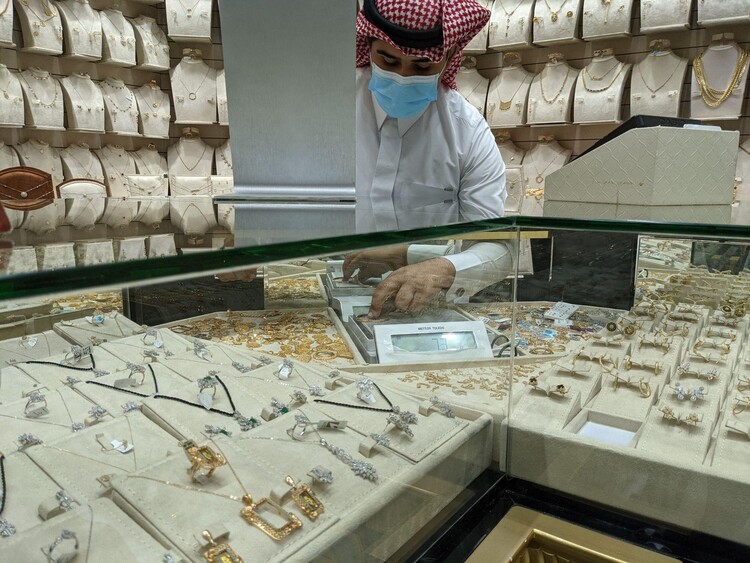
Saudi Arabian men in their 20s tend to strongly believe they should prepare money and a home for future marriage, with men bearing the bulk of the marriage expenses. Meanwhile, women contribute almost nothing toward marriage costs.
For more details on marriage and assets in Saudi Arabia, see this article.
<Thailand>
In Thailand, where extravagant and luxurious weddings are favored, the betrothal gift is highly valued as “a symbol of the bride's worth.” Betrothal gifts presented by the groom's family to the bride's family often reach 1 million to several million baht (approximately 3.7 million to 11 million yen).
In addition to cash, gold bars, and gold jewelry, photos of the house or condominium that will become the couple's new home are also prepared.
Furthermore, a service exists where families unable to prepare sufficient dowry money can “rent” cash and gold bars for the engagement ceremony – an intriguing cultural practice unique to Thailand.
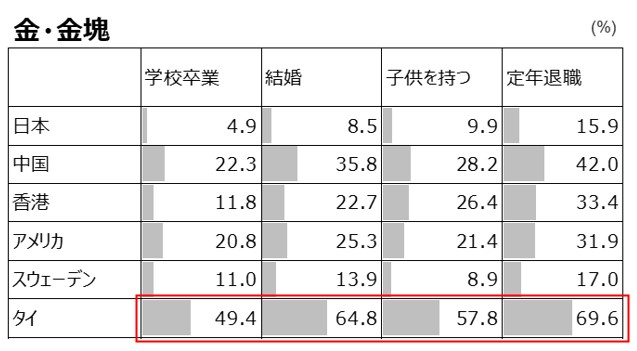
The timing when people want to hold gold and gold bullion for each life stage
Source: Intage Independent Research Project (Survey on Life Events and Assets in 9 Countries)
▶Related Article: [Global Series: Marriage and Assets] Thailand: Preparing for Marriage
<Taiwan>
In Taiwan, where late marriage is becoming increasingly common like in Japan, marriage is viewed not as a union between individuals but as a bond between families. When marrying, it is customary for the groom's family to present the bride's family with a monetary gift called “pinjin” (聘金). This is divided into two types: ‘dapin’ (大聘) and “xiaopin” (小聘).
The general market rate is considered to be over NT$360,000 (approx. ¥1.6 million) for the Da Pin and over NT$100,000 (approx. ¥450,000) for the Xiao Pin. The Da Pin essentially represents the bride's dowry, encompassing a wide range of items including furniture, bedding, home appliances, vehicles, and even gold jewelry.
For more details on marriage and assets in Taiwan, please refer to this article.
▶Related Article: [Global Series: Marriage and Assets] Taiwan: Preparing for Marriage
4. Consumption Patterns Related to Marriage: Preparations and Purchases Made Upon Getting Married
What differences exist between countries in terms of the items people prepare and purchase when getting married?
(1) Post-marriage residence (marrying into the wife's family, marrying into the husband's family, living with parents)
In Japan, “marrying into the husband's family” accounts for only about 5%, with “marrying into the wife's family” being the overwhelming majority. However, the situation differs across Asian countries. Differences in culture and values are also evident in the surname used after marriage and the primary place of residence.
In Cambodia, it is common for couples to keep their separate surnames, and it is often seen that after marriage, the couple lives with the wife's family. It is also characteristic that many households live in extended families, including relatives such as uncles and aunts.
Furthermore, as mentioned in the previous section, the culture of spending heavily on wedding receptions remains strong. Consequently, a new lifestyle is spreading where couples live at the wife's parents' home after marriage to save money, eventually purchasing a house in the suburbs.
In India, while regional variations exist, arranged marriages are common, and living with extended family, including parents and relatives, is the norm after marriage. Family bonds are strong, and the perception that marriage marks the beginning of a relationship between families remains deeply ingrained.
In Laos, the traditional practice of the groom moving into the bride's family home after marriage is predominant.
While this custom remains deeply rooted in rural areas, urban areas increasingly see newlyweds living independently.
Additionally, Laos lacks a honeymoon tradition, and wedding rings are not mandatory. Though some younger couples purchase them, this practice hasn't become a widespread custom.
For more details on marriage and assets in Laos, see this article.
▶Related Article: [Global Series: Marriage and Assets] Laos: Preparing for Marriage
So, what about “housing” when starting a new life after marriage?
According to data from an Intage independent survey (Global Report on Life Events and Assets in 9 Countries), Indonesia shows the highest percentage of people who want to purchase a detached house with land at the time of marriage.
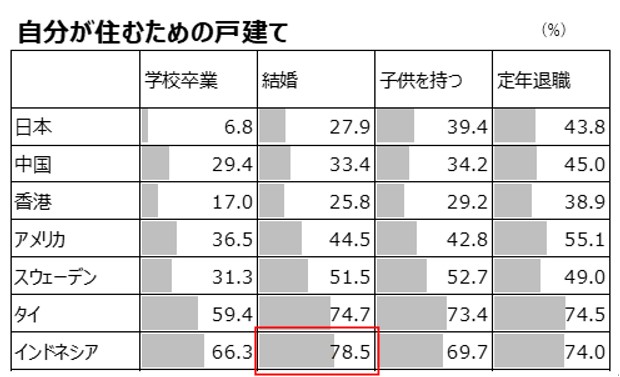
The timing when people want to own a detached home for themselves at each life stage
Source: InTage Independent Research Project (Survey on Life Events and Assets in 9 Countries)
Land in Jakarta is expensive, so many people purchase detached houses in the suburbs and commute to work. Another characteristic is that mortgage repayment periods in Indonesia are relatively short, typically allowing full repayment within about 15 years.
For more details on marriage and assets in Indonesia, please see this article.
▶Related Article: [Global Series: Marriage and Assets] Indonesia: Preparing for Marriage
Hong Kong housing is notoriously expensive globally and often features extremely cramped rooms, leading newlyweds to primarily choose one of three options for their first home after marriage:
① Purchase with a mortgage
② Move into a larger place with parents
③ Rent a room in their parents' home
Additionally, those with substantial funds may use a down payment to purchase multiple units, repaying mortgages with rental income. After paying off the loans, they end up owning several properties with asset value.
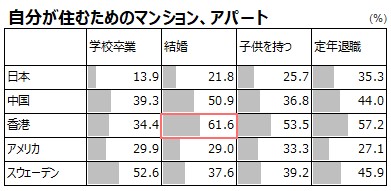
The timing when people want to own a condominium or apartment for themselves at each life stage
Source: Inteage Independent Survey (Survey on Life Events and Assets in 9 Countries)
Hong Kong's high rents lead some people to choose purchasing property and paying off a mortgage over continuing to pay rent, viewing real estate as an asset for their retirement.
It's also noteworthy that real estate holds investment significance for Hong Kong residents and plays a major role in asset formation.
For more details on marriage and assets in Hong Kong, see this article.
▶Related Article: [Global Series: Marriage and Assets] Hong Kong: Preparing for Marriage
(2) If you're getting married, do you need a car too?
Japanese people gradually develop a greater interest in cars as they progress through life stages such as marriage and having children.
Meanwhile, Chinese, Hong Kong, Swedish, and Indonesian people tend to show a 10-point or greater increase in interest in cars at the time of marriage compared to their previous life stage.
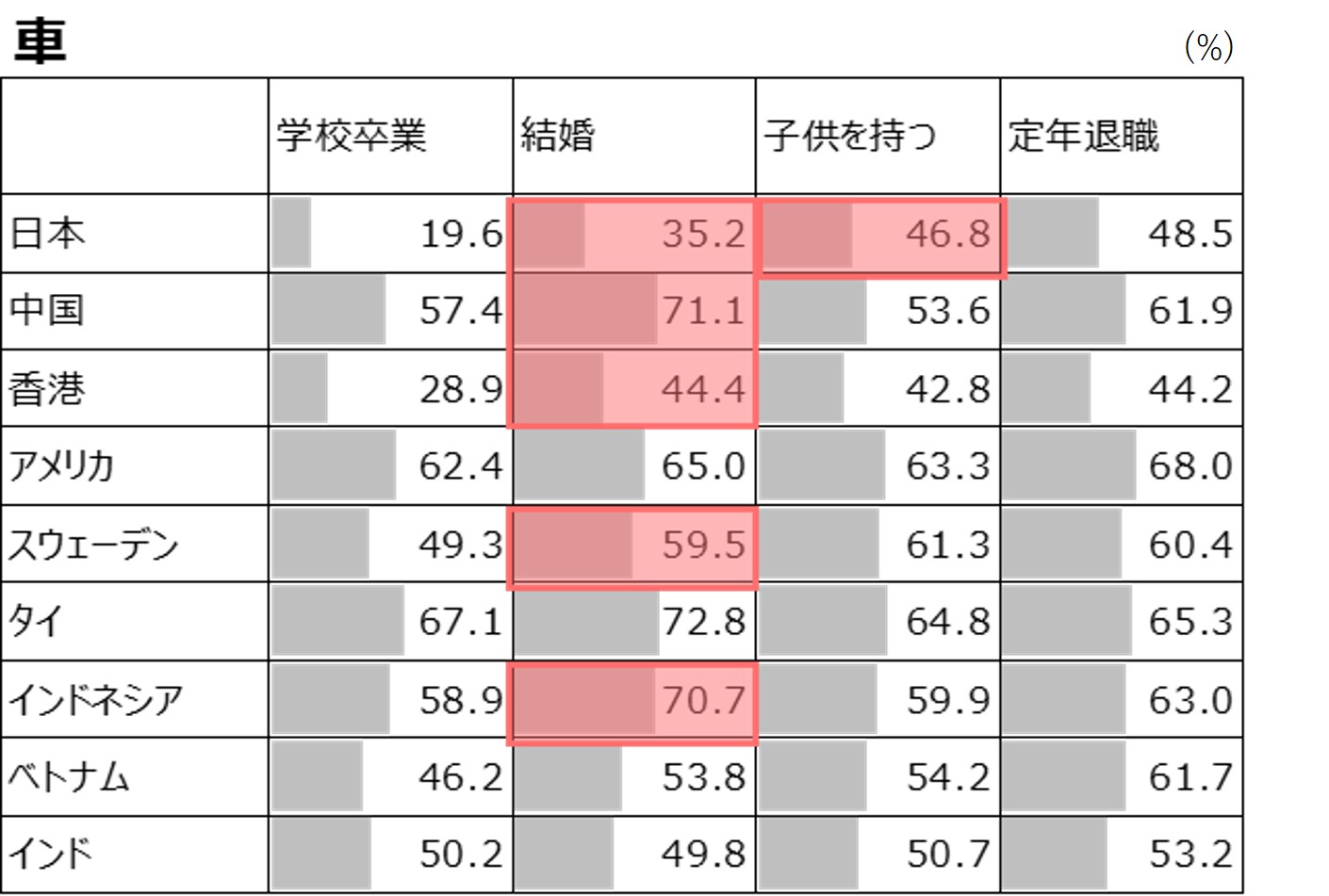
The timing when people want to own a car for each life stage
Source: Intage Independent Research (Survey on Life Events and Assets in 9 Countries)
Marriage is also a time when people consider purchasing a car, often due to changes in family structure or place of residence.
According to data from an Intage independent survey (Global Report on Life Events and Assets in 9 Countries), China has the highest percentage of people who want to buy a car when they get married.
In China, it is rare for people to buy a car upon graduating from university or starting a job. A characteristic feature is that many attend driving school not during their student years, but after marriage.
In fact, compact cars targeted at students and young people are rarely seen on the streets. Instead, luxury cars like BMW, Mercedes-Benz, and Audi are frequently spotted, so much so that the term “BBA” (an acronym for their initials) has become popular.
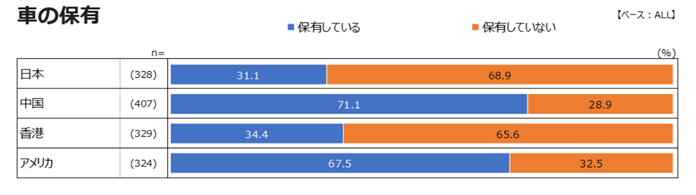
Car Ownership Rates (Japan, China/Hong Kong, USA)
Source: Excerpt from Intage's Independent Survey (Survey on Life Events and Assets in 9 Countries)
It should be noted that the “bba” is not merely an aspiration but an actual best-selling vehicle model. It consistently ranks high in sales volume rankings published by the automotive information portal site ‘Autohome’.
For more details on marriage and assets in China, please refer to this article.
▶Related Article: [Global Series: Marriage and Assets] China: Preparing for Marriage
(3) Interest in Gold, Gold Bullion, and Jewelry
①Gold and Gold Bars
Marriage provides an opportunity to consider and reassess asset management for the next life stage. So, what is the status of gold and gold bar ownership in various countries?
According to data from an Intage independent survey (Global Report on Life Events and Assets in 9 Countries), Vietnam has a high rate of gold and gold bar ownership.
In Vietnam, the 10th day of the first lunar month is known as “Ngày Vía Thần Tài” (God of Wealth Day). It is believed that purchasing gold on this day ensures a prosperous year in business and financial security. Consequently, many Vietnamese buy gold at jewelry stores on this day.
Furthermore, gold is considered a stable asset and is sometimes given by children to their parents as a gift during celebrations like birthdays.
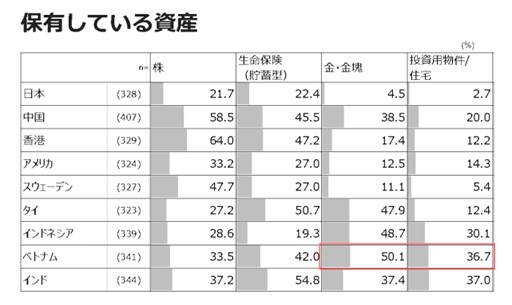
Assets Held
Source: Intej Independent Survey (Survey on Life Events and Assets in 9 Countries)
Furthermore, in Vietnam, many people prefer to keep their assets at home in the form of gold rather than deposit them in banks.
For more details on marriage and assets in Vietnam, please refer to this article.
▶Related Article: [Global Series: Marriage and Assets] Vietnam: Preparing for Marriage
②Jewelry
As introduced in the table above (3(2)), we learned that in countries other than Vietnam, the Philippines, and Indonesia, there is a custom of purchasing jewelry (such as rings or bracelets) upon marriage.
In Thailand especially, it is common for relatives to gift gold necklaces or bracelets on milestones like marriage or the birth of a child.
For more details on marriage and assets in Thailand, please see this article.
▶Related Article: [Global Series: Marriage and Assets] Thailand: Preparing for Marriage
5. Summary
This time, we introduced marriage and asset management practices across Asian countries based on Intage's proprietary data.
Understanding each country's culture and customs through marriage—a major turning point in life—and grasping their approach to asset formation is also crucial when considering business expansion into overseas markets.

-

Editor profile
Chew Fong-Tat
Malaysian researcher who has lived in Japan for 14 years and has handled many surveys on ASEAN countries.