 Global Market Surfer
 CLP
CLP Column
National Character of Countries Around the World Malaysia: A pioneering spirit balanced with the ability to enjoy life while preserving traditions
- Release date: Dec 26, 2025
- Update date: Feb 10, 2026
- 1566 Views
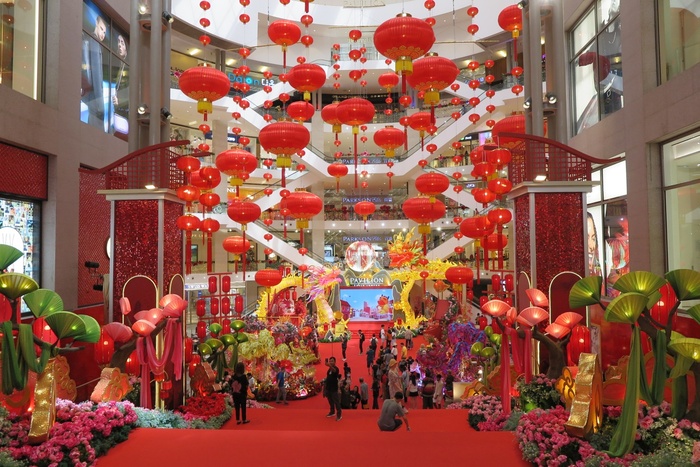
Photo 1: Shopping mall decorations during the Chinese New Year period
Malaysians are a people of diverse appearances. Their ethnic roots vary, and their religions and customs differ. According to research, there are 140 languages spoken in Malaysia. Considering that each language brings its own perspectives and values, this diversity is truly remarkable.
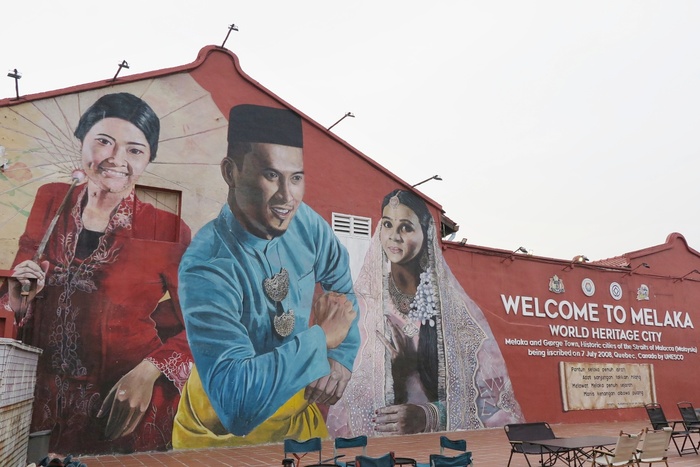
Photo 2: From left: the three major ethnic groups—Chinese, Malay, and Indian
It is not easy to summarize such a diverse group of people in a single phrase, but I think one common trait is their enterprising spirit that embraces new things.
Founded in 2001, AirAsia has become the face of low-cost carriers (LCCs) operating in 20 countries. Its founder, Tony Braverman, is an Indian Malaysian who was educated in the UK and started his business in his thirties. Grab, now headquartered in Singapore, also originated as a taxi dispatch service in Malaysia. Anthony Tan, a Malaysian Chinese, launched its predecessor, My Teksi, with friends while attending Harvard Business School in the United States. The business now operates in eight Southeast Asian countries.
Malaysia has a culture that fosters young entrepreneurs, and consumers who support new services they like. It is also characteristic of Malaysia that the places to receive education and the fields in which to develop businesses are not limited to within the country.
On the other hand, there is also a strong impression that traditional ethnic and religious events are valued. It feels as if a shared value that such events are “something to be respected” is deeply rooted in society.
In Japan, the preservation of traditional events is often discussed in a serious, rigid manner, framed within the context of “duty” or “sense of responsibility.” While Malaysia certainly has this aspect too, it's the Malaysian spirit that shines through. They never forget to enjoy these events with fun and liveliness.
目次
1. The New Year that comes four times a year
2. Ethnic events held according to the traditional calendar
3. While Islam is the state religion, Christmas is a public holiday.
4. National holidays, state holidays
5. Enjoying Seasonal Events
6. Life-cycle events commemorating milestones
7. National Commemorative Events
8. Clothes bought for special occasions
9. Food That Brings Events to Life
10. Recent Changes in Lifestyle
11. Also interested in other countries' events and customs
1. The New Year that comes four times a year
Located in the tropics, Malaysia does not have distinct seasons like Japan. People sense the seasons mainly through the alternation of rainy and dry seasons, but diverse seasonal events keep the calendar in people's minds.
Malaysia is said to have “four New Years in one year.” Because various calendars besides the Gregorian calendar are still in use, “January 1st” arrives multiple times at different periods. For 2026, the main ones are as follows:
・January 1st ― National holiday. Some places hold New Year's Eve countdown events.
・February 17th ― Lunar New Year (Chinese New Year). A national holiday; Chinese-owned businesses and shops close for 3 days to a week.
・April 14 (planned) ― Tamil New Year “Puthandu”. Many people wear festive attire and visit temples.
・June 17 (planned) ― Islamic New Year “Awal Muharram”. While no major events are held, Muslims celebrate by setting off fireworks and firecrackers.
Most traditional calendars are lunisolar, meaning festival dates shift annually on the Gregorian calendar. Even after January 1st passes, New Year celebrations arrive again under different calendars.
2. Ethnic events held according to the traditional calendar
Nearly 60% of Malaysia's population are Malay Muslims who use the Hijri calendar. Among the Chinese community, accounting for about 20%, the lunar calendar—known in Japan as the “old calendar”—remains in active use. The Indian community, a minority at 6%, uses various calendars depending on their region of origin and faith, such as the Hindu calendar or the Tamil calendar. The indigenous peoples of Borneo, known as the Orang Asli (12% of the population), have calendars specific to each ethnic group, such as the Iban and Kadazan.
The most vibrant New Year celebration in Malaysia is the Chinese New Year (CNY). It is the most significant festival for the Chinese community, lasting over two weeks starting from the first day of the Lunar New Year. Businesses and shops decorate their entrances with auspicious red-and-gold couplets and oranges, celebrating grandly with fireworks and firecrackers. Lion dances are also commonly seen during this time.
On the Malay Peninsula, the rainy season, which typically begins around November, strangely ends before Chinese New Year. Under clear blue skies, feeling the change of seasons marks Malaysia's traditional Lunar New Year.
3. While Islam is the state religion, Christmas is a public holiday.
“Huh? Tomorrow's Christmas, so work is closed,” my friend told me, and I was surprised. We were discussing plans to go out, and since December 25th that year fell on a weekday, I'd assumed my friend would be working. I didn't know Christmas was a national holiday.
My friend is Muslim, and when I told her, “Christmas isn't a holiday in Japan,” she was very surprised. That's right—Japan's national holidays don't include any religious observances. In contrast, Malaysia designates holidays not only for events related to Islam, its state religion, but also for Buddhist, Christian, and Hindu observances.
4. National holidays, state holidays
Malaysia has both national holidays and state holidays designated by each of the 13 states. Major religious festivals are designated as national holidays.
The dates for 2026 are as follows:
・Islamic holidays: Eid al-Fitr (scheduled for March 20-21), Eid al-Adha (scheduled for May 27)
・Buddhist Holiday: Buddha's Birthday (May 31)
・Hindu Holiday: Deepavali (November 8)
・Christian Holiday: Christmas (December 25)
In states with large Muslim populations, such as Kelantan and Terengganu, Eid al-Adha is observed as a holiday on the following day as well. The Malay Peninsula, referred to as “West Malaysia,” and the island of Borneo differ significantly in their regional characteristics and demographic composition. Consequently, public holidays are determined on a state-by-state basis.
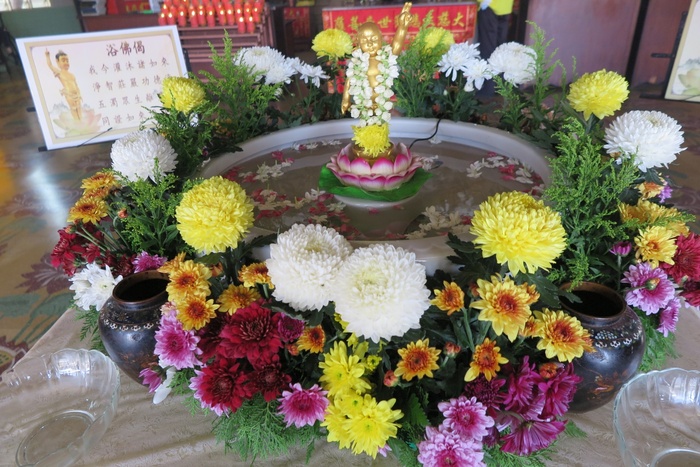
Photo 3: Vesak Day, celebrating the birth of Buddha,
is observed in Malaysia on the first full moon day of May.
5. Enjoying Seasonal Events
What's interesting is that even events originally tied to religion have an atmosphere where people enjoy participating. Large commercial complexes in Malaysia usually have indoor plazas, which undergo massive seasonal decorations. The decorations are elaborate, change rapidly, and draw large crowds.
During the Festival of Lights, also known as “Hindu New Year,” vibrant kolams are drawn. Taking snapshots in front of a favorite kolam isn't limited to those of Indian descent.

Photo 4: Kolam is an art form created using colored rice grains or flour to draw auspicious patterns
and designs.
Young Muslim women wearing headscarves posing for selfies beneath a giant Christmas tree are also a common sight.
Eid al-Fitr, the most significant event for Muslims, is traditionally spent gathering with family. As it coincides with a long holiday period, the practice of “balik kampung” (returning to one's hometown) isn't limited to Muslims, so it's common to hear people say “Have a good trip!” to one another. Even I, a Japanese person, get asked, “When are you going back home?”
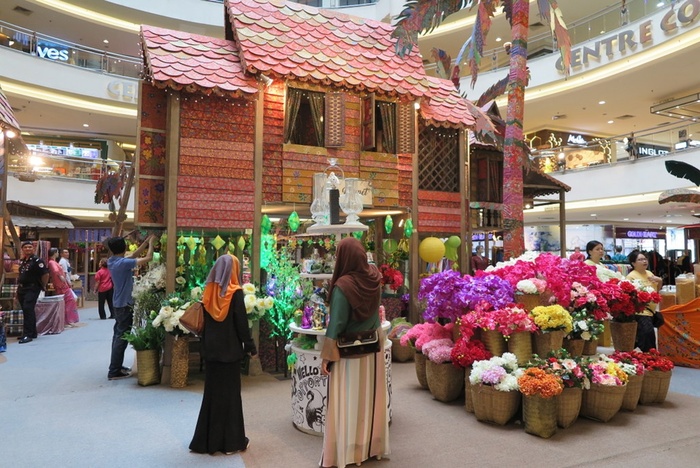
Photo 5: Hari Raya decorations during the major homecoming season evoke the image of “hometown.”
6. Life-cycle events commemorating milestones
Malaysians also place great importance on life's major events. Common ones include weddings, which welcome new family members, and funerals, which bid farewell at life's end. Birthdays are also celebrated grandly once adulthood is reached.
Once, while dining at a Chinese restaurant, the lights suddenly dimmed. Thinking it might be a power outage, I was surprised when staff gathered around our table, shouting “Happy Birthday!” and singing “Happy Birthday to You.” It turned out to be a birthday celebration for a white-haired grandmother dining with her Chinese family. It was heartwarming how they changed “to you” to “Tai Tai” (meaning “Madam” in Chinese).
The Chinese zodiac was originally introduced to Japan from China, and ethnic Chinese also place particular importance on the “kanreki” (60th birthday celebration), marking the completion of one full cycle of the zodiac. It's customary for relatives to gather, offering peach-shaped buns symbolizing longevity and good fortune, along with red envelopes (“hongbao”) containing celebratory money, to wish the celebrant long life and good health.
7. National Commemorative Events
Malaysia gained independence from Britain on August 31, 1957. There is also a commemorative day called “Malaysia Day” on September 16. This marks the day in 1963 when the Federation of Malaya, British Singapore, Sarawak, and Sabah united to form the “Federation of Malaysia.” Two years later, Singapore seceded, leading to the formation of present-day Malaysia.

Photo 6: The word “Merdeka” (Independence) rendered in the colors of the Malaysian flag
From Independence Day through Malaysia Day in August and September, the entire city is filled with Malaysian flags. In the capital Kuala Lumpur, various events take place at locations like Independence Square in the city center, including parades by the military and police, and air shows featuring fighter jets.
Malaysia is centrally located among ASEAN (Association of Southeast Asian Nations) countries and is geographically close to its neighbors. Land travel is possible to Thailand, Singapore, Brunei, and Indonesia, and communication is possible in Malay or English with the three countries excluding Thailand.
Regarding the two major groups of descendants of immigrants who settled here—the Chinese and Indians—it is still not uncommon for them to have relatives in China or India. Within this context of ongoing exchange, a framework of the nation-state is necessary for them to identify as “Malaysians” of Chinese or Indian descent, rather than simply Chinese or Indian. The government's slogan of “One Malaysia (Satu Malaysia)” stems precisely from the need to integrate ethnic groups with diverse roots.
Observing from various perspectives, I believe the abundance of events in Malaysia stems less from a love of festivities and more from the need to affirm relationships among those who belong together—as citizens, as ethnic groups, as religious communities, or as kin.
8. Clothes bought for special occasions
Seasonal events and commemorative days also provide opportunities to wear special occasion attire. In Malaysia, where events are cherished, it's fair to say that various celebrations present significant opportunities for spending.
One thing that catches the eye in town is the red clothing worn by ethnic Chinese during the Chinese New Year period. Clothing sections in supermarkets and department stores all shift to a festive red theme, displaying not only cheongsams but even red underwear and socks. Seeing families wearing matching red T-shirts featuring that year's zodiac animal (for 2026, the “Horse”) is also a quintessential New Year scene.
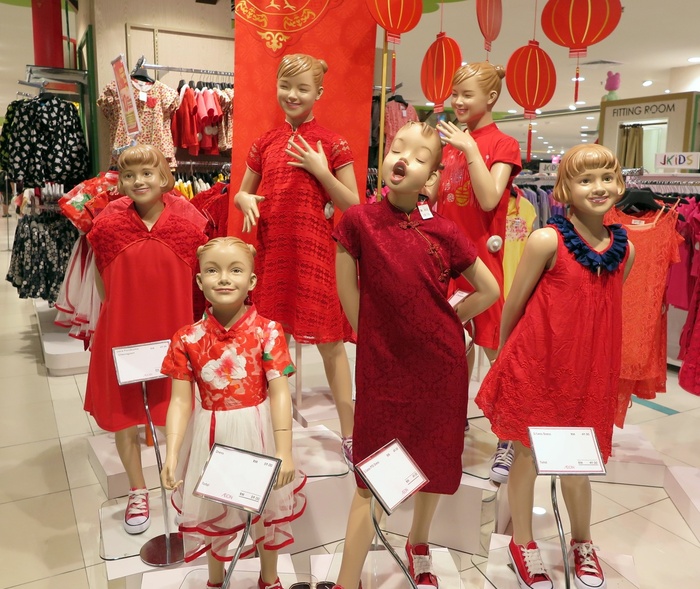
Photo 7: For Chinese people, red is not only an auspicious color but also one
with protective properties against evil spirits.
9. Food That Brings Events to Life
Food is also one element that adds a special touch to seasonal events and commemorations.
Muslims refrain from eating and drinking during daylight hours in the fasting month (the ninth month of the Hijri calendar). Throughout this month, they rise in the middle of the night to begin cooking, eat breakfast before sunrise, and skip lunch. They wait for the broadcast announcing sunset before finally quenching their thirst.
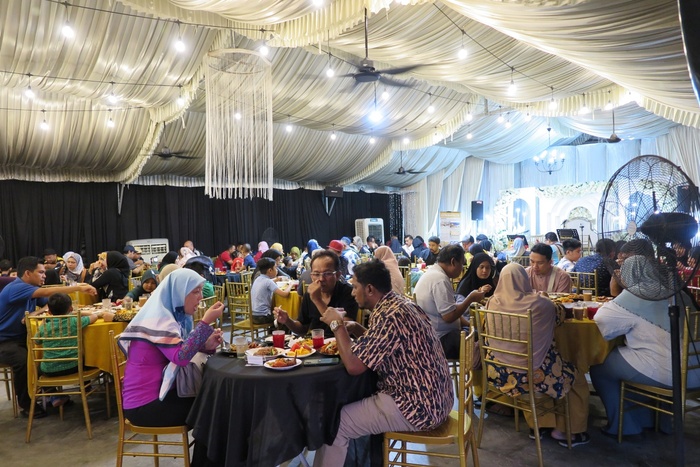
Photo 8: For Muslims during the fasting month, the meal after sunset is a great pleasure.
Perhaps as a reaction to this, the post-sunset meal, “iftar,” is lavish. Sharing a meal with family and friends is considered good, and hotels and restaurants prepare buffet-style dinners.
During the fasting month, feasts are often held for the purpose of performing good deeds. One year, I was treated to iftar by a stranger. As I passed by an event hall, the owner called out, “Since you're here, please come in.” The interior, as spacious as a hotel banquet hall, was bustling with large families. A buffet spread featured delicacies like curry and stewed dishes at the center. Ice cream and juice were popular with the children.
“I'm a traveler, I feel so honored to be treated to such a feast,” I said. “It's fine,” replied the owner. “Sharing is the spirit of Ramadan.” At a nearby table, dozens of small children sat in a line, eating politely. The owner said he invites children from the city's orphanage every year. Sharing a meal during the festival is also one of the special experiences.
10. Recent Changes in Lifestyle
Traditional events and customs are also showing some changes.
Recently, Chinese New Year greeting cards have become less common. Thirty years ago, bright red cards with gold lettering and red envelopes were sold everywhere. “These days, most people just send SMS messages,” the stationery shop owner laments. New Year greetings seem to have shifted to simpler digital methods.
How people spend their holidays is also gradually changing. Traditionally a time for family gatherings, these holidays also coincide with long weekends, leading more Malaysians to travel. Family trips are especially popular during Chinese New Year and Eid al-Fitr, filling domestic hotels to capacity. Many ethnic Chinese also use the Chinese New Year break to visit neighboring Asian countries like Japan, driving up airfare prices during this period.
Much like Japan, Malaysia may be gradually seeing a trend toward valuing personal time within smaller family units.
11. Also interested in other countries' events and customs
In 2024, approximately 500,000 Malaysians visited Japan. Japan, which offers visa-free entry for short stays, is a popular travel destination for Malaysians. Many seem eager to experience things they can't see or do in Malaysia, often asking questions like, “When do the cherry blossoms bloom in Kyoto?” or “When does it snow in Sapporo?”
The customers at local Japanese restaurants are primarily ethnic Chinese. Compared to Muslims with dietary restrictions or Indians who often eat vegetarian, they have fewer constraints and many are eager to try various foods. When they realize I'm Japanese, I'm sometimes bombarded with questions like, “What's the best sushi?” or “How do you eat mochi?”
Malaysians also seem interested in the events and customs of other countries. For example, when discussing food, if I add details like when it's typically eaten or the background behind it, they follow up with more in-depth questions. Since many already have a favorable impression of Japan, I feel a sense of promise that explaining and introducing similarities and differences between Malaysia and Japan could spark even greater interest.
If you're interested in learning about Malaysian fashion, please also check out this article.
Malaysian Women's Fashion: What Makes Muslim-Style Outfits Unique?


-

Author profile
TNC Lifestyle Researcher
Residing in Malaysia for over a decade. Began my career at a publishing company, then developed a connection to Southeast Asia through extended travel. Worked for an international cooperation NGO for approximately ten years. Interested in people's lives and history, I continue to share the present state of Southeast Asia while traveling.
-
Editor profile
Chew Fong-Tat
Malaysian researcher who has lived in Japan for 14 years and has handled many surveys on ASEAN countries.
Other related article:
-
【National Character of Asian Countries】The Surprising Side of the Generous and Tolerant Thai People
-
National Character of Asian Countries: Australia Edition: A National Character Rooted in Mateship and a Coexistence Lifestyle
-
National Character of Countries Around the World Vietnam: A Positive Drive for Advancement Fueled by a Victorious Nation Mindset