 Global Market Surfer
 CLP
CLP Column
Expectations of Southeast Asian Residents Toward Japan and Their E-Commerce Shopping Environment: Consumer Profiles Revealed Through Intent to Visit Japan and Online Purchasing Behavior
- Release date: Mar 06, 2026
- Update date: Mar 06, 2026
- 25 Views
- Usage and altitude
- Singapore
- Thailand
- Indonesia
- E-Commerce
- Japan
- Malaysia
- Philippines
- Asia
- Viet Nam
- ASEAN
In our previous article, we outlined how Southeast Asia (Indonesia, Malaysia, Philippines, Singapore, Thailand, Vietnam) is often discussed as the “next growth market,” yet the local e-commerce landscape already features intense competition. This presents Japanese companies with a critical juncture to rethink their strategies and how they deliver value.
So, within this market environment, what interests consumers? What kinds of interests and purchasing behaviors can we observe?
This article organizes consumer interests and purchasing behavior based on survey results from consumers in 13 countries, examining four key perspectives: “Intentions to Visit Japan Among Southeast Asian Consumers,” “Product Categories They Wish to Purchase in Japan,” “Level of Online Purchase Activity,” and “Importance Placed on Word-of-Mouth and Reviews.”
By presenting consumers' interests and purchasing intentions side-by-side, it reveals aspects of the consumer profile within the Southeast Asian market.
目次
1. Intentions to Visit Japan in Southeast Asia
According to Intage's Global Viewer data on overseas residents (conducted in 2025), Japan ranked first among the “countries/regions residents in Southeast Asia want to visit within the next year” in all six countries surveyed (Singapore, Malaysia, Philippines, Indonesia, Thailand, Vietnam), indicating a high level of interest in Japan.
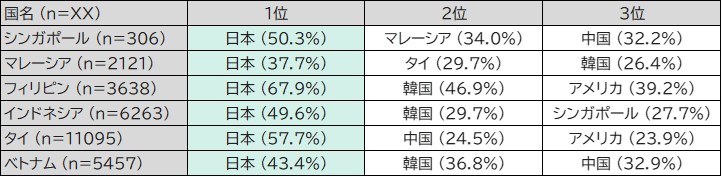
Table 1: Countries/Regions People Want to Visit Within the Next Year
(Base: Men and Women Aged 18–64 in Each Country)
Source: INTAGE Global Viewer (2025)
Accelerate decision-making with smart overseas resident data
Global Viewer
This service provides reports tailored to your issues using questionnaire data on various actual conditions and attitudes of sei-katsu-sha in 11 countries (Asia and US) stocked by INTAGE.
The service covers 400 items, including actual behavioral conditions and awareness, values, and information contact related to various product and service categories.
So, what product categories do Southeast Asian consumers want to purchase in Japan? Are there differences by country?
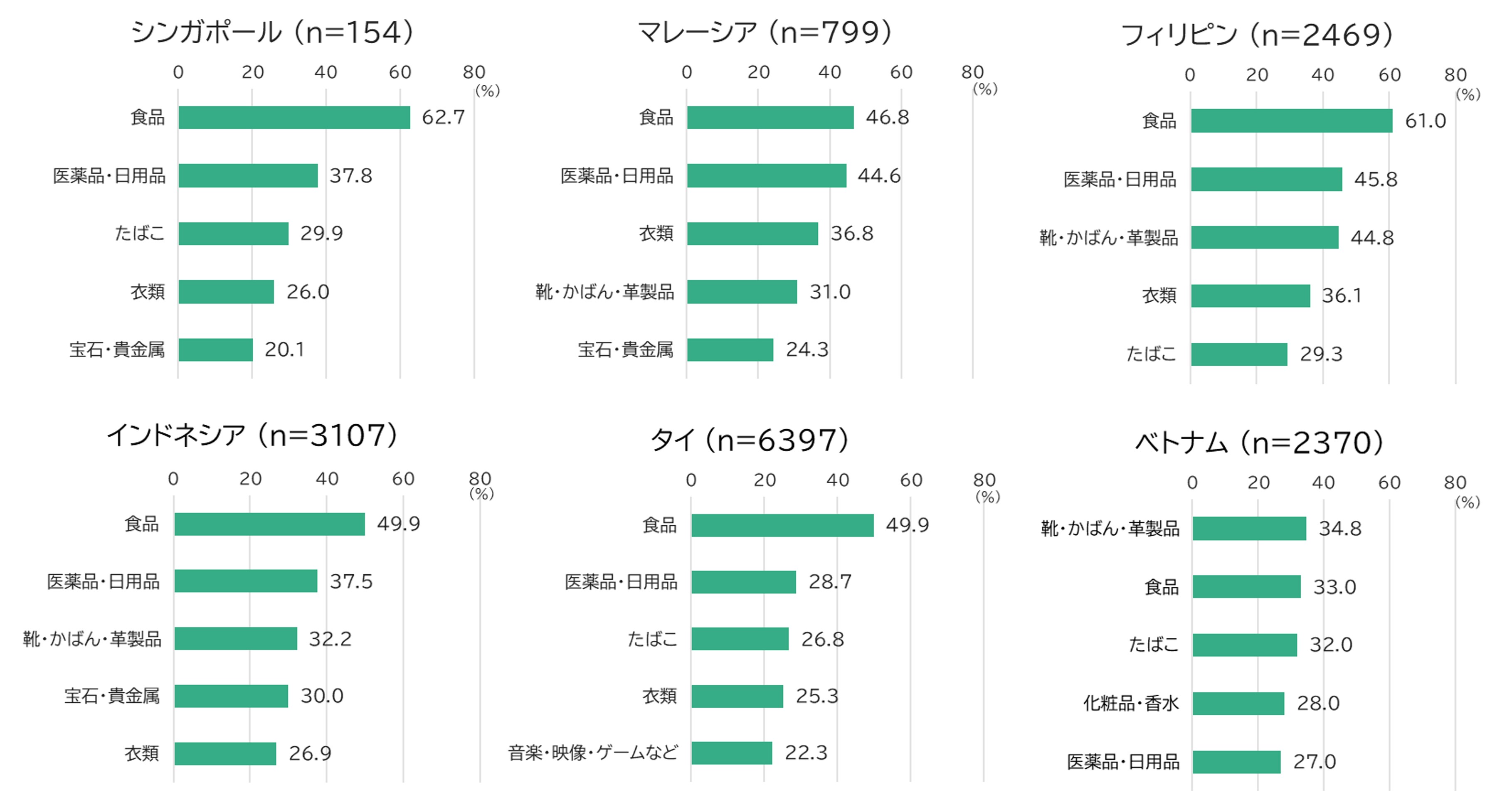
Figure 1: Categories of Products/Services People Want to Purchase During Their Visit to Japan
(Base: Men and Women Aged 18-64 in Each Country Who Intend to Visit Japan Within the Next Year)
Source: INTAGE Global Viewer (2025)
Looking at rankings within each country, “Food” ranks first and “Medicine & Daily Necessities” ranks second in Singapore, Malaysia, the Philippines, Indonesia, and Thailand, showing a common high level of interest in Japanese-made daily necessities.
In contrast, Vietnam features “Shoes, Bags & Leather Goods“ in first place and “food“ in second, highlighting a relatively stronger interest in Japanese-made apparel and accessories.
This ranking structure suggests that expectations extend beyond products perceived as “safe to consume” in Japan to include categories valued for their quality craftsmanship and durability.
Additionally, “Tobacco” ranks third in Singapore, Thailand, and Vietnam, indicating significant interest. The high ranking of tobacco, a luxury item, may reflect perceptions of the consistent quality of Japanese products and the ability to purchase authentic goods during visits to Japan.
Overall, while the specific product categories Southeast Asian consumers expect from Japan vary somewhat by country, a broad range of interests coexists, centered on “trust in quality,” spanning from food and daily necessities to durable goods and luxury items.
2. Online Purchase Utilization and Premises for Purchase Decisions Among Southeast Asian Consumers
(In this article, “EC” refers to the market and industry structure, while “online purchasing” denotes consumer behavior and attitudes.)
What does online purchasing look like in the daily lives of Southeast Asian consumers?
Across six Southeast Asian countries, over 60% of consumers actively use online purchasing in five nations (excluding Thailand), while Thailand also sees a high rate of nearly 50%. In contrast, Japan's rate was 36.4%.
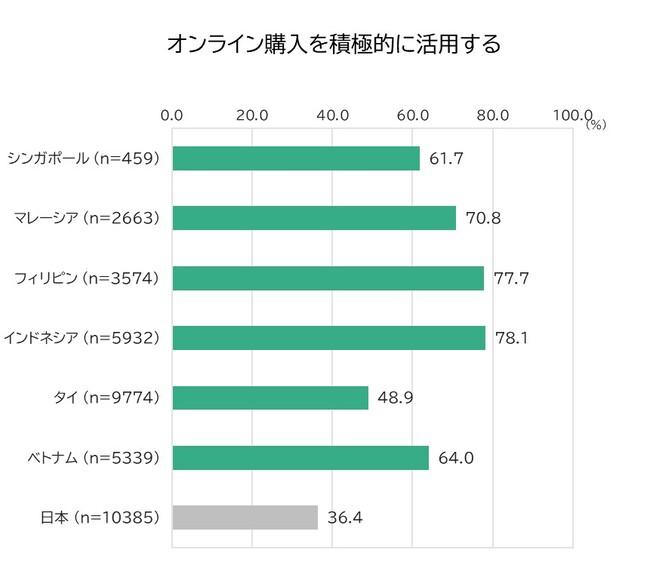
Figure 2: Proportion of TOP2※ Respondents Actively Using Online Purchases
(Base: Men and Women Aged 18–64 in Each Country)
Source: INTAGE Global Viewer (2025)
※TOP2(%) = Proportion of respondents who answered “Strongly Agree” or “Agree”
These results suggest that for Southeast Asian consumers, online purchasing has become established not as a special means but as a routine purchasing channel.
This stems from the rapid proliferation of smartphones and e-commerce in recent years, occurring before modern trade outlets like supermarkets were fully established nationwide. Furthermore, online purchasing has become a rational choice from perspectives such as price comparison, product selection, and convenience.
The difference between Japan and Southeast Asia reflects not so much a disparity in e-commerce maturity, but rather a difference in the positioning of purchasing channels within daily life.
So, within this e-commerce environment, what factors guide consumers' purchasing decisions?
In six Southeast Asian countries, the proportion of consumers who “place great importance” on high ratings from word-of-mouth and reviews when purchasing everyday items was highest in Vietnam (32.6%), followed by the Philippines (28.6%) and Malaysia (22.0%). Significant proportions were also observed in Thailand (17.8%), Indonesia (14.9%), and Singapore (14.2%).
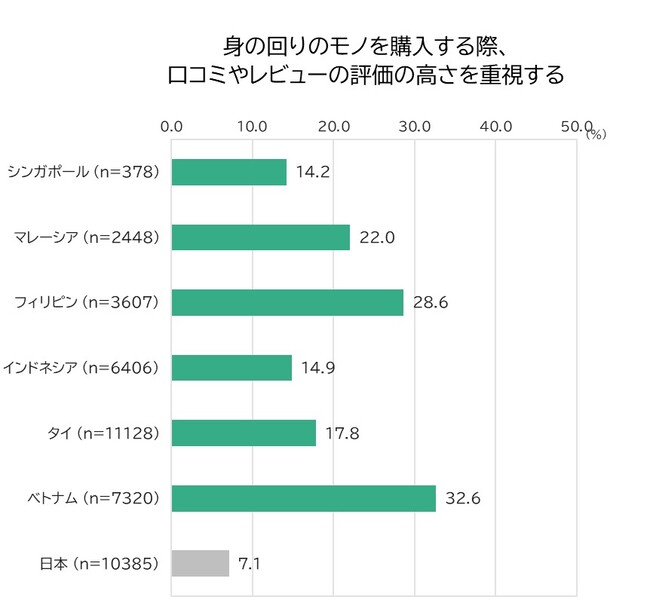
Figure 3: When purchasing everyday items, the proportion of respondents who highly value
word-of-mouth and reviews (TOP1%) (Base: Men and women aged 18-64 in each country)
Source: INTAGE Global Viewer (2025)
※TOP1(%) = Proportion of respondents who answered “Strongly agree”
Compared to Japan, word-of-mouth and reviews play a relatively larger role in purchasing decisions in Southeast Asia, serving as important clues.
These results suggest that a significant number of consumers exist whose purchasing “places” and “decision factors” are primarily structured around online platforms.
3. How Should Japanese Companies Approach the Southeast Asian Market?
The survey results examined thus far confirm that Southeast Asian consumers maintain a certain level of interest in Japanese products, while their purchasing behavior itself occurs within an environment centered on online platforms. Furthermore, third-party evaluations such as word-of-mouth and reviews are positioned as crucial decision-making factors in their purchasing decisions.
These findings suggest that when Japanese companies approach the Southeast Asian market, it is challenging to build strategies solely based on the premise that “the product is Japanese” or that “there is demand from visitors to Japan.”
While consumer interest exists, the channels through which this interest translates into concrete purchasing behavior, and the specific information driving it, are shaped under different underlying conditions depending on the market and country.
Particularly in markets where e-commerce has become an established daily purchasing route, the layout of sales spaces, how information is presented, and the accumulation of reviews and ratings become factors influencing consumers' decisions.
Given these premises, it can be said that in the Southeast Asian market, it is crucial to consider marketing initiatives and sales strategies not just by simply launching products, but by understanding the environment in which consumers compare and evaluate products.
As Southeast Asian e-commerce continues to be discussed as a “growth market,” it is vital for Japanese companies to read the market not only by its size and growth rate, but also by considering the purchasing environment and underlying conditions consumers find themselves in.
We hope this article serves as a useful tool for re-examining the Southeast Asian market from this perspective.

-

Author profile
Mayumi Koyama
For 11 years starting in 2012, I supported domestic marketing activities for Japanese and foreign FMCG manufacturers. Since 2023 in my current role, I have been responsible for sourcing and deploying overseas panel data, particularly e-commerce panel data from China and Southeast Asia, primarily supporting data utilization in the overseas e-commerce domain.
Multilingual learning and cultural observation are daily habits; deciphering the world through language is my life's work. -
Editor profile
Risa Takahama
After working in marketing research support for Japanese FMCG manufacturers (cosmetics, baby products, food and beverages, etc.) in Asia, Europe, and the U.S., from 2019, in his current position, he develops solutions for overseas marketing research for Japanese companies and conducts seminars and other outward communications.
