目次
The “Next Step” in Data Collection
Intage's International Research
Have you ever searched through public information and market reports only to find that the information you're looking for isn't there?
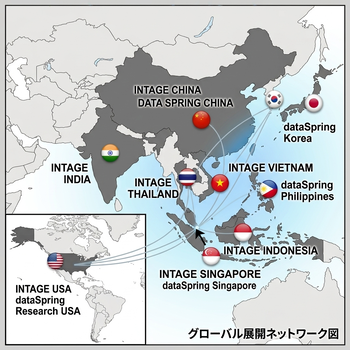
Intage’s international research has a track record of over 500 projects across more than 60 countries.
Intage supports the global business operations of many companies through our research, helping them find the answers they need.
We can accommodate a variety of research methods, including quantitative and qualitative research, as well as online and offline surveys.
If you’re struggling with issues such as “I need more consumer data from this country” or “I can’t find the information I’m looking for,”
please contact Intage’s international research team.
1. Introduction
According to a beauty trend report* by Nykaa, a leading Indian cosmetics retailer, the Indian beauty and personal care (BPC) market reached approximately $21 billion (about 3 trillion yen) in 2023 and is projected to grow to approximately $34 billion (about 5.4 trillion yen) by 2028. Among these segments, skincare is a core category used frequently and daily, particularly by Gen Z, and is driving the market’s growth. This article delves into the skincare, cosmetics, and fashion trends among Gen Z women in India, based on the results of qualitative interviews conducted with attendees of an anime event held in Bangalore in January 2026.
*Source:https://www.nykaa.com/media/wysiwyg/2024/pdf/Nykaa_Beauty_Summit_Report_2024-v5.pdf
2. Skincare is a part of daily life
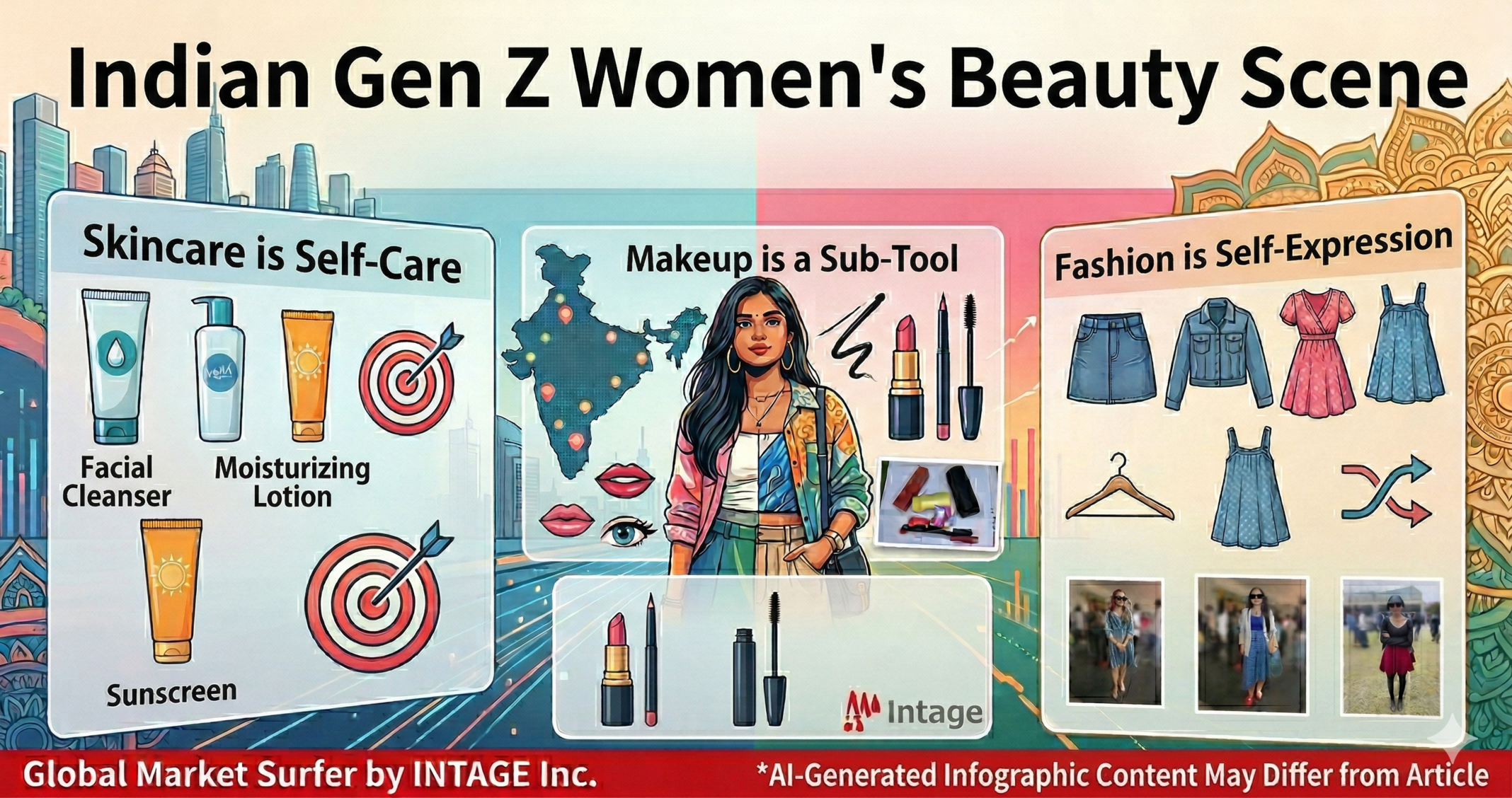
For Gen Z women in India, skincare is no longer a special beauty ritual but is becoming firmly established as a part of self-care integrated into daily life. The primary motivation is not so much “becoming beautiful” as it is practical reasons such as “preventing skin problems” and “maintaining healthy skin.” All participants in the focus group interviews reported practicing skincare daily, suggesting that it has taken root as a consistent habit. The interviews also revealed numerous concrete examples of daily routines that support this trend.
(1) What prompted them to start skincare
For Gen Z women in India, the motivation to start skincare stems more from “pressing concerns” than from a “longing for beauty.” The interviews revealed many cases where women began skincare after facing specific issues, such as worsening acne, discomfort caused by dry skin, or skin irritation due to environmental changes. In particular, the age around 20—around the time of entering college—is emerging as the primary entry point for serious skincare.
(2) Current Skin Concerns
Acne was the most frequently cited current skin concern in the interviews. For Gen Z women, skincare is viewed less as a pursuit of ideal skin and more as ongoing self-management to stabilize their skin condition; their realistic goal is “preventing it from getting worse” rather than “eliminating all problems.”
(3) Frequency: “Daily” is the norm, but without overdoing it
Regarding the frequency of skincare, “almost every day” is the standard. However, this does not mean strictly adhering to a rigid routine; rather, it is characterized by flexible adjustments based on whether they are going out or not. There is a consistent emphasis on consistency over perfection, and the premise of a skincare habit is that it can be maintained without strain.
(4) Timing: Twice a day
Skincare is incorporated into specific times of the day. Since many Indians shower in the morning, the basic timing for skincare is twice a day: “after the morning shower” and “before bed at night.”
(5) Products Used: A basic three-item set consisting of a cleanser, moisturizer, and sunscreen
A cleanser, moisturizer (e.g., cream, gel, etc.), and sunscreen form the basic components of a skincare routine. All participants in the interviews used these items on a daily basis. On the other hand, special care products such as serums and face masks were incorporated based on skin condition and need. This approach, which does not assume a multi-step routine, is closely linked to a desire to avoid putting unnecessary strain on the skin.
(6) Current Trends
Trends such as vitamin C serums and Korean skincare are widely recognized. However, there are not many cases where these trends are adopted as-is; instead, there is a sense of distance where people “know about them but don’t use them.” Compatibility with their own skin takes priority over trends, and it is striking to see this level-headed attitude where trends are viewed as merely one factor among many.
(7) Switching Brands
For Indian Gen Z women, switching brands is not driven by trends or buzz, but rather by careful judgment based on how the product actually feels on their skin. While they may experiment with multiple brands through trial and error when first starting their skincare routine, once they experience skin issues or irritation, they tend to avoid switching brands thereafter and place greater emphasis on maintaining a “state where they can continue using the product without problems.” Reasons for switching brands are almost exclusively limited to cases where they do not feel the product is effective or when they feel anxious about it; social media and influencers serve merely as entry points for information. The final decision is influenced by trusted individuals close to them, such as dermatologists, family, and friends.
(8) Monthly Spending on Skincare
Skincare spending among Indian Gen Z women varies widely, ranging from low to relatively high amounts. Among the interview participants, those who stick to basic daily care keep their spending around 1,000 rupees per month (approximately 1,700 yen), while those with specific concerns such as acne or sensitive skin tend to increase their spending in order to prioritize effectiveness and peace of mind. Skincare is viewed not as a luxury item but as a necessary expense for stabilizing skin condition.
3. Switch up your makeup to suit the occasion
For Gen Z women in India, makeup is not the centerpiece of their daily lives but is viewed as a supplementary tool for touching up their appearance when necessary. Focused makeup centered on lips is the mainstream trend, and a key characteristic is that, much like skincare, they prioritize “something they can maintain without strain” and “something that puts minimal strain on the skin.”
(1) Frequency and Occasions for Makeup
In daily life, such as at university or work, makeup is often kept very light. Specifically, they use only the bare minimum of items—such as sunscreen, eyeliner, and lipstick—and makeup is used as a supplementary tool to “look presentable.” On the other hand, for events or special outings, it is common to switch to a more thorough makeup routine by adding foundation, concealer, mascara, and other products.
(2) Products Used
The item that came up most frequently in the interviews was lipstick. Multiple respondents stated, “I always wear lipstick” or “Lipstick is a must,” and it was indeed an item they always carried in their bags. Additionally, ownership rates for eyeliner and mascara were high, indicating a tendency to prioritize makeup that emphasizes the eyes. On the other hand, regarding foundation, some said they “don’t own any” or “only use it on special occasions,” suggesting a low level of reliance on base makeup.
(3) Attitude Toward Makeup: Polishing Over Exaggeration
A common stance toward makeup was that the purpose was not to “exaggerate” or “show off to others,” but rather to “polish one’s appearance” and “create a state where I feel at ease.” Some respondents felt that wearing a full face of makeup every day was a significant burden and not good for the skin, revealing a conscious effort to balance makeup and skincare.
4. What's in the bag
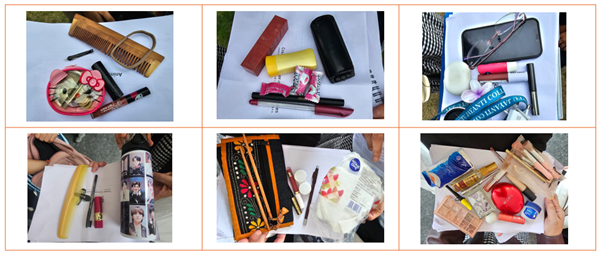
During the interviews, I asked the participants to show me the contents of their bags. It was striking to see that, unlike in Japan, they didn’t use separate makeup pouches; instead, they kept the bare essentials for grooming—such as lipstick, lip balm, and a comb—directly in their bags.
5. Fashion is an important tool for self-expression
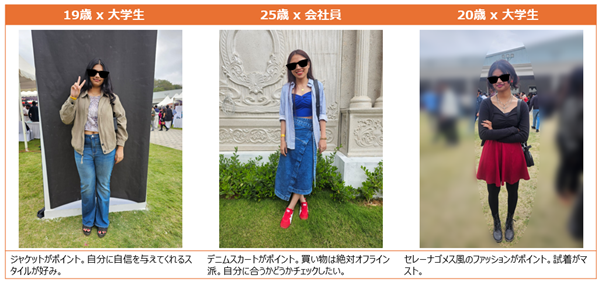
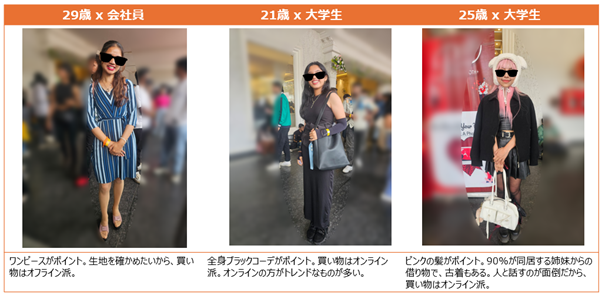
For Gen Z women in India, fashion is built around the criterion of “whether it suits who I am right now,” rather than tradition or brand. At the core of this is everyday wear based on Western clothing, combined with a “mix-and-match” approach where items are combined according to individual taste.
(1) Western Fashion as the Basis of Everyday Life
Many of the participants in this interview series wore Western fashion on a daily basis. Items such as denim, skirts, dresses, jackets, and tops are naturally chosen as everyday wear; Western fashion is not a “special style” but has become a standard choice integrated into daily life. Crucially, this choice is driven not by an affinity for a specific culture, but by practical considerations such as “ease of movement,” “comfort,” and “suitability for daily life.” For Indian Gen Z women, Western fashion is chosen as the clothing that best fits their lifestyle.
(2) Mix & Match: It’s About What Looks Good, Not the Brand
A common trait among the interview participants was that they showed almost no strong attachment to specific fashion brands. While their sources of clothing are diverse—including local brands like Zudio, street markets, online purchases, clothes borrowed from family or sisters, and secondhand items—they mix and match these freely. Rather than the idea of “matching a brand,” their decision-making criteria are based on “whether they like the design,” “whether it suits them,” and “whether it makes them feel confident.” As a result, their outfits have a strong sense of mix-and-match. This reflects their view of fashion not as a fixed form of self-expression, but as a tool for presenting their best selves on any given day. Furthermore, comments such as sharing clothes with sisters or changing their look with accessories suggest a value system that prioritizes utilization over ownership.
(3) Where to Shop: The Coexistence of Online and Offline Shoppers
Regarding where to buy fashion, a notable characteristic was not so much a matter of switching between channels, but rather a clear division between offline and online shoppers. Offline shoppers choose physical stores for reasons such as “I want to try things on to check the fit and fabric” or “I want to see if it actually looks good on me.” On the other hand, online shoppers prioritize “the ease of finding trendy items” and “the convenience of completing the process at home.” What is interesting is that the choice between online and offline is based not on price or brand, but on personality and one’s approach to the shopping experience. While some choose online to avoid interacting with others or to shop efficiently, others visit physical stores seeking the reassurance that comes from experiencing products with their five senses. There is no superiority between the two; rather, the shopping style that suits each individual is respected.
6. Conclusion
What this article has revealed is that Indian Gen Z women are not consumers who react impulsively to trends or brands, but rather highly rational individuals who make choices based on their lifestyle, skin condition, and personal values. Skincare is managed not as a pursuit of beauty, but as a form of self-care designed to maintain stability in daily life, while makeup is used sparingly and selectively as a means to present oneself appropriately for different occasions. It is also striking that, when it comes to fashion and personal belongings, “whether it suits me” serves as a consistent criterion for decision-making, rather than brand or price. This mindset leads to consumption behavior that does not view spending as an end in itself, but rather selects only what is necessary to optimize quality of life. For Indian Gen Z women, beauty and personal style are not about consuming to project an idealized image, but rather practical choices designed to bring stability and confidence to their daily lives.
・Regarding Generations
・India's Generation Z
・What are the values held by Generation Z?
Please be sure to check it out as well.