In recent years, we have increasingly come across news reports about the expansion of Japanese aesthetic medicine into Southeast Asia. What lies behind this growing trend in Southeast Asia toward addressing beauty concerns through aesthetic medicine—a step beyond cosmetics?
In this article, given the high number of people in Vietnam who have undergone chemical peels, we will examine the underlying skin care landscape in Vietnam based on insights from local staff and data from “Global Viewer,” Intage’s database of overseas residents.
目次
1. The Penetration of Aesthetic Medicine in Asian Countries
When asked about their experience with cosmetic procedures, the most common response across all countries was “no experience with cosmetic procedures.” While approximately 20% of respondents in each country reported having undergone certain types of cosmetic procedures, the survey revealed that over 30% of Vietnamese women have had a chemical peel.

Figure 1: Cosmetic medical procedures received in the past (multiple selections allowed)
(Base: Women aged 18–64 in each country)
Source: Intage Global Viewer (2025)
Accelerate decision-making with smart overseas resident data
Global Viewer
This service provides reports tailored to your issues using questionnaire data on various actual conditions and attitudes of sei-katsu-sha in 11 countries (Asia and US) stocked by INTAGE.
The service covers 400 items, including actual behavioral conditions and awareness, values, and information contact related to various product and service categories.
2. The Penetration of Aesthetic Medicine in Vietnam (by Age Group)
Now, let’s take a look at the cosmetic procedures Vietnamese women have undergone, broken down by age group.
As expected, about 30% of women in their 20s, 30s, and 50s have had these procedures. The results show that over 40% of women in their 40s have had chemical peels. Even among teenagers, nearly 20% have had chemical peels.
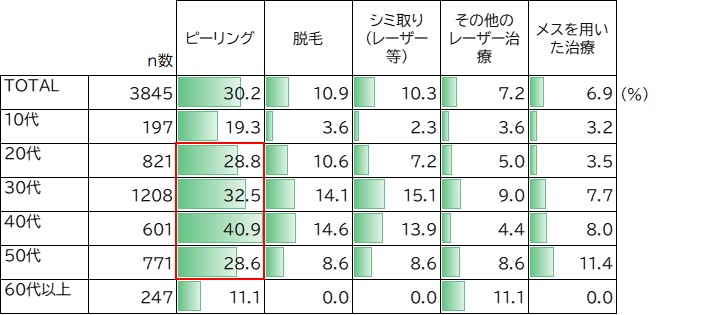
Figure 2: Aesthetic medical treatments received in the past (multiple selections allowed)
(Base: Women aged 18–64 in Vietnam)
*Displays only the top 5 items by total
Source: Intage Global Viewer (2025)
3. Why is “peeling” so popular in Vietnam?
Why is chemical peeling so popular among Vietnamese women? We asked staff at Intage Vietnam’s local subsidiary for their insights.
“When it comes to aesthetic medicine and chemical peels, there certainly seems to be more interest in Vietnam than in Japan. Many people struggle with acne, and a large number visit dermatologists for it. Unlike in Cambodia and Indonesia, more than 80% of the Vietnamese population are said to be of the Kinh ethnic group, which is believed to have originated in southern China. The skin of the Kinh people is similar to that of a slightly tanned Japanese person, so it may not be naturally resistant to sunlight or heat. While they take great care to prevent sunburn and dark spots in their daily lives, the intense sunlight in Vietnam makes it difficult to fully protect against it. Peels are also affordable, starting at around 3,000 yen per session, making them easy to try.”
Acne tends to be one of the top skin concerns in other Asian countries as well, but the following reasons can be inferred as to why chemical peels are particularly popular in Vietnam.
① Ethnically, their skin is delicate and prone to acne.
② Environmentally, the sunlight is intense, and they are unable to fully prevent sunburn and dark spots.
③ The cost of the treatment is affordable.
4. How do Vietnamese women obtain information about beauty?
Finally, let’s take a look at how Vietnamese women obtain information about cosmetic procedures. Below are the top 10 sources of information people rely on most when it comes to beauty.
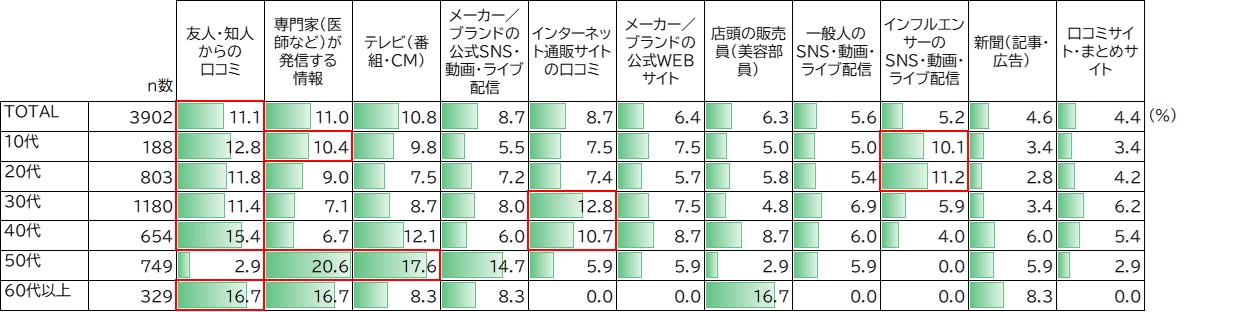
Figure 3: Most Referenced Information Regarding Beauty (Single Choice)
(Base: Women Aged 18–64 in Vietnam)
*Shows only the top 10 items in the TOTAL category
Source: Intage Global Viewer (2025)
Overall, “word of mouth from friends and acquaintances” ranks first, with more than 10% of people in every age group—except those in their 50s—citing it as their primary source of beauty information. Among those in their 50s, “information provided by experts” and “television” are strong alternatives to “word of mouth,” each accounting for about 20%. “Information provided by experts” is also cited by just over 10% of teenagers; as the age group most troubled by acne, they may be seeking to incorporate professional knowledge.
Additionally, “influencer social media, videos, and live streams” account for just over 10% among teens and those in their 20s, while “reviews on online shopping sites” account for just over 10% among those in their 30s and 40s. This suggests that people in their teens through 40s are effectively utilizing both online information and real-world word-of-mouth.
5. Summary
Peels, which remove dead skin cells and unclog pores, are a highly effective method for both treating and preventing acne.
They also help reduce sun damage and dark spots by promoting the exfoliation and removal of melanin. Furthermore, the low cost of these treatments has likely contributed to their popularity.
Can you picture Vietnamese women chatting among themselves, saying, “That peel down there was amazing!”?