目次
1. Introduction
Have you ever heard of the term “smart home”?
A smart home is a comfortable and convenient living space where home systems and appliances are connected to the internet, allowing them to be controlled via a smartphone or voice commands. For example, you can use voice commands to control rooms and appliances, or use your smartphone to turn on the air conditioner before you even arrive home.
Currently, demand for smart homes is rising year by year all over the world.
The number of smart home users worldwide was approximately 8 million in 2018, but it is projected to exceed 1.9 billion by 2029.
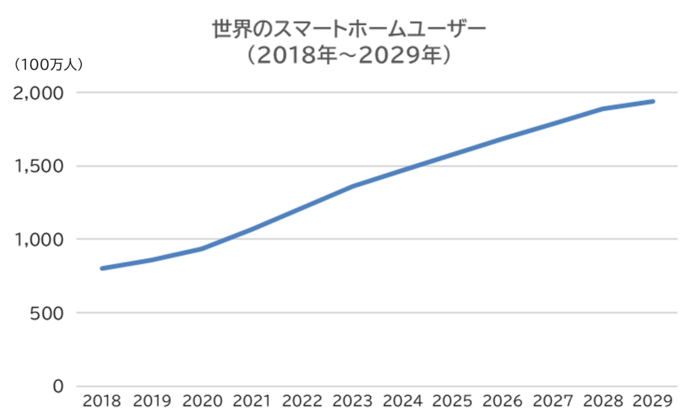
Figure 1: Global Smart Home Users (2018–2029)
Source:<Number of users of smart homes worldwide from 2018 to 2029
(in millions) (Cited from Statista)
In this article, we will discuss the growing global trend of smart homes from the following three perspectives:
① Types of smart homes
② Differences in attitudes toward smart homes across countries
③ Smart home adoption rates (India and Vietnam)
2. Types of Smart Homes
Smart homes are primarily divided into six categories.
<Types of Smart Homes>
① Smart speakers with built-in virtual assistants: A system that connects home devices via a network, enabling management and control
(e.g., Amazon Echo)
② Security: Devices that connect to the internet to monitor buildings and premises
(e.g., connected smoke detectors, connected cameras)
③Home Entertainment: Devices for delivering audio from a source to listeners, as well as connected remotes and streaming devices
(e.g., Bluetooth speakers, smart TVs, streaming devices)
④Energy Management: Products designed to reduce and control energy consumption
(e.g., connected thermostats, temperature sensors)
⑤Smart Home Appliances: Home appliances connected to the internet
(e.g., robot vacuum cleaners, smart microwaves)
⑥Electrical & Lighting: Devices that allow centralized monitoring, remote operation, and voice control via smartphone apps
(e.g., smart plugs, connected light bulbs, etc.)
Source: <Smart Home - Worldwide> (Cited from Statista)
In this article, we will examine the six categories mentioned above from the perspective of smart homes.
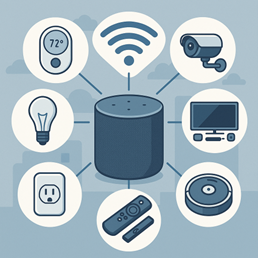
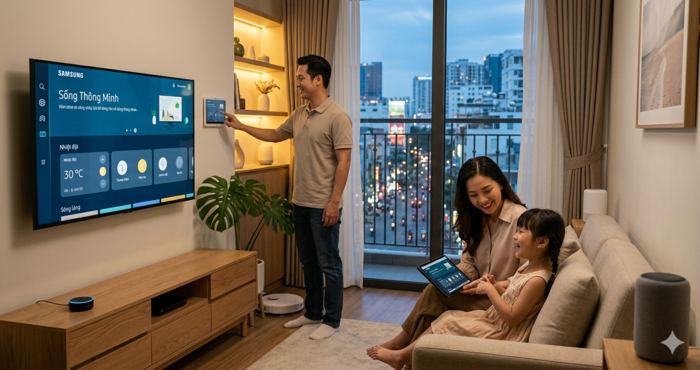
Conceptual image: Created using generative AI
3. Differences in Attitudes Toward Smart Homes Across Countries
First, let’s examine attitudes toward smart home adoption by major Asian countries. In India and Vietnam, about 40% of respondents said they “would actively adopt smart home technology even if it meant spending money,” indicating a strong enthusiasm for smart home adoption compared to other countries, where that figure ranges from 10% to 20%. Meanwhile, in Taiwan, the Philippines, China, and Thailand, approximately 60% of respondents said they “would adopt smart home technology as long as there is no financial burden.” While not as strong as in India or Vietnam, there is still a certain level of interest in adopting smart home technology.
In contrast, in Japan, 35% of respondents—the highest percentage among the countries surveyed—stated that they “do not need smart home devices at all,” followed by 30% who said they “do not intend to adopt them even if it involves additional costs.” Approximately 60% of Japanese people are reluctant to adopt smart home technology. It is possible that Japanese people are satisfied with the functions of their existing home appliances and therefore do not feel the need for smart home devices.
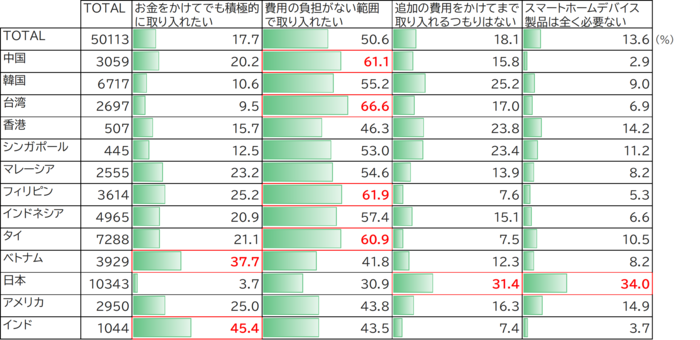
Figure 2: Intent to Adopt Smart Homes (SA)
(Red text indicates a score 10 points or more higher than the total)
Source: Intage Global Viewer (2025)
Accelerate decision-making with smart overseas resident data
Global Viewer
This service provides reports tailored to your issues using questionnaire data on various actual conditions and attitudes of sei-katsu-sha in 11 countries (Asia and US) stocked by INTAGE.
The service covers 400 items, including actual behavioral conditions and awareness, values, and information contact related to various product and service categories.
Next, we will examine attitudes toward smart homes by focusing on India and Vietnam, where there is a high level of interest in adopting smart home technology.
In India and Vietnam, a higher proportion of people compared to the global average believe that “smart home appliances and devices help save money.” They also believe that “making homes environmentally friendly is important” and hold a favorable view of smart homes. India and Vietnam rank low on the Global Environmental Performance Index. It may be precisely because these countries face ongoing challenges regarding environmental awareness that they are eager to adopt smart homes.
In India, in addition to the points mentioned above, there is also a perception that “home safety is particularly important” and that “it’s good to be able to connect household products to the internet.”In India, where public safety is a concern*1, smart home devices appear to be utilized as a security measure. Even when away from home, it is possible to check for intruders using sensors and cameras. Furthermore, in the unlikely event of a break-in, a notification is sent to a smartphone, allowing users to immediately detect any unusual activity. On the other hand, a certain number of people express concerns such as, “I’m worried about being monitored through these devices” and “It costs too much to turn my home into a smart home.” They also seem to be concerned about the risk of personal information leaking through smart cameras and speakers.
*1 https://www.economicsandpeace.org/global-peace-index/

Figure 3: Attitudes toward smart homes (MA)
(Red text indicates scores 10 points or more higher than the total)
Source: Intage Global Viewer (2025)
4. Smart Home Ownership Trends (India and Vietnam)
Looking at the adoption rates of smart home technology in India and Vietnam—two countries with high interest in smart homes—we find that approximately 90% of households in both countries have adopted smart home devices. Regardless of their level of interest in adopting smart home technology, the types of devices owned follow the same trend as seen globally: “home entertainment” devices are the most common, suggesting that consumers are prioritizing entertainment-related convenience over everyday convenience. Furthermore, the high ownership rates of ‘security’ and “electricity/lighting” devices indicate that these technologies are being used to address inconveniences in daily life.
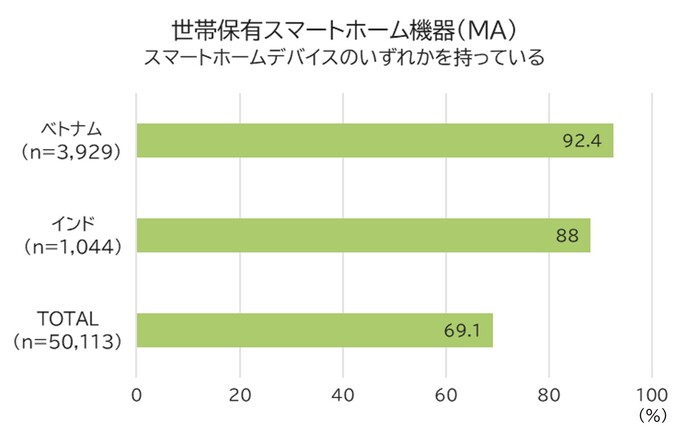
Figure 4: Household Ownership Rates of Smart Home Devices
Source: Intage Global Viewer (2025)

Figure 5: Smart Home Devices Owned by Households
(Red text = 10 percentage points or more higher than the total)
Source: Intage Global Viewer (2025)
Now, let’s take a look at some examples of smart homes using “Consumer Life Panorama” (commonly known as CLP), the visual database of overseas consumers maintained by Intage.
In India, we found households that have adopted smart lighting. Using this control panel, it appears you can also open and close curtains and adjust the air conditioner settings. There were control panels next to the room door and next to the bed. This seems convenient for turning off the lights when going to sleep.

Source: Consumer Life Panorama (IN_220)
We also use smart locks and smart speakers.
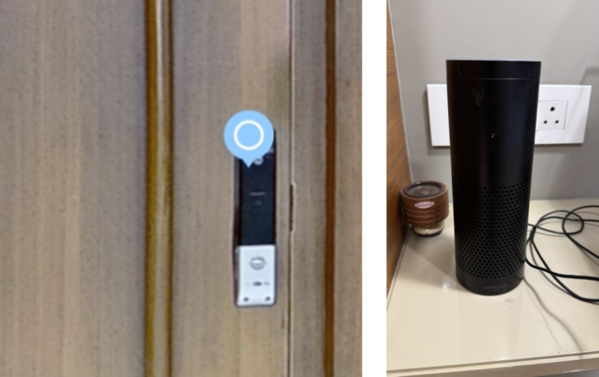
Source: Consumer Life Panorama (Left: IN_220, Right: IN_217)
What is Consumer Life Panorama?
This is a website-type database that has accumulated visual data on more than 1,000 sei-katsu-sha from 18 countries around the world. The database includes many 3D models of living environments and 2D data of items owned by each sei-katsu-sha, and is useful for understanding overseas sei-katsu-sha, which is difficult to grasp using only letters and numbers.
Using visual data such as those cited in this column,
Compare the differences in the attributes of overseas consumers
To get a realistic understanding of the actual usage of each category
To understand the overall lifestyle of target consumers
etc., can be utilized as a “no-go” home visit survey.
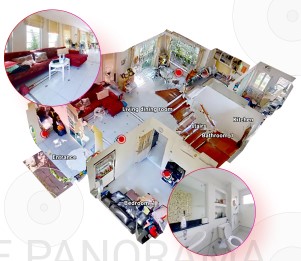
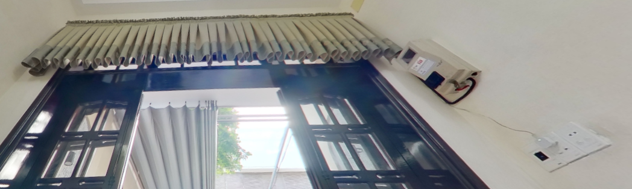
Next, let’s look at the example from Vietnam. In one Vietnamese home, a smart hub was plugged into a power strip located right inside the entrance.
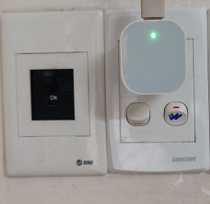
Also, the smart hub and the device next to the curtains are connected by a cable, so it appears the curtains are operated electrically.
Source: Consumer Life Panorama (VN_115)
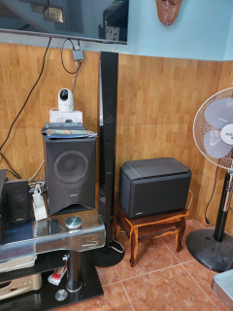
There were also homes that had smart cameras installed in their living rooms.
Source: Consumer Life Panorama (VN_144)
5. Summary
We have discussed the adoption of smart homes in India and Vietnam, where interest in this technology is high.
As technology continues to advance, the adoption of smart homes is expected to grow even further. We hope this article helps you better understand the current state of smart home adoption in Asia.