目次
- 1. Introduction
- 2. A society where speed is a given. The evolution of urban services driven by the pursuit of the shortest possible time
- 3. The Chinese National Character and Electric Motorcycles: A Focus on Reaching the Destination as Quickly as Possible
- 4. Chinese Home Appliances Evolving to Eliminate Hassle and Decision-Making
- 5. Summary
1. Introduction
“Why are you in such a hurry?” About ten years ago, when I had just arrived in Shanghai, I was surprised by how fast the taxi driver was driving and blurted out that question. The reply I got was simply, “Because I want to get there quickly.”
It was an incredibly simple answer, but I felt that this single phrase encapsulated a facet of the Chinese national character. And today, this tendency to “move quickly” has become even stronger than it was back then.
China is composed of 56 ethnic groups, with significant regional differences, making it difficult to generalize about the national character. Nevertheless, there are common characteristics observed in urban areas.
That is the value of “minimizing the time to results,” which this article explores.
The “minimizing the time to results” referred to here is not merely about efficiency. It is a mindset that prioritizes “how to shorten the time it takes to reach the result itself” above all else.
2. A society where speed is a given. The evolution of urban services driven by the pursuit of the shortest possible time
So why is speed so crucial?
In China’s urban areas, “how quickly one can achieve results” is prioritized in every aspect of daily life. Underlying this is an environment of excessive competition known as “neijuan.”
In a situation where hard work rarely leads to a noticeable difference, there is a widespread sense of urgency that if one doesn’t achieve results as quickly as possible, they will be left behind. It is not uncommon to hear local friends say things like, “I don’t want to lose” or “I don’t want to be weeded out.” This mindset serves as a strong motivation to “act as quickly as possible.”
Furthermore, since a significant amount of time is spent commuting and waiting in urban areas, the value of time itself has increased.
As a result, “moving quickly” has become meaningful in and of itself, and speed functions not merely as a convenience but as a “prerequisite for survival.”
This value is clearly reflected in everyday services.
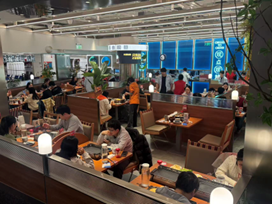
For example, at the fish hot pot restaurant “Yuku,” they’ve introduced a service where the meal is free if it isn’t served before the hourglass runs out. Here, the “time to service” itself is guaranteed, making speed a tangible value.
In urban areas of China, speed is a top priority even for delivery services. For example, it has become common practice to offer compensation based on the length of a delay if a delivery is late.
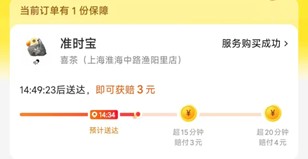
The compensation amount increases with the length of the delay
“One-on-One Priority Delivery,” which offers priority delivery for an additional fee, is also common. In China, “faster than expected” is no longer considered an added value. It is now expected of service providers as a minimum requirement for survival.
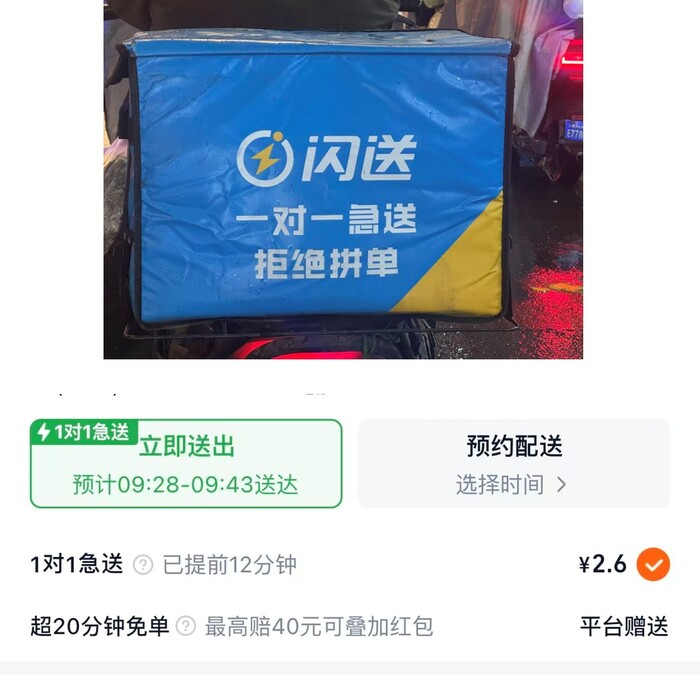
By selecting the priority one-on-one delivery option, your order will arrive 12 minutes earlier
This value system permeates not just the delivery industry, but urban life as a whole. What people prioritize is not merely efficiency, but “how quickly they can achieve results.”
And to understand this “society of minimized time to results,” it is essential to recognize the culture that values connections.
In China, when choosing products or services, decision-making is overwhelmingly faster when done through existing networks—such as relatives, friends, or acquaintances—rather than building a relationship from scratch with a stranger.
This is because an introduction from a trusted source allows people to skip much of the comparison and evaluation process.
At first glance, this reliance on connections might seem inefficient. However, in reality, it functions as a rational means of shortening the “time required to build trust.”
In other words, connections are utilized not so much as human relationships themselves, but rather as “mechanisms for reaching a decision in the shortest possible time.”
Thus, in urban life, “how quickly one can achieve results” is valued even more than “efficiency,” and this value permeates every aspect of mobility and consumption.
3. The Chinese National Character and Electric Motorcycles: A Focus on Reaching the Destination as Quickly as Possible
In urban areas, there is a strong emphasis on “reaching one’s destination as quickly as possible.” This focus on “minimizing the time to reach a result” influences not only daily activities but also the speed of decision-making, and electric motorcycles are a symbol of this trend.
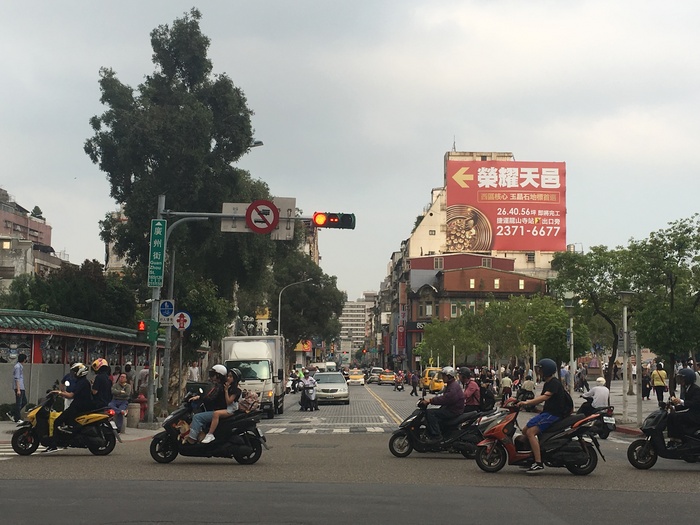
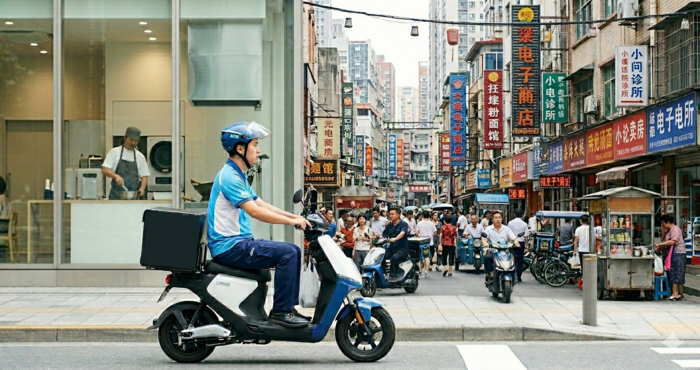
Electric motorcycles are not merely a means of transportation; they function as “infrastructure for reaching destinations in the shortest time possible” by enabling door-to-door travel. They are used for a wide range of purposes, including commuting, dropping off and picking up children, and deliveries. Since the law permits one child aged 12 or younger to ride as a passenger, they are also routinely used by parents as a means of transportation for their children.
Furthermore, for trips within a 3–10 km radius, they are faster than public transportation, and the existence of dedicated lanes allows them to avoid traffic congestion, which is a significant advantage. Furthermore, in urban areas where parking space is limited, the ability to park relatively freely adds to their convenience.
In this environment, time wasted on “waiting,” “transferring,” and “searching for parking” is significantly reduced. As a result, it has become rational to “immediately choose the fastest option” when traveling. A decision-making style that prioritizes speed over careful consideration and “eliminates the time spent deliberating” has become established.
This value system is also strongly reflected in the delivery sector. An environment has been created where delivery workers in their 20s to 50s regularly use electric scooters and are required to “achieve maximum results in a limited time.” The 2024 film *Life in Reverse* depicted this reality and garnered attention as a subject symbolizing a “time-competitive society.”
Furthermore, in China, cost-effectiveness is an important criterion for decision-making, not just speed. Compared to buses (2 yuan, approx. 46 yen) and subways (approx. 3–5 yuan, approx. 70–116 yen), electric scooters can travel about 100 km on a single charge (approx. 3–5 yuan, approx. 70–116 yen), and parking costs are kept low at around 120 yuan (approx. 2,790 yen) per year. Since maintenance costs are virtually nonexistent, they have become a rational choice as a mode of transportation that simultaneously fulfills the conditions of “fast, cheap, and free.”
In this way, daily activities in urban life are being reorganized into a “structure completed via the shortest route.” This is not merely an improvement in convenience, but a concrete manifestation of the value of “simultaneously reducing both the time and cost required to reach a result.”
In other words, the proliferation of electric scooters is a tangible manifestation of a national character that seeks to “minimize the time to results,” and they can be seen as a symbolic presence supporting the acceleration of daily activities and decision-making.
4. Chinese Home Appliances Evolving to Eliminate Hassle and Decision-Making
Chinese home appliances are taking “convenience” and “comfort” a step further, evolving to reduce the amount of work and decision-making required of users—and even the waiting time itself. The current focus is on how much the time it takes to achieve a result can be shortened.
What stands out most is automation that allows users to completely relinquish the task itself.
A prime example is automatic cooking appliances. Products that prepare meals simply by adding ingredients have become widely popular, significantly simplifying the act of “cooking” itself.
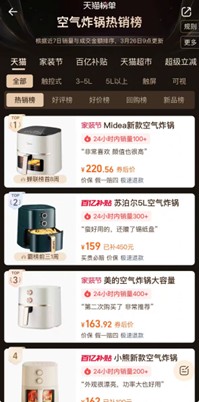
In particular, “air fryers” have been gaining popularity in China in recent years against the backdrop of the spread of Western cuisine. Supported by health-conscious trends and the convenience of making fried foods without oil, sales have been growing, as evidenced by 2025 data.
The product range is extensive, spanning from compact single-serving models to large-capacity units, and adoption is accelerating. It is so common that nearly every household among my friends owns one, indicating just how deeply it has penetrated the market. Representative best-selling models include Midea’s “KZC5089” and Supor’s “KJD53D821C.”
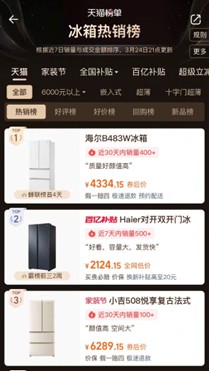
Furthermore, Haier’s smart refrigerators (BCD series) sync with a dedicated app to manage ingredients and suggest meal plans, thereby reducing the time spent deciding what to cook.
The company holds the top market share among Chinese households, and its premium brand, Casarte, has introduced models equipped with “AI Eye”—a feature that automatically recognizes the contents and environment inside the refrigerator—as well as models that support voice control.
What stands out in this context is a design philosophy based on the premise of “no waiting.”
Chinese home appliances clearly emphasize “how quickly results can be achieved.” For example, Xiaomi’s “Xiaomi Mi Water Purifier 1200G” prominently features claims such as “an ultra-high flow rate that fills a glass of water in about 2 seconds.”
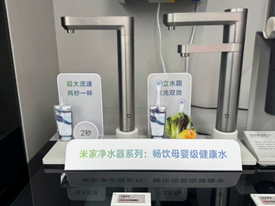
Xiaomi Water Purifier Display
Here, more than the sheer number of features, it is the “time it takes to achieve the result” that is presented as the product’s value.
When compared to competitors’ products, the fact that “we don’t lose a single second in speed” serves as a direct competitive advantage.
Furthermore, the company’s electric kettles and rapid-heating pots achieve quick heating and long-lasting heat retention, thereby minimizing the act of “waiting” as much as possible.
In this way, Chinese home appliances are evolving not merely to make tasks easier, but to break down the series of processes—such as “thinking, waiting, and deciding”—and shorten or eliminate each step.
In other words, home appliances are transforming from tools that make life convenient into devices designed to achieve “the shortest path to results.”
This trend is also evident in smartphones.
Huawei and Vivo are increasing the power output of fast charging, and there is a growing number of models that can charge to a usable level within a few tens of minutes.
Here, the very premise of “waiting time for charging” is fading, and the “gaps of waiting time” that occurred in daily life are being eliminated.
Furthermore, smart features that “anticipate” time are also advancing.
Gree Electric’s “KFR-35GW” air conditioner and Midea’s smart air conditioners link with smartphones, allowing users to adjust room temperature remotely before returning home or prevent forgetting to turn them off.
This eliminates the need for actions like “operating the unit after arriving home” or “responding only after noticing a problem,” thereby optimizing the flow of daily life itself by bringing tasks forward.
I often hear from friends living in Shanghai that “features like these are a major deciding factor when making a purchase.”
In addition, miniaturization and multifunctionality are advancing simultaneously.
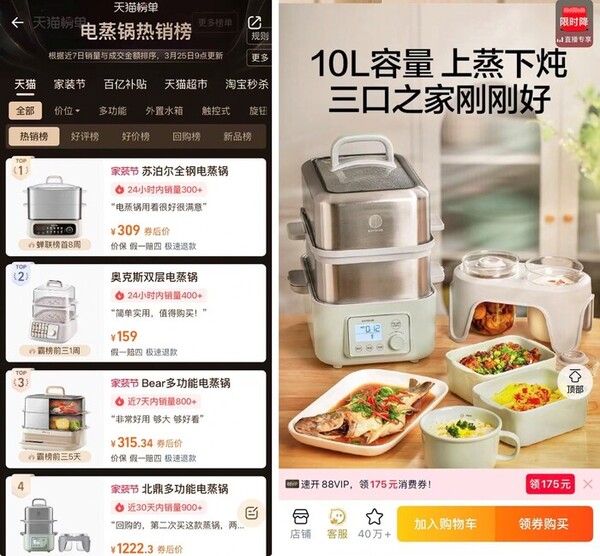
Against the backdrop of an increase in single-person households and nuclear families, home appliances that fulfill multiple roles with a single unit are gaining popularity. Buydeem’s “G56A” electric pot ranks high on bestseller lists despite being in a relatively high price range, demonstrating that the value of “a single unit that does it all” is being embraced.
In recent years, compact smart home appliances made overseas have also become widely popular. Vorwerk’s “TM6” is known for being able to handle more than 12 different cooking processes all in one machine, and many dual-income households say it has become “something they can’t live without.”
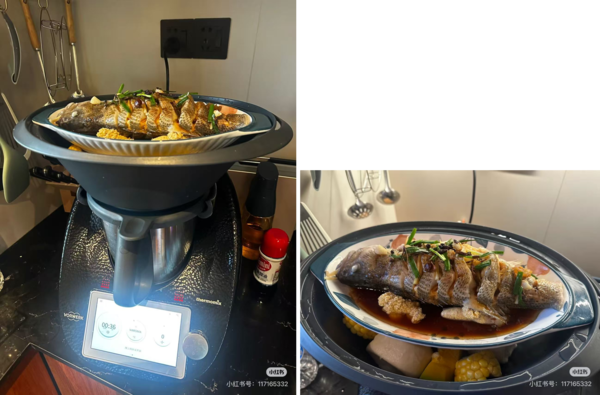
Vorwerk's “TM6” (publication permission granted)http://xhslink.com/o/2UwnxuHlrOG
What these examples have in common is their relentless focus on minimizing three key elements: “effort (labor),” “decision-making (mental effort),” and “waiting time (time cost).”
As a result, the criteria for consumer behavior have shifted from “what is good” to “how quickly one can achieve a result.” Products and services are now evaluated not only on their features and quality but also on “how much time they can save.”
What is interesting is that, despite these well-established “time-saving mechanisms,” the final deciding factor in a purchase is, surprisingly, relationships with other people.
In China, when choosing home appliances, people often first gather information on social media and then seek opinions from close friends or partners. They make their final decision based on the feedback of “close acquaintances who are actually using the product.”
At first glance, it might seem that making a decision on one’s own, without relying on others, would be the fastest way to reach a conclusion. However, in reality, “consulting the opinions of trusted individuals” is actually the quickest and most reliable way to reach a conclusion.
In other words, connections here function not merely as human relationships, but as “mechanisms that shorten the time required to build trust.”
In this way, within Chinese society, “mechanisms for saving time” and “human relationships” coexist without contradiction.
In fact, the more technology streamlines processes to the extreme, the stronger the tendency becomes to entrust the final decision to “someone trustworthy.” It is precisely this structure that best symbolizes the Chinese national character, which is oriented toward “minimizing the time to results.”
5. Summary
Behind urban life in China lies a national character that cannot be fully captured by efficiency alone. What we see there is a strong inclination to “reach results as quickly as possible.”
As electric scooters shorten travel times and smart home appliances reduce effort and waiting time, this inclination is growing even stronger. In China today, value is placed not merely on “efficiency,” but on “reaching results in the shortest possible time.”
Moreover, it is not just technology that supports this focus on speed. A culture that values connections also plays a major role. Depending on “who told you about it” or “who recommended it,” the time spent comparing and considering options is saved, and decision-making is accelerated. Such trust often goes beyond mere encouragement to become the deciding factor in a purchase.
In short, in China, a national character that prioritizes “minimizing the time to results” is intertwined with technology, infrastructure, and personal relationships, shaping the pace of society as a whole.
So, what is important when approaching this market?
The key question is: “How quickly can you build trust?” The time it takes to reach a purchase decision varies significantly depending on “who is speaking” and “through which relationship the message is delivered.”
In the Chinese market, “avoiding confusion” holds more value than simply “being chosen.” To meet the desire to reach results as quickly as possible, the key lies not in increasing the volume of information, but in how effectively you can shorten the distance to trust.