目次
1. Introduction
Characteristics of Filipinos such as their “cheerfulness,” “friendliness,” and “warmth” are often described as part of their “national character.” People are very cheerful and humorous, and “having fun” is naturally woven into daily life for everyone from children to the elderly.
However, looking back on their history—which includes Spanish rule, American rule, the Japanese occupation, and subsequent political instability—it is by no means all sunshine and roses. The Philippines has a history of constantly having to adapt to changes imposed from outside. Faced with massive, external upheavals, there were surely many situations where individuals felt powerless to resist and had no choice but to accept them.
Perhaps the accumulation of these experiences has made accepting external changes the norm, naturally fostering a “flexibility” that allows people to adapt their lives to reality.
The Tagalog phrase “Bahala na” symbolizes this flexibility. It is used when things don’t go as planned or when difficulties arise, conveying the sense of “it will be what it will be” or “it’ll work out somehow.” It is also used to let go of a situation that isn’t going well, accepting that “this is just how things are right now.”
2. A Way of Life Built on Mutual Support
In the Philippines, a country prone to disasters and facing growing economic and social inequality, sudden heavy rains, flooding, increased traffic, and severe congestion are factors that undermine the foundations of people’s daily lives.
As a member of the general public, the author uses a car for daily tasks like taking the kids to and from school and grocery shopping. However, while the number of cars on the road increases year by year, there are many instances where it feels as though infrastructure development hasn’t kept pace.
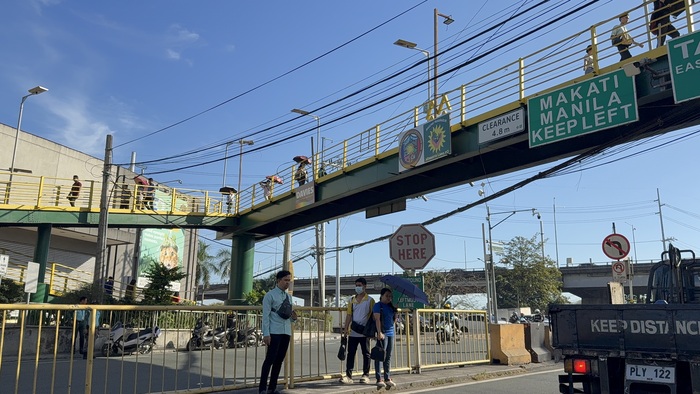
For example, at major intersections where there are no traffic lights, several traffic enforcement officers direct traffic using hand signals. Starting early in the morning, they keep coffee and crackers within reach as they manage the flow of passing cars and motorcycles—a routine that has become part of their daily lives.
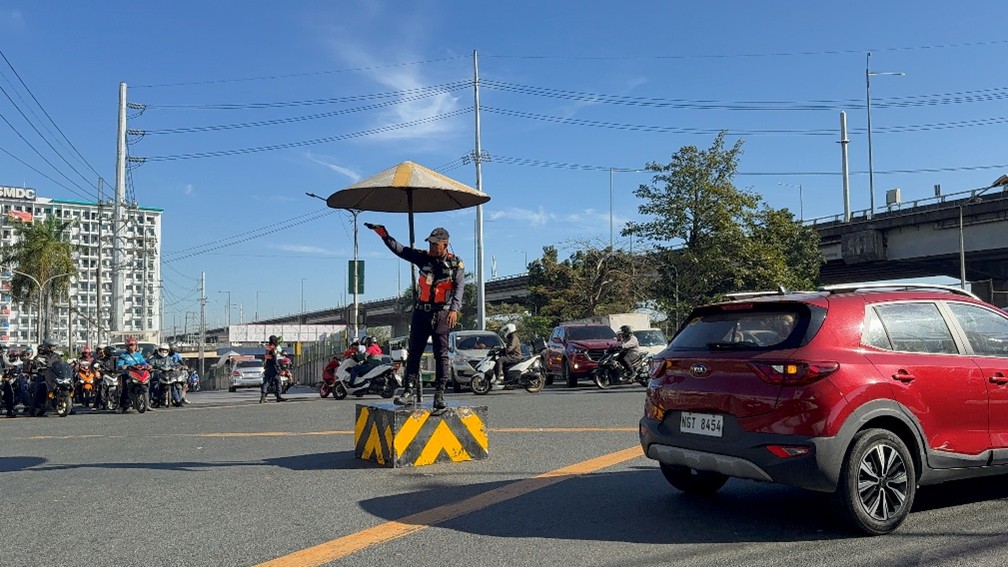
Photo 1: A major arterial road with no traffic lights.
A traffic enforcement officer stands on a platform, directing traffic from
the highway and local roads using hand signals.Sometimes they entertain us with a lively dance.
While “organizing” sounds impressive, in reality, cars and motorcycles all start moving at once, turning the intersection into a “make-or-break” moment for an instant.
Rather than controlling traffic through systems like in Japan, they adjust the flow of traffic based on the situation on the ground, making it work no matter what.
Even in a situation where long-term infrastructure is insufficient, this approach of adapting to the moment to make things work clearly illustrates the Philippines’ flexibility.
However, from a Japanese perspective, this flexibility might seem less like “solving problems” and more like “skillfully getting by in the moment.”
While Japan places a strong emphasis on systems and rules to prevent recurrence, the Philippines, where people are forced to live with uncertainty as a given, frequently relies on on-the-spot adjustments and human intervention to make things work.
In such situations, people embrace the phrase “Bahala na”—accepting and letting go of the situation—as they navigate their daily lives.
3. From Culture to Apps: “Consumption That Ensures a Stable Lifestyle”
At the same time, the burden of travel and the uncertainty of daily life impose a significant cost on consumers.
In this environment, the Philippines has long cultivated a culture in which the inconveniences of travel and shopping are offset by human connections. A prime example of this is the “SUKI” culture.
“Suki” is a Tagalog term meaning “trusted regular customer” or “favorite shop or customer,” referring to the ongoing relationship of trust built between seller and buyer. It is characterized by a relationship that goes beyond that of a mere regular customer, involving mutual recognition and flexibility based on the situation.
Within this relationship, “VIP treatment”—such as discounts and priority service—often arises naturally, fostering psychological trust and loyalty that extend beyond the transaction itself. In fact, this concept has deeply permeated daily life, as seen in the implementation of membership programs—often called “SUKI Cards”—at pharmacies and retail stores.
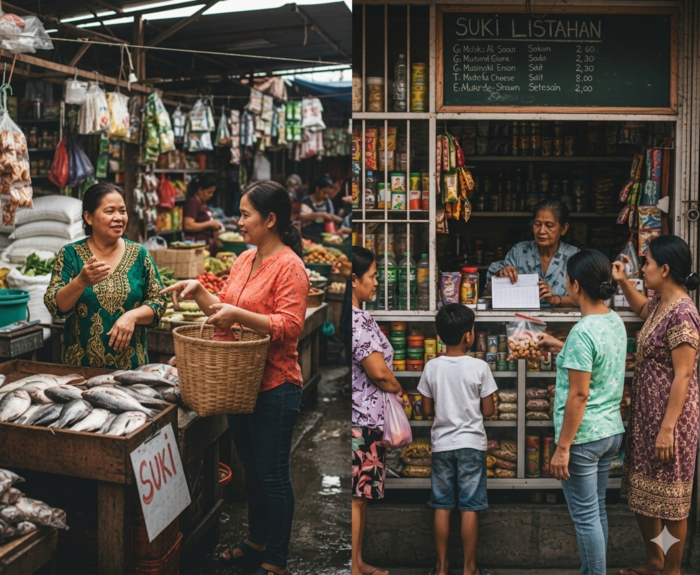
※The image above is an AI-generated image.
Although the word “SUKI” sounds similar to the Japanese word for “like,” there is no etymological connection between the two.
While “SUKI” is most commonly seen in shopping contexts, it also appears in daily commutes, such as on the way to and from school. In some cases, daily transportation relies on familiar drivers—such as those operating tricycles that provide school drop-off and pick-up services—who are asked to accommodate specific needs.
Even in daily life, where schedules are easily disrupted by traffic jams or weather, drivers often flexibly adjust pickup times or accommodate situations involving children or luggage.
This mutual assistance functions not merely as “special treatment for regular customers,” but as a system supported by the uniquely Filipino flexibility that makes transportation possible in an environment where infrastructure is not yet fully developed.
While the “SUKI” culture persists today, in recent years apps have partially replaced this “infrastructure of relationships,” standardizing it across a wider range.
In everyday life in the Philippines, ride-hailing services like Grab, JoyRide, and Angkas have become established, particularly among younger people, and services such as GrabFood, foodpanda, Lalamove, Pick-A-Roo, and GrabPabili have been integrated into daily routines.
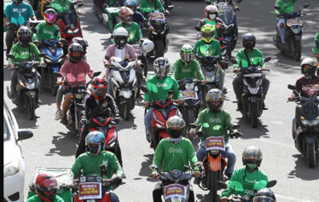
Ride-hailing services also offer a feature that allows users to save drivers they like as “favorites,” reflecting a trend toward securing “reliable drivers” they can count on.
This could be seen as an example of the “SUKI” culture continuing in a new form within the digital realm.
4. “Inviting” Rather Than “Going”: Flexible Lifestyles Reflected in Home Services
The flexibility of the Philippines is evident not only in travel and shopping but also in how people access services.
In daily life, where going out rarely goes as planned due to traffic jams and sudden downpours, it often makes more sense to “have someone come to your home” rather than “go to a store.”
As a result, on-demand services are widely prevalent in the Philippines.
From haircuts, hair rebonding (straightening), eyelash extensions, and manicures to Hilot (traditional Filipino oil massage), and even carpenters and repairmen, a wide variety of everyday services are accepted as “services that come to your home.”
Particularly distinctive is a culture known as “Paluto.” This involves inviting a cook to one’s home to prepare meals on the spot, and it has become established as a home service unique to the Philippines that supports family gatherings and events.
A key feature is that these are not special services reserved for the wealthy, but are utilized as everyday options regardless of income level.
In recent years, the scope of home services has expanded even further.
In addition to fitness activities like yoga, Pilates, and weight training, these services are now penetrating deeper areas of daily life, such as nursing care and newborn care.
I myself have experienced in-home lessons from a doula who supports mothers from pregnancy through the postpartum period. I was surprised to find that even support for life’s major milestones has become established as a “service that can be completed at home.”
Furthermore, these home services are well-suited to social media, and it is easy to check the details of the services on Instagram.
For example, Beyond Massage PH, a massage service provider,offers not only general relaxation massages but also prenatal massages.
In addition, the spa brand Nuyu Spa is offering a couples’ massage package for Valentine’s Day. In addition to foot spas, manicures, and pedicures, the package includes special touches like LED-lit balloons, offering a service that packages the “experience itself.”
In this way, the concept of “calling for the necessary services based on the situation” rather than “going to a specific location” is naturally integrated into everyday life in the Philippines.
In other words, home services are not merely a matter of convenience; they represent a uniquely Filipino consumption style that allows people to adapt their lives flexibly even in an uncertain environment.
5. Summary
What underpins Philippine society is a flexible mindset symbolized by the phrase “Bahala na.”
This is not mere optimism, but a practical ability to adapt in order to make daily life work within an uncertain environment. Rather than striving for perfection through rigid systems, Filipinos choose the best approach in each situation and adapt flexibly as needed.
While Japan is a “society of order,” the Philippines can be described as a “society of adaptation.”
Behind behavior that may seem “casual” at first glance lies a rationality designed to make life work while adapting to the environment. This flexibility is the most important perspective for understanding the Philippine market.