目次
1. Introduction
In recent years, Japanese companies have been accelerating their expansion into Southeast Asia, with particular attention focused on new market entries and market expansion within the beauty industry. Against the backdrop of remarkable economic growth and a large population, the Southeast Asian market holds significant potential. Understanding what information consumers rely on when purchasing cosmetics and beauty-related products is a critical factor for companies considering market entry or sales channel expansion.
In this article, we will examine the beauty information-gathering behaviors of consumers in five Southeast Asian countries (Malaysia, the Philippines, Indonesia, Thailand, and Vietnam) based on Intage’s “Global Viewer” overseas consumer data (collected in 2025).
2. Sensitivity to beauty trends in various countries
First, let’s examine how actively consumers seek out beauty information.
When comparing beauty values across East and Southeast Asian countries, significant differences were observed between nations regarding the statement “I enjoy gathering beauty-related information.”
In particular, across the five Southeast Asian countries, a higher percentage of respondents tended to answer “I enjoy gathering beauty information” compared to Japan, China, and South Korea.
One contributing factor is that, compared to markets such as Japan and South Korea, the Southeast Asian beauty market is still in a phase of expansion. There is active launch of new brands and influx of international brands, and consumers not only actively seek out beauty information but also exhibit relatively strong tendencies to “find and use cosmetics that suit them” and “share information about products they like with friends and on social media.”
In contrast, since the beauty markets in Japan and South Korea are mature, consumers have already established their preferred brands and purchasing habits, and the act of gathering beauty information has become part of their daily routine.
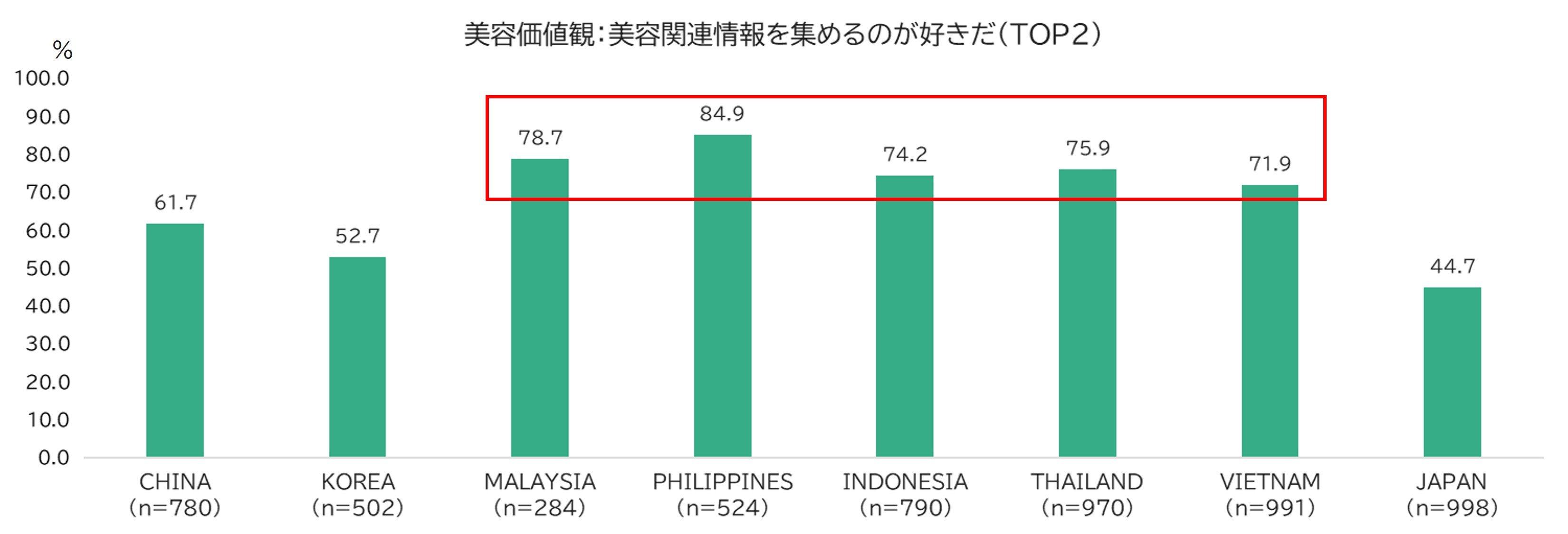
Figure 1: Beauty Values by Country (multiple responses allowed). Excerpt from the item
“I like gathering information about beauty” (Base: Women aged 18–29 in each country)
Source: Intage Global Viewer (2025)
Accelerate decision-making with smart overseas resident data
Global Viewer
This service provides reports tailored to your issues using questionnaire data on various actual conditions and attitudes of sei-katsu-sha in 11 countries (Asia and US) stocked by INTAGE.
The service covers 400 items, including actual behavioral conditions and awareness, values, and information contact related to various product and service categories.
3. Methods for Gathering Beauty Information in Southeast Asia
So, what specific sources do female consumers in their teens and twenties in Southeast Asia use to gather beauty information?
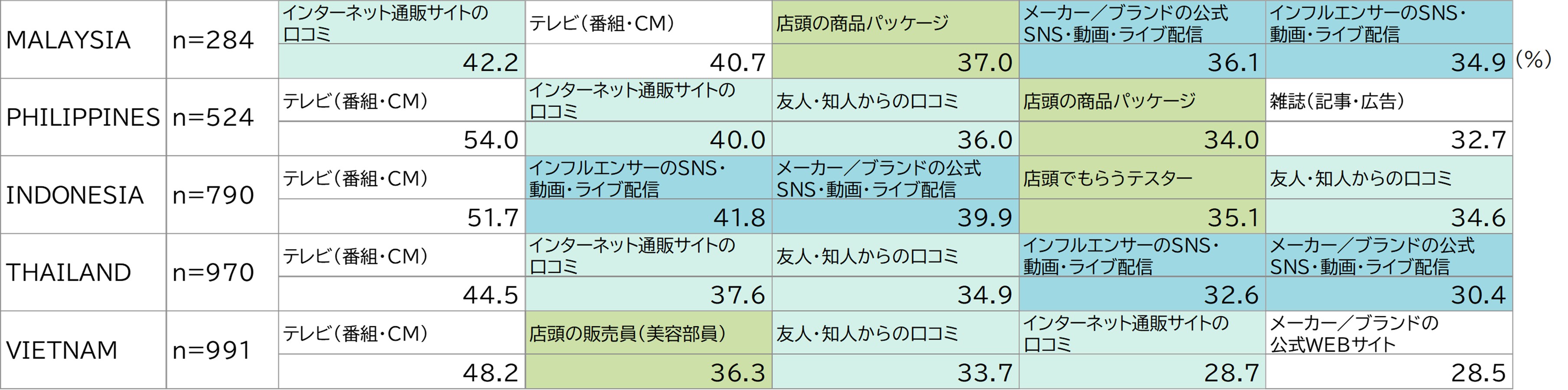
Figure 2: Top 5 Methods for Gathering Beauty Information by Country
(Base: Women aged 18–29 in each country)
Source: Intage Global Viewer (2025)
Looking at the data on “Methods of Gathering Beauty Information in Southeast Asian Countries” (Figure 2), “television (programs and commercials)” is used as a primary source of information in many countries. Television commercials and program tie-ins are still considered one of the most effective methods.
Looking at other sources, it is clear that women in their teens and 20s in Southeast Asia primarily gather beauty information from three channels: “word of mouth,” “in-store,” and “online.”
For example, this includes word-of-mouth information from actual users, such as “word-of-mouth from friends and acquaintances” and “reviews on online shopping sites”; information obtained directly in-store, such as “product packaging,” “in-store sales staff (beauty consultants),” and “product samples received in-store”; and information disseminated online, such as “influencers’ social media, videos, and live streams” and “manufacturers’/brands’ official social media, videos, and live streams.”
In particular, women in their teens and twenties, who use social media and video platforms on a daily basis, tend to show a higher interest in “authentic information”—such as review videos and user experiences—than in simple advertisements. At the same time, offline touchpoints like in-store testers and word-of-mouth remain important, suggesting that they gather beauty information by crossing multiple channels.
4. What kinds of online platforms are used in Southeast Asia?
While there are many commonalities across countries regarding in-store and word-of-mouth sources of information, usage patterns of online platforms vary by country and region.
First, regarding e-commerce platforms, Shopee stands out for its exceptionally high usage rate. Founded in Singapore in 2015, Shopee has since expanded its operations primarily across Southeast Asia. It is characterized by a mobile-first design, frequent sales promotions, live commerce features, and a culture of review posting, and boasts a high usage rate, particularly among younger demographics. The health and beauty category, in particular, is one of the major categories on Shopee.
(SEA: e-commerce GMV by platform 2024| Statista)
(SEA: Shopee categories GMV by country 2025| Statista)
Top: Shopee Vietnam “12.12” major sale advertisement
Bottom: Shopee Thailand campaign advertisement
In recent years, “content commerce”—which blends social media, video viewing, and e-commerce—has also been expanding, with platforms like TikTok Shop and YouTube Shopping leading the way. It is becoming increasingly common for users to watch review videos or live streams and make a purchase directly from there.
When it comes to social media, platforms such as Instagram, Facebook, TikTok, and YouTube are widely used. In addition, Lemon8—which is gaining users in Japan—also has a significant presence in Southeast Asia.
Lemon8 Global Edition
Like TikTok, Lemon8 is owned by ByteDance. It is not a dedicated beauty app but rather a lifestyle-focused social media platform. It features a large number of beauty and skincare-related posts and is used as a visually oriented platform for gathering information. In some respects, it is positioned similarly to China’s “Xiaohongshu (RED).”
5. Summary
An analysis using “Global Viewer,” Intage’s database of overseas consumers, revealed that women in their teens and 20s in Southeast Asia show a relatively high level of interest in gathering beauty information compared to other parts of Asia.
In terms of specific sources, in addition to television and in-store interactions, the use of online channels such as word-of-mouth, social media, and e-commerce sites is particularly notable, suggesting that they gather beauty information by cross-referencing multiple sources. On social media in particular, it is believed that they frequently engage with content that provides a sense of actual usage, such as review videos and live streams by influencers.
Based on these findings, it is believed that in beauty marketing within the Southeast Asian market, a multi-channel approach combining television, in-store, social media, and e-commerce will be crucial for building consumer awareness and sparking interest.
Furthermore, beyond mere ad delivery, PR campaigns utilizing influencers and communication strategies that incorporate “experiential value worth sharing on social media” will likely become increasingly important in the future.