Asia continues to be one of the world’s most dynamic regions. For decades, growth in Asia has largely been described through rising GDP, expanding middle classes, increasing consumption and improving standards of living. But consumers do not experience their lives through GDP, they experience the cost of the weekly shop. The pressure for caring ageing parents. The quality of their sleep. The security of their income. The strength of their relationships. And whether tomorrow feels more hopeful than today.
That creates one of the most important questions for brands operating across Asia: do consumers really feel the economic progress is improving their lives?
The 2026 INTAGE Well-being Study explores this question among 9,440 consumers across 10 markets through six interconnected dimensions: Physical, Mental, Social, Financial, Environmental and Purpose. One finding stands out: economic development alone does not guarantee stronger well-being. India, Thailand and Indonesia record relatively high overall well-being, while Japan and Korea sit at the lower end of the study. The conclusion is not that wealth is irrelevant. Rather, economic progress and felt progress do not always move together.
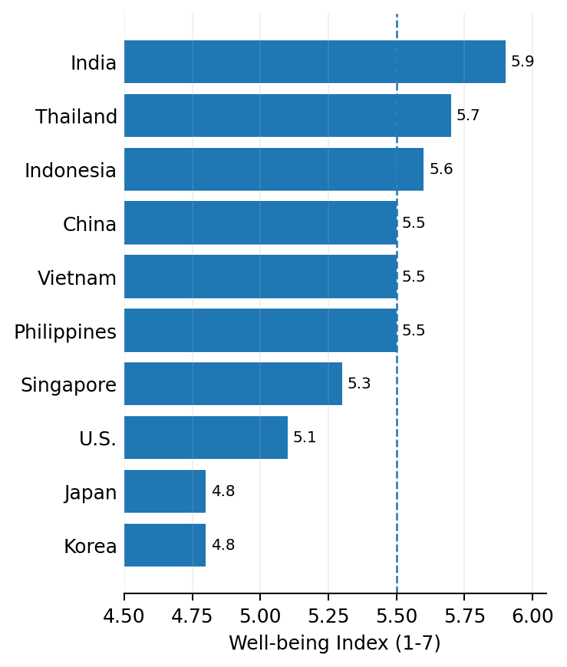
Figure 1. Overall Well-being Index across 10 markets.
The Index is derived from the 6 interconnected well-being dimensions
目次
1.Economic success does not automatically become felt progress
The paradox becomes clearer when economic affluence is viewed alongside well-being. Some emerging markets retain strong optimism, family and social energy even before they reach the highest income levels. Meanwhile, some mature markets combine sophisticated infrastructure with emotional fatigue, financial pressure and increasingly complex lives.
The finding is not that prosperity makes people unhappy. Nor that emerging economies are inherently happier. The more important lesson is that prosperity does not automatically translate into a better lived experience.
This paradox is highly visible in mature markets like Japan and South Korea, which sit at the lowest end of the Well-being Index despite high affluence. Japanese consumers enjoy highly sophisticated infrastructure, yet face immense emotional fatigue, complex social structures, and persistent future anxieties.
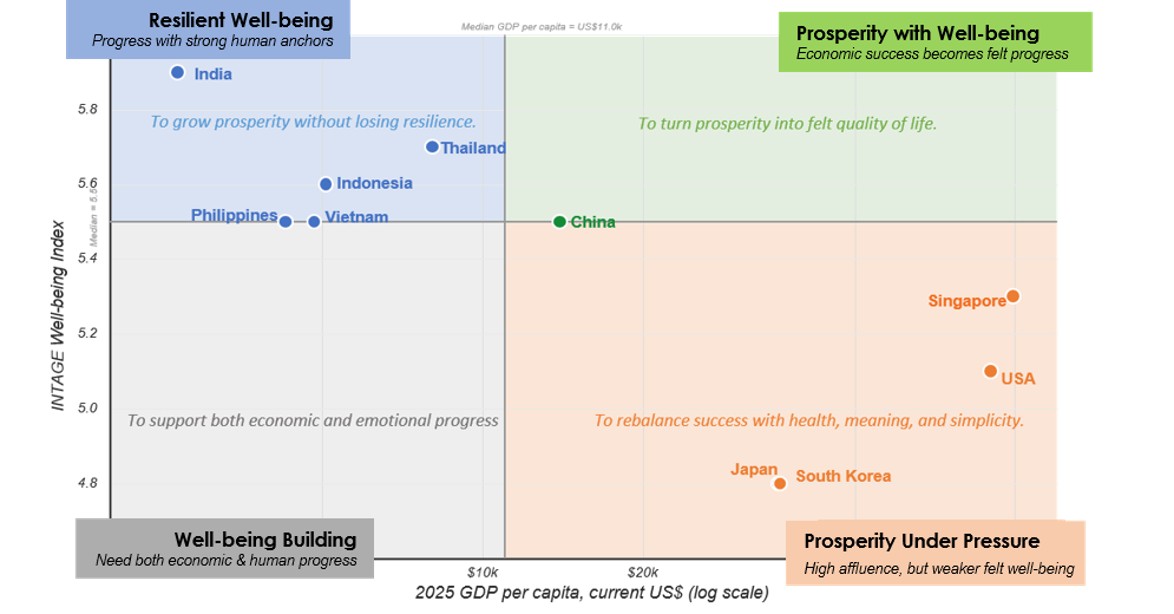
Figure 2: Affluence and well-being reveal different forms of progress across markets.
Economic data source: IMF World Economic Outlook Database, April 2026 edition.
GDP per capita, current prices (US$), 2025.
Well-being data: INTAGE 2026 Well-being Study, n=9,440.
Well-being is not a category. It is a brand capability.
The study suggests a broader and more useful view than a brand must sell health, wellness or self-care products to participate. A bank can reduce financial uncertainty. A retailer can improve access to healthier choices. A technology company can remove complexity. A mobility brand can return time. A hospitality brand can create genuine recovery. An employer can make everyday work more sustainable.
The opportunity is not to turn every company into a wellness brand.
It is to understand where each brand has permission to improve people’s lives.
2.From well-being promise to well-being action. CARE turns human needs into brand action.
Identifying a well-being gap is only the first step. CARE - a diagnosis of how a brand can help translating consumer pain and enable sustainable gain. It is designed to move the discussion from 'What should we communicate?' to 'What capability should we create for people?'
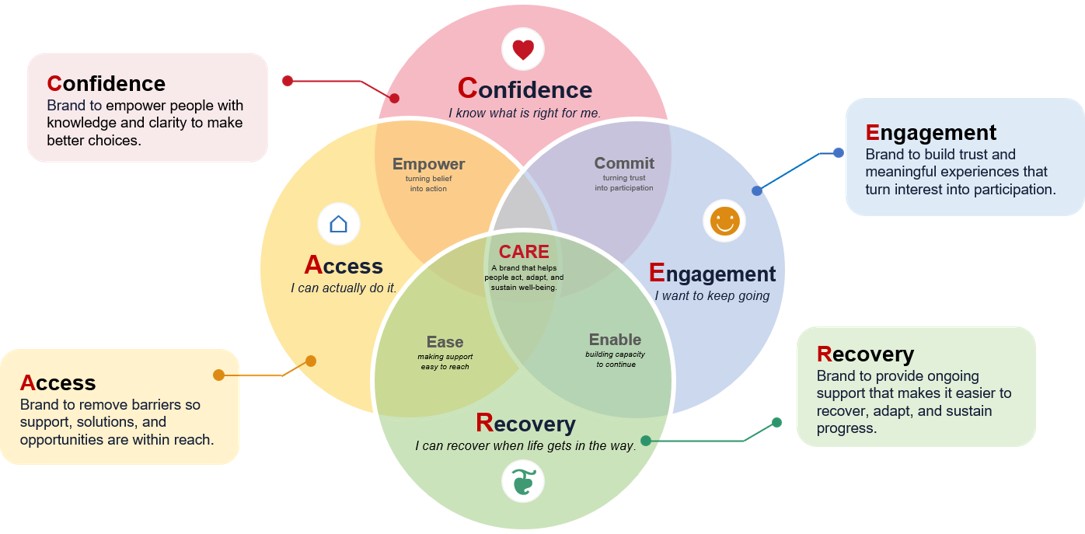
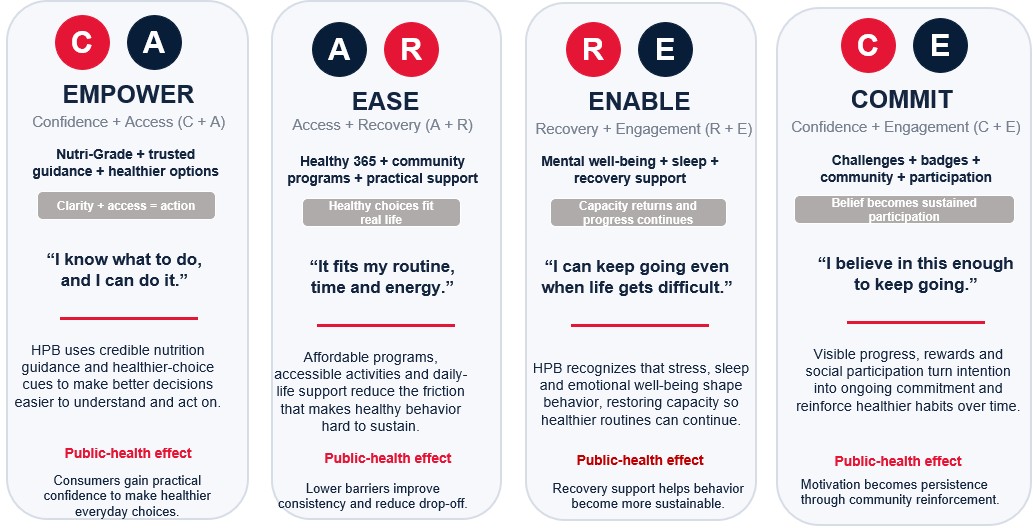
Figure 3:CARE turns well-being needs into actionable brand roles: Confidence, Access, Recovery and Engagement.
For marketers, the CARE framework functions as a practical Customer Experience (CX) diagnostic checklist. By auditing your brand against these four dimensions—Confidence, Access, Recovery, and Engagement—businesses can systematically identify where they have the "permission" to intervene and improve the lives of their consumers, transforming abstract well-being concepts into actionable marketing strategies.
The power of CARE is in the combinations:

The “Next Step” in Data Collection
Intage's International Research
Have you ever searched through public information and market reports only to find that the information you're looking for isn't there?
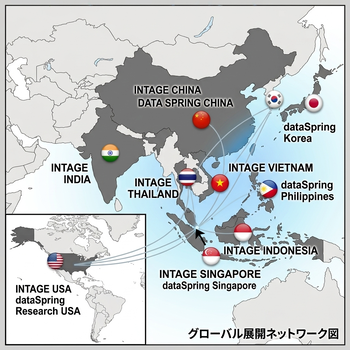
Intage’s international research has a track record of over 500 projects across more than 60 countries.
Intage supports the global business operations of many companies through our research, helping them find the answers they need.
We can accommodate a variety of research methods, including quantitative and qualitative research, as well as online and offline surveys.
If you’re struggling with issues such as “I need more consumer data from this country” or “I can’t find the information I’m looking for,”
please contact Intage’s international research team.
3.CARE in Action: From Framework to Real Life
Case 1: Singapore HPB: Designing the system, not just the message
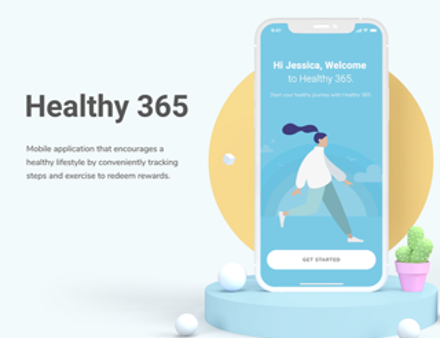
Singapore’s Health Promotion Board shows how CARE can operate as a behavior-change ecosystem. Trusted nutrition guidance helps people know what is better for them. Healthier options and accessible programs make those choices easier to act on. Support for sleep, stress and recovery helps people sustain healthier routines when life gets difficult, while challenges, rewards and community participation create motivation to continue. The lesson for marketers is very clear that changing behavior often requires more than persuasion. It requires designing the conditions that make better behavior possible.
While this is a public-health initiative by a government agency, it offers a perfect blueprint for private sector businesses. The ecosystem of Healthy 365 can be directly applied to corporate branding strategies, such as optimizing app UI/UX design, creating customer habituation models, and refining loyalty/reward programs to drive long-term user engagement.
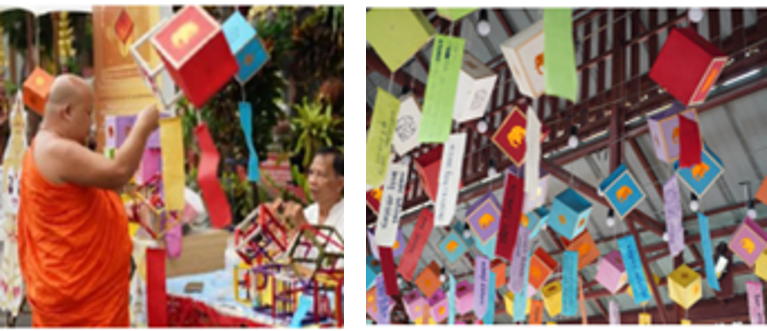
Case 2: Tassa Lanna Lantern: Turning local value into viable value
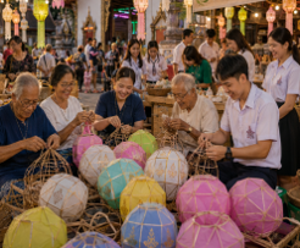
※The image above is an AI-generated image.
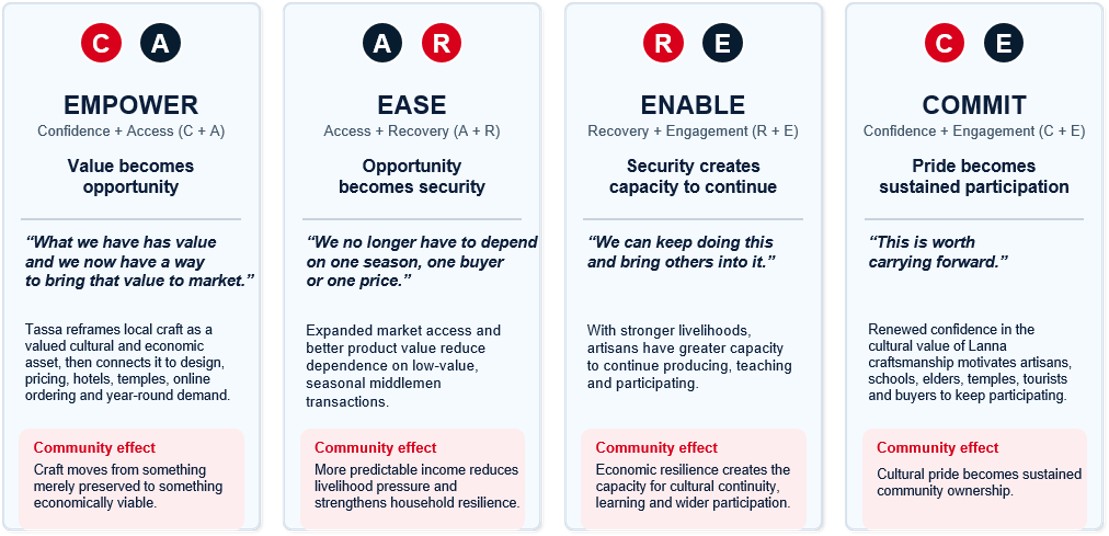
In Thailand, Tassa Lanna Lantern demonstrates CARE in a very different context. Traditional craft was reframed as something with cultural and economic value, building confidence among producers. New design, pricing and market connections expanded access to demand. Better and more predictable income strengthened livelihood resilience, while participation from artisans, schools, temples, tourists and buyers helped sustain community pride and cultural continuity.
https://www.posttoday.com/smart-sme/729445
CARE here is not a wellness program. It is an ecosystem that enables people and communities to become more capable of sustaining a better life.
This traditional craft initiative directly mirrors major corporate trends in Japan today. The Tassa Lanna case serves as an actionable roadmap for enterprises looking to design initiatives around Regional Revitalization, Sustainable Supply Chain Management, and CSV (Creating Shared Value)—demonstrating how a brand can build an ecosystem that makes a community economically and socially viable.
4.Different markets need different forms of CARE
CARE is deliberately universal in structure but local in application. That matters because the study shows that generations and markets should not be treated as if they experience well-being in the same way.
In high-growth markets, CARE may be about helping people move forward - strengthening access, confidence and the ability to sustain momentum. In high-pressure mature markets including Japan, it may be about helping people carry less - reducing friction, rebuilding security and creating room to recover, instead of adding more pressure or ask consumers to do more.
The framework therefore does not tell every brand to behave the same way. It gives marketers a shared language for asking the same strategic question in very different local realities: what would genuinely improve people's ability to navigate life here?
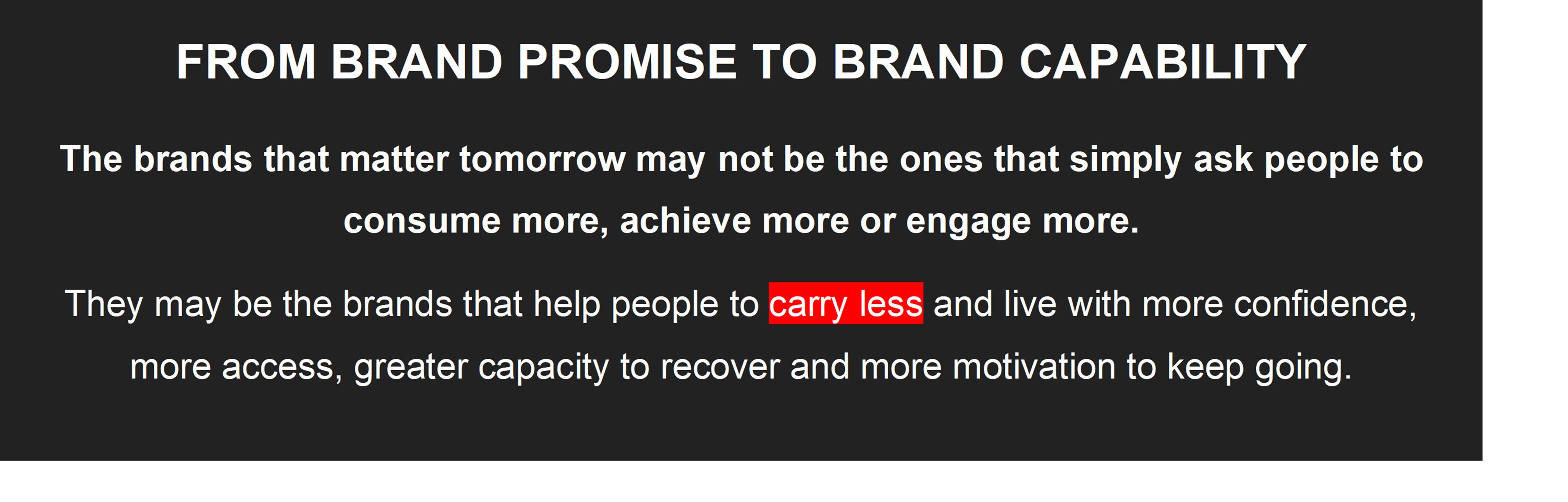
That is the shift from selling well-being to enabling well-being: from communication to action, from aspiration to capability, and from asking only 'What can we sell people?' to asking 'What can we help people do?'
Do not simply promise a better life.
Help people become more capable of living one.
The INTAGE Well-being Index is designed to reveal the gap between objective progress and lived experience. By tracking six interconnected dimensions across markets and generations, it gives businesses a human lens on where progress is being felt and where it is breaking down.
CARE converts that understanding into a practical question for brands: what capability can we create that genuinely makes life easier, stronger or more sustainable? Through our comprehensive data assets and consulting capabilities, INTAGE is uniquely positioned to help Japanese enterprises decode these well-being gaps and engineer the exact brand capabilities required to drive pipeline growth and improve win rates in tomorrow's market.