Food consuming
10 results
-

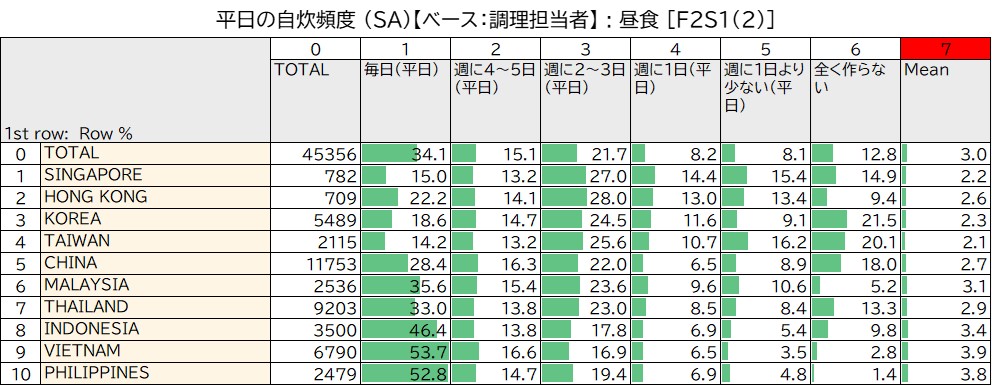
Frequency of Cooking at Home on Weekdays: Lunch (Intage Global Viewer)
- sellGlobal Viewer
calendar_monthApr 06, 2026
・Among those who reported cooking their own lunch “every day” on weekdays, the country with the highest percentage was Vietnam (53.7%), followed by the Philippines (52.8%) and Indonesia (46.4%).・Among those who responded that they cook for themselves “2–3 days a week,” the country with the highest percentage was Hong Kong (28.0%).・Among those who responded that they “never cook,” the country with the highest percentage was South Korea (21.5%), followed by Taiwan (20.1%).Intage Global Viewer also provides the latest data for 2025/2026, as well as data on topics such as “frequency of cooking on holidays.”Click here for more details.If you would like to gain a deeper understanding of home cooking habits in various countries, please also check out the following article. From Stocking Up on Ingredients to Cleaning Up: Home Cooking in 8 Asian Countries ~Three Trends Revealed Through Food Culture~Food is an essential part of our lives. It strongly reflects a country’s culture, family structure, and infrastructure.・Grocery shopping and food storage habits・Changes in the kitchen’s main role・Time management for increasingly diverse dining experiences
-

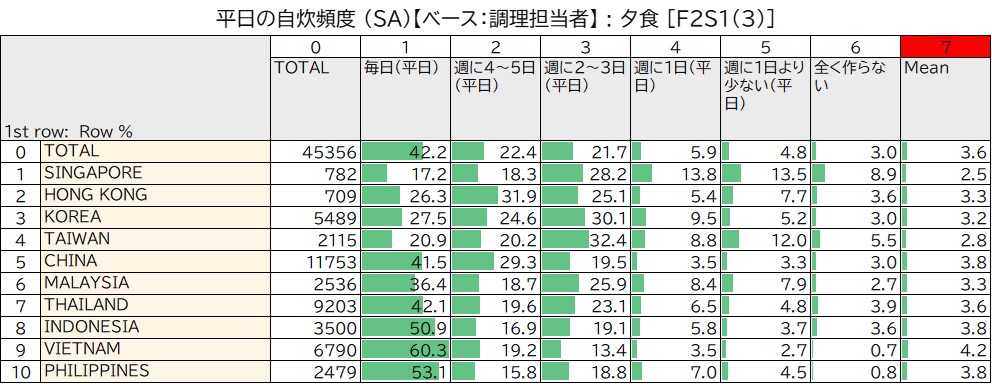
Frequency of Cooking at Home on Weekdays: Dinner (Intage Global Viewer)
- sellGlobal Viewer
calendar_monthApr 06, 2026
・Among those who responded that they cook their own dinner “every day” on weekdays, the country with the highest percentage was Vietnam (60.3%). This was followed by the Philippines (53.1%) and Indonesia (50.9%).・Among those who responded that they cook their own meals “2–3 days a week,” the country with the highest percentage was Taiwan (32.4%), followed by South Korea (30.1%).・Among those who answered “once a week (on weekdays),” the country with the highest percentage was Singapore (13.8%).Intage Global Viewer also provides the latest data for 2025/2026, as well as data on topics such as “frequency of home cooking on holidays.”Click here for more details.If you’d like to gain a deeper understanding of home cooking trends in various countries, please also check out the following article.From Stocking Up on Ingredients to Cleaning Up: Home Cooking in 8 Asian Countries ~Three Trends Revealed Through Food Culture~Food is an essential part of our lives. It strongly reflects a country’s culture, family structure, and infrastructure.・Grocery shopping and food storage habits・Changes in the kitchen’s main role・Time management for increasingly diverse dining experiences
-

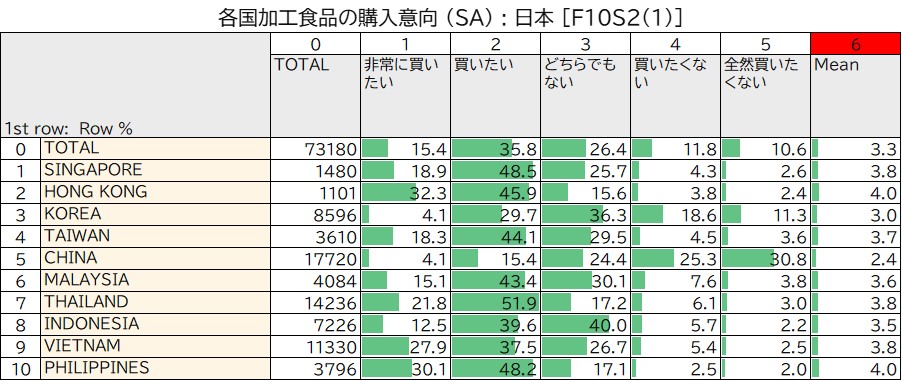
Intent to Purchase Processed Foods_Japan (Intage Global Viewer)
- sellGlobal Viewer
calendar_monthApr 06, 2026
・The country with the highest percentage of respondents who said they “definitely want to buy” Japanese processed foods was Hong Kong (32.3%), followed by the Philippines (30.1%).・The country with the highest percentage of respondents who said they “want to buy” Japanese processed foods was Thailand (51.9%), followed by Singapore (48.5%) and the Philippines (48.2%).・The country with the highest percentage of respondents who said they “definitely do not want to buy” Japanese processed foods was China (30.8%), followed by South Korea (11.3%).Intage Global Viewer provides the latest data for 2025/2026, as well as data on “food ingredients purchased in the past month” and more.Click here for details. If you’d like to gain a deeper understanding of home cooking trends in various countries, please also check out the following article. From Stocking Up on Ingredients to Cleaning Up: Home Cooking in 8 Asian Countries ~Three Trends Revealed Through Food Culture~Food is an essential part of our lives. It strongly reflects a country’s culture, family structure, and infrastructure.・Grocery shopping and food storage habits・Changes in the kitchen’s main role・Time management for increasingly diverse meals
-

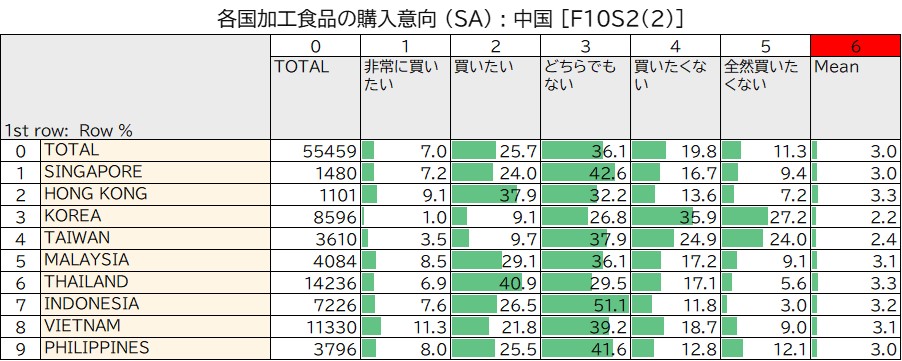
Intent to Purchase Processed Foods_China (Intage Global Viewer)
- sellGlobal Viewer
calendar_monthApr 06, 2026
・The country with the highest percentage of respondents who said they “want to buy” Chinese processed foods was Thailand (40.9%), followed by Hong Kong (37.9%).・The country with the highest percentage of respondents who said they “definitely do not want to buy” Chinese processed foods was South Korea (27.2%), followed by Taiwan (24.0%).・The country with the highest percentage of respondents who answered “neither” regarding their intention to purchase Chinese processed foods was Indonesia (51.1%), followed by Singapore (42.6%).Intage Global Viewer also provides the latest data for 2025/2026, as well as data on “food ingredients purchased in the past month” and more.Click here for details. If you’d like to gain a deeper understanding of home cooking trends in various countries, please also check out the following article. From Stocking Up on Ingredients to Cleaning Up: Home Cooking in 8 Asian Countries ~Three Trends Revealed Through Food Culture~Food is an essential part of our lives. It strongly reflects a country’s culture, family structure, and infrastructure.・Grocery shopping and food storage habits・Changes in the kitchen’s main role・Time management for increasingly diverse meals
-

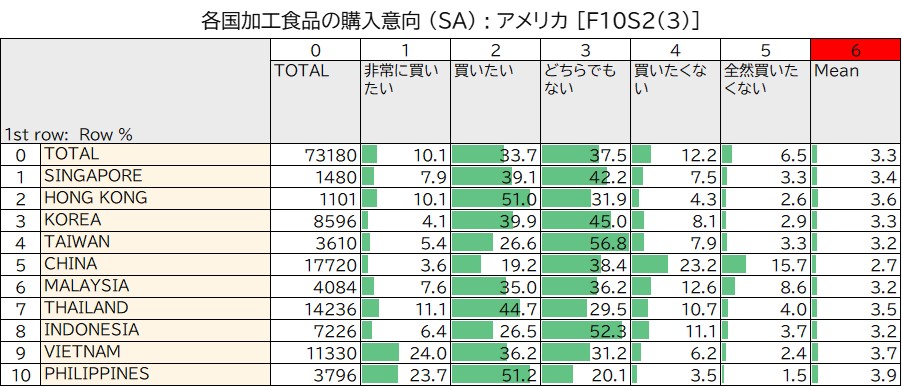
Intent to Purchase Processed Foods_United States (Intage Global Viewer)
- sellGlobal Viewer
calendar_monthApr 06, 2026
・Vietnam had the highest percentage of respondents who said they were “very interested in buying” U.S. processed foods (24.0%), followed by the Philippines (23.7%).・The country with the highest percentage of respondents who said they “want to buy” American processed foods was the Philippines (51.2%), followed by Hong Kong (51.0%).・The country with the highest percentage of respondents who said they “do not want to buy” U.S. processed foods was China (23.2%), followed by Malaysia (12.6%).Intage Global Viewer provides the latest data for 2025/2026, as well as data on “groceries purchased in the past month” and more.Click here for details. If you’d like to gain a deeper understanding of home cooking trends in various countries, please also check out the following article. From Stocking Up on Ingredients to Cleaning Up: Home Cooking in 8 Asian Countries ~Three Trends Revealed Through Food Culture~Food is an essential part of our lives. It strongly reflects a country’s culture, family structure, and infrastructure.・Grocery shopping and food storage habits・Changes in the kitchen’s main role・Time management for increasingly diverse dining experiences
-

Intent to Purchase Processed Foods_Own Country (Intage Global Viewer)
- sellGlobal Viewer
calendar_monthApr 06, 2026
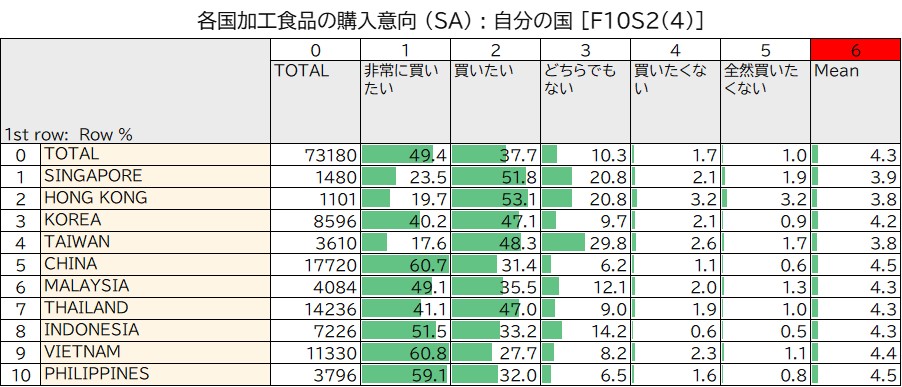
・Overall, many countries reported that consumers were “very likely” or “likely” to purchase processed foods from their own country.・Among countries where consumers reported being “very likely” to purchase processed foods from their own country, Vietnam had the highest percentage (60.8%), followed by China (60.7%) and the Philippines (59.1%).・Among countries where respondents answered “neither” regarding their intention to purchase processed foods from their own country, Taiwan had the highest percentage (29.8%), followed by Singapore and Hong Kong, which tied at 20.8%.Intage Global Viewer provides the latest data for 2025/2026, as well as data on “food ingredients purchased in the past month” and more.Click here for details. If you’d like to gain a deeper understanding of home cooking trends in various countries, please also check out the following article. From Stocking Up on Ingredients to Cleaning Up: Home Cooking in 8 Asian Countries ~Three Trends Revealed Through Food Culture~Food is an essential part of our lives. It strongly reflects a country’s culture, family structure, and infrastructure.・Grocery shopping and food storage habits・Changes in the kitchen’s main role・Time management for increasingly diverse meals
-

Types of meals typically prepared at home (Intage Global Viewer)
- sellGlobal Viewer
calendar_monthApr 01, 2026
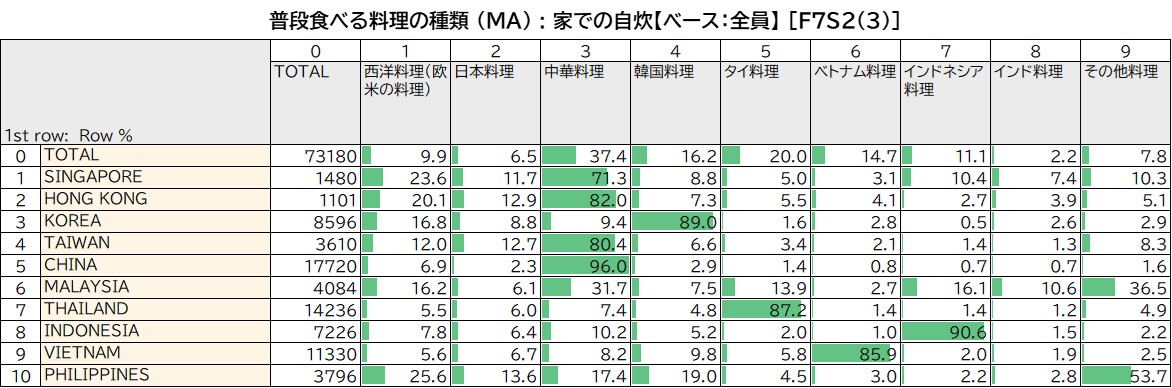
・Regarding the types of food people cook and eat at home, respondents in 5 out of 10 countries said they eat their own country’s cuisine most often. In descending order, these were: China: Chinese cuisine (96.0%), Indonesia: Indonesian cuisine (90.6%), and South Korea: Korean cuisine (89.0%).・Among the countries where respondents said they eat Western cuisine (European and American dishes), the highest percentage was in the Philippines (25.6%).Intage Global Viewer also provides the latest data for 2025/2026, as well as data on topics such as “the percentage of people who cook Japanese cuisine at home.”Click here for more details.If you’d like to gain a deeper understanding of home cooking trends in various countries, please also check out the following article.From Stocking Up on Ingredients to Cleaning Up: Home Cooking in 8 Asian Countries ~Three Trends Revealed Through Food Culture~Food is an essential part of our lives. It strongly reflects a country’s culture, family structure, and infrastructure.・Grocery shopping and food storage habits・Changes in the kitchen’s main role・Time management for increasingly diverse dining experiences
-

The person in charge of cooking at home (Intage Global Viewer)
- sellGlobal Viewer
calendar_monthMar 31, 2026
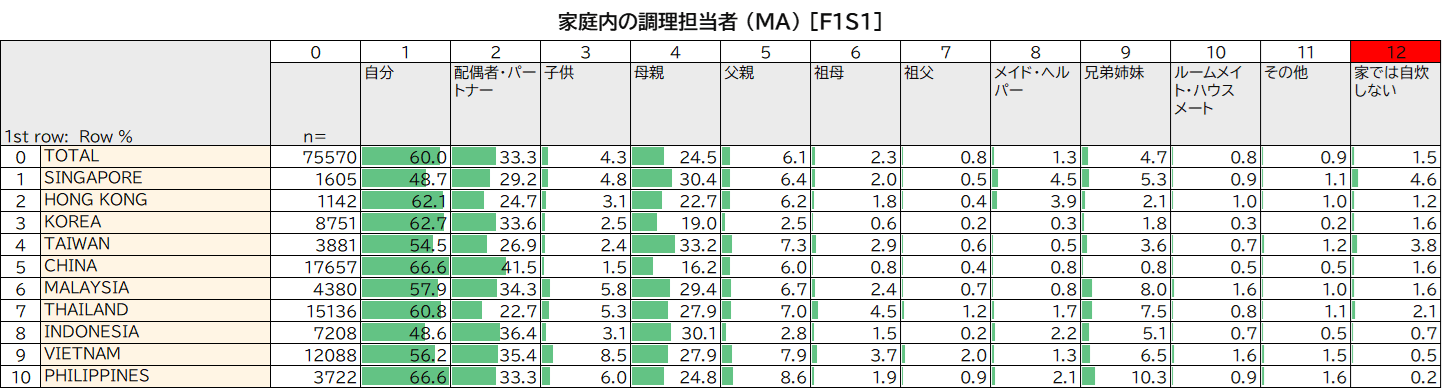
・In all countries, respondents most often cooked for themselves.・Among the 10 countries, Taiwan had the highest percentage (33.2%) of respondents whose mothers cooked for them.・Among the 10 countries, China had the highest percentage (41.5%) of respondents whose spouses cooked for them.Intage Global Viewer provides the latest data for 2025/2026, as well as data on topics such as “food purchasing managers.” Click here for more details. If you’d like to learn more about home cooking in different countries, please also check out the following article. From Grocery Shopping to Cleanup: Home Cooking in 8 Asian CountriesFood is an essential part of our lives. It strongly reflects a country’s culture, family structure, and infrastructure.・Grocery shopping and food storage habits・Changes in the kitchen’s main role・Time management for increasingly diverse mealshttps://www.global-market-surfer.com/pickup/detail/649/
-
![Frequency of cooking at home on weekdays (SA) [Base: Person in charge of cooking] Breakfast](https://www.global-market-surfer.com/assets/market/image/en/847/OpnelVMbKB.png)
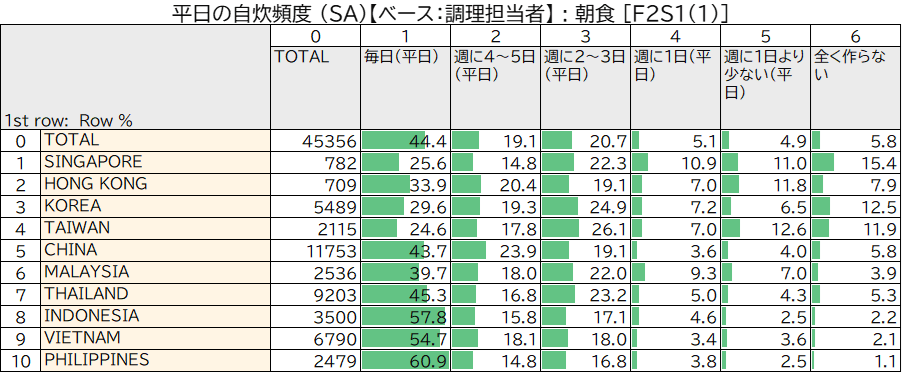
Frequency of cooking at home on weekdays: Breakfast (Intage Global Viewer)
- sellGlobal Viewer
calendar_monthMar 31, 2026
・Among those who reported cooking their own breakfast every weekday, the highest percentage was in the Philippines (60.9%). This was followed by Indonesia (57.8%) and Vietnam (54.7%).・Among those who reported cooking their own meals 4–5 days a week, the highest percentage was in China (23.9%).・Singapore had the highest percentage of respondents who reported never cooking at all (15.4%).Intage Global Viewer also provides the latest data for 2025/2026, as well as data on topics such as “frequency of cooking on weekends.”Click here for more details.If you’d like to gain a deeper understanding of home cooking habits in various countries, please also check out the following article. From Stocking Up on Ingredients to Cleaning Up: Home Cooking in 8 Asian Countries ~Three Trends Revealed Through Food Culture~Food is an indispensable part of our lives. It strongly reflects a country’s culture, family structure, and infrastructure.・Grocery shopping and food storage habits・Changes in the kitchen’s main role・Time management for increasingly diverse dining experiences
-

Types of dishes typically eaten when dining out (Intage Global Viewer)
- sellGlobal Viewer
calendar_monthMar 31, 2026
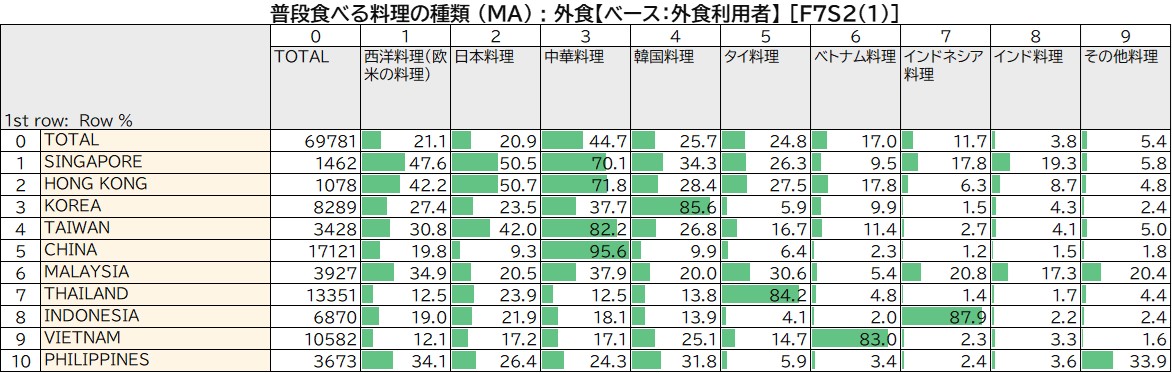
・When asked about the types of food they eat when dining out, respondents in five out of ten countries said they most often eat their own country’s cuisine. In descending order, these were: China: Chinese cuisine (95.6%), Indonesia: Indonesian cuisine (87.9%), South Korea: Korean cuisine (85.6%), Thailand: Thai cuisine (84.2%), and Vietnam: Vietnamese cuisine (83.0%).・Among the countries that reported eating Japanese cuisine, the highest percentage was in Hong Kong (50.7%), followed by Singapore (50.5%) and Taiwan (42.0%). Intage Global Viewer provides the latest data for 2025/2026, as well as data on topics such as “the percentage of people who cook Japanese food at home.”Click here for more details. If you would like to gain a deeper understanding of home cooking trends in various countries, please also check out the following article. From Stocking Up on Ingredients to Cleaning Up: Home Cooking in 8 Asian Countries ~Three Trends Revealed Through Food Culture~Food is an indispensable part of our lives. It strongly reflects a country’s culture, family structure, and infrastructure.・Grocery shopping and food storage habits・Changes in the kitchen’s main role・Time management for increasingly diverse dining experiences