目次
- 1. Introduction: Understanding India’s Gen Z Through a Comparison with Three ASEAN Countries
- 2. “Connections with Others” as Reflected in Home-Cooked Meals and Time Spent with Family
- 3. Smartphones are the infrastructure that connects people and drives daily life
- 4. Purchasing Behavior: Discovering Products on Social Media and Verifying Them Through People You Know or Reviews
- 5. An efficient and streamlined purchasing process, which is particularly evident in India
- 6. India and Three ASEAN Countries: Similarities and Differences
- 7. Summary: India’s Gen Z: Using Human Connections as a Starting Point to Find Satisfactory Solutions Through Digital Means
1. Introduction: Understanding India’s Gen Z Through a Comparison with Three ASEAN Countries
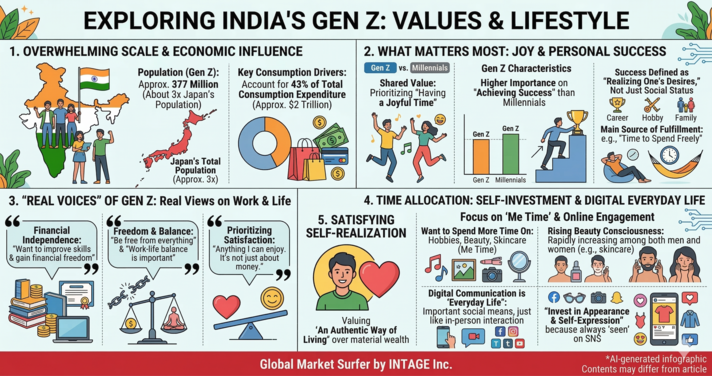
When you hear the term “Generation Z,” you might picture young people getting their information from social media and videos and quickly selecting products online. However, a closer look at India’s Generation Z reveals that while they are digitally savvy, they also place great importance on connections with those closest to them, such as family and friends.
For them, digital technology is not a substitute for human relationships. By bouncing between the opinions of family and acquaintances, social media posts, videos, and reviews, they gather reliable information and use it as a means to choose products and services they feel confident about.
In this article, we compare Gen Z in India with that of three ASEAN countries (Vietnam, Thailand, and Indonesia) where many Japanese companies have established a presence. By comparing trends common to all four countries with trends specific to India’s Gen Z, we will analyze the lifestyle values cherished by India’s Gen Z and their relationship to purchasing behavior, including information gathering and decision-making.
2. “Connections with Others” as Reflected in Home-Cooked Meals and Time Spent with Family
To understand the lifestyle values of India’s Gen Z, the first thing to focus on is the time they want to spend more of. According to a survey by Intage India, eating at home and spending time with family ranked among the top priorities. Let’s take a closer look at the details.
(1) Want to spend more time eating at home
Among India’s Gen Z, “time spent eating at home” ranked first among the activities they want to increase, reaching 77.7%. It also ranked first in Vietnam at 71.8%, third in Indonesia at 70.4%, and fourth in Thailand at 59.3%. On the other hand, “time spent eating out” was the activity they most wanted to reduce in India, Vietnam, and Indonesia, and ranked second in Thailand.
These results suggest that India’s Gen Z tends to view their homes not merely as places to rest, but as spaces to enrich their daily lives, including mealtimes. The fact that they focus not only on external stimulation and convenience but also on the quality of their everyday lives provides a key insight into understanding India’s Gen Z.
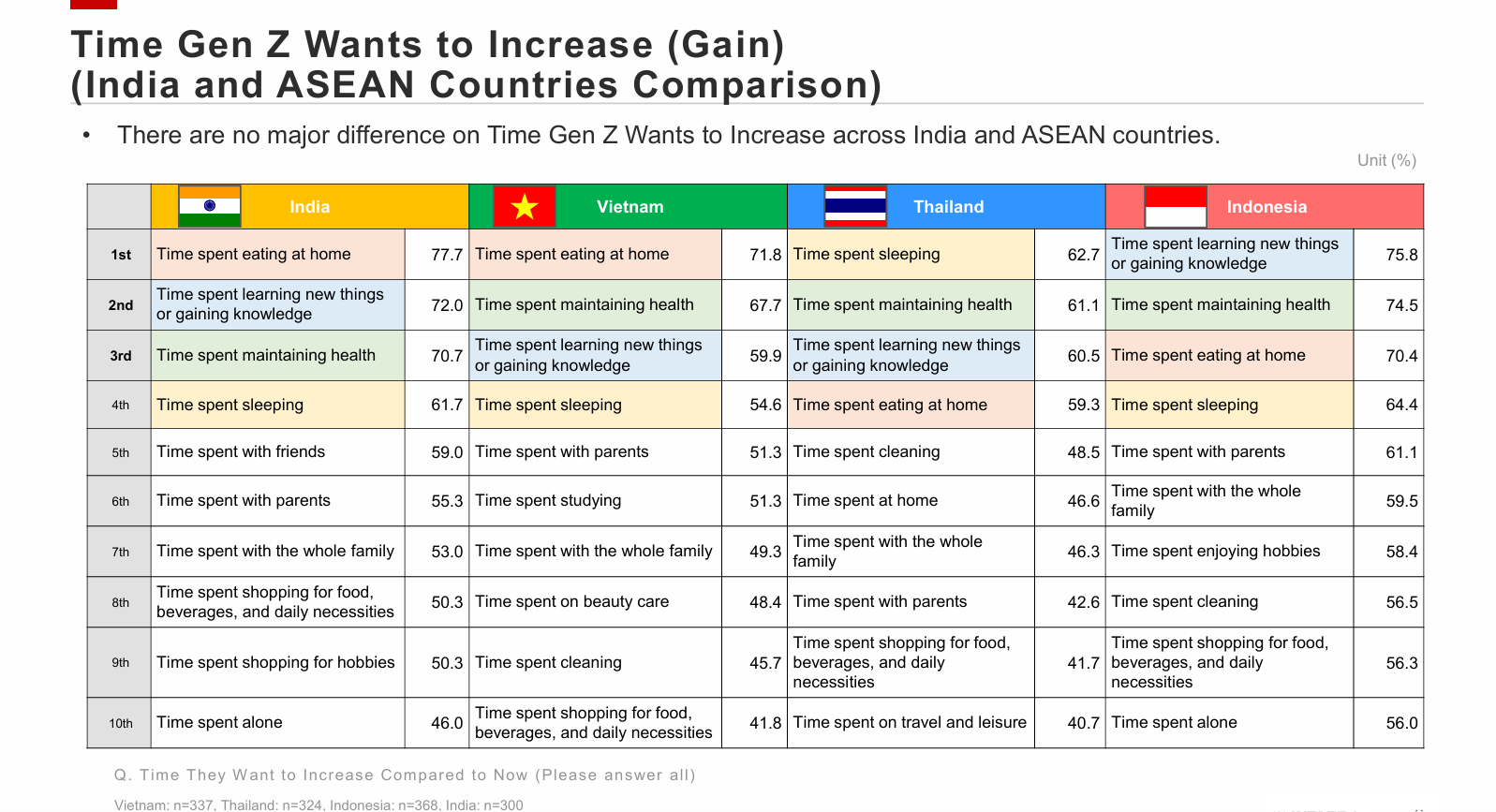
Figure 1: Time Gen Z Wants to Increase (or Secure) <Comparison of India and ASEAN Countries>
Source: INTAGE Research
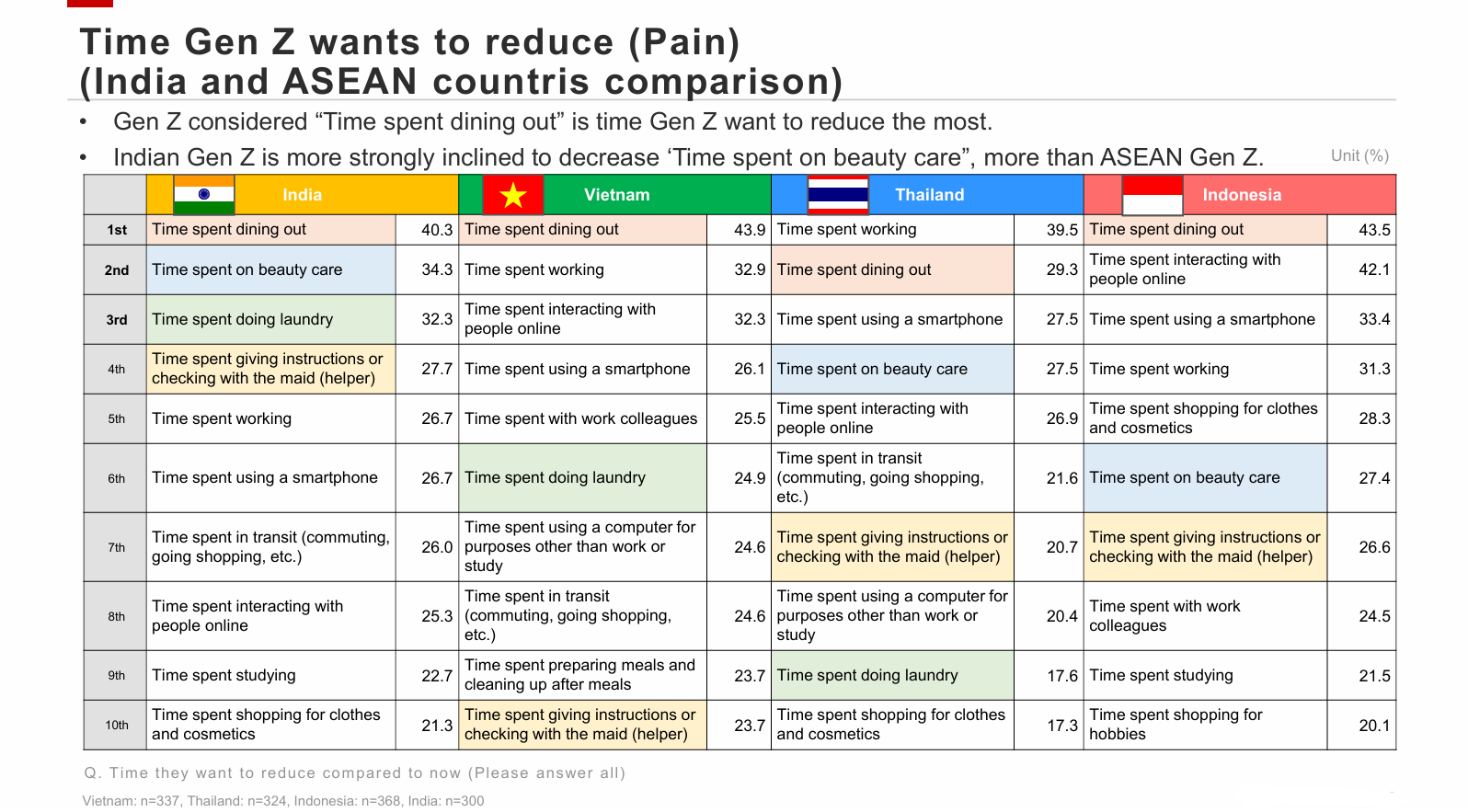
Figure 2: Time (Burden) Gen Z Wants to Reduce: A Comparison of India and ASEAN Countries
Source: INTAGE Research
(2) I want to spend more time with my family and parents
Another notable point is that family-related items also ranked high. Among India’s Gen Z, “time spent with parents” stood at 55.3% and “time spent with the whole family” at 53.0%, with both exceeding 50%. In Vietnam, the figures were 51.3% and 49.3%, respectively; in Indonesia, 61.1% and 59.5%; and in Thailand, 42.6% and 46.3%.
Across all four countries, nearly 50% of respondents expressed a desire to “spend more time with family and parents,” with India’s Gen Z showing the highest tendency.
(3) Relationships with Trusted People Also Influence “Sense of Fulfillment”
Furthermore, when asked about “times they feel rich and fulfilled,” “spending time with trusted friends and family” ranked first among India’s Gen Z at 21.3%. Considering the desire to spend more time eating at home alongside the tendency to prioritize time with family and trusted people, it can be inferred that for India’s Gen Z, a sense of fulfillment is not limited to the individual alone but is also found in relationships with those close to them.
Of course, “eating at home” does not necessarily mean eating with family. However, given that eating at home, time with family, and time with trusted people all ranked highly, understanding India’s Gen Z requires considering not only their independence and digital orientation but also their emphasis on everyday life spent with those close to them.
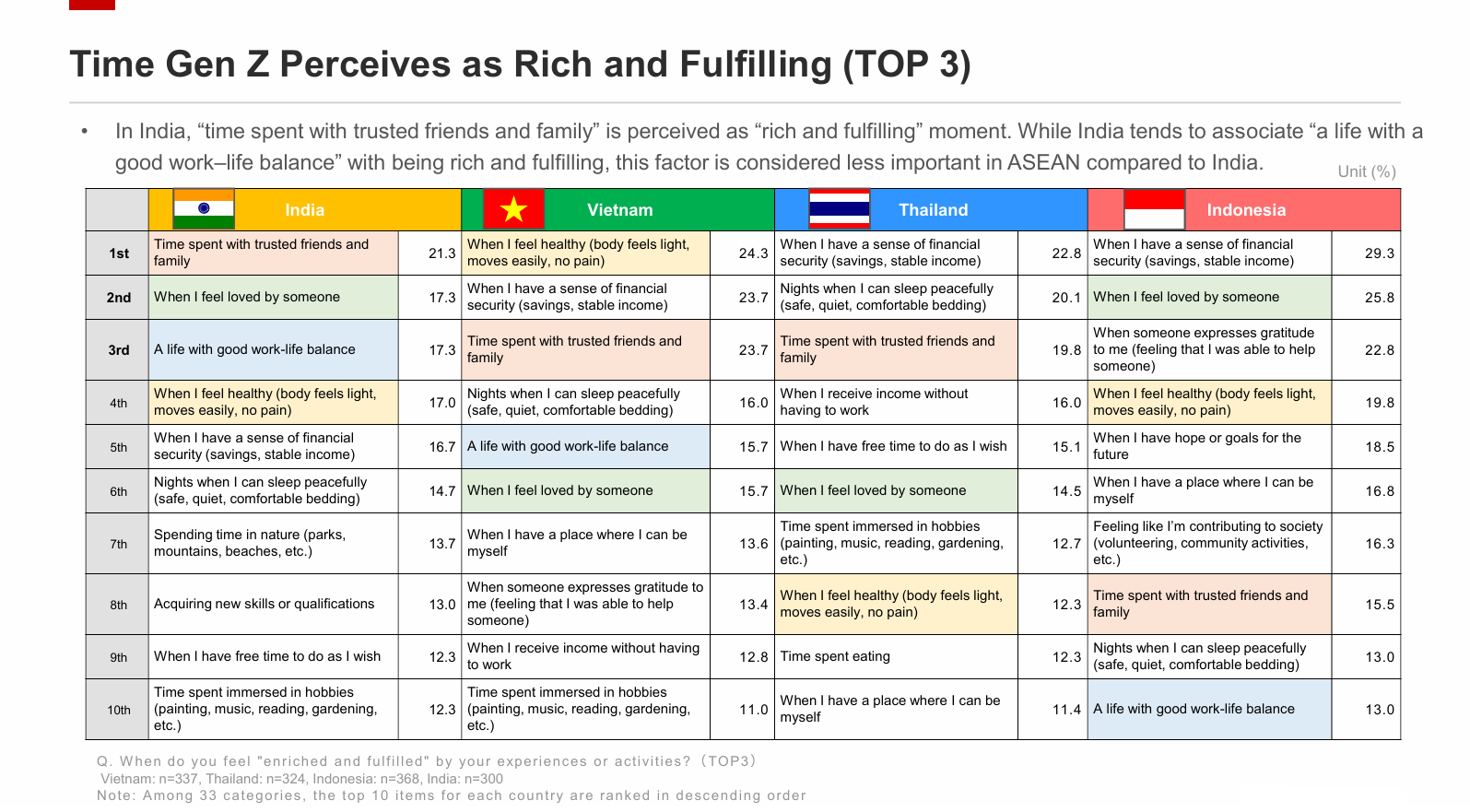
Figure 3: Times When Gen Z Feels “Rich and Fulfilled” (Top 3)
Source: INTAGE Research
As we can see, while India’s Gen Z is adept at using digital technology in their daily lives, they also place great importance on the sense of security and trust derived from relationships with family and friends. Furthermore, this “value placed on human connections” may extend beyond how they spend their days to their purchasing behavior—specifically, whose opinions they seek and what information they trust when selecting products and services.
*For more details on the survey findings, please refer to this report.
What are the differences between Gen Z in India and Gen Z in ASEAN?
3. Smartphones are the infrastructure that connects people and drives daily life
Next, let’s take a look at the survey results on “The Impact of Losing or Dropping a Smartphone.” When we examine the role smartphones play in the lives of India’s Gen Z, we can see that digital and real-life relationships do not conflict with one another but rather overlap.
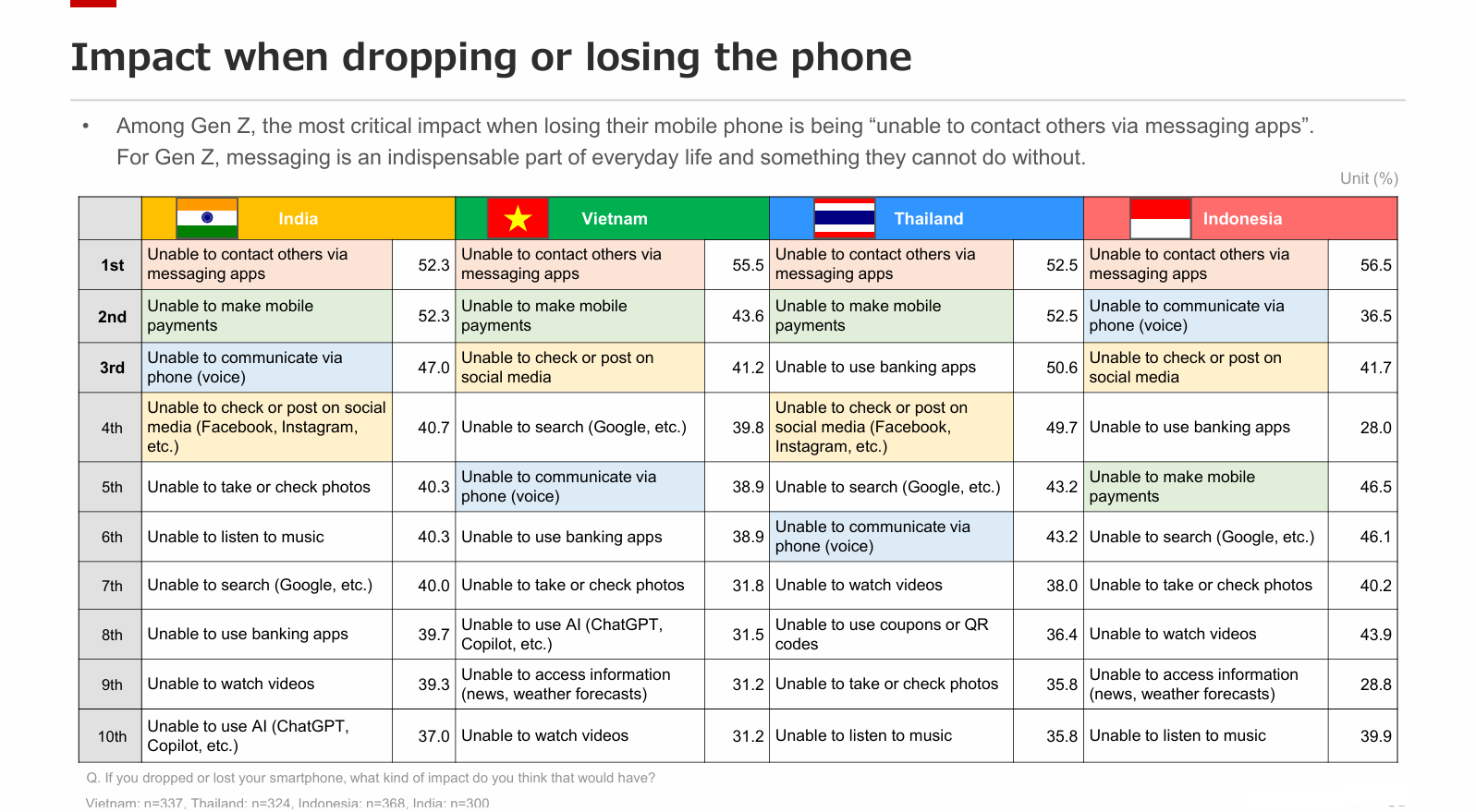
Figure 4: Consequences of Dropping or Losing a Smartphone
Source: INTAGE Research
(1) When You Lose Your Smartphone, the Biggest Problem Is “Not Being Able to Communicate”
When asked about the consequences of losing a smartphone, “not being able to contact others via messaging apps” ranked as the top concern in all four countries—India, Vietnam, Thailand, and Indonesia.
As introduced in Chapter 2 above, for India’s Gen Z—who place a high value on relationships with family and friends—messaging apps do not seem to exist in a world separate from real-life relationships. It is possible that these apps support daily communication and information sharing with those close to them, serving as a means to complement face-to-face interactions. In other words, it can be interpreted not that digital tools become unnecessary because real-life connections exist, but rather that digital tools are used to maintain those real-life relationships.
(2) Indispensable Not Only for Communication, but Also for Payments and Searches
Next, “inability to make mobile payments” also tied for first place among India’s Gen Z, at 52.3%. It is clear that smartphones serve a variety of functions in daily life, including making phone calls, using social media, searching for information, banking, and watching videos.
In other words, for India’s Gen Z, smartphones are not merely devices for entertainment or browsing information. They are viewed as essential infrastructure for daily life—enabling them to stay in touch with others, find necessary information, make payments, and carry out other daily activities.
(3) Gen Z Maintaining Connections with Those Close to Them Through Digital Means
As shown above, for India’s Gen Z, smartphones are not merely devices for entertainment or browsing information. It is clear that they serve as a “lifeline” for maintaining relationships, accessing necessary information, and carrying out daily activities. Keeping this in mind makes it easier to understand India’s Gen Z’s use of digital technology not as a one-dimensional image of “young people who prefer the online world,” but rather as practical behavior that efficiently supports their daily lives and interpersonal relationships.
4. Purchasing Behavior: Discovering Products on Social Media and Verifying Them Through People You Know or Reviews
These “human connections” and “practical use of digital technology” are also evident in the way consumers choose products. Here, we take a closer look at the purchasing behaviors revealed by a survey of Gen Z consumers in India and ASEAN countries (Vietnam, Thailand, and Indonesia) regarding “how they choose and purchase products.”
(1) Using Different Information Sources Depending on the Product Category
Looking at “Information Sources Used When Purchasing Food and Beverages,” “in-store” ranked first in all four countries. Meanwhile, friends and acquaintances, video sites, social media posts, social media ads, and online grocery stores also ranked highly. This indicates that while in-store shopping—where consumers can easily see the actual products—serves as the foundation for everyday purchases, they also make use of digital sources and word-of-mouth recommendations.
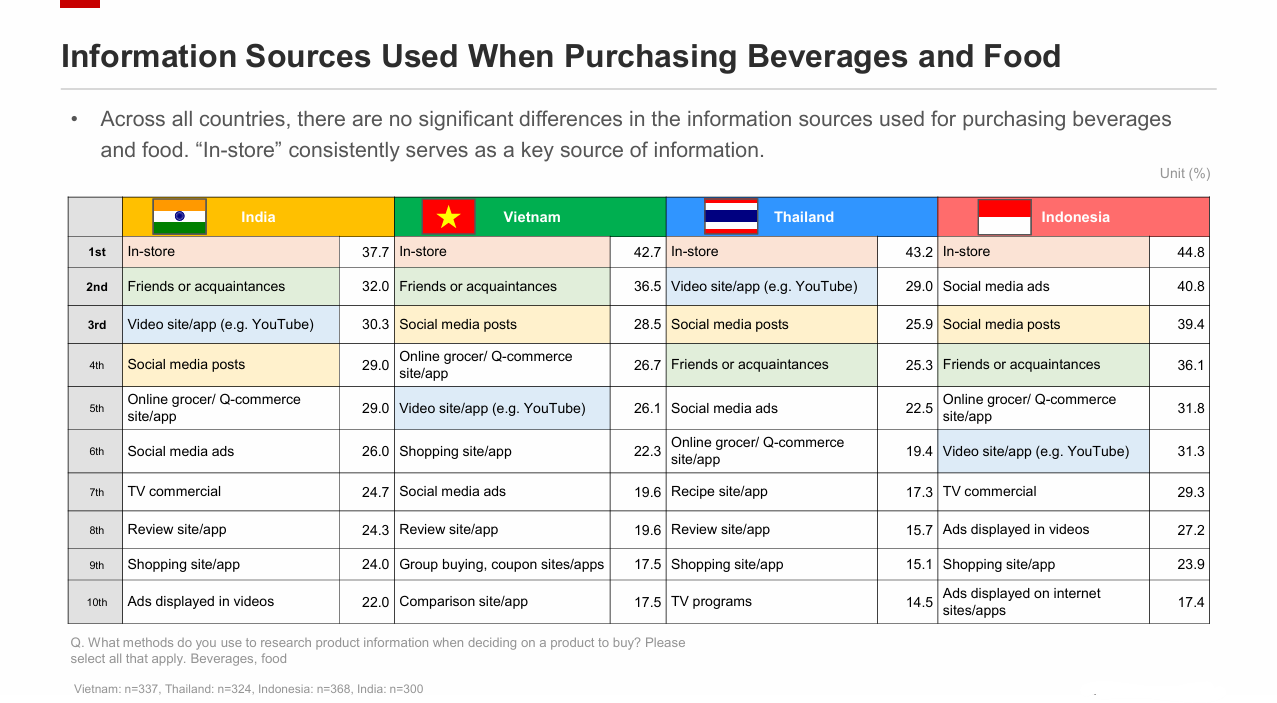
Figure 5: Information Sources Used When Purchasing Beverages and Food
Source: INTAGE Research
Next, regarding “sources of information used when purchasing cosmetics, detergents, and daily necessities,” the top choice among India’s Gen Z was “social media posts” at 33.0%, followed by “review sites/apps” at 31.3%. In contrast, “friends and acquaintances” ranked first in Vietnam, “in-store” in Thailand, and “social media ads” in Indonesia, demonstrating that even among Gen Z, the primary sources of information vary by country.
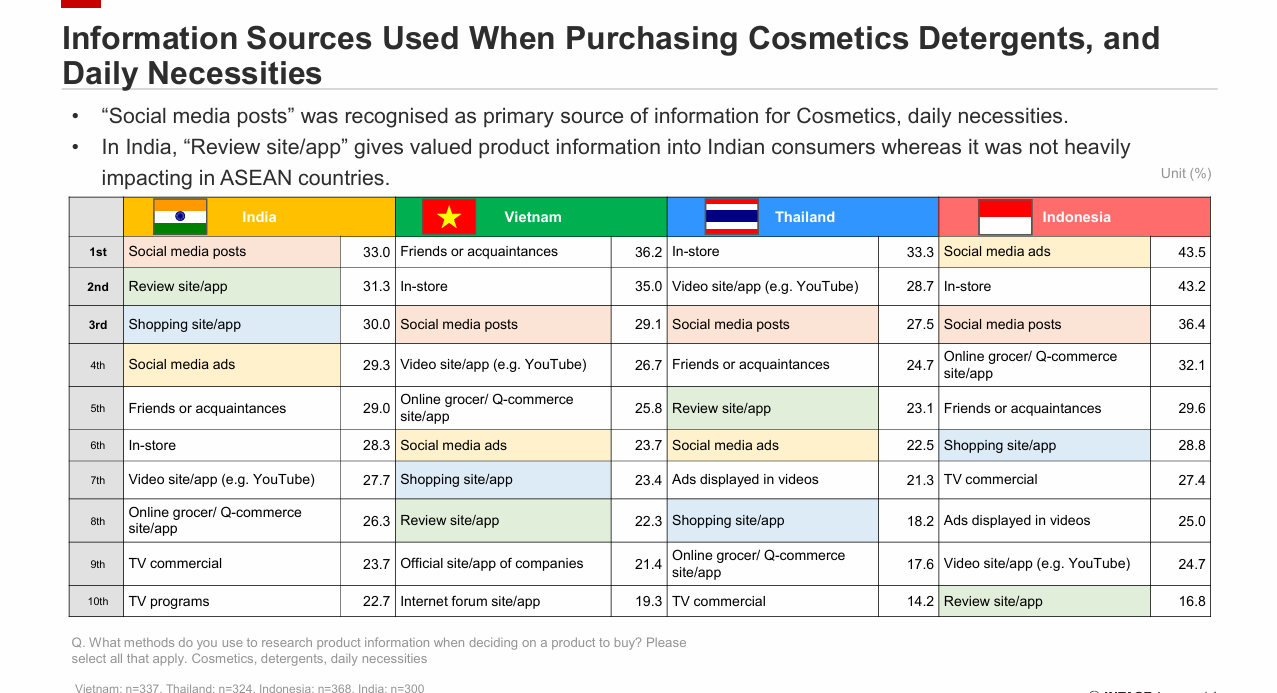
Figure 6: Information Sources Used When Purchasing Cosmetics, Detergents, and Household Goods
Source: INTAGE Research
(2) The more expensive the product, the more digital and interpersonal trust are on par
What about when you're buying high-priced items, such as cars or home appliances?
Regarding “information sources used when purchasing cars and motorcycles,” the top choice among India’s Gen Z was “video sites and apps” at 33.3%, followed by “friends and acquaintances” at 32.3%.
Furthermore, regarding “information sources used when purchasing home appliances, smartphones, and air conditioners,” “video sites and apps” ranked first at 37.0%, followed by “shopping sites and apps” at 31.7%. Meanwhile, friends and acquaintances (29.3%), in-store information (31.3%), and review sites and apps (29.3%) also accounted for approximately 30% each.
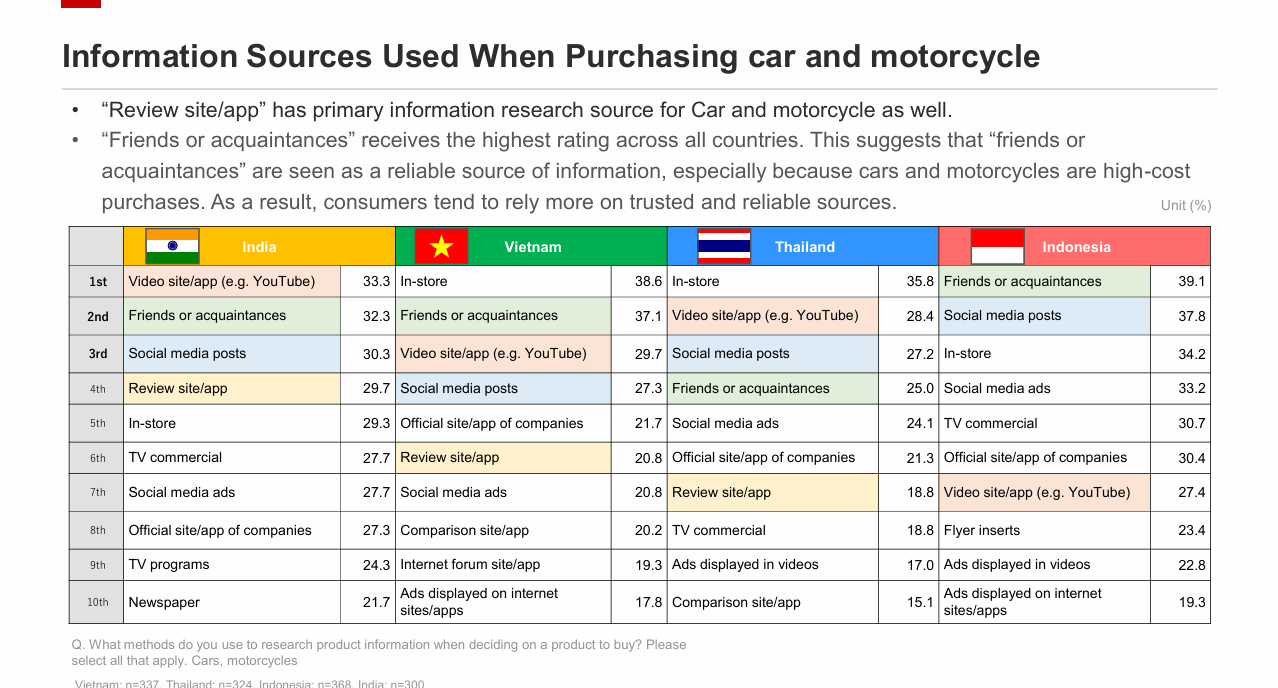
Figure 7: Information Sources Used When Purchasing Cars and Motorcycles
Source: INTAGE Research
(3) The Shift in Trust from “Real-World to Digital”
What these survey results reveal is that India’s Gen Z does not view digital sources and word-of-mouth as an either/or choice. Instead, they discover products through videos and social media, compare them using reviews and shopping sites, and also consider the opinions of friends and acquaintances as part of their decision-making process. In other words, they are using multiple sources of information simultaneously. This does not indicate a loss of trust in people close to them, but rather suggests that the scope of their search for “reliable information” has expanded to include digital ratings and user experiences. This suggests that both Indian Gen Z and ASEAN Gen Z are combining online and offline information to find trustworthy options.
5. An efficient and streamlined purchasing process, which is particularly evident in India
A closer look at the purchasing behavior of India’s Gen Z reveals that they don’t just gather a lot of information—they proceed through a series of steps, from discovery and comparison to verifying purchase conditions and sharing their experience after the purchase.
[The 4-Step Purchasing Process]
① Discovery and Narrowing Down Options
They learn about products through YouTube, Instagram, friends, and family, and create a shortlist while assessing the products’ relevance and usefulness to them. Not only advertisements from companies but also user reviews and the opinions of people close to them play a role in discovering and narrowing down product options.
② Evaluation and Comparison
They check reviews, ratings, unboxing videos, and comparison videos, and compare prices across multiple platforms. Rather than making decisions based solely on brand name, they verify the product’s intrinsic value, such as features, specifications, safety, and reliability.
③ Decision and Purchase
In addition to price and features, they check for discounts, ease of returns, customer support, and compatibility with the brand. Among India’s Gen Z, 40.3% prioritize “customer support” at the time of purchase, while 26.7% prioritize “promotions, discounts, and freebies”—both figures are higher than those of Gen Z in the three comparable ASEAN countries.
④ Post-Purchase Sharing
After making a purchase, they share reviews and feedback online, and this information serves as a basis for other consumers’ decisions. In other words, not only does the quality of the product matter, but a brand’s prompt response when issues arise also influences long-term trust, reputation, and future purchases.
Thus, the purchasing behavior of India’s Gen Z does not appear to be as simple as impulsively buying products that are trending on social media. They discover products based on recommendations from people they know or third-party reviews online, check reviews, comparison videos, and price information, and assess a product’s value—including factors such as customer support and discounts—before making a purchase. A key characteristic of their digital behavior is that they use technology not only to expand their options but also to efficiently narrow them down, enabling them to make “choices that are less likely to result in regret.”
6. India and Three ASEAN Countries: Similarities and Differences
As discussed so far, Gen Z in India and Gen Z in the three ASEAN countries share the common trait of valuing human connections while drawing on multiple sources of information. At the same time, a comparative analysis reveals country-specific differences in trusted sources of information and purchasing priorities, and provides a clearer picture of the purchasing behavior of Gen Z in India.
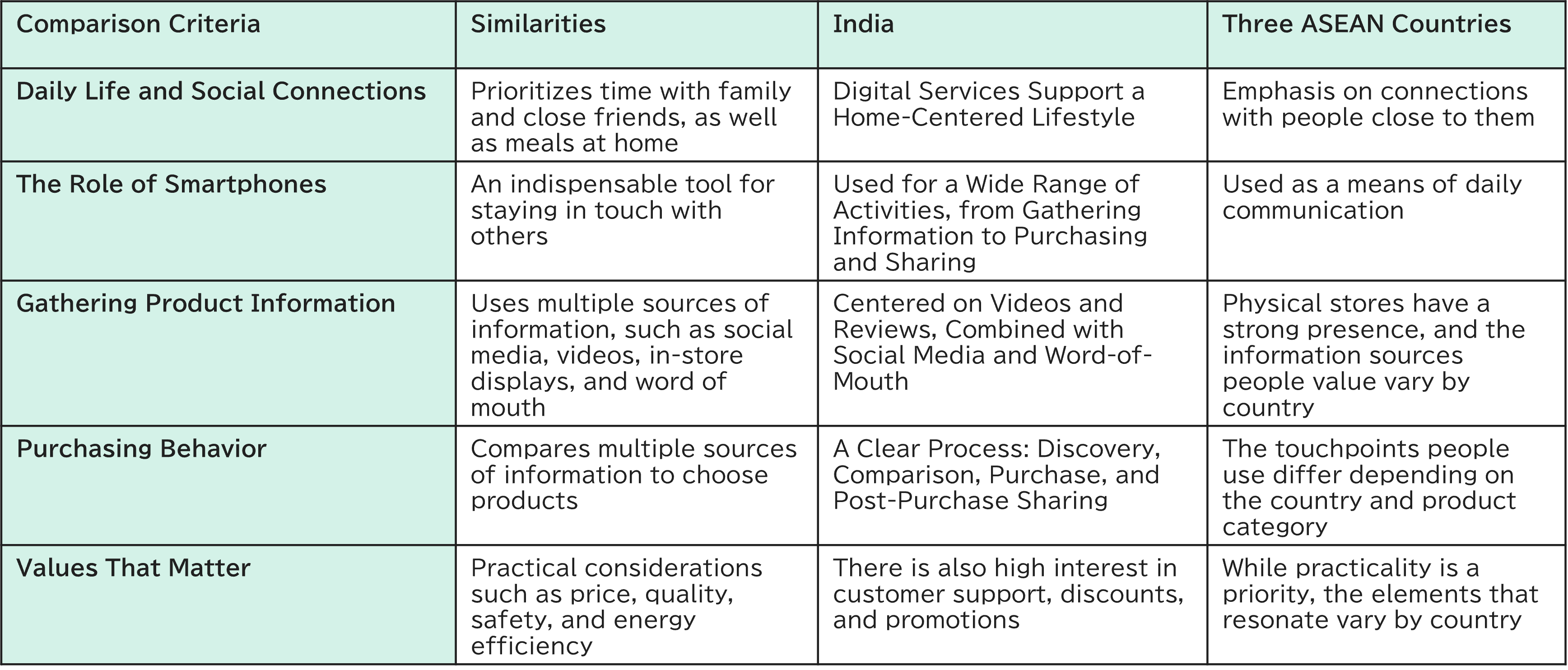
While Gen Z in India and Gen Z in three ASEAN countries share common values, differences were observed in their information-gathering and purchasing behaviors. In particular, Gen Z in India tends to combine information from videos, reviews, social media, and friends and family to repeatedly compare and evaluate options. Therefore, when marketing products or services to Gen Z in India, it will be necessary to adopt a communication strategy that goes beyond a single touchpoint and encompasses the entire journey—from discovery to post-purchase sharing.
7. Summary: India’s Gen Z: Using Human Connections as a Starting Point to Find Satisfactory Solutions Through Digital Means
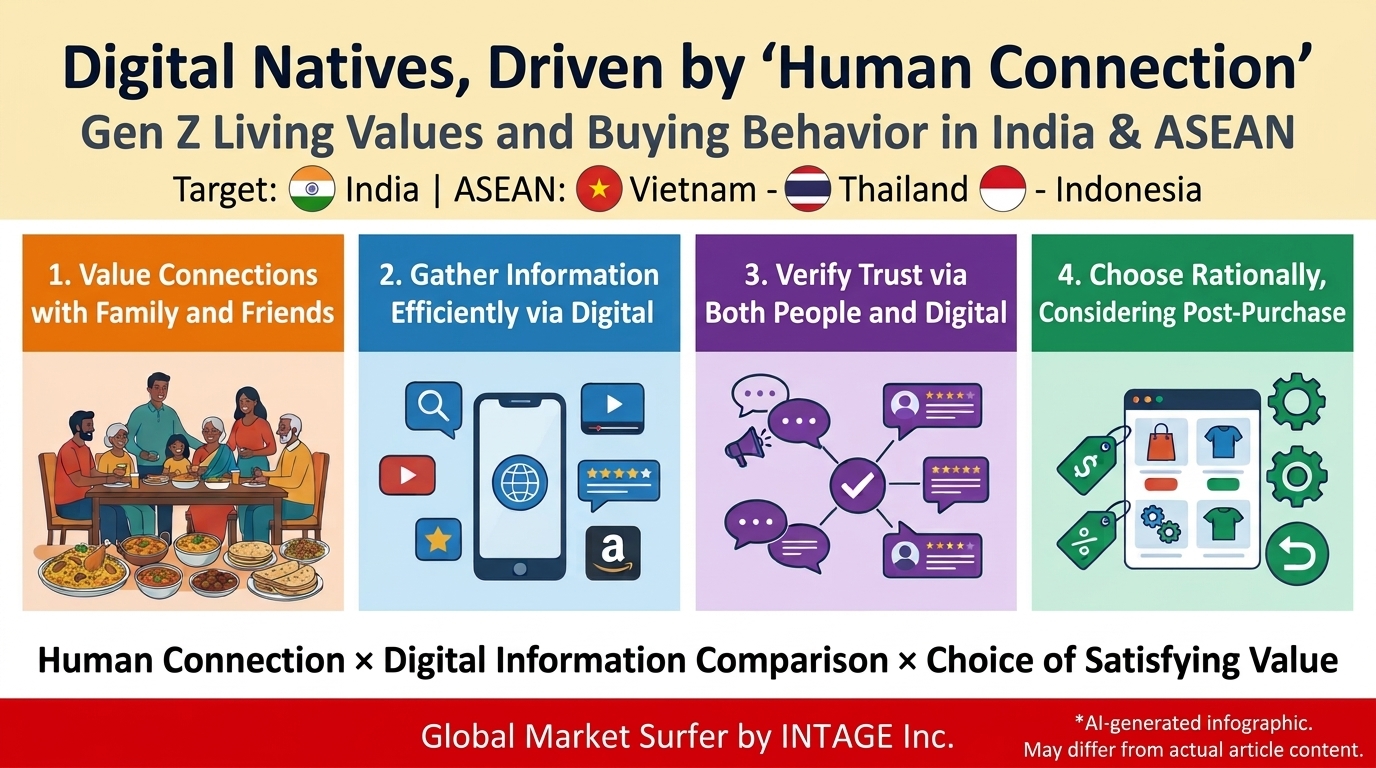
As we’ve discussed so far, to understand India’s Gen Z, it’s essential to look beyond their status as “digital natives” and also focus on their interpersonal connections and the criteria they use when selecting products. Here, we’ll organize the characteristics of India’s Gen Z lifestyle attitudes and purchasing behaviors—as revealed by the survey results—into four key points.
① Valuing Connections with Family and Friends
India’s Gen Z places a high priority on eating meals at home and spending time with family and friends. Although they are a generation of digital natives, it is evident that relationships and trust with those close to them form the foundation of their daily sense of fulfillment.
② Using Digital Tools to Efficiently Gather a Wide Range of Information
When selecting products or services, they actively utilize social media (such as YouTube and Instagram), videos, review sites, and shopping sites. Digital platforms serve as a means to efficiently find products that suit them from among a vast number of options.
③ Verifying Reliability Through Both Human and Digital Sources
India’s Gen Z verifies the reliability of products and brands by combining word-of-mouth from friends and family with user reviews, videos, and in-store information. Trust in those close to them and online evaluations do not conflict; rather, they complement each other in the decision-making process.
④ Making rational choices by comparing price, features, and post-purchase support
They check not only price and discounts but also product features, safety, ease of returns, and customer support. The purpose of gathering information is not merely to follow trends, but to minimize the risk of making a mistake and to choose products that offer value they find convincing.
As shown above, it has become clear that the lifestyle values and purchasing behavior of India’s Gen Z are characterized by “using digital tools to compare information while valuing personal connections, and finding their own satisfactory solutions.”
Understanding India’s Gen Z from this perspective will be a key factor in ensuring that your products and services are chosen.
Survey Overview
・Target Population: Men and women aged 15–29 (Generation Z)
・Sample Size: 1,329 respondents in total (337 from Vietnam, 324 from Thailand, 368 from Indonesia, and 300 from India)
・Survey Period: Three ASEAN countries: February 7–March 9, 2025; India: March 24–April 10, 2026
・“ASEAN” as used in this article refers to the three countries: Vietnam, Thailand, and Indonesia
・Source: INTAGE Research
The “Next Step” in Data Collection
Intage's International Research
Have you ever searched through public information and market reports only to find that the information you're looking for isn't there?
Intage’s international research has a track record of over 500 projects across more than 60 countries.
Intage supports the global business operations of many companies through our research, helping them find the answers they need.
We can accommodate a variety of research methods, including quantitative and qualitative research, as well as online and offline surveys.
If you’re struggling with issues such as “I need more consumer data from this country” or “I can’t find the information I’m looking for,”
please contact Intage’s international research team.