目次
- 1. Introduction
- 2. Understanding Taiwan’s “Average” Based on Statistical Data (Basic Profile of Taiwanese People)
- 3. The Taiwanese Lifestyle: Housing, Environment, Housework, and Marriage
- 4. Taiwanese Food Culture and Attitudes Toward Health and Sports
- 5. Gen Z: The Driving Force Behind Taiwan’s Market, and Trends in Entertainment and Beauty
- 6. Taiwan’s High Educational Standards and Semiconductor Industry
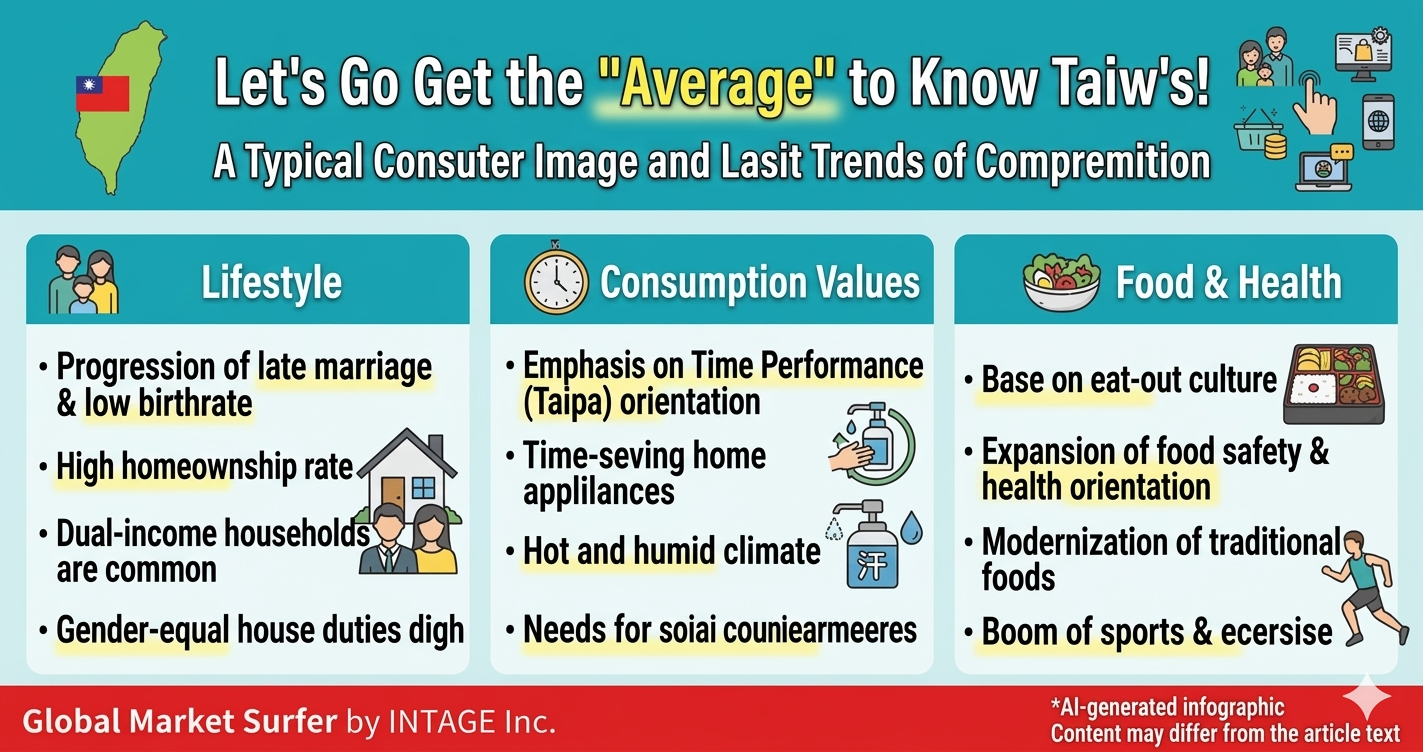
- 7. Summary
1. Introduction
Taiwan is known for its pro-Japanese sentiment and is attracting significant attention as a destination for Japanese companies looking to expand overseas. However, when it comes to developing concrete marketing strategies, how accurately are you able to grasp the “average lifestyle and values of Taiwanese people”? Rather than relying on vague impressions, understanding a data-driven “average profile” is essential for improving the precision of your targeting and message design.
In this article, drawing on various data sources—including Intage’s “Global Viewer” database of international consumers—we will organize and explain the fundamental “average” profile of Taiwanese consumers and the latest trends that emerge from it.
2. Understanding Taiwan’s “Average” Based on Statistical Data (Basic Profile of Taiwanese People)
(1) Population: The Declining Birth Rate
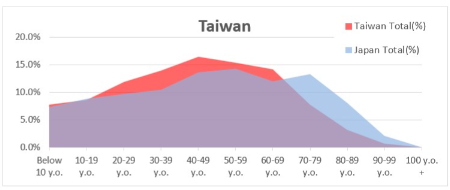
・Population Structure: While Japan’s population is concentrated in the 40–70 age group, Taiwan’s is centered on the 30–60 age group. The population is smaller among younger age groups, indicating an aging society.
・Birth Rates and Declining Birth Rates: According to a 2017 survey, the total fertility rate was 1.13, the second-lowest in Asia after South Korea’s 0.81 (2021 survey). Although the rate was 1.10 in 2007—10 years ago—and has risen slightly since then, it remains at a low level.
Furthermore, the average age of childbirth for women is 31.9 years (2023 survey), the same as Japan’s 31.9 years. Compared to the 2016 survey figure of 31.3 years, this indicates that women are giving birth later in life.
For more details, please click here.
▶Related Data: Population/population ratio by age and sex (10 y.o. range) _Taiwan
▶Related Data: Total fertility rate_17 countries
▶Related Data: Mean age at childbearing_17 countries
(2) Ethnic, Religious, and Linguistic Composition
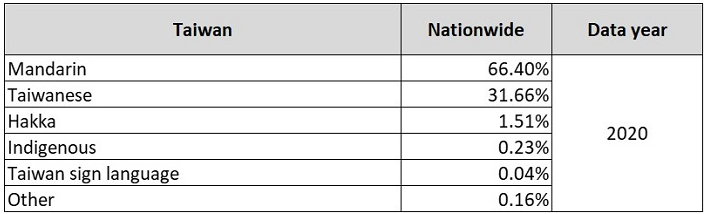
・Ethnicity and Language: The Han Chinese make up over 90% of the population, while indigenous peoples who have lived in Taiwan since before the immigration from mainland China account for approximately 2.3%. Regarding language, 66.40% of the population speaks Mandarin (Standard Chinese), while Taiwanese (31.66%) and other languages are also used in daily life.
・Religion and Immigration: In terms of religion, Buddhism and Taoism are widely practiced. Although the number of immigrants exceeded 1.13 million in 2024, they account for only about 5% of the total population, remaining at a relatively low level.
For more information, please click here.
▶Related data:Population ratio by ethnic groups_Taiwan
▶Related data:Population ratio by language _Taiwan
▶Related data:Population ratio by religion_17 countries
▶Related data:Number of International Migration _16 countries
3. The Taiwanese Lifestyle: Housing, Environment, Housework, and Marriage
(1) High Homeownership Rate
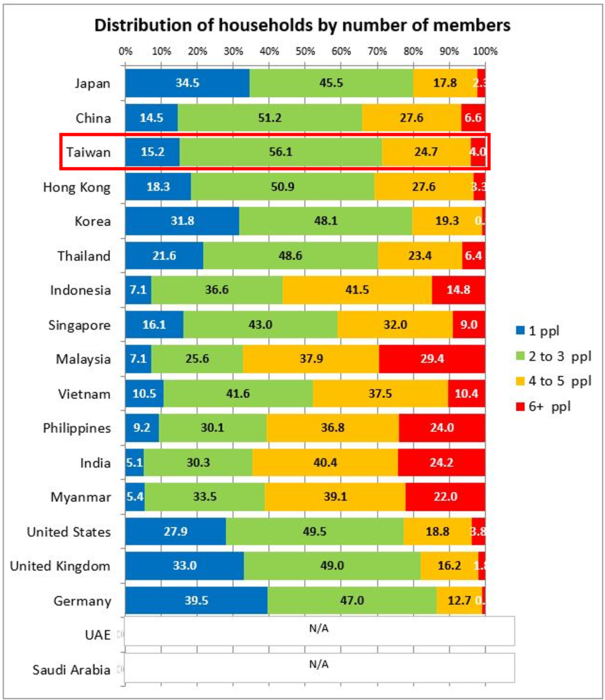
・Households and Income: Single-person households account for about 15% of the total—a relatively small proportion—while households with two to three members make up the majority, at about 56%. The monthly household income for the middle class is estimated to be between NT$75,000 and just under NT$100,000 (approximately 370,000 to 500,000 yen).
・Housing: The homeownership rate stands at approximately 84%, which is significantly higher than Japan’s 61.2% and has remained at a high level over the past decade. Even in the northern region, including Taipei where land prices are high, the homeownership rate reaches 82.9%.
For more details, please click here.
▶Related Data:Distribution of households by size (number of members)_16 countries
▶Related data:Percentage of households by household income&SEC_Taiwan (Greater Taipei)
▶Related data:Homeownership rates_16 countries
▶Related data:The change in homeownership rates_Taiwan (2010/2020)
(2) “Hygiene and Sweat Management” in a Hot and Humid Climate
・Climate: Taiwan has a mild climate, with an average temperature of about 22°C and average lows ranging from 12°C to 17°C, making it feel like spring all year round. However, the average humidity is high at 70–80%, creating an environment where people tend to sweat easily throughout the year.
・Sweat Management and Bathing: Many Taiwanese people consider “excessive sweating” to be a physical concern, and sheet-type sweat-control products are popular. At home, about 40% of people take a shower “immediately after returning home” to wash off sweat accumulated while out and about. Many households in Taiwan do not have bathtubs, and shower-based bathing is the norm.
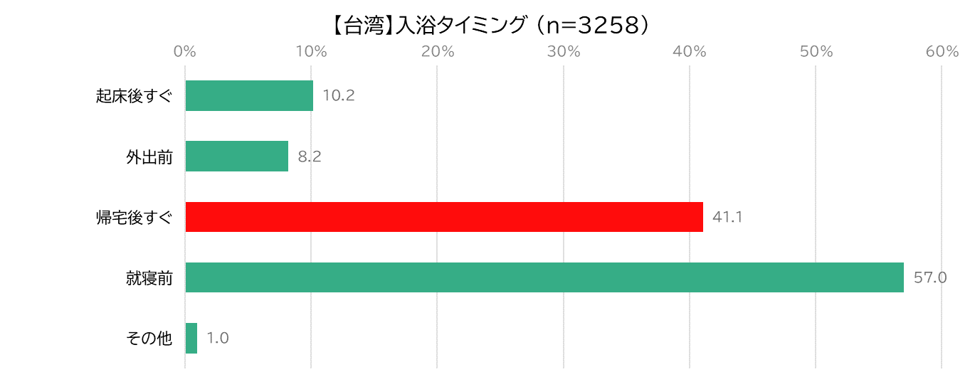
Figure 1: Bathing Times (Multiple Choices) (Base: Taiwanese men and women aged 18–64)
Source: Intage Global Viewer (2024)
Accelerate decision-making with smart overseas resident data
Global Viewer
This service provides reports tailored to your issues using questionnaire data on various actual conditions and attitudes of sei-katsu-sha in 11 countries (Asia and US) stocked by INTAGE.
The service covers 400 items, including actual behavioral conditions and awareness, values, and information contact related to various product and service categories.
・Hygiene: Because high humidity makes mold a common problem, there is a strong demand for “drying, ventilation, and odor control,” and thoroughly drying wet areas is generally considered a sign of cleanliness.
For more details, please click here.
(3) Labor Force Participation Rates and Equal Division of Household Chores
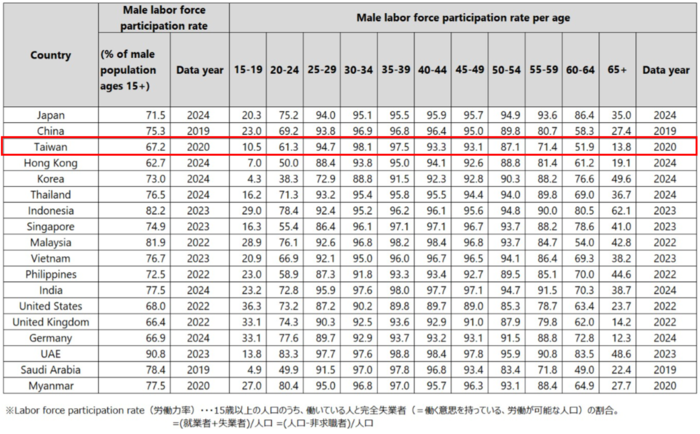
・Labor Market Conditions: The labor force participation rate peaks at 98.1% for men in their early 30s and 90.5% for women in their late 20s, and then tends to decline for both men and women after age 60.
・Household Chores and Time-Saving Appliances: In Taiwan, there is a trend toward relatively equal division of household chores between men and women. In particular, more than 70% of men handle dishwashing and cleaning the living room. Against the backdrop of many dual-income households and busy lifestyles, interest in and the intention to purchase “time-saving” appliances—such as robot vacuum cleaners that “complete tasks with minimal effort”—are on the rise.
For more details, please click here.
▶Related data:Male labor force participation rate
▶Related data:Female labor force participation rate by age_18 countries
▶Related data:Employment distribution by occupation
▶Related Articles:In which countries do men actively participate in housework? Division of housework between men and women and prevalence of support appliances in Asian countries
(4) Marriage and Financial Trends Among Taiwanese People
In Taiwan, against the backdrop of rapid economic development and the advancement of IT, the attitudes of young people toward marriage have changed significantly.
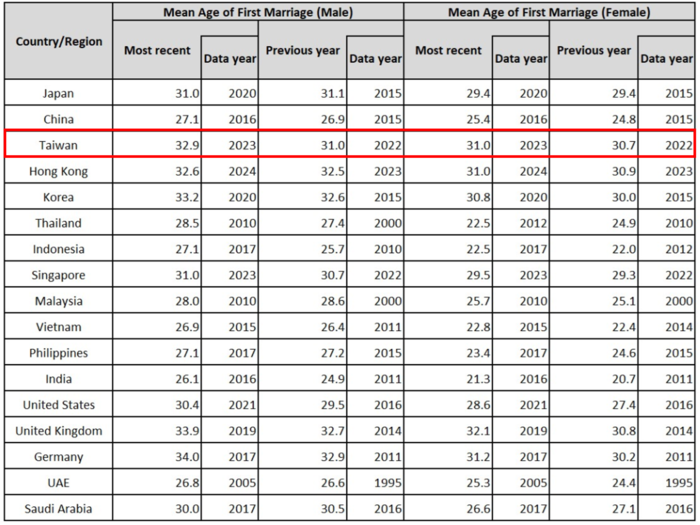
・Rising Trends of Late Marriage and Non-Marriage: The average age at first marriage is 32.9 years for men and 31.0 years for women, which is among the highest in Asia, on par with Hong Kong (32.6 years for men and 31.0 years for women). Against a backdrop of economic uncertainty and soaring real estate prices, the rate of unmarried adults has reached an all-time high, and, similar to Japan, an increasing number of young people no longer view marriage and childbirth as essential life events.
・Simplification of traditional customs: In Taiwan, family ties are valued even more highly than in Japan. As a result, traditional customs such as betrothal gifts (pinjin) and dowry (jiaozhuang) have evolved into more formal and simplified practices.
・Rising financial barriers: The once-ideal marriage requirements of “a car, a home, and sufficient savings” have become difficult to meet on an average annual income due to rising living costs in Taipei and soaring real estate prices (up approximately 50% over the past decade).
For more details, please click here.
▶Related Articles:[Global Series: Marriage and Assets] Taiwan: Preparing for Marriage
▶Related data:Mean age of first marriage by sex
4. Taiwanese Food Culture and Attitudes Toward Health and Sports
Taiwan is renowned for its rich culinary culture, often described as “the land of good food,” but in recent years, this culture has been undergoing changes.
(1) The Culture of Eating Out and Growing Awareness of “Food Safety and Health”
・A diet centered on eating out: In Taiwan, the rate of home cooking is low, with fewer than 20% of people cooking at home four or more days a week. The culture of eating out has deep roots, and with post-war economic growth, diverse dining scenes—including night markets, which expanded in urban areas—have flourished.
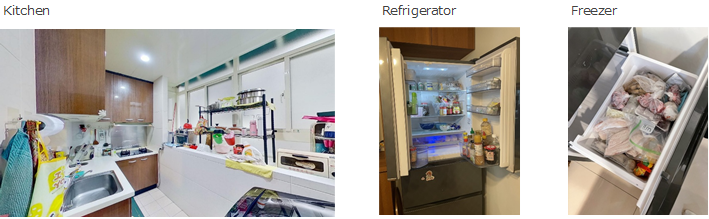
Photo 1: Kitchen Conditions in Taiwan: Married Women, 3-Person Households,
Monthly Household Income of TWD 130,000–169,999 (approx. 650,000–850,000 yen)
Source: Consumer Life Panorama (TW_11)
What is Consumer Life Panorama?
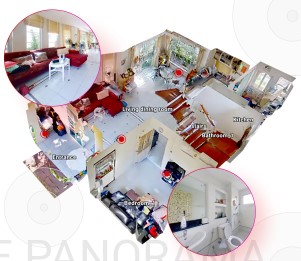
This is a website-type database that has accumulated visual data on more than 1,000 sei-katsu-sha from 18 countries around the world. The database includes many 3D models of living environments and 2D data of items owned by each sei-katsu-sha, and is useful for understanding overseas sei-katsu-sha, which is difficult to grasp using only letters and numbers.
Using visual data such as those cited in this column,
Compare the differences in the attributes of overseas consumers
To get a realistic understanding of the actual usage of each category
To understand the overall lifestyle of target consumers
etc., can be utilized as a “no-go” home visit survey.
・Food Safety and the Organic Trend: Against the backdrop of past food safety issues and growing health consciousness, concern about pesticide residues has increased, leading more households to choose organic oils and additive-free seasonings. Safety-conscious practices have become widespread, and the habit of carefully washing vegetables with specialized detergents has also become common.
・Growing Health-Consciousness: Centered around Gen Z, high-priced “healthy bento boxes” featuring low-GI, low-fat, and high-protein options are gaining popularity. Online ordering and eco-friendly packaging are also contributing factors to this trend. Additionally, following its introduction at Starbucks, demand for oat milk has rapidly expanded due to its environmental and nutritional benefits, driving the health-conscious boom.
For more details, please click here.
▶Related articles:[Taiwan]A Cultural Icon: Taiwan's Night Market
▶Related articles:Home cooking in Asian countries: How Cooking Frequency Reveals Differences in National Eating Habits
▶Related articles:[Taiwan: World Residence Tour] Food and Health Consciousness of Taiwanese
▶Related articles:[Taiwan] Health-conscious bento boxes, "健康餐盒," are booming in Taiwan, attracting the younger generation!
▶Related articles:[Taiwan] Oats milk has expanded rapidly since its introduction at Starbucks. Oats milk is popular in Taiwan
(1) Time-Efficiency First! Evolving Food Trends
・The Evolution of Prepared and Home-Cooked Meals: Against the backdrop of an increase in dual-income households and rising prices—which has made dining out feel expensive—frozen foods, known for their time-efficiency, have gained popularity, expanding to a market where 45 billion meals are consumed annually. It is believed that the “time spent at home” and indoor-oriented lifestyles that became established during the COVID-19 pandemic are driving the popularity of frozen foods. Additionally, the “drinking at home” trend—where people, particularly Gen Z, enjoy craft beer and high-alcohol beverages with an alcohol content of 9.99%—has become firmly established.
・Modernizing Tradition: Taiwanese instant noodles, developed in collaboration with Japanese companies, have become a staple in Taiwanese daily life thanks to the addition of Taiwanese-style seasoning. They are also valued as emergency supplies during typhoons and have gained support from Gen Z with the introduction of vegetarian options. Furthermore, a trend of enjoying traditional foods in a modern way is spreading, as seen in the colorful reinterpretations of the traditional Chinese herbal dessert “Fengui,” which have become a hot topic on social media. “Tai Cha No. 25,” a new tea variety developed over approximately 29 years by a research institute in Nantou County, Taiwan, possesses the unique characteristic of changing color depending on the processing method and is expected to become a new trending ingredient.
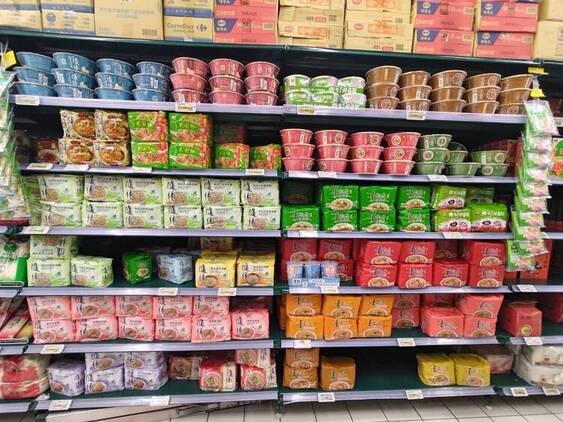
Photo 2: Vegetarian instant ramen Photo 3: Vegetarian instant ramen
For more information, please click here.
▶Related articles:[Generation Z in Asian Countries] Taiwan: Frozen Foods and Craft Beer for Gourmet Enjoyment at Home
▶Related articles:[Generation Z in Asian Countries] Taiwan Edition: Popular Instant Noodles and Cookies that Reflect the Values of Generation Z
▶Related articles:[Taiwan] Modernizing Traditional Chinese Medicine Sweets! Colorful "Powdered Bread" Popular among the Younger Generation!
▶Related articles:[Taiwan] Producing Area Report: Promising New "Taiwan Tea No. 25," a New Variety Bred Over 29 Years
(3) The Sports Boom Accelerated by the COVID-19 Pandemic
Following the prolonged pandemic, the percentage of people who “exercise” has risen to 81.6%, marking an increase from the previous year. Interest in boosting immunity has grown in the wake of the pandemic, further strengthening people’s commitment to exercise. Initiatives combining “eco-friendly practices with sports”—such as major corporations sponsoring marathons and planting trees based on the distance run—are also attracting attention.
For more details, please click here.
5. Gen Z: The Driving Force Behind Taiwan’s Market, and Trends in Entertainment and Beauty
(1) The Consumption Behavior of Digital-Native Generation Z
・Digital-Native Lifestyles: Internet penetration among Taiwanese aged 18 and older stands at 84.7%. Among them, Generation Z—who have been familiar with the internet since childhood—has an exceptionally high internet usage rate, and music streaming has become an established daily habit for them, regardless of whether it is a weekday or a weekend.
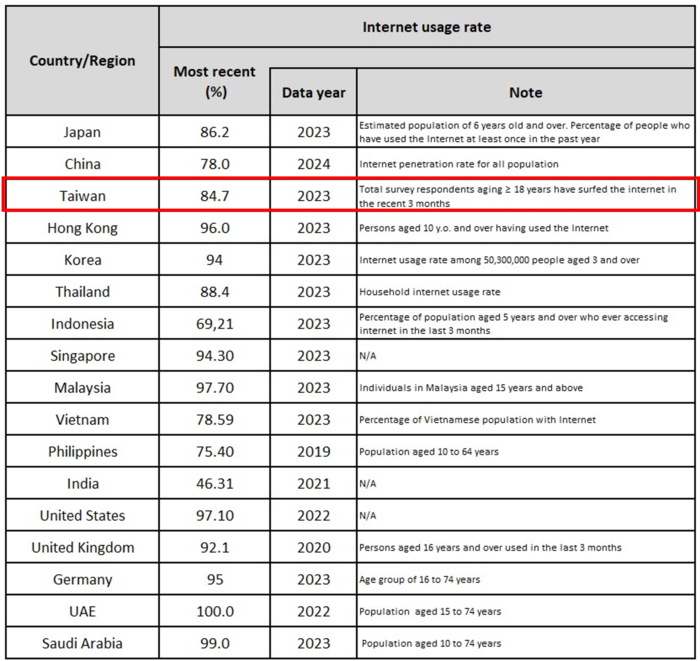
・The Source of Trends: Among Gen Z, digitally-driven content and information—such as the massive hit “Chiikawa” and food trends originating on the social media platform “Threads”—are having a significant impact on consumer behavior.
For more details, please click here.
▶Related data:Internet usage rate_17 countries
▶Related data:What's the Current State of the Music Streaming Market? The Spread of Music Streaming in Asian Countries
▶Related articles:Asia 8 Area Trend Ranking 2025-2026
▶Related articles:Understanding Generation Z Around the World: Country-Specific Trends Through Values and Daily Life
(2)Men's Beauty and Grooming Focused on Practicality
Compared to South Korea and China, Taiwanese men have a lower rate of makeup product usage. However, when it comes to skincare, their usage of facial cleansers is the highest among the three countries, reflecting a culture that places a strong emphasis on “cleanliness.” This suggests a tendency to prioritize functionality and practicality over the aesthetic effects of makeup. As the market for general skincare—including moisturizers—continues to expand, there appears to be potential for future growth into the makeup market.
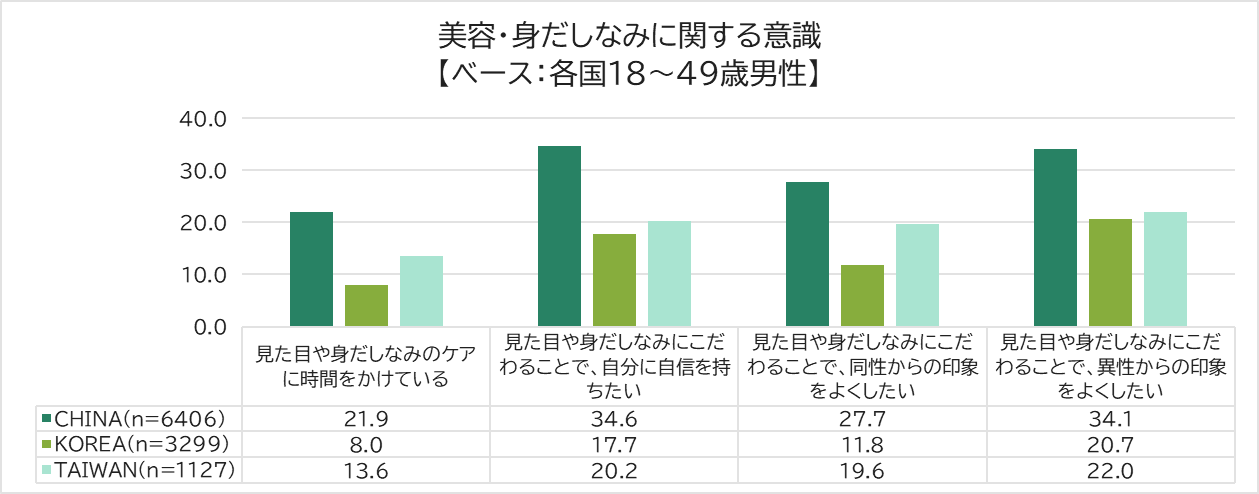
Figure 2: Attitudes toward beauty and personal grooming
Base: Men aged 18–49 in each country
(Source: INTAGE Global Viewer, 2024)
For more information, please click here.
6. Taiwan’s High Educational Standards and Semiconductor Industry
Building on its high educational standards, Taiwan has established a world-leading semiconductor industry. Finally, we will explore the source of competitiveness generated by the synergy between education and industry.
・Education: In the PISA (Programme for International Student Assessment) for 15-year-olds, Taiwan demonstrated a high level of proficiency, outperforming Japan by 2–3% in subjects such as mathematics.
・Industry: Taiwan produces approximately 60% of the world’s semiconductor supply and about 90% of cutting-edge semiconductors. The semiconductor industry, led by Taiwan Semiconductor Manufacturing Company (TSMC), accounts for 15% of Taiwan’s GDP and has become an indispensable part of the global economy.
For more details, please click here.
▶Related data:Academic Ability Test Scores_PISA _16 countries
▶Related articles:[Taiwan]How Taiwan Continues to Lead the Semiconductor Industry
7. Summary
The key terms introduced in this article that are essential for understanding modern Taiwanese consumers are as follows:
・Lifestyle: Characterized by the trend toward later marriage and a declining birth rate, as well as high homeownership rates, the widespread adoption of dual-income households, and an equal division of household chores between men and women.
・Consumer Values: In addition to a “time-saving mindset” (focused on home appliances and frozen foods), there is a strong emphasis on hygiene and sweat management due to the hot and humid climate.
・Food and Health: While rooted in a culture of dining out, there is a growing trend toward “food safety and health consciousness” (organic foods, healthy bento boxes, oat milk). The modernization of traditional cuisine and a sports boom are also gaining momentum.
・Gen Z and Industry: In addition to the consumption behaviors of digital natives and the growing popularity of men’s grooming focused on practicality, the social foundation is shaped by a world-leading semiconductor industry and high educational standards.
Takeaways for Marketers (Practical Tips)
(1) Maximize Added Value with “Time Efficiency × Health”
For busy Taiwanese consumers—many of whom are dual-income households—”time efficiency” is a strong purchasing motivator. However, differentiation is difficult based solely on “speed and convenience.” By combining these with health values such as “additive-free, safety, and nutrition,” you can create a premium offering and a compelling reason for consumers to choose your product.
(2) Localization Design Rooted in Climate and Living Environments
Taiwan’s hot and humid climate significantly influences hygiene awareness and daily routines. Considering habits like showering immediately after returning home and the need to keep wet areas dry, it is crucial to design products and communications that address local lifestyles, emphasizing functional benefits such as “sweat, odor, and mold prevention.”
(3) Capturing Gen Z with “Tradition × Modernization”
For Gen Z, “modernized products”—traditional items updated with a contemporary twist—are particularly effective. Whether it’s colorful rice cakes or innovative craft beers, the key is to design products with visual impact and experiential value in mind, with the expectation that they will go viral on social media. Given the information-seeking behaviors of digital natives, it is essential to design a pathway that starts on social media, generates buzz, and ultimately leads to a purchase.