目次
- 1. Introduction: “Beauty” is not merely a matter of personal preference; it is shaped by society and one’s living environment.
- 2. Caring about one’s appearance is not the same as being proactive about beauty
- 3. How do differences in aesthetic sensibilities manifest in beauty habits and product choices?
- 4. The Product Purchase Process: Where Do You Learn About It, What Do You Check, and Where Do You Buy It?
- 5. The “Desired State” and “Basis for Trust” That Influence Product Selection
- 6. Conclusion: Three Key Points for Translating Each Country’s Concept of “Beauty” into Product Strategy
1. Introduction: “Beauty” is not merely a matter of personal preference; it is shaped by society and one’s living environment.
People live within various groups, such as families, friends, schools, and workplaces. As a result, to varying degrees, we are all conscious of “how others perceive us.”
The purpose of grooming isn’t simply to make oneself look beautiful. Appearance also plays a role in “how we express ourselves in society”—such as giving a clean impression, looking healthy, dressing appropriately for the occasion, and demonstrating self-discipline.
Furthermore, “personal grooming” isn’t limited to clothing and makeup. Skincare, hair care, fragrance, oral care, accessories, and personal items such as bags also contribute to the impression one makes on others. In addition, there are countries where it is believed that maintaining healthy lifestyle habits—such as diet, exercise, and sleep—leads to beauty and a healthy appearance.
For example, in China, the condition of one’s hair and scalp is recognized as a key factor in one’s appearance. In the Philippines, a “pleasant scent” is linked to a sense of cleanliness, while in India, health management—including diet, exercise, and sleep—is viewed as the foundation of beauty. Even when people are striving for the same goal of “beauty,” what they focus on and what they consider the ideal state vary by country and region.
So, do countries that place a greater emphasis on appearance actively seek out beauty information and use more cosmetics?
In this article, we’ll explore this relationship by analyzing comparative data from various countries and specific beauty habits drawn from “Global Viewer,” Intage’s database of international consumer data.
2. Caring about one’s appearance is not the same as being proactive about beauty
(1) The “importance placed on appearance” varies by country
Survey data on the “importance placed on appearance” in various countries shows that there are differences from country to country.
The country with the highest “importance of appearance” was India at 55.5%, followed by Indonesia at 51.6%, the Philippines at 44.1%, Vietnam at 40.9%, Thailand at 34.1%, China at 32.6%, and Malaysia at 32.4%. In contrast, Taiwan scored 31.9%, Singapore 23.9%, South Korea 23.2%, Hong Kong 21.3%, and Japan 18.0%.
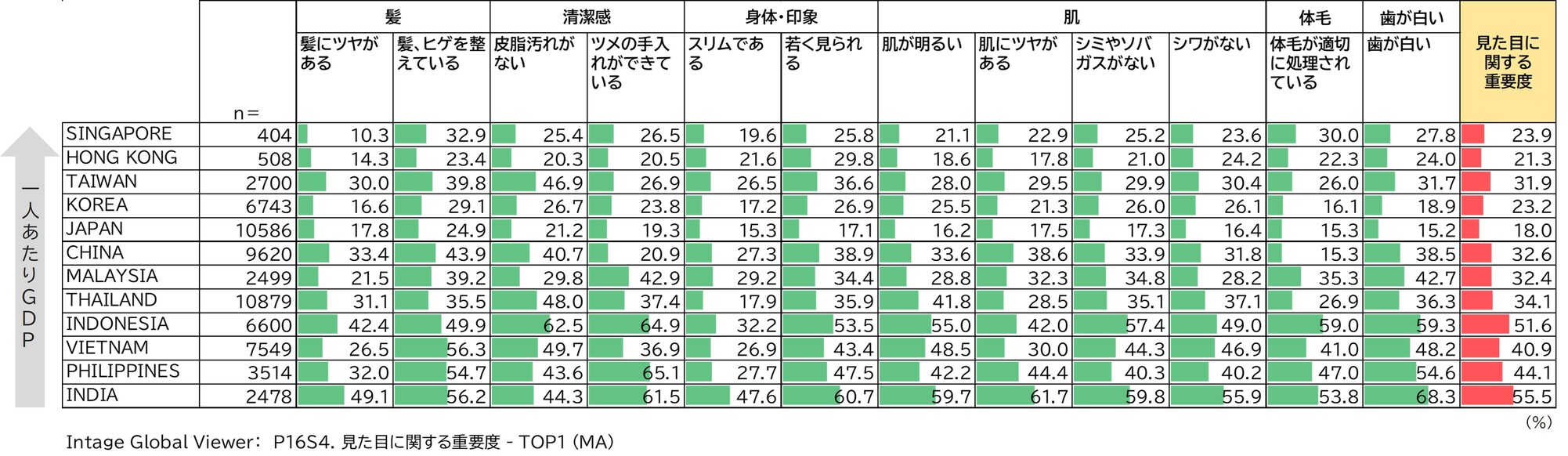
Figure 1: Importance of Appearance—Top 1 (MA)
Source: Intage Global Viewer (2025)
Accelerate decision-making with smart overseas resident data
Global Viewer
This service provides reports tailored to your issues using questionnaire data on various actual conditions and attitudes of sei-katsu-sha in 11 countries (Asia and US) stocked by INTAGE.
The service covers 400 items, including actual behavioral conditions and awareness, values, and information contact related to various product and service categories.
Overall, countries with high GDP per capita tend to place relatively less importance on appearance, while those with lower GDP per capita tend to place greater importance on it. However, this indicator does not reflect the amount of cosmetics used or spending on beauty. The concept of “valuing appearance” encompasses not only attractiveness but also multiple objectives, such as a sense of cleanliness, harmony with one’s surroundings, trustworthiness, and self-confidence. Therefore, it is not possible to judge a country’s aesthetic sensibilities or interest in beauty based solely on the high or low values of this indicator.
For more information, please click here.
(2) The ranking of countries changes when looking at “level of engagement with beauty”
On the other hand, when examining “attitudes and values regarding engagement with beauty,” the ranking differs from that based on the importance placed on appearance.
In terms of the degree of involvement with beauty, the ranking from highest to lowest is as follows: India at 40.7%, the Philippines at 28.6%, Vietnam at 28.3%, Thailand at 21.2%, Malaysia at 19.8%, Indonesia at 18.9%, and China at 17.5%.
When these two sets of data are compared, it becomes clear that in each country, awareness of appearance “does not necessarily translate into the same level of beauty-related behavior.”
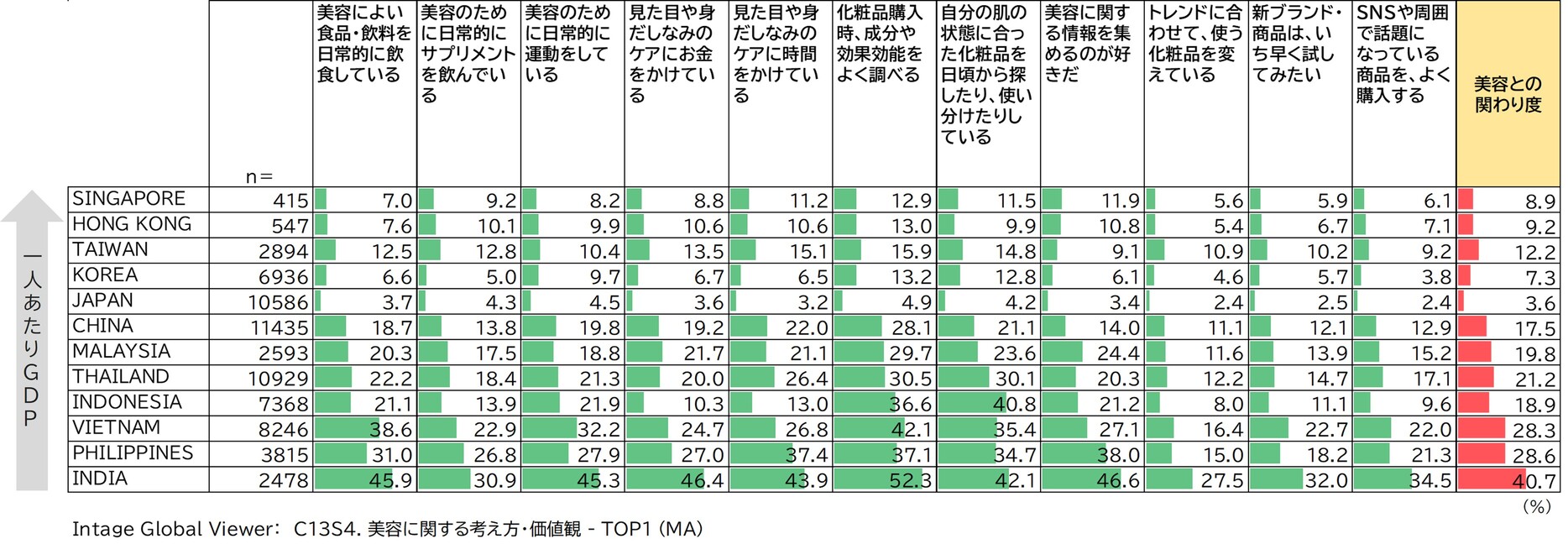
Figure 2: Attitudes and Values Toward Beauty—Top 1 (MA)
Source: Intage Global Viewer (2025)
(3) Vietnam: Both Awareness and Behavior Are Relatively High
In Vietnam, the importance placed on appearance stands at 40.9%, and the focus on beauty at 28.3%—both of which are at relatively high levels.
In a survey of Vietnamese Gen Z women, 51% responded that they “carefully check the ingredients and effects when purchasing cosmetics.” Before purchasing cosmetics, they check ingredients and effects through social media and online reviews, demonstrating a proactive approach to finding products that suit them from both domestic and international brands.
Furthermore, “engagement with beauty” in this context isn’t limited to simply using many products. Actions such as searching for product information, researching ingredients, comparing brands, and checking user reviews are also considered part of this engagement.
In Vietnam, the desire to “improve one’s appearance” may be driving this proactive information-gathering and product comparison.
For more details, please click here.
(4) Indonesia: A Discrepancy Between the Importance Placed on Appearance and Engagement with Beauty
In Indonesia, the importance placed on appearance stands at 51.6%, the second highest among the 12 countries surveyed, while engagement with beauty is 18.9%.
This discrepancy suggests that a strong focus on appearance does not necessarily translate into the use of many cosmetics or the adoption of complex beauty routines.
When selecting cosmetics in Indonesia, while Halal compliance is a prerequisite for peace of mind, factors such as comfort, price, and ease of purchase are also prioritized. This suggests that consumers are making practical choices based on products that align with their religious beliefs and daily life circumstances, rather than expressing a strong preference for specific cosmetics.
Furthermore, in Indonesia, factors other than cosmetics—such as clothing and personal belongings—are also part of self-expression and personal grooming. It is possible that concern for one’s appearance is not limited to makeup and skincare but is dispersed across various aspects of daily life.
For more details, please click here.
(5) South Korea: Low Interest Levels Despite Its Reputation as a “Beauty Powerhouse”
South Korea is known as a “beauty powerhouse” that sets global trends in cosmetics and beauty, yet its level of engagement with beauty—at 7.3%—is among the lowest of the countries covered in this study. However, we cannot conclude from this result that South Koreans have a low interest in beauty.
Compared to men in China and Taiwan, a high percentage of South Korean men use not only skincare products such as toners, lotions, serums, and sunscreen but also makeup items like BB cream and tinted lip products. Approximately 30% use BB cream and about 20% use lip gloss, indicating that the practice of naturally enhancing skin texture and complexion has become deeply ingrained in their daily lives.
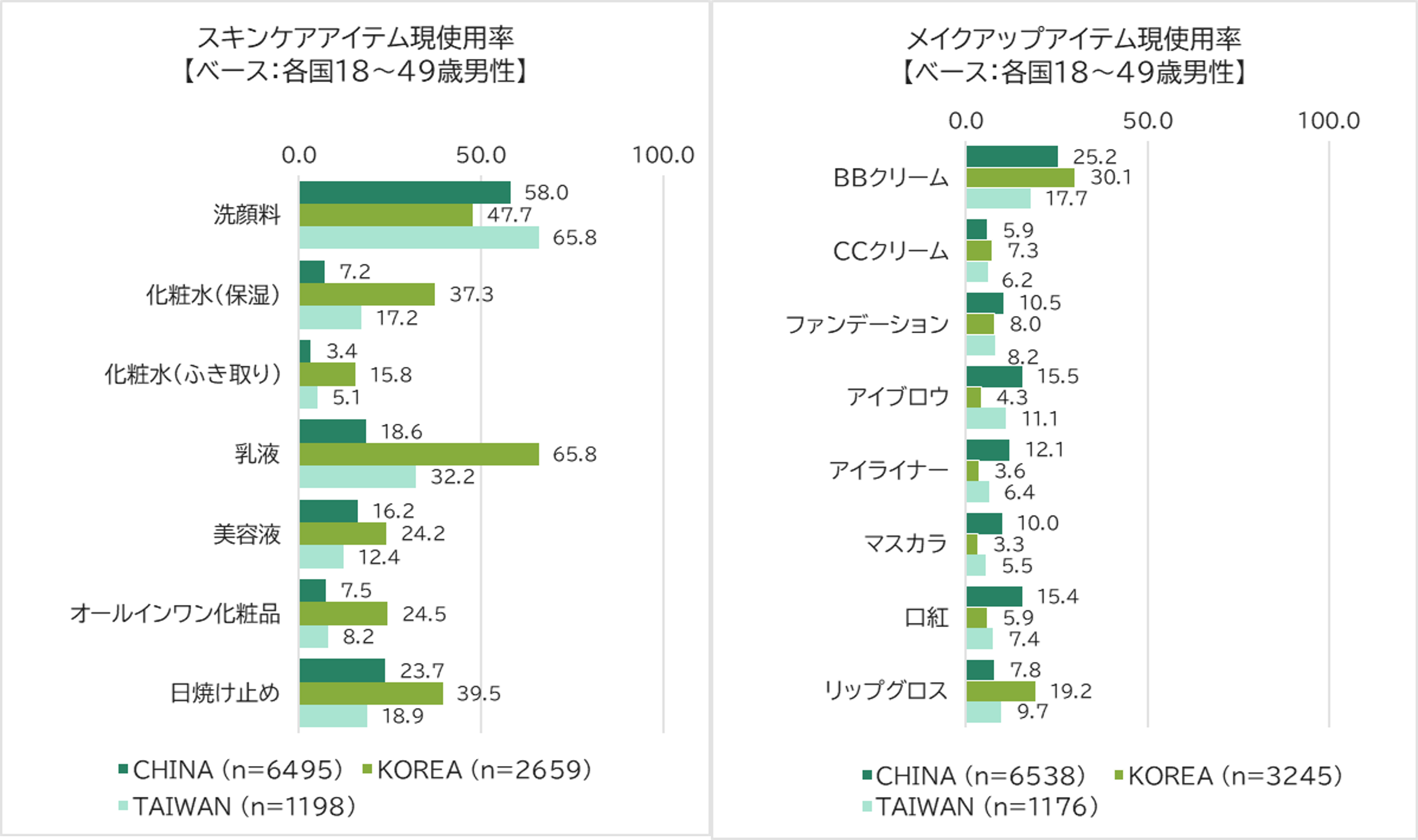
Figure 3: Usage rates of skincare products among men aged 18–49 in China, South Korea,
and Taiwan (left)
Usage rates of makeup products among the same group (right)
Source: Intage Global Viewer (2024)
Thus, it is possible that in South Korea, beauty is not a special hobby or interest, but has become established as part of everyday self-care. Furthermore, if young women have already decided on the brands, products, and places to shop that suit them, there is less need to actively seek out new information.
Furthermore, young women in five Southeast Asian countries are actually more likely to seek out beauty information than their counterparts in Japan or South Korea. This is thought to be partly due to the fact that the beauty market in Southeast Asia is in a growth phase, with new brands emerging and overseas brands actively entering the market. In contrast, the beauty markets in Japan and South Korea may be mature, with established brands and purchasing habits already in place.
For more details, please click here.
(6) A country’s unique character is reflected in the “difference” between the importance placed on appearance and the extent to which beauty is valued.
“Importance Placed on Appearance” and “Level of Engagement with Beauty” are not intended to rank countries, but rather serve as indicators to understand how attitudes translate into behavior. In countries where there is a disparity between these two metrics, it is possible that people maintain their appearance through means other than cosmetics—such as clothing, hairstyles, and fragrance—that beauty has become a habitual practice with little need for information-seeking, and that consumers tend to stick with their go-to products.
On the other hand, in countries with a high level of engagement with beauty, activities such as gathering information, comparing products, checking reviews, and sharing post-use experiences may be integral parts of beauty-related behavior.
3. How do differences in aesthetic sensibilities manifest in beauty habits and product choices?
(1) Comparison by Country: What and Where Do People Focus Their Grooming Efforts?
① China: Hair and the Scalp Are Key Focus Areas for Appearance Management
According to survey data, among Chinese people in their 20s and 30s, “a clean, neat appearance” is cited as the most important factor regarding physical appearance. “Hair” is considered a key component of one’s appearance, alongside “body and overall impression” and “skin.”
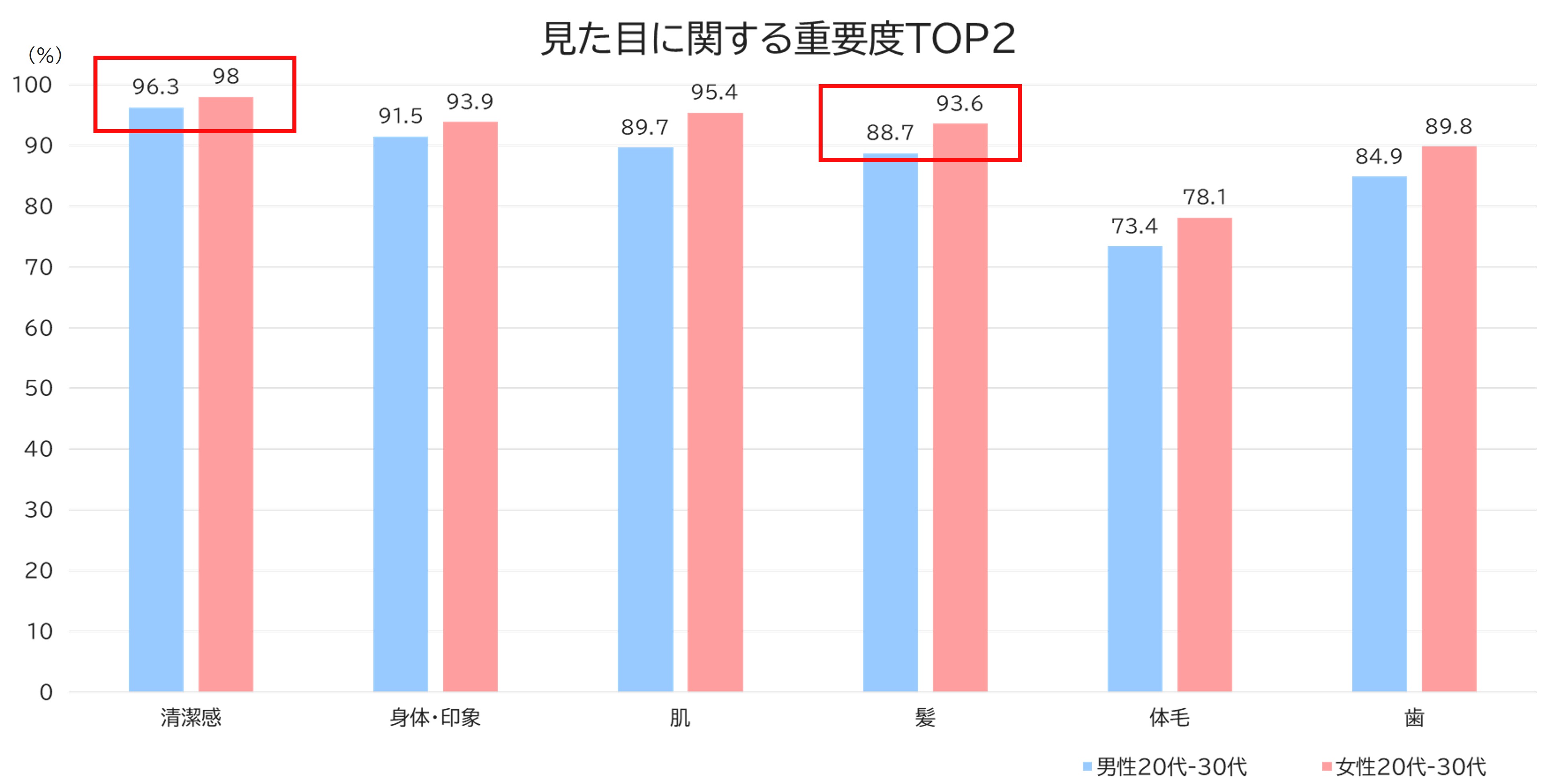
Figure 4: Importance of Appearance (multiple selections allowed)—Excerpt of top responses by gender (Base: Chinese men and women in their 20s and 30s)
Source: Intage Global Viewer (2025)
One possible factor behind this trend is the widespread adoption of social media platforms centered on images and videos. On platforms such as Xiaohongshu (RED) and Douyin (the Chinese version of TikTok), users view content in short bursts, so visual impressions are crucial for capturing initial attention. It’s not just the face—factors such as hair shine, volume, the condition of the crown, and overall styling also play a key role in shaping first impressions.
Looking at hair and scalp concerns, “oily or greasy scalp” is the biggest concern shared by both men (42.5%) and women (46.5%). Meanwhile, men also cited dandruff and itchy scalp, while women cited lack of hair volume, hair loss, and dryness.
While these concerns are shared, the data also reveals gender differences in how people address them.
Furthermore, while 74.4% of women use conditioners or hair treatments, only 28.8% of men do. Women also use hair dryers and flat irons, not only to maintain the condition of their hair and scalp but also to adjust the texture and overall look of their hair. In contrast, men tend to follow a relatively simple hair care routine centered around shampoo.
Thus, even though both genders share the same desire to “keep their hair clean,” men may prefer products that allow them to quickly and easily cleanse their hair and control sebum, while women may seek products tailored to specific concerns—including repair and styling.
For more details, please click here.
② South Korea: Letting nature take its course as part of daily self-care
Compared to men in China and Taiwan, Korean men tend to use skincare and makeup products at a higher rate.
In addition to toners, moisturizers, serums, all-in-one products, and sunscreen, they also use BB creams and tinted lip balms. What’s particularly notable is that these products are used to naturally even out the skin and complexion rather than to create a striking makeup look.
For example, lotions that even out skin tone or provide coverage can be considered products that fall somewhere between general skincare and light makeup. Products that combine the functions of lotion, sunscreen, and BB cream allow users to complete multiple steps at once while achieving a naturally refined complexion.
Thus, in South Korea, it appears that a natural finish—one that conveys a sense of “consistent self-care”—is valued over an appearance that clearly reveals the use of makeup. Consequently, beauty has become a daily habit for maintaining a clean and well-groomed impression, rather than an action taken solely to alter one’s appearance for special occasions.
While in China (as mentioned in Section 1), skincare routines are divided into detailed steps based on specific hair and scalp concerns, in South Korea there is a trend toward using multi-functional products to efficiently achieve a natural finish.
By looking not just at whether people use cosmetics, but also at “which areas they are grooming, for what purpose, and to what extent,” we can gain a more concrete understanding of the beauty habits in each market.
For more details, please click here.
(2) Even under the same hot and humid conditions, the preferred approaches differ
A survey comparing the importance placed on physical appearance among men in Malaysia, Vietnam, and Thailand—all of which share a hot and humid climate—found that “cleanliness” was the most important factor in all three countries.
The percentages were 77.6% in Vietnam, 70.2% in Thailand, and 68.5% in Malaysia; all three countries recorded figures of nearly 70%, placing “cleanliness” in first place by a wide margin over other factors.
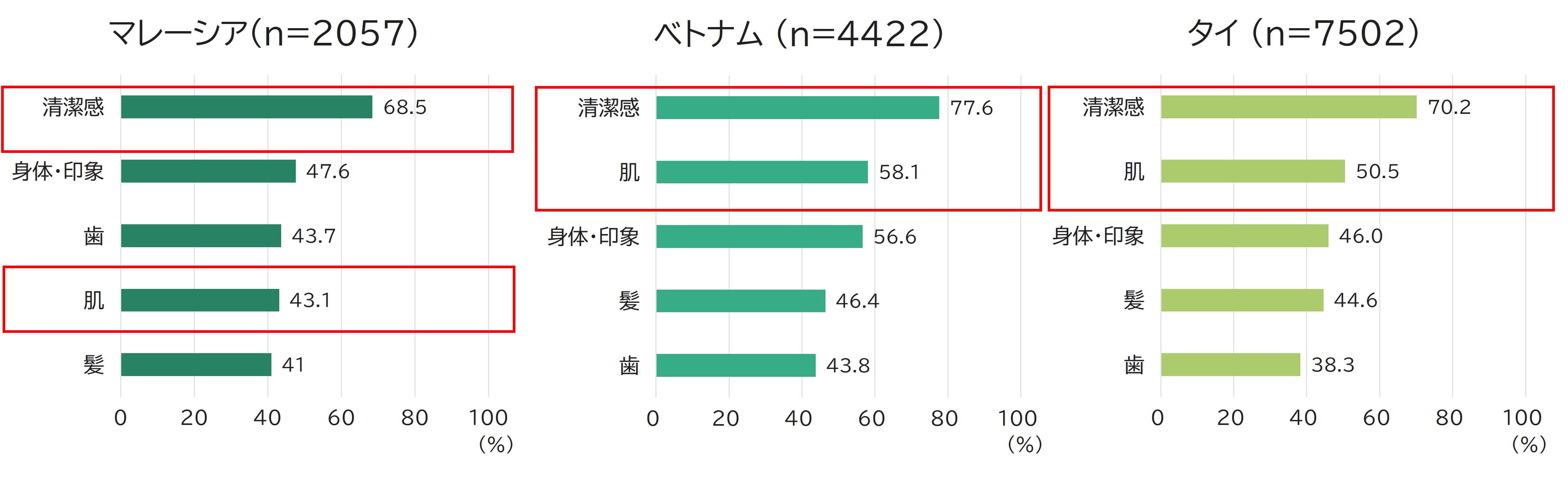
Figure 5: Importance of Appearance (multiple selections allowed)—Top 5 for each country
(Base: Men aged 18–64 in each country)
Source: Intage Global Viewer (2024)
In addition, when it comes to facial skin concerns, excess oil and stickiness, as well as breakouts and acne, rank among the top issues, revealing common challenges related to the hot and humid climate.
However, just because these skin concerns are shared doesn’t mean people are choosing the same products or skincare methods. Next, let’s take a look at the skincare routines in these three countries.
① Malaysia: Moisturizing After Cleansing Is a Fundamental Step
Among Malaysian men, toner ranks high on the list of products used following facial cleansers. This suggests that a basic skincare routine—which not only removes impurities and excess sebum but also moisturizes the skin after cleansing to balance its condition—has become widely accepted. Based on this, it is considered more effective to combine “value” propositions—such as preventing dryness after cleansing, minimizing stickiness, and maintaining a routine with few steps—rather than simply emphasizing strong cleansing power or sebum removal. Additionally, lightweight textures that can be used comfortably even in hot and humid environments, as well as simple skincare routines that make it easy to maintain both cleansing and moisturizing, are likely to meet the needs of Malaysian consumers.
② Vietnam: Combining Prevention and Coverage
Among Vietnamese men, the usage rate of sunscreen is higher than in Malaysia or Thailand, and serums also rank high among the most commonly used products. Furthermore, concealer ranks high among makeup products.
Based on this data, we can interpret a two-step approach: preventing future skin problems with sunscreen and serums, while using concealer to minimize the appearance of existing blemishes and acne. This demonstrates that skincare and makeup are not separate beauty routines, but rather a series of actions aimed at managing skin condition and maintaining a well-groomed appearance.
In other words, rather than simply viewing the market by product category, it will become increasingly important to adopt a perspective that spans multiple product categories based on consumers’ goals—such as “I don’t want to make my acne worse” or “I want to hide my current acne.”
③ Thailand: Emphasis on Making Skin Look Beautiful
Among Thai men, in addition to sebum and acne, “dull skin” was cited by 26.9% and “lack of radiance” by 20.7%, indicating a clear interest in skin tone and brightness. Consequently, they use base makeup products—such as face powder and BB cream—to even out and enhance the appearance of their skin.
Meanwhile, serums are also a major skincare product for Thai women. Locally, there are examples of serums promoting brightening and tone-up effects being sold in small pouches.
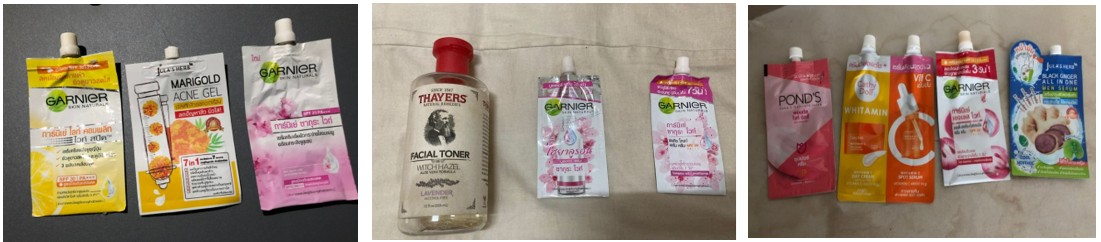
Photo: Skincare products used by women in their 20s and 30s living in Bangkok
Source: Intage Consumer Life Panorama
What is Consumer Life Panorama?
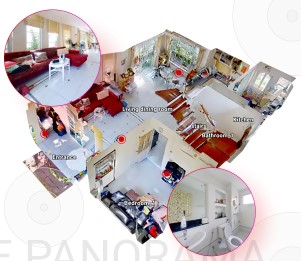
This is a website-type database that has accumulated visual data on more than 1,000 sei-katsu-sha from 18 countries around the world. The database includes many 3D models of living environments and 2D data of items owned by each sei-katsu-sha, and is useful for understanding overseas sei-katsu-sha, which is difficult to grasp using only letters and numbers.
Using visual data such as those cited in this column,
Compare the differences in the attributes of overseas consumers
To get a realistic understanding of the actual usage of each category
To understand the overall lifestyle of target consumers
etc., can be utilized as a “no-go” home visit survey.
In Japan, “serums” are sometimes viewed as a special treatment used in addition to toners and moisturizers. In Thailand, however, they may be used as a core product to help achieve the desired skin brightness and radiance. Additionally, small pouches offer advantages such as lower prices that make them easy to try, the ability to purchase only the amount needed, and portability. Thus, it appears that not only the product’s functionality but also whether its size and packaging align with local purchasing power and usage scenarios are important factors in consumer choice.
If you'd like to learn more, please click here.
④ The Philippines: “Scent” Supports the Perception of Cleanliness
In the Philippines, a “pleasant scent” is a key factor in creating a sense of cleanliness.
According to survey data, people seek pleasant scents not only on their bodies and clothing but also in living spaces such as the living room, bathroom, and kitchen. In particular, there is a tendency to view the lingering scent of detergent as “proof that something has been cleaned.”
This example suggests that a sense of cleanliness is not created solely by appearance. While perfumes, deodorants, scented hair and body care products, fabric softeners, and household cleaners belong to different product categories, consumers may choose them based on the common goal of “experiencing a sense of cleanliness.”
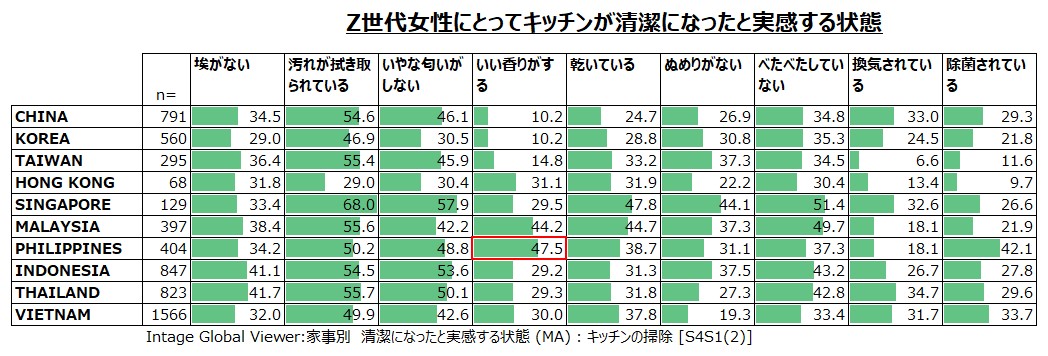
Figure 6: Perceived Cleanliness (MA) by Household Task: Kitchen Cleaning
Source: Intage Global Viewer (2024)
If you'd like to learn more, please click here.
As we’ve seen, hot and humid environments present common challenges such as excess sebum, sweat, and acne. At the same time, it has become clear that the desired solutions vary by country: in Malaysia, the focus is on moisturization; in Vietnam, on prevention and coverage; in Thailand, on skin tone and finish; and in the Philippines, on a sense of cleanliness through fragrance. Therefore, rather than categorizing markets based solely on climate, it seems necessary to confirm exactly what consumers consider to be a “state in which their concerns have been resolved.”
4. The Product Purchase Process: Where Do You Learn About It, What Do You Check, and Where Do You Buy It?
(1) Gathering beauty information isn’t limited to social media alone
A consumer’s sense of beauty and expectations for a product are reflected not only in the products they use but also in the process of learning about, verifying, and purchasing them. By examining where consumers first learn about a product, what sources they rely on for verification, and where they make their purchases, we can gain a more comprehensive understanding of beauty behaviors in each market.
This is also evident from “Global Viewer” (to be conducted in 2025), Intage’s overseas consumer data, which shows that women in their teens and 20s across five Southeast Asian countries primarily gather beauty information from three sources: “word of mouth,” “in-store,” and “online.”
● Word of mouth: Information from friends and acquaintances, as well as buyer reviews posted on e-commerce sites
● In-store: Product packaging, explanations from sales associates and beauty consultants, and the feel of the product when using testers
● Online: Influencers’ social media posts, review videos, live streams, and official accounts of manufacturers and brands
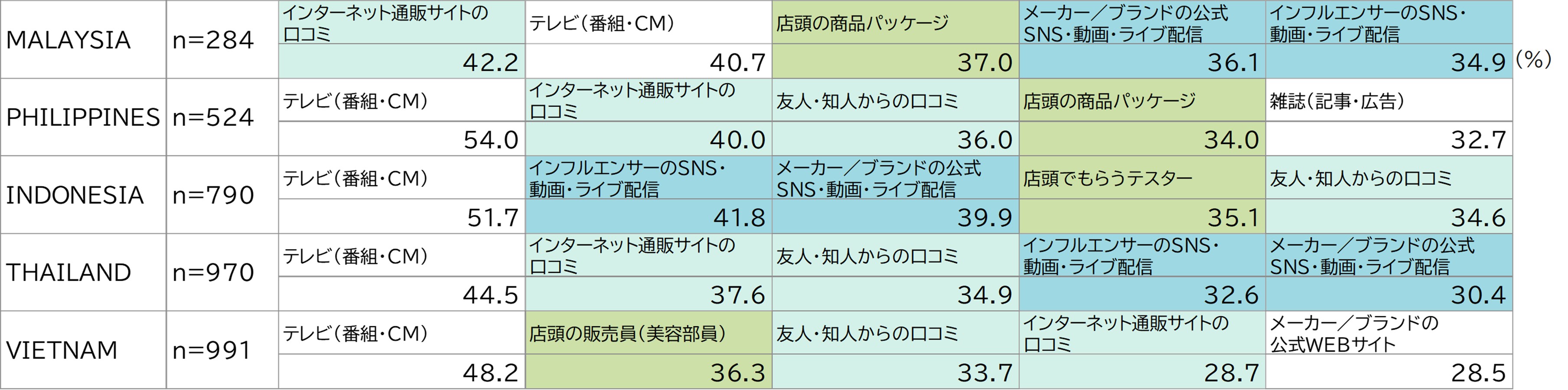
Figure 7: Top 5 Methods for Gathering Beauty Information by Country
(Base: Women aged 18–29 in each country)
Source: Intage Global Viewer (2025)
Furthermore, while it is often assumed that younger people primarily gather information through social media, television programs and commercials are also used as major sources of information in several countries. What this data reveals is that “decisions regarding beauty are not made based on a single medium alone.”
For more details, please click here.
(2) The information available varies by source
The information available at each touchpoint (social media, videos, word of mouth, in-store, packaging, e-commerce, TV commercials) also differs. We have summarized this in the list below.
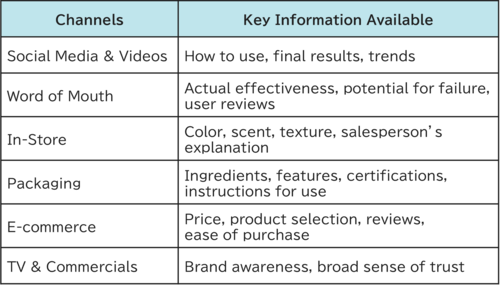
*This framework is an analytical model presented in the article based on the general roles of each information source. It does not represent fixed behaviors common to all countries or consumers.
For example, consumers may “discover a product on social media, read reviews on an online shopping site, test the texture in a store, and then compare prices before purchasing it online.” It is clear that they do not rely on either online or offline channels exclusively, but rather use each one depending on their specific purpose.
(3) Purchase Channels: Differences in Distance and Path to Purchase
In Southeast Asia, the e-commerce platform Shopee is widely used, and content commerce—which integrates video viewing with e-commerce, such as TikTok Shop and YouTube Shopping—is also expanding. It is becoming increasingly common for consumers to watch review videos or live streams and proceed directly to a purchase.
The process of purchasing a product begins with “learning about the product through social media, TV, friends, etc.” and can be broken down as follows:
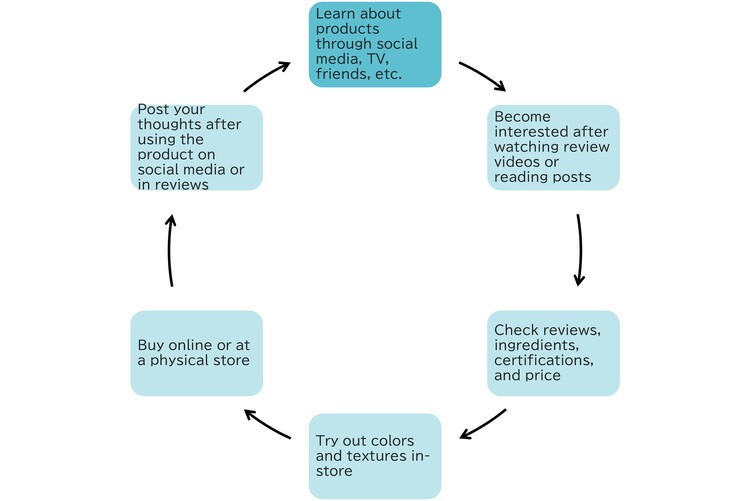
Within this cycle, consumers are not only recipients of information but also sources of information that influence future buyers.
Furthermore, purchasing channels are not uniform even within the same country.
Among shampoos used by Chinese consumers in their 20s and 30s, 44.7% of purchases by women are made on e-commerce platforms, indicating a trend toward online shopping. On the other hand, while men also primarily shop online, 21.0% of their purchases are made at department stores and 10.2% at supermarkets, indicating that they use brick-and-mortar stores at a higher rate than women.
As this data shows, rather than categorizing countries as either “e-commerce-centric markets” or “brick-and-mortar-centric markets,” it is necessary to analyze purchasing pathways separately based on gender, age, product category, and purchase purpose.
In other words, differences in beauty standards across countries are not limited to the types of products used; rather, beauty behaviors are shaped by a range of factors, including which areas are targeted for care, the number of steps in a routine, how consumers discover products, and what they consider before making a purchase.
For more details, please click here.
5. The “Desired State” and “Basis for Trust” That Influence Product Selection
The term “beauty” may bring to mind the idea of dramatically transforming one’s appearance or pursuing an ideal standard of beauty. However, looking at the examples from various countries we’ve covered so far, it becomes clear that cosmetics and beauty products aren’t used solely to drastically alter one’s appearance.
Therefore, in this chapter, we’ll organize how consumers in different countries choose products from three perspectives: “the desired outcome,” “the basis of trust,” and “the touchpoints from learning about a product to making a purchase.”
(1) Desired State: The Ideal Is Not Just “Changing” but Also “Refining”
First, the phrase “I want to be beautiful” can be broadly categorized into four main objectives.
① Improvement
This includes objectives such as reducing acne, preventing dryness, controlling sebum and oiliness, and repairing hair damage.
② Prevention
These are actions taken to prepare for future problems, such as protecting against the effects of UV rays, preventing skin issues from worsening, and maintaining the scalp and hair in a stable condition.
③ Correction
This includes actions such as making one’s complexion appear naturally brighter, concealing acne with concealer, evening out skin tone, and adjusting frizz or volume in the hair.
④ Self-expression
These are actions that utilize one’s appearance within relationships with others—such as expressing one’s true self, creating a sophisticated impression, or adapting one’s appearance to the situation.
When we focus on these four purposes, it becomes clear that beauty is not necessarily just about “transforming oneself into something glamorous,” but also involves actions taken to maintain and improve one’s daily well-being.
Here, we present qualitative interview data from India.
[India]
● Skincare is about stabilizing the skin rather than chasing an ideal
In qualitative interviews with India’s Gen Z, skincare is viewed not as a special beauty ritual, but as a form of self-care integrated into daily life.
The reason people start skincare isn’t a vague longing for beauty, but rather specific concerns such as worsening acne, discomfort from dryness, or skin irritation caused by environmental changes.
Consequently, basic skincare consists of facial cleansers, moisturizing creams or gels, and sunscreen. Specialized treatments like serums and face masks aren’t used to add numerous steps to a daily routine, but rather are incorporated based on the skin’s condition and specific needs.
In other words, rather than endlessly pursuing “perfect” skin, the more realistic goal is to maintain a condition where skin issues do not worsen, allowing for a trouble-free daily life.
Furthermore, while trends such as vitamin C serums and Korean skincare are widely known, there is a noticeable sense of caution—people tend not to use products if they do not suit their skin. In India, being aware of trends and actually purchasing and using products are two distinct actions.
● Makeup: A Way to Present Oneself Appropriately for the Occasion
Qualitative interviews regarding everyday makeup revealed that the routine centers on a minimal set of items, such as sunscreen, eyeliner, and lipstick.
On the other hand, for events or special outings, women add foundation, concealer, and mascara to create a more polished look than usual.
In other words, makeup is not always used to make oneself look glamorous; rather, it serves as a supplementary tool to create a polished impression at university or work and to switch to a different look for events.
When analyzing the cosmetics market in India, it is important to consider not only frequency of use but also the specific occasions in which products play a role.
For more details, please click here.
(2) There Is No Single Basis for Trust
When consumers choose cosmetics, they need information that allows them to determine whether a product is safe for them and will deliver the expected results.
However, what is considered a basis for trust varies by market. Here, we will examine China, Vietnam, Indonesia, and India.
① [China] Science and Technology Build Trust in Product Efficacy
In China’s skincare market, consumer needs are becoming increasingly segmented—shifting from basic care centered on natural ingredients to highly effective care targeting the benefits of specific ingredients, and further to “science-based skincare” that emphasizes science and cutting-edge technology.
In such a market, trust is built not only on abstract expressions like “highly effective” or “good for the skin,” but also on specifics such as which ingredients are used, how those ingredients work, and what technologies and research they are based on.
On the other hand, simply listing technical terms and ingredient names may not adequately convey a product’s value. It is important to link scientific evidence to specific skin concerns and post-use results, and to explain them in language that consumers can understand.
For more details, please click here.
② [Vietnam] Checking Ingredients, Effects, and Safety for Themselves
According to “Global Viewer,” a consumer database maintained by Intage, 51.2% of Gen Z women in Vietnam reported that they carefully check ingredients and claimed effects when purchasing cosmetics.
The information they check before purchasing includes ingredient lists, specific effects, the presence of ingredients they want to avoid, whether the product is naturally derived, actual user experience, and the reliability of the brand and retailer. Caution regarding counterfeit products in online shopping may also be contributing to this careful verification of information.
Vegan cosmetics, which are gaining attention in Vietnam, are not chosen solely for their environmental or animal-friendly considerations. They are supported by a combination of multiple factors, including a natural and safe image, easy-to-understand ingredients, specific benefits, trendy brands, and sophisticated packaging.
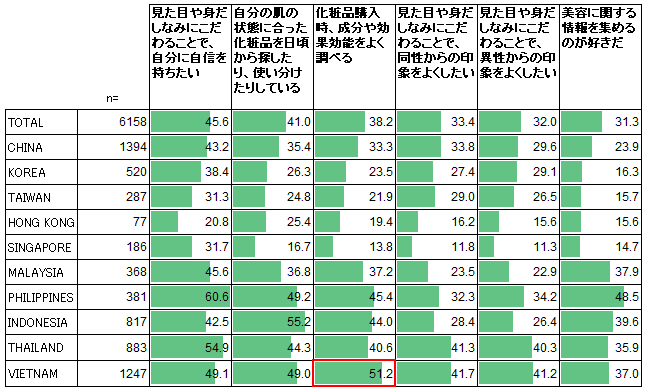
Figure 8: Top 1 Beauty Attitudes and Values Among Gen Z
Source: Intage Global Viewer (2024)
Therefore, in Vietnam, rather than promoting the “vegan” aspect solely on ethical grounds, it will be important to convey it in conjunction with safety, effectiveness, and design appeal for consumers.
For more information, please click here.
③ [Indonesia] Halal Certification, User Experience, and Price Are Evaluated on a Sliding Scale
In Indonesia, home to the world’s largest Muslim population (approximately 240 million), “halal certification” serves as a key factor for Muslim consumers in determining whether they can use a product with confidence.
However, when actually selecting products, consumers prioritize not only halal certification but also usability, skin compatibility, price, and ease of purchase. For makeup products in particular, “comfortable application” is highly valued, and it is also important that products be affordable and easily accessible both in stores and online.
Based on this, product selection in Indonesia can be broken down into three stages.
1. Check for halal certification and ingredients to determine if the product is permissible for use according to religious guidelines.
2. Determine whether the product is suitable based on its texture, how well it suits one’s skin, and its effectiveness in addressing specific skin concerns.
3. Consider the price and where to purchase it to determine whether it is a product one can continue to buy.
In other words, while halal certification is an important prerequisite for purchase, a product is not chosen simply because it is certified; rather, once this condition is met, factors such as user experience, price, and ease of access ultimately influence the final choice.
For more details, please click here.
④ [India] Traditional Knowledge and Close Relationships Foster Trust
In India, health is considered the foundation of beauty. The prevailing view is that diet, exercise, sleep, hydration, and stress management all affect the condition of the skin, hair, and the body as a whole.
Ayurveda, with a history spanning over 5,000 years, has expanded beyond its role as a traditional health system to encompass the fields of skincare and hair care. Trust in time-honored formulations—such as herbs and plant extracts—aligns with the modern trend toward natural ingredients.
Furthermore, a survey of India’s Gen Z revealed that while social media and influencers serve as gateways to discovering new products, “familiar and trustworthy information”—such as advice from dermatologists, family, friends, and personal experience—is prioritized when making the final decision.
As such, the catalyst for product awareness and the basis for the purchase decision are not necessarily the same. A phased communication strategy is necessary: first gaining widespread awareness through social media, then building trust through evaluations from experts and family members, and finally through actual user experiences.
For more details, please click here.
(3) Product Selection: Even with the Same Features, the Value Communicated Changes
When selecting products, even if the features are the same, the value that should be communicated changes depending on the goals consumers are striving for and the basis for their trust. It is important not only to translate the feature-based appeals used in Japan but also to explain them in a way that connects them to local usage purposes and selection criteria.
Below is a summary of the values consumers seek in each product and key points for communicating them.
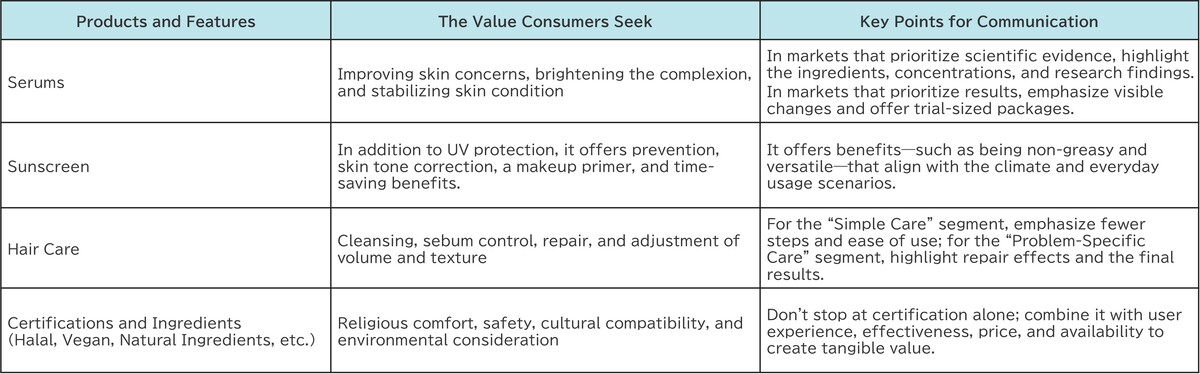
In this way, a product’s value—rather than its functions alone—becomes easier for consumers to understand when it is designed as a cohesive whole that addresses “what the product is used to achieve,” “why it is trustworthy,” and “at which touchpoints it is understood and verified.”
6. Conclusion: Three Key Points for Translating Each Country’s Concept of “Beauty” into Product Strategy
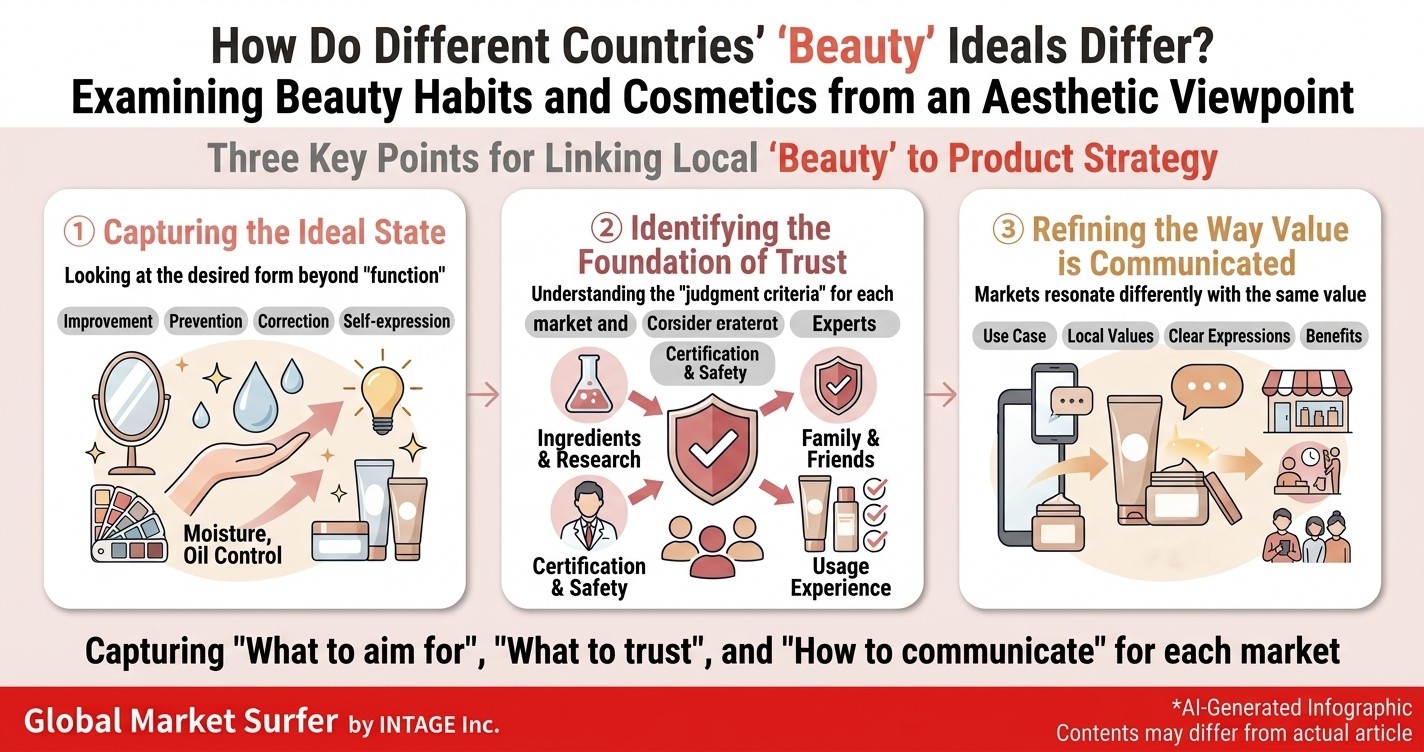
As we’ve seen so far, the degree to which people prioritize appearance does not necessarily align with the extent to which they actively engage in beauty routines. Furthermore, even among consumers with the same climate or skin concerns, the products they choose and the values they perceive vary depending on their “ideal (target) state,” “trusted sources of information,” and “purchase journey.” Therefore, to conclude, we’ll summarize the “three key concepts” that marketers should keep in mind.
① Understand the “Ideal (Desired) State”
Go beyond functions such as moisturizing, sebum control, and brightening to understand what state consumers ultimately want to achieve through those functions. By identifying whether the focus is on improvement, prevention, correction, or self-expression, you can clarify the role the product plays and the messaging that will resonate.
② Identify the Basis of Trust
The factors that build trust—such as scientific ingredients, research, certifications, safety, experts, family and friends, and personal experience—vary by market. It’s important to distinguish between the information that builds awareness and the rationale behind a purchase decision, and to explain the product’s value in line with local decision-making criteria.
③ Design the touchpoints from product discovery to purchase
Consumers first learn about products through social media or TV, verify information through word-of-mouth, reviews, and packaging, test the product in-store, and then make a purchase online or at a physical store. It is necessary to clarify the role of each touchpoint and design the entire process—from awareness, understanding, and comparison to purchase and sharing—as a seamless experience.
As shown here, the concept of “beauty” in each country is not merely a matter of aesthetic preference; it is linked to values such as how people want to spend their daily lives, what they consider safe to use, and how they choose products.
Understanding consumers from these three perspectives provides a starting point for developing products and communication strategies tailored to each specific market.