目次
- 1. Introduction
- 2. Understanding the “Average” in Indonesia Based on Statistical Data (Basic Profile and Values of Indonesians)
- 3. Lifestyle and Living Environment: Differences by Socioeconomic Class (SEC)
- 4. Household Chores : Laundry, Cooking, Cleaning, and the Division of Labor Between Men and Women
- 5. Work Culture and Mobility
- 6. Health and Medical Care
- 7. Religious and Halal Considerations and Unique Consumer Behavior
- 8. Gen Z Consumer Behavior and the Latest Trends
- 9. Summary
1. Introduction
With the world’s fourth-largest population and sustained GDP growth, Indonesia is Southeast Asia’s largest economy. While it is garnering attention as a dynamic market centered on its younger generation, do we truly have a concrete picture of “the average Indonesian’s daily life”?
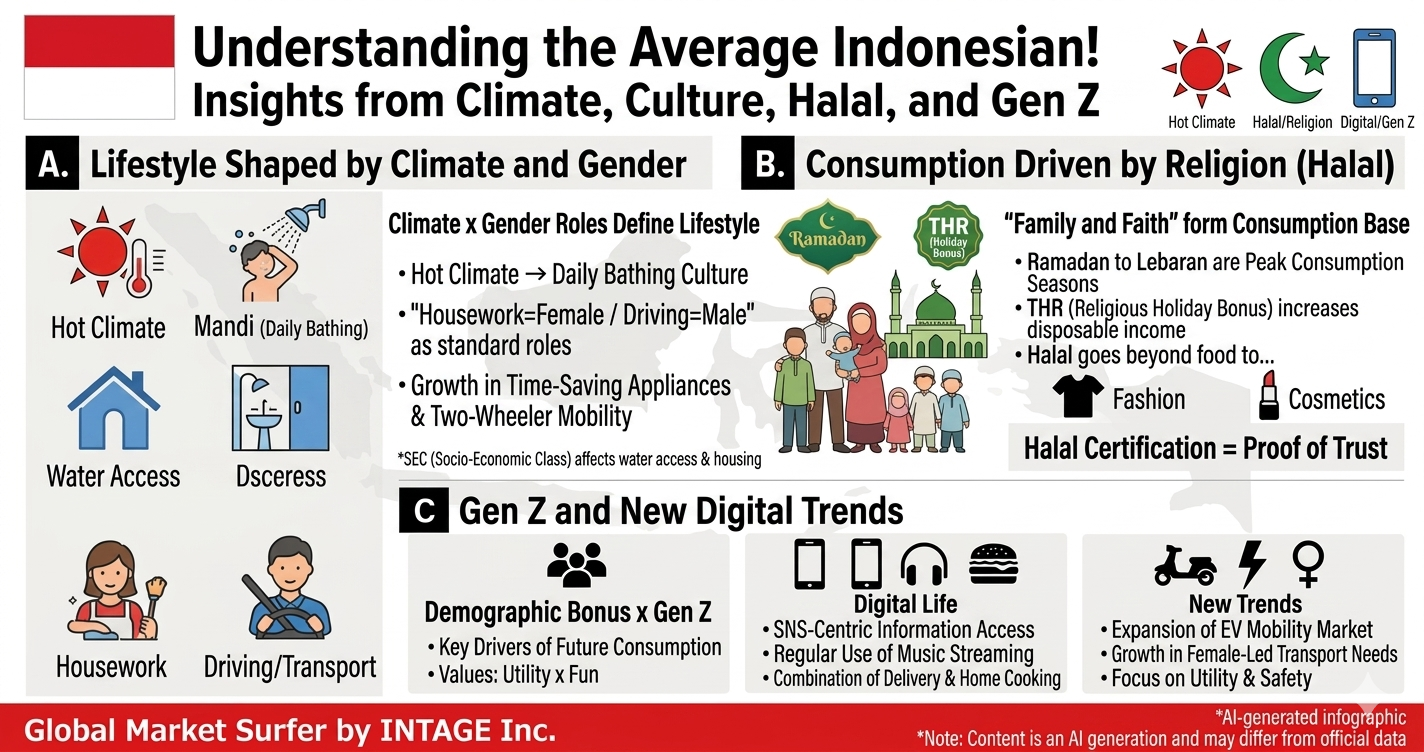
The key to understanding the country’s consumers lies in three perspectives: unique lifestyles rooted in climate and gender roles; religious and halal values that influence every aspect of daily life; and Generation Z, which is driving market change.
In this article, based on Intage’s overseas consumer data sets “Global Viewer” and “Consumer Life Panorama,” we will analyze the “average” and “typical” Indonesian consumer—key insights for marketers—by cross-referencing these three perspectives with the underlying differences in income levels (socioeconomic class: SEC).
2. Understanding the “Average” in Indonesia Based on Statistical Data (Basic Profile and Values of Indonesians)
First, we will outline the basic structure of demographics and values, which serves as a foundation for understanding the Indonesian market.
(1) A demographic structure supported by the younger generation and attitudes toward early marriage
・Population Structure: In contrast to Japan, the population has a pyramid-shaped structure centered on the young, with teenagers making up the largest group. People aged 50 and under account for approximately 90% of the total population.
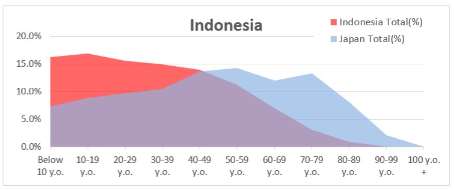
・Marriage and Childbirth: The average age at first marriage is relatively young—27.1 years for men and 22.5 years for women—and the marriage rate among women in their 20s reaches approximately 70%. The total fertility rate stands at 2.17, which is relatively high, but it has been on a gradual downward trend (-13.2%) over the past 10 years.
・Preparing for Marriage (Values and Consumption Patterns): The belief that “the sooner you marry, the better” is deeply ingrained. By their mid-20s, people tend to look for partners through introductions by friends or relatives (arranged meetings) or via dating apps, and build relationships with the assumption that “dating leads to marriage.” Marriage requires both a religious ceremony and civil registration. Among the Muslim majority, there is a deeply rooted cultural tradition where men present women with a “dowry” in the form of cash, jewelry, land, or livestock.
From a marketing perspective, it is important to note that the timing of marriage and home purchases directly leads to “lump-sum purchases of major appliances and high-end furniture.” During their single years, people often live with their parents or in furnished shared housing (kos), and it is common for them not to own their own appliances. Consequently, upon getting married, they tend to purchase a full set of attractive furniture and appliances all at once, anticipating that they will invite relatives and friends over.
For more details, please click here.
▶Related Data:Population/population ratio by age and sex (10 y.o. range) _Indonesia
▶Related Data:Married rate by age and sex_Indonesia
▶Related Data:Mean age of first marriage by sex
▶Related Data:Total fertility rate_17 countries
▶Related Data:Mean age at childbearing_17 countries
▶Related articles:[Global Series: Marriage and Assets] Indonesia: Preparing for Marriage
(2) Indonesia as a Multiethnic, Multilingual, and Muslim Nation
Ethnic Groups and Religion: Indonesia is a multiethnic nation where approximately 300 ethnic groups coexist, including the Javanese (40.1% of the total population) and the Sundanese (15.5% of the total population); the official language is Indonesian. The vast majority of the population practices Islam, and religion is deeply rooted in various aspects of daily life.
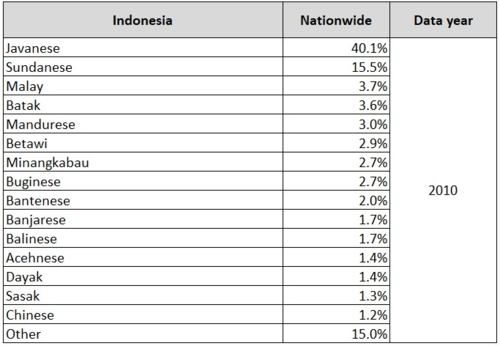
The Chinese Community: Although the Chinese community accounts for only about 1.2% of the population, it wields significant economic influence. In fact, many of the major conglomerates driving the Indonesian economy were founded by members of the Chinese community. Examples include the Salim Group, known for the nationally popular instant noodle brand “Indomie”; the Djarum Group, which owns BCA, the country’s largest private bank; and the Lippo Group, which operates across a wide range of sectors including real estate, healthcare, and retail. All of these companies were founded by ethnic Chinese entrepreneurs and have had a major impact on the country’s business landscape.
For more information, please click here.
▶Related Data:Population ratio by ethnic groups_Indonesia
▶Related Data:Population ratio by language _ Indonesia
▶Related Data:Population ratio by religion_17 countries
3. Lifestyle and Living Environment: Differences by Socioeconomic Class (SEC)
In Indonesia, due to the significant disparities in living standards based on income (SEC), it is important to understand the actual living conditions of each social class rather than treating the population as a single homogeneous group.
(1) The Reality of Average Household Size and Homeownership Rates
Household Size: Single-person households are rare, and the trend is toward large families, with 4 to 5 people being the most common household size. The average household size is 3.86 people.
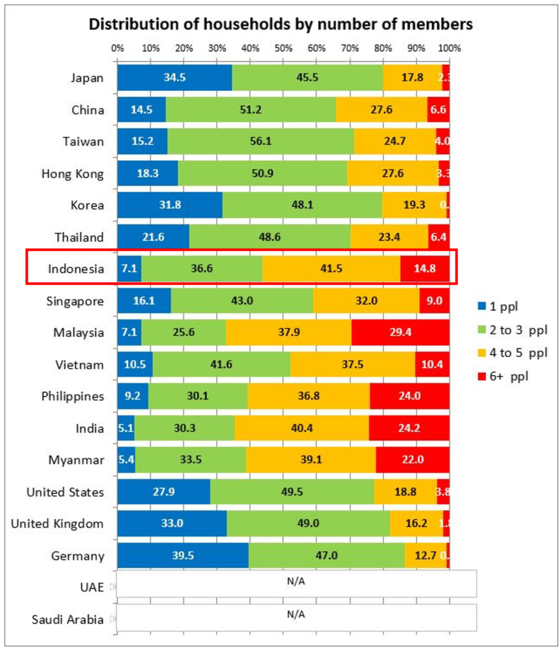
Homeownership Rates and Urban-Rural Disparities: The national average homeownership rate is high at approximately 80%, and in rural areas, owning a home is generally considered the norm. However, in the capital city of Jakarta, where population density is extremely high and there is a large influx of people from rural areas, the homeownership rate remains at around 50%.
For more details, please click here.
▶Related Data:Distribution of households by size (number of members)_16 countries
▶Related Data:Average household size_14 countries
▶Related Data:Population density by cities_17 countries
▶Related Data:The change in homeownership rates_Indonesia
(2) “Mandi” (Bathing) and Concepts of Toilets and Hygiene, Shaped by a Hot and Humid Climate
Climate and Bathing: Because Indonesia has a hot and humid climate year-round, there is no custom of soaking in a bathtub like in Japan. Instead, it is common to take a shower or a “Mandi” several times a day (in the morning and evening, before going out, or after returning home), not only to wash away sweat but also to cool down. For this reason, bathtubs are rarely found in ordinary households.
While households in the upper socioeconomic class may have multiple bathrooms and water heaters, many people still prefer to take a mandi even when hot water is available. On the other hand, many middle- and lower-class households lack showers; in such cases, people wash themselves by scooping water from a basin in the bathroom using a bucket. While body wash is commonly used during showers, the frequency of hair washing varies, with some people washing their hair daily and others every few days.
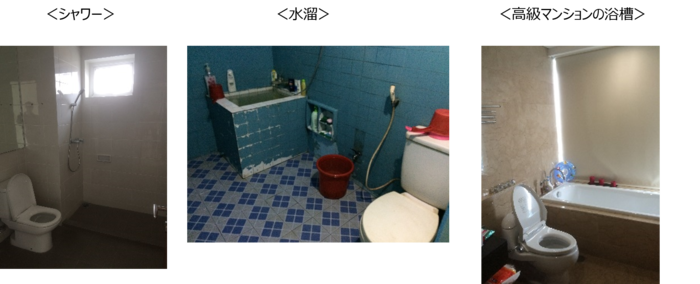
Toilet Etiquette: It is common to wash with water rather than use toilet paper. Western-style toilets have a dedicated hose installed next to the seat, while with squat toilets, you wash by pouring water from a bucket. Due to religious beliefs, the left hand is considered “impure” and is used for washing, so handing things over or shaking hands with the left hand is considered rude.
Toilet paper is sometimes provided, but it is mainly used to dry off after washing with water. Many people feel uncomfortable relying solely on paper, and it is not uncommon to see water splashed around in public restrooms at shopping malls, airports, and other facilities.
Additionally, Muslims practice “Wudu” (ablution), which involves cleansing their hands, feet, and face before each of the five daily prayers, so home bathrooms and toilets play an important role as places for this religious purification.
For more details, please click here.
▶Related Data:Maximum and minimum temperatures, precipitation, number of days with rain, and humidity for Jakarta and Tokyo
▶Related Reports:Survey on Sanitation in Five Asian Countries
▶Related articles:[Indonesia: World Residence Tour]“Kamar mandi” Toilet, Bath and Washroom in One Unit
▶Related articles:<Report from overseas office> [Indonesia: World Residence Tour] Bathrooms in Indonesia.
(3) Differences in Kitchens and Appliances by SEC (Socioeconomic Class)
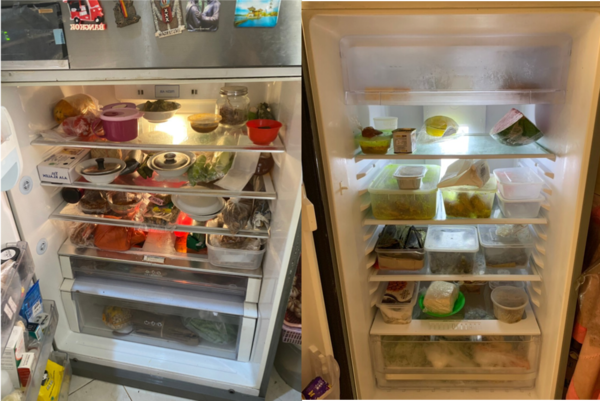
Disparities by SEC: When comparing residents in Jakarta, those in the upper SEC tiers (A and B) primarily live in single-family homes (A in new, high-quality homes; B in standard single-family homes). They are well-equipped with appliances such as air fryers and water dispensers, and tend to enjoy health-conscious cooking and a variety of dishes. In contrast, among lower-income groups (C and D), many households do not own a microwave, and it is common to cook meals on the stovetop as needed and consume them immediately. While refrigerators are widespread, they are primarily used for storing ingredients, and reheating is often done on the stovetop. There is also a tendency to prepare drinking water by boiling it rather than purchasing bottled water.
Source: Intage Consumer Life Panorama
Inside the refrigerators of high-income households in Jakarta.
In households that own a microwave, food stored in Tupperware containers can also be seen.
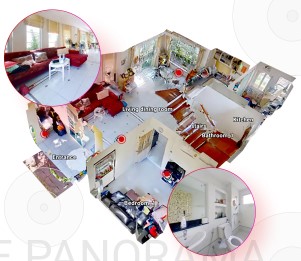
What is Consumer Life Panorama?
This is a website-type database that has accumulated visual data on more than 1,000 sei-katsu-sha from 18 countries around the world. The database includes many 3D models of living environments and 2D data of items owned by each sei-katsu-sha, and is useful for understanding overseas sei-katsu-sha, which is difficult to grasp using only letters and numbers.
Using visual data such as those cited in this column,
Compare the differences in the attributes of overseas consumers
To get a realistic understanding of the actual usage of each category
To understand the overall lifestyle of target consumers
etc., can be utilized as a “no-go” home visit survey.
For more information, please click here.
▶Related Reports:SEC Report in Indonesia (Jakarta)
▶Related articles:Kitchens in Jakarta, Indonesia: How do they differ by SEC (socioeconomic class)?
▶Related articles:<Report from overseas office> [Indonesia: World Residence Tour]Kitchen in Indonesia (Jakarta)
4. Household Chores : Laundry, Cooking, Cleaning, and the Division of Labor Between Men and Women
Here, we focus on household chores—such as laundry, cooking, and cleaning—which form the foundation of daily life, and examine the reality of household work in Indonesia as well as the characteristics of gender role division.
(1) The Perception That “Housework Is Women’s Work” and the Demand for Taipa Appliances, as Seen in an Asian Comparison
Comparison of Housework Division in Asia: In developed countries such as Singapore and Taiwan, while women tend to handle a higher proportion of cooking, tasks like washing dishes and cleaning are generally shared relatively equally, including by men. In contrast, in Indonesia, the traditional perception that “housework is a woman’s role” remains strong, and the burden of housework tends to be heavily skewed toward women. This is believed to be influenced by factors such as the level of women’s participation in the workforce and the large household sizes.
Demand for Time-Saving Appliances: Against this backdrop of uneven household workload distribution, demand for “time-saving” appliances—such as robot vacuum cleaners that “complete tasks automatically with minimal effort”—is rapidly increasing. The number of potential buyers is more than three times that of current owners, indicating a strong need to save time and effort.
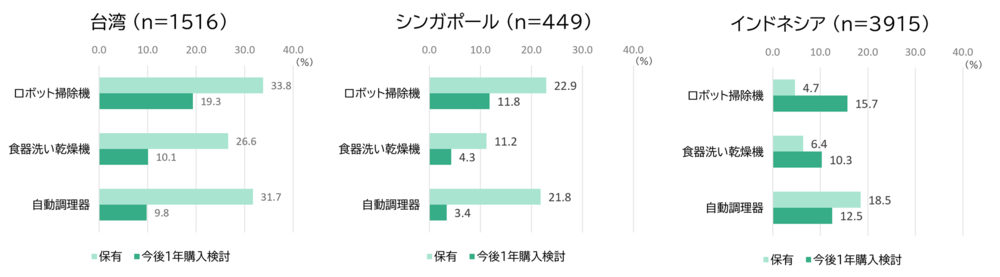
Figure 4: Household Ownership / Purchase Intentions for the Next Year: Home Appliance Categories (White Goods and Large Appliances) (Multiple responses allowed)
Excerpted from (Base: Married individuals)
Source: Intage Global Viewer (2024)
Accelerate decision-making with smart overseas resident data
Global Viewer
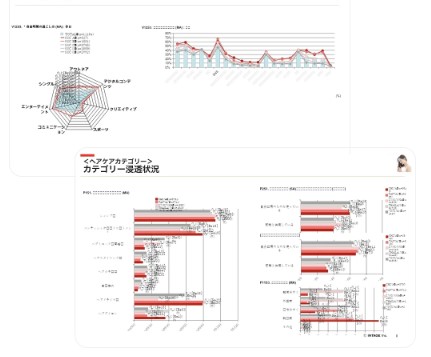
This service provides reports tailored to your issues using questionnaire data on various actual conditions and attitudes of sei-katsu-sha in 11 countries (Asia and US) stocked by INTAGE.
The service covers 400 items, including actual behavioral conditions and awareness, values, and information contact related to various product and service categories.
For more information, please click here.
(2) Laundry and Dishwashing: The Bathroom as a Multi-Purpose Household Space
Frequent Laundry and Demand for Antibacterial Products: Due to the hot and humid climate, people tend to change clothes multiple times a day, resulting in very frequent laundry. Consequently, there is a growing demand for laundry detergents and fabric softeners with antibacterial properties.
Multi-purpose Household Spaces in Lower SEC Groups: The environment for laundry and dishwashing varies significantly by SEC group. While upper-class households have dedicated laundry areas and kitchen sinks, it is not uncommon for lower-class households (C and D classes) to lack washing machines or sinks. In such cases, the “Kamar mandi” (bathroom)—which combines a toilet and shower—serves as a multi-purpose household space for hand-washing clothes and dishes. Although this layout is often placed next to the kitchen and is efficient in terms of workflow, the constant presence of moisture makes it prone to mold and deterioration, and maintaining cleanliness remains a challenge.
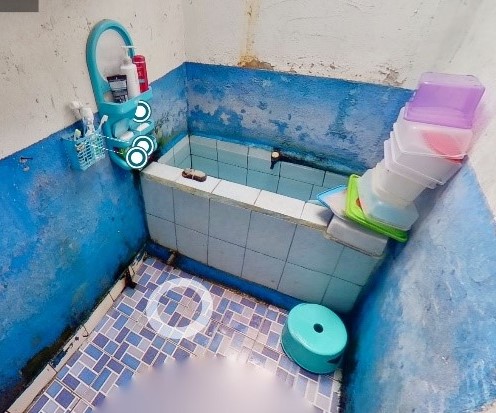
Source: Consumer Life Panorama
For more information, please click here.
(3) Dining Culture: A Focus on Home Cooking and Family Gatherings! A Traditional, Handmade Approach Centered Around the Stone Mortar “Cobek”
Basic Styles of Home Cooking: In Indonesia, where there is a strong cultural emphasis on food, home cooking typically follows a “one-plate style”—featuring a generous serving of rice as the staple, accompanied by a main dish of fish or meat and one or two stir-fried side dishes—or a style where soup is served alongside (or poured over) the rice. While using a spoon and fork is the mainstream way to eat, the traditional style of mixing rice and side dishes with the right hand remains deeply rooted.
Comparison with Other Southeast Asian Countries (Emphasis on Home Cooking and Family Gatherings): Even within Southeast Asia, compared to countries like Thailand—where the culture of eating out and street food has developed and the frequency of home cooking has declined—Indonesia (and Vietnam) still strongly retains a culture of “cooking at home and eating as a family.” A key characteristic is the emphasis on natural ingredients and nutrition, along with a strong appreciation for home-cooked flavors.
The “Cobek” (Mortar and Pestle): The Cooking Tool That Defines Home-Cooked Flavors: A distinctive feature of home cooking in Indonesia is the presence of the stone mortar and pestle, known as the “Cobek.” By grinding sambal (chili sauce) and spices together in each household, a unique flavor is created. While the use of blenders, instant seasonings, and delivery services has grown in recent years, many people remain committed to homemade cooking, believing that “food made in a cobek has a better aroma and flavor.” This coexistence of time-saving convenience and tradition is a defining feature of Indonesian home cooking.
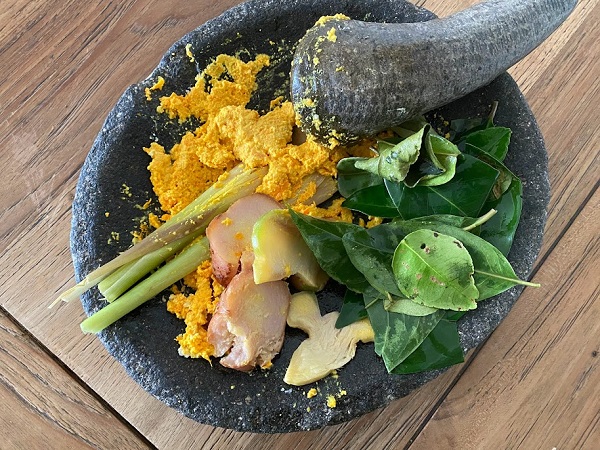
Grind and blend the spices using a stone mortar called a “cobek”
For more information, please click here.
5. Work Culture and Mobility
(1) The Reality of Work Patterns Among Older Workers and Women
Labor Conditions: A key characteristic is the high proportion of employment in the primary sector (39.4%) and the very high labor force participation rate among men aged 65 and older (62.1%). This is largely due to the fact that many people are engaged in the informal sector (non-regular employment), such as agriculture and self-employment, and because social security benefits, such as pensions, are insufficient, older workers are forced to continue working for extended periods to support themselves.
Characteristics of the Female Labor Force Participation Rate: The female labor force participation rate peaks among women in their late 30s to 40s. This is because many women marry and have children in their early 20s (the marriage rate for women in their 20s is approximately 70%), and as their children grow older, more women return to work or begin working to supplement household income for expenses such as education. Unlike the “M-shaped curve” seen in countries like Japan, the rate in Japan forms a gentle mountain-shaped curve throughout the 30s and 40s.
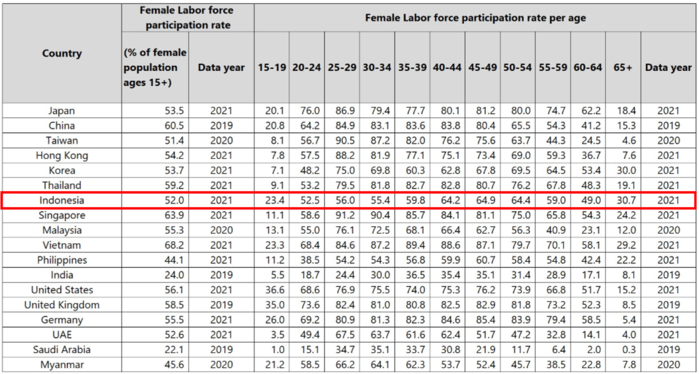
For more information, please click here.
▶Related Data:Male labor force participation rate
▶Related Data:Female labor force participation rate by age_18 countries
▶Related Data:Employment distribution by occupation
(2) Indonesian Women’s Values Regarding “Success”
For working women, “success” is not limited to career advancement or financial prosperity. Spiritual and religious fulfillment—such as making the Hajj (pilgrimage to Mecca) after years of dedicated effort and gratitude, owning one’s own land, and living a prosperous life with one’s family—is considered a key indicator of success.
For more information, please click here.
(3) The Women-Led Mobility Revolution and the EV Market
Mobility Issues and Gender Gaps: In Indonesia, even when women obtain a motorcycle license, they often lack the confidence to drive due to perceptions held by the men around them—such as the idea that it is “dangerous” or “too difficult for women”—and thus hesitate to use motorcycles for daily transportation. Regarding cars as well, even when purchased jointly by a couple, the loan contract and vehicle registration are often in the husband’s name, meaning the wife may not be able to use the car freely in practice; gender disparities in transportation thus persist.
Women as Early Adopters: On the other hand, women have also been instrumental in driving the practical evolution of mobility. Automatic scooters (automatic motorcycles), which appeared in the early 2000s, initially gained popularity among women due to their ease of operation, and were quickly adopted by women who prioritized practicality over specifications. Subsequently, their convenience was recognized, and today approximately 90% of motorcycles in Indonesia are automatic.
Women Driving the EV Market: This trend is also evident in electric motorcycles (EVs). Benefits such as low-maintenance and quiet operation align with women’s needs, and adoption rates are reported to be more than double those of men (4.7% vs. 2.1%). These trends among women as “early adopters who prioritize practicality” serve as a key indicator for the future of the mobility market.
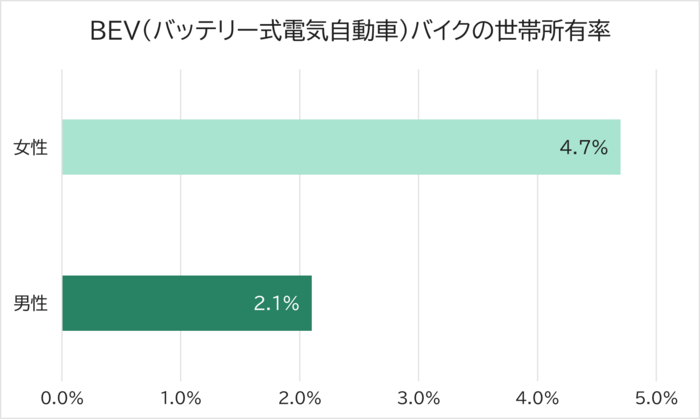
Source: Intage Indonesia Survey, N=403 (3 major cities)
▶Related articles:From Matic to Electric: How Women Have Always Driven Indonesia’s Mobility Revolutions (Even When Men Take the Wheel)
▶Related articles:The Indonesian Road Less Travelled (Because Someone Didn't Hand Her the Keys)
▶Related articles:Pillion Passengers: The Data Behind Indonesia's Motorbike Gender Gap
6. Health and Medical Care
Why Not Go to the Hospital? Unique Attitudes Toward Health and Medical Care
Medical Situation: With fewer than one doctor and fewer than two hospital beds per 1,000 people, the healthcare system faces significant challenges. Compared to Japan, which has a well-developed medical infrastructure (approximately 2.5 doctors per 1,000 people and a large number of hospital beds), the standard of care is lower. Like the Philippines, Thailand, and Vietnam, it is difficult to easily access medical care.
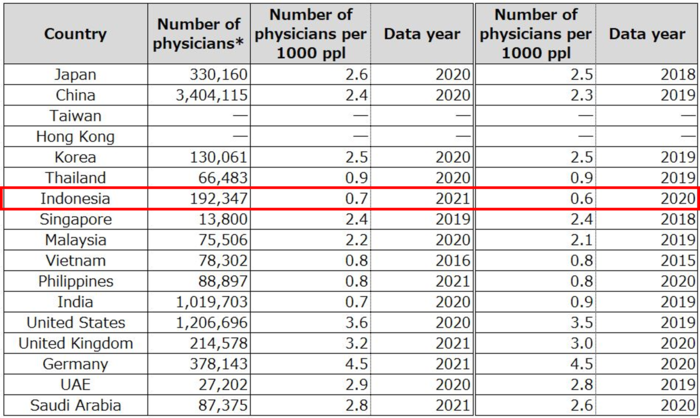
Health Awareness: In addition to limited access to medical care, there is a lack of widespread awareness regarding preventive medicine and proper health knowledge. As a result, there is a tendency to “put up with minor ailments” and to feel “reluctance (both psychological and physical) to seek medical attention at a hospital.” Consequently, when feeling unwell, it is common to treat symptoms with “Jamu,” a traditional herbal beverage made from turmeric and ginger, or to use over-the-counter (OTC) medications based on recommendations from family and friends.
Furthermore, in Indonesia, where the dietary supplement market is expanding, the use of supplements is also growing. Rather than for general health maintenance, people prefer to take vitamins such as C, B, A, and D with the goal of “disease prevention.” A notable characteristic is the strong trend toward “one-stop solutions,” where people choose multivitamins that provide multiple nutrients in a single dose.
For more details, please click here.
▶Related Data:Number of physicians per 1000 people_17 countries
▶Related Data:Number of hospital beds per 1000 people
▶Related articles:[Indonesia] Resistance to seeing a doctor? Awareness and Measures towards Health in Indonesia
▶Related articles:【ASEAN】Health Supplement Market: Insights from Rapid Growth
▶Related articles:Survey of Five Asian Countries How do demands for nursing care services differ by country?
7. Religious and Halal Considerations and Unique Consumer Behavior
(1) Classifying Consumers into Four Types and the “Halal Awareness” Revealed
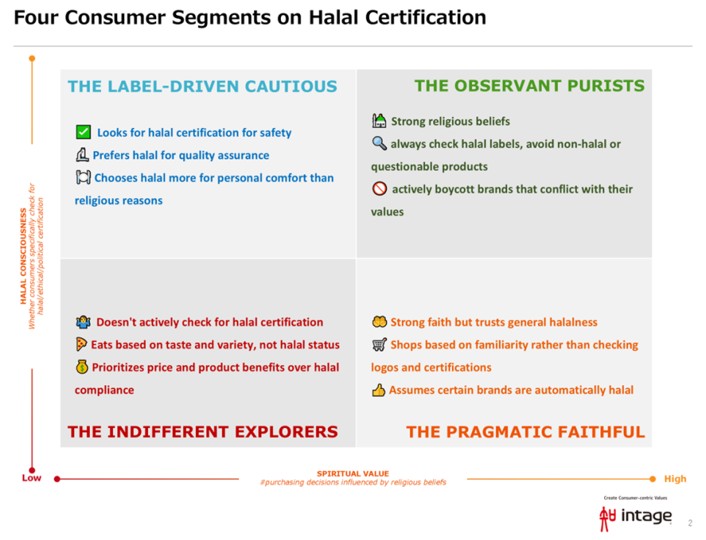
While Islam is deeply rooted in daily life, the government’s enforcement of strict regulations is relatively weak, and awareness of and adherence to halal practices vary widely. Consequently, individuals differ in how they approach halal in their purchasing behavior and the criteria they use to make decisions; these can be broadly categorized into the following four types. The Indonesian halal market is not monolithic, and understanding these diverse needs is the key to success.
・Label-conscious Cautious Consumers: A group that prioritizes safety and peace of mind, using the presence of Halal certification (labels or marks) as their primary criterion.
・Purists Who Uphold Their Beliefs: A strict group with very strong religious convictions who thoroughly avoid products that do not align with their doctrine.
・Practical consumers who prioritize familiarity: A group that, while religious, prioritizes intuition and long-trusted brands in their daily purchasing decisions.
・Realists who balance practicality: A group that is mindful of halal certification but makes flexible choices based on a balance between practical factors such as price, quality, and convenience.
For more information, please click here.
(2) Unique Consumption Patterns Driven by Ramadan and Eid (Lebaran)
・A surge in consumption linked to religious events: Eid (Lebaran), the festival marking the end of Ramadan (the month of fasting), is the biggest shopping season of the year in Indonesia. During this period, formal employees receive a religious holiday bonus known as “THR,” which dramatically boosts consumer spending.
・Unique purchasing behavior: Demand for apparel expands due to the “Salimbit” culture, where families and relatives wear matching outfits, and there is also active replacement of home appliances and furniture—such as large refrigerators and air conditioners—in anticipation of hosting guests. Furthermore, consumption patterns that blend religion, socializing, and self-expression are evident, including colorful syrups for posting photos of the breaking-of-the-fast meal (Iftar) on social media, and alcohol-free traditional perfumes (Attar).
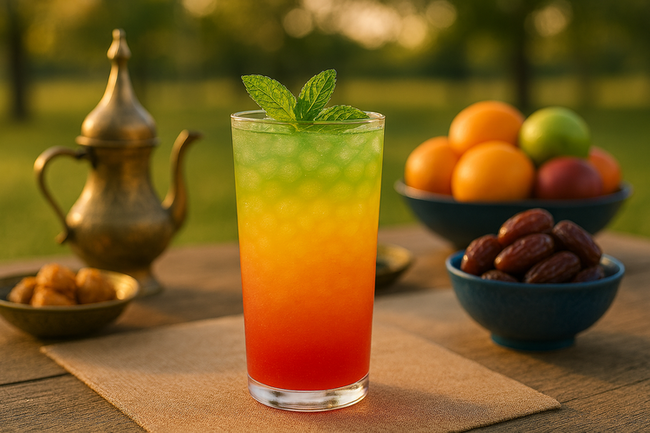
*The image above is an AI-generated illustration of Buka Puasa (Iftar).
・Demand for Cars as “Mobile Living Rooms” and Gengsi (Social Prestige): Cars, particularly 7-seater vehicles (MPVs) suitable for transporting large groups, are a prime example of high-value consumption during this period. Against the backdrop of post-Ramadan homecomings (mudik), long-distance travel, limited public transportation, and visits to relatives, cars function not merely as a means of transportation but as “mobile living rooms” that ensure the family’s comfort. Furthermore, the decision to replace a vehicle is strongly influenced by a desire for “gengsi” (social prestige), and cars have increasingly come to serve as status symbols signifying “success in the city.”
For more details, please click here.
(3) Halal Integrated into Everyday Life: Trends in Fashion and Cosmetics
・Balancing Halal Compliance and Self-Expression: Against the backdrop of economic growth, Indonesia’s Gen Z has a strong desire to consume, and there is a growing need to enjoy fashion and beauty while respecting Islamic teachings. Particularly for cosmetics used daily, Halal certification has become a key selection criterion, and products that satisfy religious values while offering both practicality and trendiness are gaining traction among consumers.
For more details, please click here.
8. Gen Z Consumer Behavior and the Latest Trends
Gen Z: The Generation Set to Drive Future Markets. Here’s a breakdown of their consumer behavior and the latest trends you need to know.
Gen Z Food, Beverage, and Beauty Trends (Fusion Coffee, Halal Cosmetics)
・Food and Beverage: For Gen Z, coffee is not just a drink but a part of their lifestyle and self-expression, and cold, sweet “fusion-style coffee” is particularly popular. Against a backdrop of growing eco-consciousness and fashion-forward trends, the practice of carrying high-end reusable bottles from brands like “Hydro Flask” and “Stanley” has become firmly established.
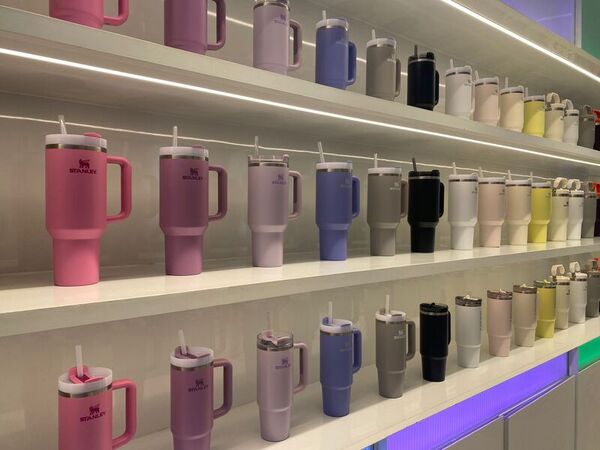
・Beauty & Cosmetics: Affordable local halal cosmetics brands such as Wardah and Emina Cosmetics are gaining significant popularity, particularly among Gen Z. Products designed to address local skin concerns, such as acne, are especially popular.
For more details, please click here.
9. Summary
Finally, let’s review the “three key concepts” for understanding the values and behaviors of people living in Indonesia.
(1) A Unique Lifestyle Shaped by Climate and Gender Inequality
To understand consumer behavior, it is essential to grasp the division of roles based on climate, culture, and gender. An understanding rooted in actual living conditions—such as the “bathing (Mandi)” culture and water-related infrastructure born from a hot and humid environment, as well as demand for time-saving appliances and mobility solutions driven by the perception that “housework is for women and driving is for men”—serves as the starting point for localization. Additionally, it is necessary to pay attention to differences in living environments based on income levels (SEC).
(2) Consumption Mechanisms Linked to Religion (Halal)
Values that prioritize “family and faith” form the foundation of consumption, giving rise to major spending seasons such as Ramadan and THR (Religious Holiday Bonus). Furthermore, Halal awareness extends beyond food to permeate the entire lifestyle—including fashion and cosmetics—and significantly influences purchasing decisions.
(3) The Rise of Generation Z and New Digital Trends
Against the backdrop of the demographic dividend, Generation Z will drive future consumption. Characterized by a lifestyle centered on social media and music streaming, they exhibit flexible consumption behaviors, such as combining food delivery with home cooking. Furthermore, new trends are emerging, such as the female-led movement in the EV market.
[For a Deeper Understanding]
To succeed in the rapidly growing and changing Indonesian market, it is essential to have a perspective that captures the real lives of consumers in addition to macro data. Global Market Surfer offers a variety of reports, including “Global Viewer,” which aggregates proprietary surveys and quantitative data, and “Consumer Life Panorama,” a visual database that visualizes living environments. We invite you to register for free and utilize these resources to develop your strategies for the Southeast Asian market.